
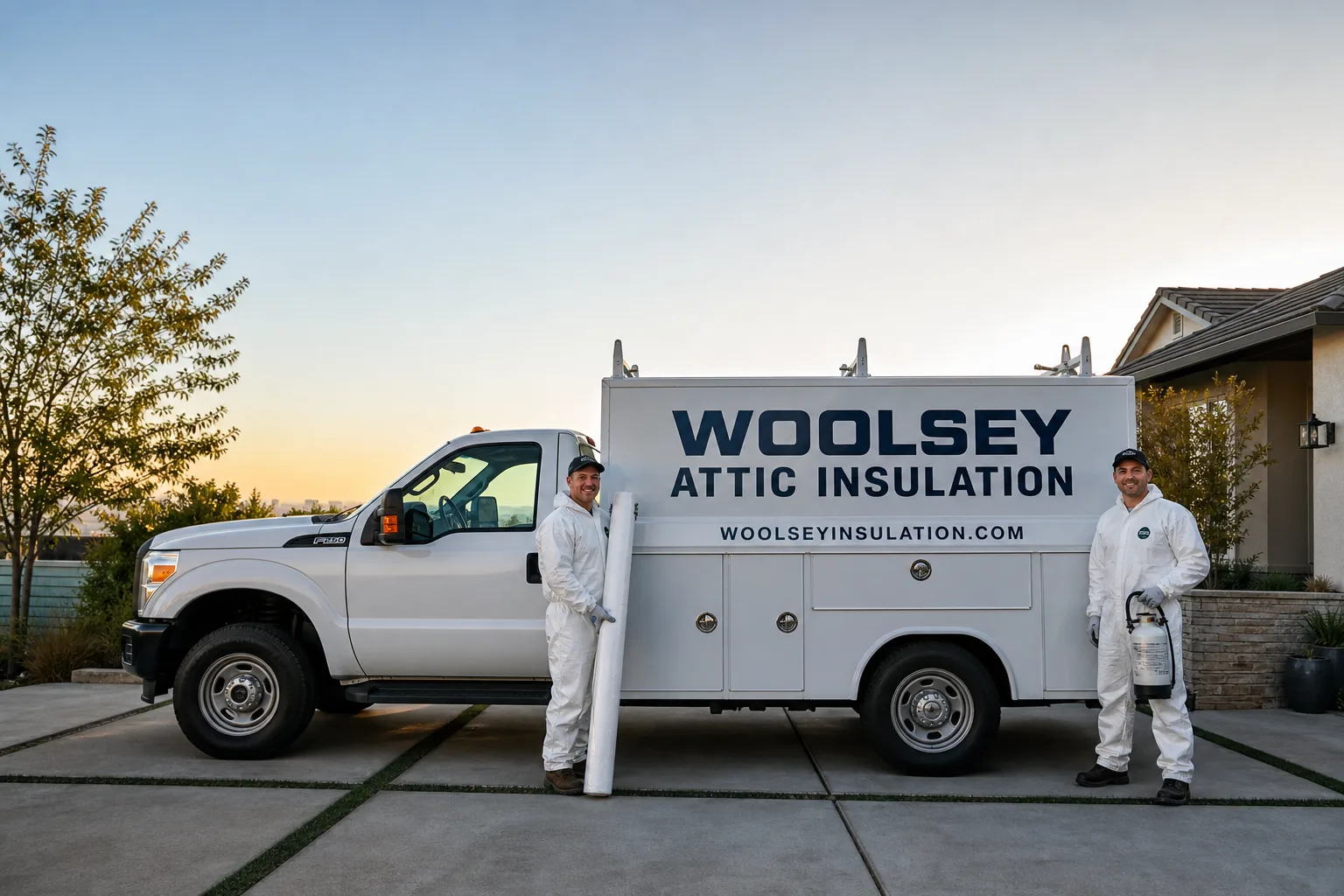
Fast, Reliable Spray Foam Insulation Across Saratoga
Spray foam insulation in Saratoga costs between $3.50 and $7.50 per board foot installed, with most full-attic jobs landing between $4,800 and $12,400 depending on foam depth and whether the assembly needs fire-rated closed-cell to meet CalFire WUI rules. That’s the honest range up front, because Saratoga is not a one-quote-fits-all town. Hillside parcels along Saratoga-Los Gatos Road and the Congress Springs corridor sit inside Very High Fire Hazard Severity Zones, which changes the material spec compared to a flat-valley job in Cupertino. We give you the exact written number before any work starts, not after the crew pulls up. Call (325) 240-5411 for a free estimate and a straight answer.
Why Woolsey Attic Insulation Is Saratoga’s Preferred Spray Foam Insulation Company
Saratoga homeowners call us because we’re an attic and Spray Foam Insulation specialist, not a general contractor squeezing insulation between window replacements. That focus matters on homes built between 1955 and 1978 as custom ranch and split-level designs on heavily wooded lots. We know what’s hiding in those knee-wall cavities and rim joists because we’ve opened enough of them across Saratoga to recognize the patterns. Our crews carry eight leading insulation brands, including Johns Manville, Knauf, and Icynene, so the material recommendation fits your house and your fire zone, not whatever happens to be on the truck.
Every Woolsey job on a Saratoga property runs through the Kingswell Guarantee. That means a written price before any work starts, a committed arrival window, a clean job site when we leave, a written guarantee on the work, and a free return visit if anything fails within the guarantee period. Glenn Hartley leads our team, and he’s the reason the phones get answered by a live person 24 hours a day. No voicemail maze, no call-back window. You call, a real person picks up, and you get answers.
Spray Foam Wall Insulation in Saratoga
Spray Foam Wall Insulation in Saratoga fills stud cavities, header gaps, and top plates with a two-part foam that expands on contact and seals the wall assembly airtight. For most Saratoga homes built between 1955 and 1978, the original wall cavities were left with thin or compressed fiberglass batts that do almost nothing against the cold air drainage that slides off the Santa Cruz Mountain foothills on clear nights. Closing those gaps with open-cell foam in interior walls or fire-rated closed-cell foam in exterior assemblies cuts heat loss more measurably here than in Sunnyvale at the same latitude, simply because Saratoga nights run 5 to 8 degrees colder.
When the Fire Zone Changes the Spec
Homes in the Very High Fire Hazard Severity Zone along Saratoga-Los Gatos Road and Congress Springs need exterior wall foam that meets Class A flame-spread standards under Santa Clara County’s WUI code. That means closed-cell products like Icynene or Demilec rated for ember-zone exposure, not the open-cell foam a flat-valley contractor might default to. We check the parcel’s fire hazard designation before we quote anything.
What Re-Siding Unlocks
When a Saratoga homeowner tears off old redwood siding during a renovation, that’s the moment to foam the wall cavities from the outside. The sheathing is exposed, the stud bays are visible, and we can get a continuous air seal without tearing out drywall inside. You only get that shot once before the new siding goes back on.
Rim Joist Spray Foam in Saratoga
Rim Joist Spray Foam in Saratoga seals the band board where the floor framing meets the foundation and exterior wall, which is the single most overlooked air leak in split-level and crawl-space homes from the 1960s and 1970s. Cold air drainage off the foothills gets sucked through unsealed rim joists and top plates, pulling warm air out of the house and dragging cold soil gasses in. Sealing that perimeter with closed-cell spray foam stops the stack effect that has been driving winter heating bills in Saratoga ranch homes for five decades.
Why Vapor Retarder Choice Matters Here
Coastal moisture pushes through the mountain gaps and condenses against interior sheathing when a vapor retarder is specified wrong for Saratoga’s humidity profile. In a rim joist application, the wrong open-cell product or an unfaced batt can trap water against the framing and feed mold inside the band board. We spec closed-cell foam with the correct permeance for the assembly, not a one-size-fits-all product.
Crawl Space and Ember Entry
Saratoga hillside crawl spaces are ember entry points during fire season. The rim joist at the foundation line is exactly where embers pile up and find gaps into the framing. Sealing it with fire-rated closed-cell foam does two jobs at once: it keeps the heat in during the cold-drainage nights and closes a path for embers during wildfire season.
Trusted Brands We Service in Saratoga
Woolsey works with eight leading insulation manufacturers and keeps the material choices tailored to Saratoga’s WUI requirements and humidity profile. On most Saratoga jobs we’re installing Johns Manville closed-cell foam for high-moisture areas, Knauf open-cell for interior wall cavities, and Icynene fire-rated closed-cell for rim joists and roof decks in the Very High Fire Hazard Severity Zone. We stock local parts and schedule Saratoga crews for same-week start dates on most spray foam jobs. You won’t wait three weeks for material that somebody forgot to order.
Common Spray Foam Insulation Problems We See in Saratoga Homes
- Unfaced fiberglass batts left in place in hillside attics. These fail the Class A flame-spread requirement imposed by Santa Clara County’s WUI standards for the Very High Fire Hazard Severity Zone, and some out-of-area bids miss it entirely. We pull them out and switch to fire-rated closed-cell before the inspector shows up.
- Vapor retarder specified for a Dry Valley climate, not Saratoga’s humidity profile. Coastal moisture condenses against interior sheathing and rots the framing from the inside out. Choosing the wrong foam permeance in a wall or rim joist assembly causes damage you can’t see until the drywall comes down.
- Cold air drainage hitting unsealed rim joists and top plates. Homes from the 1955 to 1978 ranch and split-level era were built with loose tolerances, and the gaps at the foundation line are where Saratoga’s below-valley nighttime temperatures do the most damage. Foam that doesn’t reach the rim joist means the air-sealing benefit leaks away through gaps the crew never touched.
- Lightweight open-cell foam used where the WUI code demanded Class A closed-cell. Some bids quote a generic open-cell attic job because it’s cheaper on paper. It doesn’t pass inspection in Saratoga’s fire hazard zones, and the homeowner pays twice: once for the wrong foam, then again for the right one.
Pricing for Spray Foam Insulation in Saratoga, CA
Spray foam wall insulation in Saratoga typically runs $4.50 to $6.75 per board foot installed for open-cell and $5.50 to $8.00 per board foot for fire-rated closed-cell, with a standard 2×4 wall cavity at R-13 to R-15 open-cell averaging $3,400 to $5,800 for a single-story ranch. Rim joist spray foam runs $2,800 to $5,600 on a typical split-level or crawl-space home. Closed-cell roof deck applications in WUI zones run $8,500 to $14,000 for a standard attic. The final number depends on foam depth, square footage, access, and your parcel’s fire hazard designation. We give you the written price before any work starts, and the estimate is free. Call (325) 240-5411.
We Also Serve Cities Near Saratoga
Woolsey crews work Saratoga daily and also cover Cupertino, Los Gatos, Campbell, and Santa Clara for spray foam and attic insulation jobs. If you’re just outside the city line, call (325) 240-5411 and we’ll confirm your service area and schedule. The same Kingswell Guarantee applies on every job, in every city.
Serving Saratoga, CA - Our Local Coverage Area
We’re based in the Saratoga area and know this community well. Use the map below to see our service coverage - if you’re nearby, we can almost certainly help.
FAQs About Spray Foam Insulation in Saratoga
Your parcel sits in a CalFire Very High Fire Hazard Severity Zone, which triggers Santa Clara County WUI building standards that require Class A flame-spread-rated insulation materials in attic and wall assemblies. Sunnyvale sits on the valley floor outside those zones, so standard unfaced fiberglass passes there but fails inspection on most Saratoga hillside parcels. We check the designation before we quote, and we spec fire-rated closed-cell or mineral wool where the code demands it. Call (325) 240-5411 and we’ll confirm your parcel’s status.
Yes, and it’s measurable. Cold air slides off the Santa Cruz Mountain foothills on clear nights and pools on Saratoga lots, dropping temperatures 5 to 8 degrees below Cupertino or Sunnyvale at the same latitude. That extra cold load means the air-sealing performance of closed-cell foam at rim joists, top plates, and wall cavities delivers more heating-season savings here than it would down-valley, so the spec matters more, not less. The fix is a continuous air seal, and that’s what closed-cell foam does.
The foam traps moisture against the band board and framing when coastal humidity from the mountain gaps condenses against the interior sheathing, and you get rot or mold you can’t see until the damage is serious. Saratoga’s humidity profile is different from the valley floor, so the permeance rating of the foam has to match the assembly. We spec closed-cell foam with the correct vapor retarder characteristics for the Rim Joist Spray Foam details on your specific home, and we put it in writing.
Split-level and ranch homes built between 1955 and 1978 on the large-lot parcels south of Saratoga-Sunnyvale Road and along the Congress Springs corridor are the most frequent candidates. Those builds have loose rim joist fitment and unsealed top plates, and the cold air drainage off the foothills exploits every gap. We typically recommend rim joist spray foam whenever the home gets wall insulation because the stack effect will keep pulling heat out through the foundation line if it’s left unsealed.
We use Icynene fire-rated closed-cell on most Saratoga Very High Fire Hazard Severity Zone jobs, and we also pull from Johns Manville and Demilec when the assembly calls for a different density or vapor permeance. The brand choice follows the fire code and the moisture profile of the assembly, not whichever can is sitting on the truck. We’ll give you the exact material spec in your written quote before any work starts.
Written by Glenn Hartley, Owner at Woolsey Attic Insulation, serving Saratoga and the surrounding San Francisco Bay Area since 2002.