
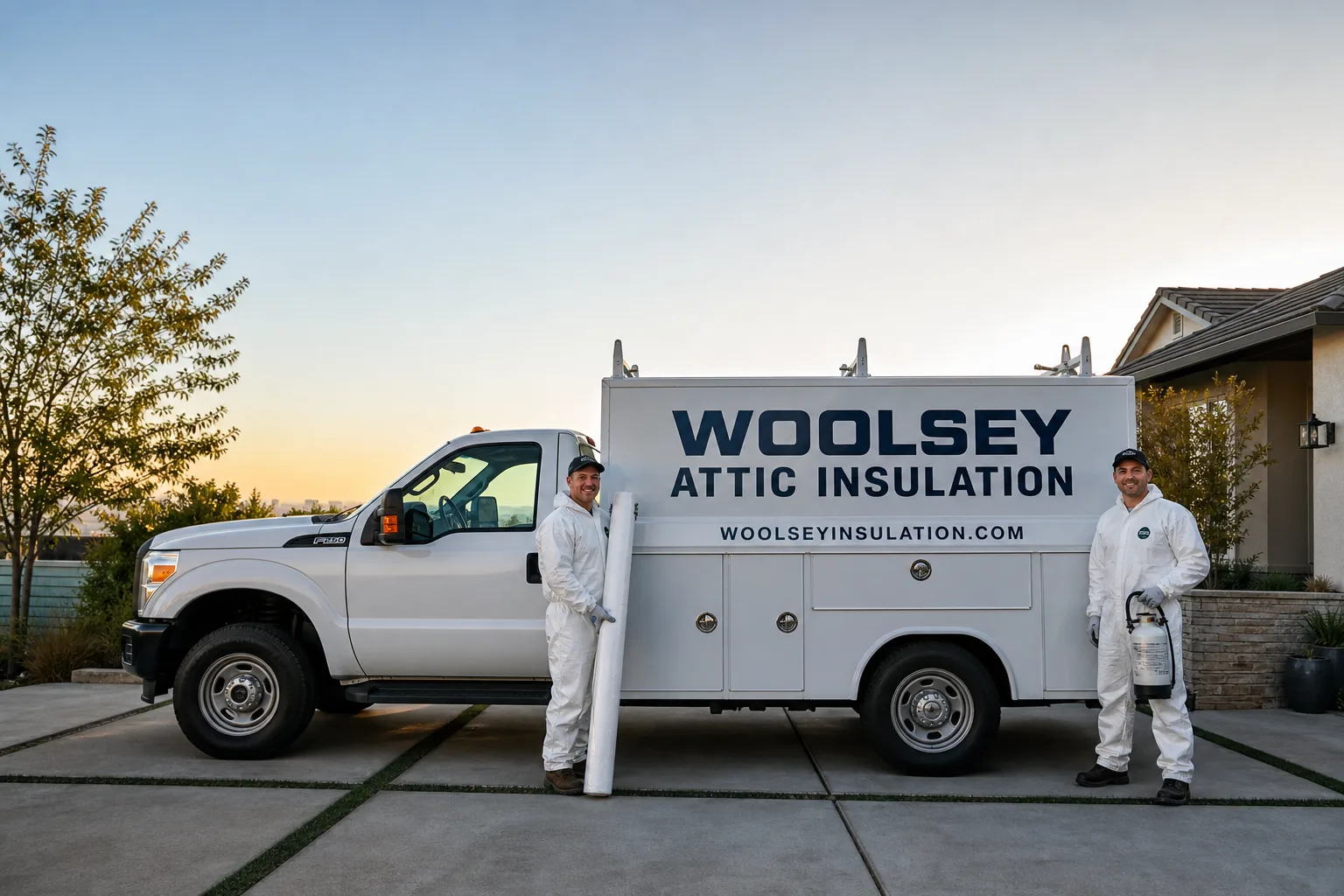
Fast, Reliable Spray Foam Insulation Across South San Francisco
Spray foam insulation in South San Francisco is a two-part liquid that expands on contact and seals gaps airtight, and it’s the single most effective retrofit for the wind-driven fog that pushes through the San Bruno Gap every day. Most closed-cell jobs in Sunshine Gardens, Buri Buri, and Paradise Valley run between $1.80 and $3.10 per board foot installed, and we give you the exact written number before any work starts. That price is the Kingswell promise: a real figure on paper, not a range that shifts at the door. Call (325) 240-5411 and a live person answers, any hour, any day.
Why Woolsey Attic Insulation Is South San Francisco’s Preferred Spray Foam Insulation Company
We’re the spray foam and attic insulation arm of the Kingswell family, and our crews know South San Francisco’s housing stock the way a mechanic knows a certain engine. Glenn Hartley leads our team, and the technicians who arrive at your door are background-checked and uniformed. You know exactly who is walking into your home before they step over the threshold.
Our South San Francisco customers call us because the phone rings through to a person – not a voicemail maze – 24 hours a day, 7 days a week. When a fog-season condensation problem shows up on a Tuesday night, someone here answers. We show up in a committed arrival window, we price the job before work begins, and we put the 365-Day Done Right Promise in writing on every single job. If something isn’t right within a year, we come back and make it right at no charge.
Homeowners in South San Francisco have been through the wringer with insulation crews that changed the price at the door or never called back. Woolsey was founded in 2002 to be the other kind of company. The one that writes the number down first, shows up when promised, and leaves the job site cleaner than we found it.
Garage Spray Foam Insulation in South San Francisco
Garage Spray Foam Insulation in South San Francisco means treating the garage ceiling and band boards as part of the home’s thermal envelope, not an afterthought. Most 1950s and 1960s tract homes here have garages that leak heated air straight through the ceiling joists into unfinished attics above. We spray closed-cell foam against the ceiling drywall or directly to the underside of the roof deck, which stops the stack effect dead and keeps the garage usable for projects year-round.
A typical garage ceiling spray foam job in South San Francisco runs $1,900 to $4,200 depending on square footage and whether we’re also sealing the rim joist. The San Bruno Gap wind makes garage band boards a prime air-leak point here; without foam at the perimeter, the ceiling foam can’t do its job. We check the rim joist every time, because on these homes the failure point is almost always at the edge, not the field.
When a garage needs it most
If your attached garage shares a wall with finished living space and that wall feels cold in July fog or radiates heat in August, the garage assembly is leaking. If you park in the garage and the car smells musty after a wet winter, moisture is moving through the ceiling plane. Those are the houses where garage foam pays for itself fastest.
What we spray
We stock Johns Manville and Icynene closed-cell products for garage work because they hold up to the salt-laden fog air that sits low over South San Francisco. The foam goes on as a liquid, expands within seconds, and creates a monolithic air seal that no batt or blown-in product can match.
Closed Cell Spray Foam Insulation in South San Francisco
Closed Cell Spray Foam Insulation in South San Francisco is the specification we recommend most often for the unwrapped stucco walls of Sunshine Gardens, Buri Buri, and Paradise Valley. Closed-cell foam cures to a rigid, dense structure that stops both air and vapor, which means it doubles as the vapor barrier those original wall assemblies never had. In a city where the daily fog condenses on the back of exterior stucco skins, that vapor-stopping ability matters more than the R-value printed on the spec sheet.
A full wall cavity closed-cell installation in South San Francisco typically runs $3,200 to $7,800 for a 1,200 to 1,800 square foot ranch, with attic and rim joist work priced separately. We spray in lifts so the foam cures without thermal stress, and we always verify moisture content in the wood sheathing before the first pass. Spraying closed-cell over damp, unwrapped 1950s sheathing traps existing moisture; that’s the most common cause of delamination we see from previous bad installs.
Why vapor management drives the spec
Wood sheathing sits directly under stucco in most pre-Title 24 South San Francisco homes. There is no house wrap, no drainage plane, nothing between the studs and the stucco skin. When fog pushed by the San Bruno Gap condenses on the back of that stucco, the sheathing stays wet for months. Closed-cell foam, properly flashed at the top and bottom plates, gives the wall assembly a vapor barrier it never had from the builder.
Open-cell vs closed-cell in this climate
Open-cell foam breathes, which is useful in hot dry attics but not ideal for South San Francisco’s damp coastal walls. Closed-cell doesn’t breathe, which is exactly what you want when the marine layer sits low over the city into late summer mornings. We carry both types and specify based on what we find in the wall, not what happens to be on the truck.
Trusted Brands We Service in South San Francisco
We work with eight leading insulation brands – Owens Corning, Johns Manville, Knauf, Rockwool, CertainTeed, Icynene, Demilec, and GreenFiber – because no single material fits every South San Francisco home. For coastal stucco retrofits we lean on Johns Manville closed-cell for its vapor-barrier performance and Knauf for certain attic applications. For open-cell and blown-in work we turn to CertainTeed and Rockwool. The material recommendation is built around your house’s actual wall assembly, humidity profile, and wind exposure. We stock local parts for South San Francisco jobs and can schedule material drops to Sunshine Gardens, Buri Buri, or Paradise Valley sites with a one-day lead time in most cases.
Common Spray Foam Insulation Problems We See in South San Francisco Homes
- Perimeter failure before field failure. Wind-driven fog through the San Bruno Gap pushes air and vapor against attic and crawl space perimeters. Spray foam applied without first sealing the rim joist and top plates fails at the edges while the field of the panel looks fine.
- Damp 1950s stucco sheathing trapping moisture. We regularly open Sunshine Gardens walls to find original wood sheathing dark and damp behind peeling interior paint. No vapor barrier between studs and stucco skin means chronic condensation; foam sprayed directly over that damp wood traps it permanently.
- Crawl space re-wetting from fog humidity. On homes where a prior foam crew skipped the crawl space, fog humidity wicks up through the soil and re-wets the floor assembly. The foam above looks perfect while the framing beneath stays wet and begins to rot.
- Salt-laden fog corroding exposed metal and fasteners. The same marine air that rusts garage-door springs faster here also attacks any exposed metal fasteners, hangers, and edge flashing in insulation systems. We use stainless where it touches the foam perimeter and always inspect the existing metal during a retrofit.
Pricing for Spray Foam Insulation in South San Francisco, CA
Closed-cell spray foam in South San Francisco runs $1.80 to $3.10 per board foot installed, with most whole-wall retrofits landing between $3,200 and $7,800 for a typical postwar ranch. Open-cell runs $0.80 to $1.40 per board foot. Garage ceiling work runs $1,900 to $4,200. Rim joist sealing runs $900 to $2,100. The biggest cost variable here is wall access: homes with direct-stucco construction, especially in Sunshine Gardens and Buri Buri, require careful drilling patterns that add labor compared to siding-clad homes a few miles inland. Every Woolsey job includes a written price before work starts – not an estimate, a fixed number in writing – and a free second visit within 365 days if anything fails. Call (325) 240-5411 for your exact quote; estimates are free and the number comes to you before any work begins.
We Also Serve Cities Near South San Francisco
Our crews work throughout the northern Peninsula and the coastal range. We regularly run spray foam jobs in Daly City, San Bruno, Millbrae, and Pacifica, and our South San Francisco scheduling team coordinates all of it. If you live anywhere along the 280 or 101 corridors north of SFO, we likely already have a job within ten minutes of your block. This page focuses on Spray Foam Insulation work in South San Francisco specifically, but the same crews, pricing, and Kingswell Guarantee apply everywhere we go.
Serving South San Francisco, CA - Our Local Coverage Area
We’re based in the South San Francisco area and know this community well. Use the map below to see our service coverage - if you’re nearby, we can almost certainly help.
FAQs About Spray Foam Insulation in South San Francisco
Closed-cell makes more sense in Sunshine Gardens because those 1950s stucco walls have no vapor barrier, and closed-cell foam acts as one. Blown-in insulation fills the cavity but lets fog-driven vapor keep condensing on the back of the stucco skin, which means the damp wall problem never actually goes away. Closed-cell stops the vapor movement as well as the air movement. It costs more upfront, but on a home with direct-stucco construction it’s often the difference between solving the problem and just burying it. Call (325) 240-5411 for a written quote on your wall assembly.
Yes, but only after we verify the moisture source and ventilate or seal the right way. South San Francisco’s fog sits low and long, and many attics here stay above 60% relative humidity for weeks in summer. Spraying closed-cell directly over damp framing or damp sheathing traps that moisture and creates delamination. We test moisture content in the wood first, address any active leaks or venting problems, and only then spray. If the attic framing is already too wet, we dry it out before the foam goes on. The 365-Day Done Right Promise covers this work in writing.
Yes, the Gap wind drives spray foam failures to the perimeter before the field. The persistent northwest wind pushes air and vapor against the rim joist, top plates, and exterior corners of attics and crawl spaces, so those are the first places an air seal breaks down. On a calm inland home the failure might show up years later in the middle of a panel. On a South San Francisco home it shows up first at the rim joist and the top plate. That’s why we always inspect and seal those edges before we spray the field.
We offer garage spray foam because South San Francisco’s uninsulated 1950s and 1960s garages leak heated air constantly through the ceiling and band boards, and the wind from the Gap makes those losses worse. A typical attached garage here shares a wall with finished living space, and that shared wall is often cold enough in July fog to make a bedroom on the other side uncomfortable. Foaming the garage ceiling and rim joist fixes that thermal boundary. Material cost for a standard two-car garage here runs $1,900 to $4,200, with the written price delivered before we start.
We stock Johns Manville and Icynene closed-cell foam for most coastal South San Francisco jobs, plus Knauf and CertainTeed open-cell for specific attic applications. Johns Manville closed-cell holds its vapor-barrier performance in high-humidity conditions, which matters when the marine layer sits over Sunshine Gardens for weeks at a time. We carry eight brands total so the material fits the home. If you want to know exactly which foam we’d specify for your wall assembly, call (325) 240-5411 and we’ll walk through it.
Written by Glenn Hartley, Owner at Woolsey Attic Insulation, serving South San Francisco and the northern Peninsula.