
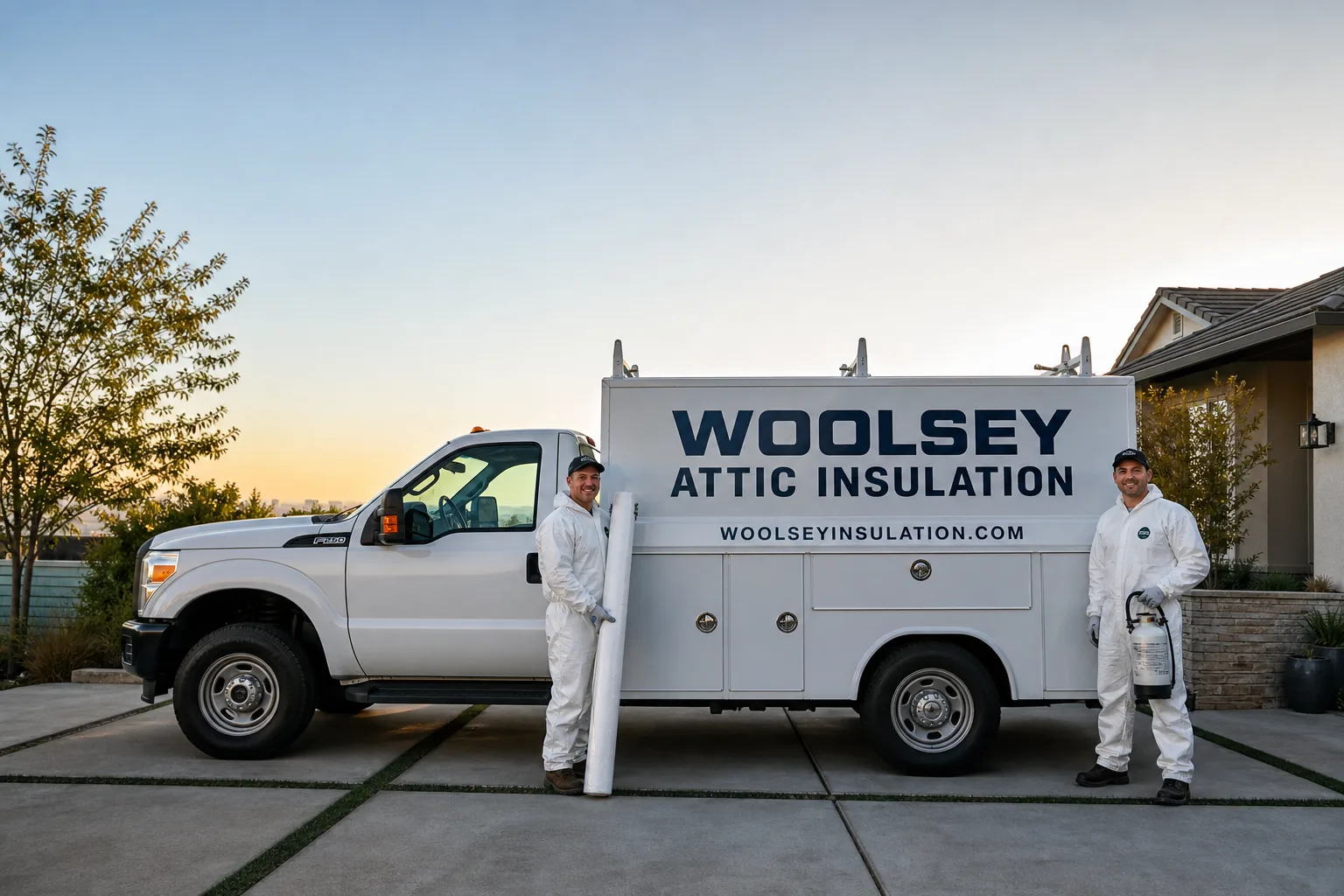
How Much Does Insulation Cost in San Francisco?
Attic insulation in San Francisco typically runs $1,800 to $4,500 for a standard single-family home, with most homeowners landing near $2,900. Spray foam jobs cost more because the material and labor are heavier: figure $3,500 to $9,000 for a full attic. These numbers reflect the real San Francisco market in 2026, including the older housing stock and the permitting quirks that come with it.
What you actually pay depends on your square footage, the insulation you choose, and how much prep the attic needs. The one thing that shouldn’t vary is the price you’re quoted. Every Woolsey Attic Insulation job starts with a written price before any work begins, so the number on the estimate is the number on the invoice.
Insulation Cost Breakdown (2026)
Here’s where the money goes on a typical San Francisco attic project. Ranges cover most single-family homes; a tight Bernal Heights bungalow sits at the low end, a large Sunset District house with a big attic sits high.
| Line item | Typical range (San Francisco, 2026) |
|---|---|
| Blown-in fiberglass (attic floor, R-38 to R-49) | $1,800 – $3,800 |
| Blown-in cellulose (attic floor, R-38 to R-49) | $2,000 – $4,200 |
| Open-cell spray foam (attic, per sq ft) | $2.50 – $5.00 per sq ft |
| Closed-cell spray foam (attic, per sq ft) | $4.00 – $8.00 per sq ft |
| Air sealing before insulation (per job) | $400 – $1,200 |
| Removal of old, damaged, or pest-soiled insulation | $700 – $2,500 |
| Baffles and vent chutes for roof ventilation | $300 – $900 |
| Radiant barrier or reflective layer (add-on) | $1,000 – $2,800 |
| Attic hatch or kneewall door insulation | $250 – $600 |
Blown-in fiberglass is the workhorse for most San Francisco attics. It’s loose material blown through a hose to a set depth, and it’s measured by R-value, which is just a number for how well a material resists heat flow. Higher R-value, more resistance, more material, higher cost. Spray foam insulation – a two-part liquid that expands on contact and seals gaps airtight – costs more per square foot but does two jobs at once: it seals air leaks and insulates. In San Francisco’s fog-belt neighborhoods, that double duty often pays for itself faster than the price difference suggests.
Cellulose runs a little higher than fiberglass because it’s denser and takes more material to hit the same R-value, but many homeowners choose it for the recycled content and the way it settles into irregular joist bays. If your attic has been home to rodents or has old insulation that’s matted and dark, removal adds cost before anything new goes in. We can’t lay fresh material over contaminated insulation and promise it’ll perform, so that line item shows up honestly on the estimate.
What Affects Insulation Pricing in San Francisco
San Francisco isn’t a generic insulation market. The city’s mix of Victorian flats, 1920s stucco boxes, and mid-century Sunset homes means no two attics are the same, and the price swings with the details.
- Attic size and access. A wide, walkable attic off a hallway hatch is fast to work in. A cramped crawl-through space behind a closet, common in older Noe Valley and Mission District homes, adds labor hours and sometimes a smaller crew because only one person fits at a time.
- Age of the home and existing insulation. Pre-1950 San Francisco homes often have little or no insulation, plus knob-and-tube wiring or old junction boxes that have to be worked around carefully. We never cover wiring we can’t see or access safely.
- Air sealing needs. San Francisco’s marine layer and year-round dampness make air leaks more consequential than in dry climates. Sealing gaps around plumbing stacks, recessed lights, and top plates before insulating is often the single best dollar you spend.
- Material choice. We work with eight leading brands – Owens Corning, Johns Manville, Knauf, Rockwool, CertainTeed, Icynene, Demilec, and GreenFiber – so the recommendation fits your attic, not whatever’s on the truck that day. Material availability can nudge pricing week to week.
- Moisture and pest history. A Fog Belt home with a history of roof leaks, or a Bernal Heights attic that’s had raccoons, needs remediation before insulation. That’s a real cost, and skipping it just means the new insulation fails sooner.
- Permits and inspections. Any work that changes the building envelope in San Francisco may require a permit through the Department of Building Inspection, and older homes sometimes trigger a Title 24 energy compliance check. We’ll tell you upfront whether your job needs one.
How to Save on Insulation
You can’t control material prices, but you can control how the job is scoped, and that’s where the savings live.
- Do air sealing and insulation in one visit. Booking them together saves the second trip charge and gets you a better-performing assembly. Sealing alone without insulation, or insulation over leaks, wastes money either way.
- Fix the moisture problem first. If your attic has a roof leak, a bath fan venting into the attic, or rodent entry points, handle those before you insulate. New insulation over an active leak is money down the drain. We’ll flag it during the estimate even though we don’t do roofs or vents ourselves.
- Choose blown-in over spray foam when the attic allows it. If your attic is already reasonably airtight and the main goal is thermal resistance, blown-in fiberglass or cellulose gets you there for a fraction of the cost.
- Target the attic floor before the roof deck. For most San Francisco homes, insulating the attic floor (keeping the attic itself vented) is cheaper and just as effective as a full spray-foam roof deck encapsulation. Encapsulation makes sense when you want a conditioned attic or have HVAC equipment up there.
- Get the written price before work starts. This is the real savings. A quote that changes at the door costs you more than any material upgrade. Our pricing is written and delivered before the first crew member arrives – call (325) 240-5411 for a free estimate.
What San Francisco Homeowners Actually Pay: Three Real Scenarios
Numbers on a table are useful, but real jobs make them concrete. Here’s how three common San Francisco situations price out.
Scenario 1: A 1920s Inner Sunset bungalow, 900 sq ft of attic
Original insulation is thin and matted, and there’s a raccoon-stained corner near the dormer. Remove and dispose of the old material, air seal around the plumbing stack and top plates, blow in R-49 fiberglass. Landed around $3,200. The homeowner was ready for a $5,000 bill after another company’s door-step quote, which is exactly why the written price matters.
Scenario 2: A Noe Valley Victorian flat, 600 sq ft of tight attic
Access is a hatch behind a closet; only one technician fits. The bay windows and interior walls have old knob-and-tube wiring that has to be left accessible. Blown-in cellulose at R-38 with baffles around the eaves to keep the roof breathing. Came in near $2,100. Smaller attic, but the access and the wiring work kept it from being the cheapest job.
Scenario 3: A large Sunset District house with a walk-up attic, 1,400 sq ft
The homeowner wanted a conditioned attic for storage, so we went with closed-cell spray foam on the roofline plus an attic hatch insulated to match. Total near $8,600. Higher price, but it turned dead space into usable square footage and sealed the attic from the ocean air in one pass.
Your job will land somewhere on this range. The only way to know where is a free estimate, and ours comes with a real number before any work starts.
Why Insulation Costs More in San Francisco Than Elsewhere in California
You’ll see insulation quotes from Sacramento or the Central Valley that run 15 to 30 percent lower than San Francisco for similar square footage. That gap is real, and it’s not padding. Labor in San Francisco costs more because rents and wages are higher, and access is harder – narrow streets, permit parking, and steep staircases to attics. Older housing stock means more prep work: knob-and-tube wiring, old chimneys, and attic spaces that were never designed for a crew with equipment. Material shipping into the city adds a bit too. We build all of that into the written price, so there’s no surprise when the truck arrives.
The Kingswell Way: What a Job Actually Looks Like
Woolsey Attic Insulation is part of the Kingswell family of independently owned and operated insulation companies, founded in 2002. The way a job runs here has a name – The Kingswell Way:
- Say the price. A written price is delivered before any work starts. No door-step changes.
- Show up in the window. A real arrival window, and a background-checked, uniformed technician who you know is coming.
- Leave it cleaner than we found it. Drop cloths, contained debris, and a job site that looks like we were never there except for the insulation.
- Put the guarantee in writing. Every repair and installation includes a written guarantee – the 365-Day Done Right Promise. If it isn’t right within 365 days, we come back and fix it at no charge.
- Answer the phone. A live person picks up 24 hours a day, 7 days a week. No voicemail, no call-back window.
Woolsey – wool was the first insulation, and we keep the idea in the name. It’s the same material science that’s now engineered into every batt, every bag of cellulose, and every can of foam we install across San Francisco.
If you’d like to see what your attic needs and what it should cost, Woolsey Attic Insulation offers a free estimate with a written price before any work begins.
FAQs – Insulation Cost in San Francisco
How much does attic insulation cost in San Francisco?
Most attic insulation jobs in San Francisco run $1,800 to $4,500, with the average landing around $2,900. Spray foam jobs run $3,500 to $9,000 depending on attic size and whether you’re insulating the attic floor or encapsulating the roof deck. Call (325) 240-5411 for a free estimate with a written price before any work starts.
Is spray foam worth the extra cost over blown-in?
Spray foam costs roughly two to three times more per square foot than blown-in, but it seals air leaks as it insulates. If your attic is drafty or you want to use the space for storage, foam often pays back faster. If your attic is already reasonably sealed, blown-in fiberglass or cellulose gets you most of the performance for a much lower price. We’ll tell you honestly which one your attic needs.
Can I just add insulation on top of what’s already there?
Sometimes, yes. If your existing insulation is dry, clean, and not compressed, adding blown-in material on top can work and usually costs less. If it’s wet, pest-contaminated, or matted down, it needs to come out first – removal runs $700 to $2,500. We’ll inspect during the estimate and tell you which situation you’re in. Free estimates: call (325) 240-5411.
Does insulation work require a permit in San Francisco?
Adding insulation inside an existing attic usually doesn’t require a permit, but any work that changes the building envelope, or projects in older homes that trigger energy compliance review, may need one through the San Francisco Department of Building Inspection. We’ll flag whether your job needs a permit before we schedule. Call (325) 240-5411 and we’ll sort it out.
How long does an attic insulation job take in San Francisco?
Most attic insulation jobs are done in a single day – typically four to eight hours for blown-in, longer for spray foam that needs cure time. Larger attics, removal of old material, or tricky access can push it to two days. Either way, you get a real arrival window and a written price before we start.
Is it cheaper to repair or replace insulation?
It depends on the damage. Small areas of compressed or wet insulation can be topped up or spot-replaced for a few hundred dollars. Insulation that’s failed across the whole attic – from rodent damage, a long-running leak, or decades of settling – is usually cheaper to replace entirely than to patch in sections. Replacement in San Francisco typically runs $2,000 to $4,500. Call (325) 240-5411 for a free estimate and we’ll tell you which makes sense for your attic.
Pricing reflects the San Francisco market as of 2026. Woolsey Attic Insulation offers free estimates – call (325) 240-5411. Written by Glenn Hartley, Owner at Woolsey Attic Insulation.
What Our Customers Say
"Showed up on time, laid down protection on the floors, and were careful going into the attic. Explained exactly what they were doing and why. House holds its heat so much better now."
- Preston Hale"Insulation job was done well. Scheduling took a little longer than I'd have liked, they were booked out a couple weeks. But once they came it was quick and the house is cozier."
- Felicia Grant"The guy didn't try to sell me on foaming the whole house. He said the attic was where I'd actually feel it and left it at that. Honest, and he was right, our bills dropped."
- Angela Ruiz