
Attic Insulation Pricing Breakdown: What Los Angeles Homeowners Pay in 2026
Most Los Angeles homeowners will pay between $1,800 and $6,500 for attic insulation work in 2026, depending on material, square footage, and whether old insulation needs removal. The single biggest reason two identical homes in Sherman Oaks or El Segundo get quotes thousands of dollars apart is scope, not markup. If you’d rather skip the research and get a written number for your specific attic, call us at (325) 240-5411.
Two LA homeowners with identical 1,200-square-foot attics can get quotes $3,000 apart, and both contractors might be pricing honestly. One quote includes full removal of old material, air-sealing, and disposal. The other is blowing new fiberglass over whatever is already up there. Same square footage, completely different job. This breakdown is built to give you a line-item lens so you can read a quote and understand what you’re actually paying for.
What Actually Drives Attic Insulation Cost in Los Angeles
Every insulation quote has five line items hiding inside it. Knowing them is the difference between comparing real bids and comparing hope. We’ve been insulating attics across Los Angeles County since 2002, and the breakdown below reflects what we see on real jobs from Woodland Hills to Highland Park, not national averages that ignore LA labor rates.
- Material type: Blown-in fiberglass runs $1.00 to $2.50 per square foot installed. Blown-in cellulose is similar, $1.20 to $2.80. Open-cell spray foam jumps to $2.50 to $5.00, and closed-cell spray foam lands between $3.50 and $7.00. Closed-cell costs more because it delivers a higher R-value per inch and acts as its own vapor barrier. For most LA attics, that distinction is worth understanding: a 2×4 ceiling cavity can only hold so much material, and the R-value math changes depending on what you choose.
- Existing insulation removal: If your attic has old, compacted, or pest-damaged material, removal adds $1.00 to $2.00 per square foot. That includes bagging, vacuum extraction, and disposal. Homes built before 1980 in Los Angeles frequently have original insulation that has settled to half its rated R-value, which is why bakers roof insulation removal shows up as its own line item on honest quotes. Skipping removal when it’s needed means your new insulation sits on top of old problems.
- Air-sealing labor: This is the line item most contractors quietly omit, and it’s the one that matters most for actual comfort in Los Angeles. Air-sealing means closing the gaps around recessed lights, plumbing penetrations, chimney chases, and top plates before insulation goes in. It typically adds $300 to $800 for an average attic. Blowing new insulation over an unsealed attic is like putting on a heavier coat while leaving the zipper open.
- Access difficulty: Low-pitch roofs, tight scuttle holes, and attics with no standing room all extend labor hours. Pre-1980 Los Angeles homes frequently have shallow attics built around truss systems that make maneuvering slow work. Expect 10% to 20% more in labor on jobs where a technician can’t stand up.
- Disposal fees: LA County transfer stations charge by weight. A typical 1,200-square-foot attic with old fiberglass produces 600 to 1,000 pounds of material. Disposal runs $150 to $400 depending on volume, and any contractor who says disposal is “included” has built it into another line item. It’s not free; it’s just hidden.
2026 Price Ranges by Material for Los Angeles Homes
Here are the numbers we see on Los Angeles jobs in early 2026. These are installed prices for a typical 1,200-square-foot attic with reasonable access and no major removal work. Prices assume you’re adding insulation to reach R-38, which is the California Title 24 expectation for most LA climate zones.
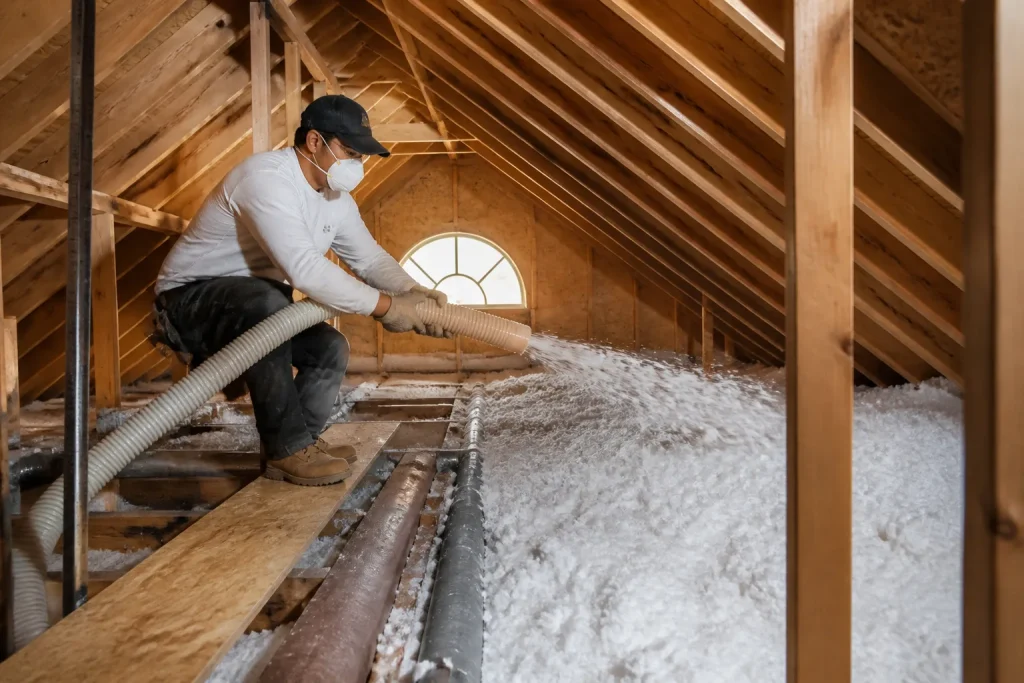
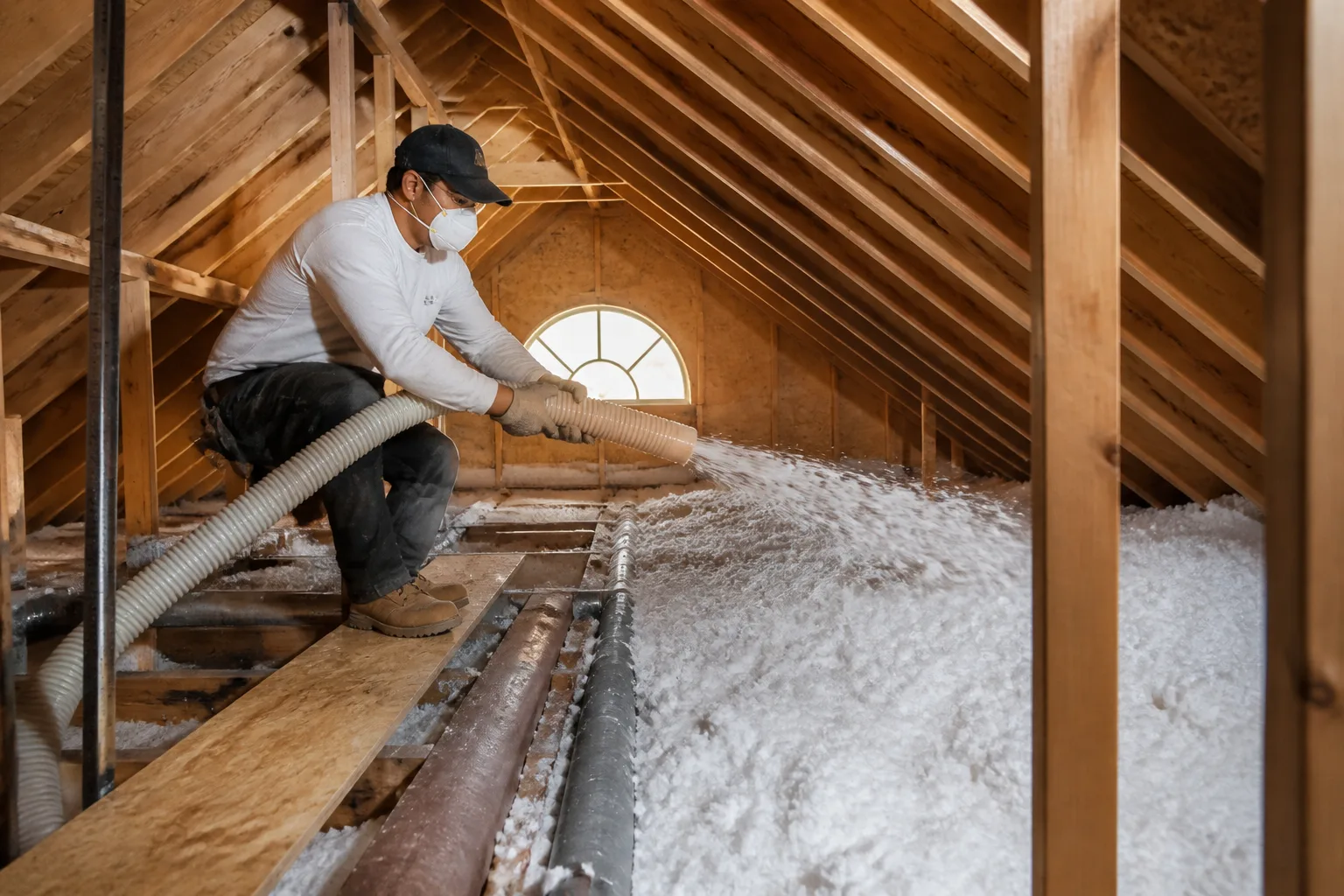
- Blown-in fiberglass: $1,200 to $3,000. The workhorse. Affordable, fast to install, and effective when paired with proper air-sealing. We install Knauf and CertainTeed blown fiberglass, and for most LA homes this is the practical default.
- Blown-in cellulose: $1,400 to $3,400. Slightly higher material cost, but denser coverage and better sound damping. GreenFiber cellulose is a good fit for older LA homes where you want something that packs into odd cavities.
- Open-cell spray foam: $3,000 to $6,000 for attic floor application. It air-seals as it insulates, which makes it excellent for LA attics with complex geometry. We use Icynene open-cell when the roof deck itself needs treatment. It’s also unforgiving if installed wrong, which is why proper training matters.
- Closed-cell spray foam: $4,200 to $8,400 for the same 1,200 square feet at attic floor level. This is the premium option. R-6.5 to R-7 per inch, excellent moisture resistance, and structural rigidity. Most LA homeowners choose closed-cell only when they’re converting an attic to living space or dealing with specific moisture problems.
- Attic roof deck (the underside of the roof sheathing): Expect to add 50% to 100% to the prices above. This is the “hot roof” approach that turns the attic into conditioned space. It’s a different job from insulating the attic floor, and it’s worth knowing the distinction before you compare quotes.
One thing that surprises a lot of Los Angeles homeowners: the cost per square foot goes down slightly as the attic gets bigger. Mobilization, setup, and cleanup are fixed costs. A 600-square-foot attic in a Silver Lake bungalow might cost $2.75 per square foot, while a 2,000-square-foot attic in Porter Ranch might come in at $1.90.
Why Older LA Homes Cost More to Insulate
Los Angeles has a distinctive housing stock problem when it comes to attics. Homes built before 1980, which means most of the San Fernando Valley and huge swaths of the Westside and Northeast LA, were typically framed with 2×4 ceiling joists and low-pitch roofs. You get two compounding cost factors.
First, shallow attics mean slower work. A technician working on hands and knees in a 24-inch crawl space takes two to three times longer than one standing upright in a modern truss attic. That’s straight labor cost.
Second, old California construction rarely included adequate attic ventilation. When you add insulation depth to a 2×4-framed ceiling, you risk blocking soffit vents and creating moisture problems. Proper jobs on older LA homes include installing or repairing baffles, which adds $200 to $500 depending on linear footage. Contractors who skip this step are creating a mold problem that shows up in two years, by which point they’re long gone.
If your home has original batt insulation from the 1960s or 1970s, assume removal is non-negotiable. That old fiberglass has settled, absorbed dust and moisture, and is doing almost nothing for your cooling bill. In Pasadena and Altadena, we regularly pull out insulation that has compacted to under two inches. It was probably R-11 when new. It’s closer to R-3 now.
A realistic budget for an older Los Angeles home with removal, air-sealing, and new blown-in insulation runs $3,500 to $7,000 depending on size. That’s more than the national average, and it should be. The scope is bigger.
Quote Red Flags Every Los Angeles Homeowner Should Know
If you get three quotes for attic insulation and one is dramatically lower, don’t celebrate yet. Look at the scope. Here are the red flags we tell our friends to watch for, because we’ve fixed enough jobs where one of these got skipped.
- A price given before anyone looks at the attic. Nobody can honestly quote insulation without seeing the existing material, measuring square footage, checking access, and looking for air leaks. A phone quote based on square footage alone is a sales opener, not a commitment. The Kingswell Way starts with an inspection and a written price before any work begins. Every time.
- A scope with no air-sealing line item. This is the most common way LA contractors undercut each other. Air-sealing is invisible work. You won’t see it after the job is done, but you’ll feel it on the first hot August day. If air-sealing isn’t on the quote, ask where it went.
- “Final cost determined on-site” language. This is a door-step surprise waiting to happen. Once the crew is in your driveway with the truck unloaded, suddenly the scope “grew” and the price adjusts. A written price before work starts is the only protection against it.
- No mention of disposal or cleanup. Old insulation has to go somewhere. If disposal isn’t itemized, it’s either hidden in another line or it’s going into your trash bin. Neither is honest.
- A quote that doesn’t specify R-value. “Insulation to code” is not a specification. Ask for the target R-value in writing. In Los Angeles, under Title 24, attic floor insulation should hit R-38 in most climate zones. If the quote doesn’t say R-38, you don’t know what you’re buying.
How Title 24 and Rebate Programs Can Offset 2026 Costs
California’s Title 24 energy code has been the quiet driver of attic insulation pricing in Los Angeles for years. The 2022 code cycle, still in effect for most LA residential work in early 2026, sets prescriptive attic insulation requirements at R-38 for most climate zones across the county. If you’re doing a remodel that triggers a permit, your insulation upgrade has to meet the current standard, which often means more material than a straight comfort upgrade.
LADWP rebates: The Los Angeles Department of Water and Power runs the Residential Energy Efficiency Rebate Program. For attic insulation in 2026, homeowners can typically receive $0.20 to $0.50 per square foot, with most projects landing between $150 and $500 in total rebates. It’s real money, but it’s not transformative. The rebate amount depends on current program terms, which shift annually, so check LADWP’s site before you budget around it.
SoCal Gas rebates: Southern California Gas Company offers attic insulation rebates through its Energy Savings Assistance Program and select residential efficiency programs. In practice, the typical SoCal Gas attic insulation rebate runs $100 to $400, and eligibility requirements include the home’s age, your heating fuel type, and whether the work is done through an approved contractor. We’ve helped enough LA homeowners navigate these to tell you with confidence: the rebate is a nice discount, not a reason to choose a more expensive job.
One practical note: rebate programs in Los Angeles usually require the insulation work to be documented with before and after photos, R-value verification, and sometimes an energy audit. A contractor who won’t provide that documentation is costing you the rebate. Get it in writing.
Blown-In vs. Spray Foam: How to Think About It in LA
Los Angeles has a mild winter but a brutal summer. Your attic hits 130 degrees in August. That’s the reality insulation has to fight. The question isn’t “what’s the best insulation,” it’s “what does this specific attic need.”
Blown-in insulation, whether fiberglass from Knauf or cellulose from GreenFiber, works by slowing heat transfer. It does the job well at R-38, and it’s forgiving of imperfect attic geometry. In our experience, blown-in is the right call for 70% of Los Angeles attics. It’s affordable, it’s fast, and when paired with proper air-sealing, it delivers measurable cooling savings.
Spray foam insulation, open-cell from Icynene or closed-cell from Demilec, does something different: it seals air leaks while insulating. In attics with lots of penetrations, cathedral ceilings, or HVAC equipment in the attic space, spray foam solves problems blown-in can’t. It also costs two to three times more. The right choice depends on whether your primary problem is heat gain through the ceiling (blown-in handles it) or air movement and humidity (spray foam wins).
We pulled an old batt job out of a garage-conversion attic over in Mar Vista last month where the homeowner had paid for “attic insulation” three years ago and still couldn’t keep the room below 82 degrees. The previous contractor had blown R-19 over an unsealed attic with a leaky scuttle hatch. The material was fine. The air-sealing was never done. That’s a $4,000 lesson in reading the scope, not just the bottom line. If you’d rather not learn it the hard way, our Attic Insulation in Los Angeles page walks through how we approach each job.
When to Call a Pro vs. Tackling It Yourself
There’s a version of this project you can do yourself: buying bags of blown-in fiberglass from a home improvement store, renting the blower, and spending a weekend in your attic. It’s possible. We’ve also fixed enough DIY jobs to know what goes wrong. Voids where coverage is uneven. Blocked soffit vents. Insulation dust in the bedroom below. And nobody air-seals their own attic, because air-sealing is miserable, awkward work that requires getting into places a homeowner reasonably never wants to visit.
If your attic is small, your access is good, and you’re comfortable working in a 120-degree crawl space for a day, DIY blown-in insulation can save you $1,000 to $2,000. If any of those conditions fail, the savings disappear into rework. Spray foam, of course, is never a DIY job. The chemicals require professional training, proper safety equipment, and exacting application conditions. A botched spray foam job is expensive to remove. We’ve seen it. Don’t go there.
If you’re in Los Angeles and want someone who will inspect, quote honestly in writing, and guarantee the result, we’d be glad to help. We also install Spray Foam Insulation in Los Angeles for attics where it’s genuinely the right material.
The Bottom Line
Attic insulation in Los Angeles costs between $1,800 and $6,500 for most homes in 2026, with older pre-1980 houses running higher because of removal, access, and air-sealing requirements. The price you pay should be driven by the scope of work: material type, removal needs, air-sealing labor, access difficulty, and disposal. Read every quote as a line item. Ask for the target R-value. Refuse to accept a price that wasn’t preceded by an attic inspection. And if the scope omits air-sealing, ask why.
We built Woolsey Attic Insulation home around the idea that Los Angeles homeowners deserve a written price before any work starts and a guarantee that extends 365 days past the final cleanup. That’s The Kingswell Guarantee, and it applies to every job we install, from a small Silver Lake attic to a full Reseda remodel. If you want to know exactly what your attic needs and what it costs, give us a call at (325) 240-5411. The estimate is free, the conversation is honest, and nobody is going to change the price at your door.
Frequently Asked Questions
Expect to pay $1,800 to $6,500 for a typical Los Angeles attic insulation job in 2026. Smaller attics with easy access run lower; older homes with removal, air-sealing, and poor access run higher. For an exact written number on your attic, call Woolsey at (325) 240-5411 for a free estimate.
If your existing insulation has settled below half its original depth, is pest-damaged, or was never air-sealed, replacement is usually the better value long-term. Adding material over dead insulation doesn’t fix air leaks, and you’ll pay twice for the same comfort problem. In most pre-1980 Los Angeles homes, we recommend removal and fresh installation rather than a repair patch.
Yes. LADWP offers attic insulation rebates that typically land between $150 and $500 for Los Angeles residential customers, and SoCal Gas has programs that add another $100 to $400 in many cases. Both programs change terms annually and require documentation. The contractor should provide before and after photos and R-value verification. Call (325) 240-5411 and we’ll help you sort out what your home qualifies for.
Most LA attic insulation jobs take four to eight hours for a standard 1,200-square-foot attic. Removal of old insulation adds two to four hours, and spray foam jobs take longer because of the application and curing process. At Woolsey, the committed arrival window gives you an honest expectation before the day of the job.
Written by Glenn Hartley, Owner at Woolsey Attic Insulation, serving Los Angeles since 2002.
Need Insulation Help?
Call Woolsey Attic Insulation - licensed & insured, here with fast after-hours help in Los Angeles.
(325) 240-5411