
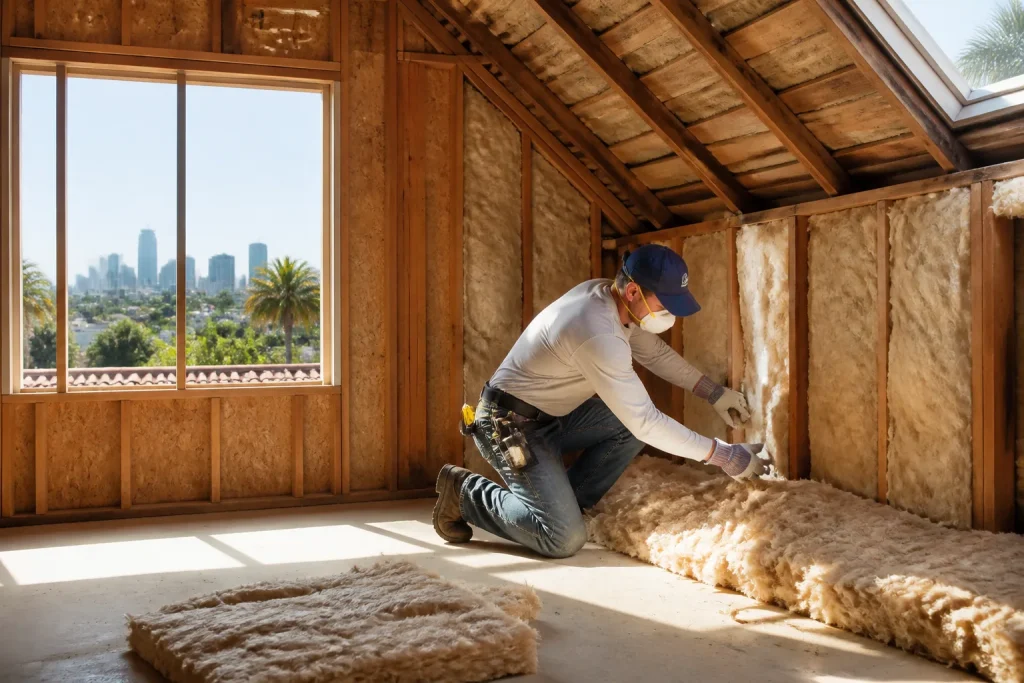
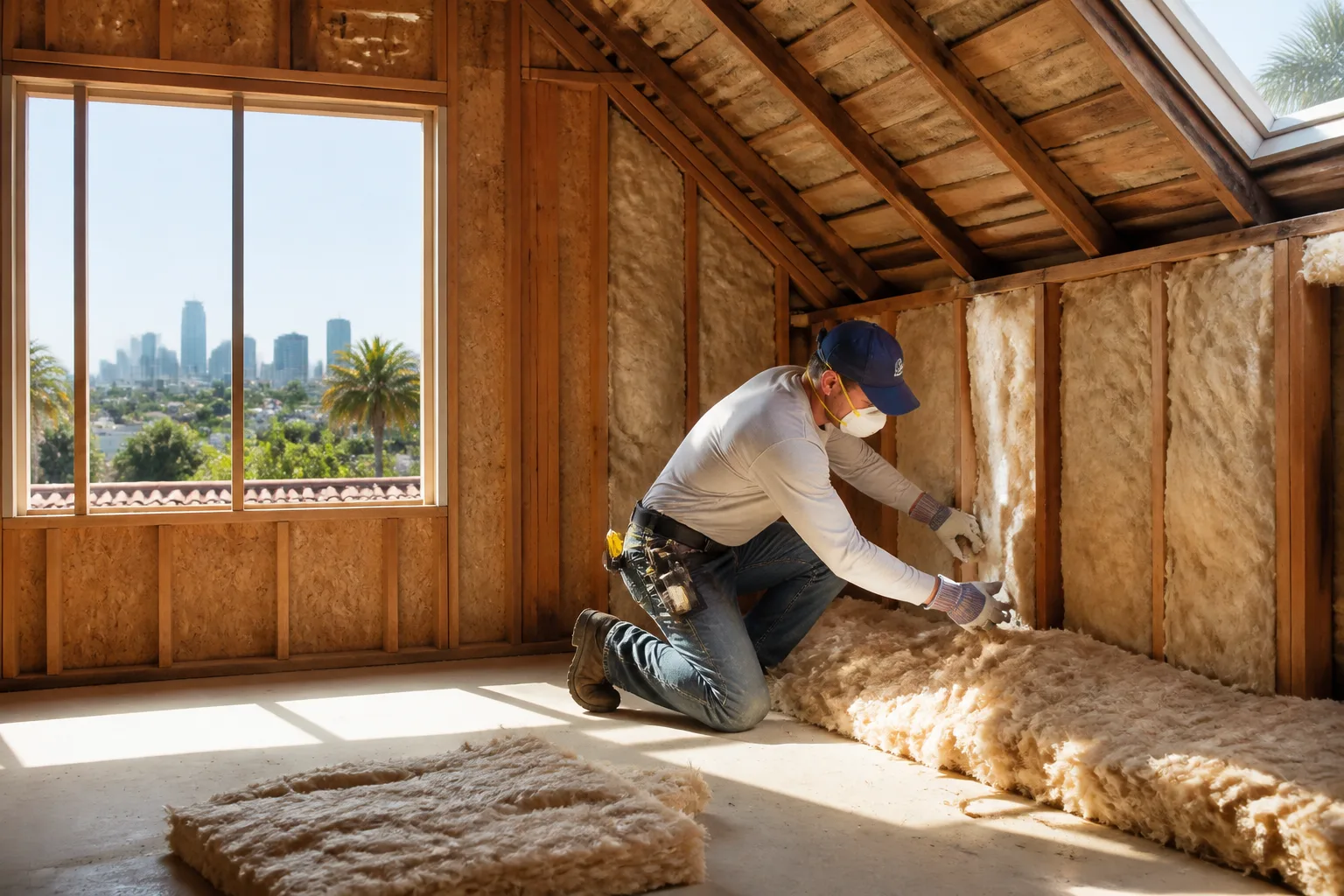
How to Choose the Right Insulation Company in Los Angeles
Choosing an insulation company in Los Angeles comes down to one thing: written commitments. Not the sales pitch, not the brochure, not the friendly handshake. A company that puts its price, its arrival window, its cleanup responsibility, and its guarantee in writing before any work starts is worth more than three companies with lower estimates and looser lips. Here’s how to tell them apart. If you’d rather skip the legwork, call Woolsey Attic Insulation at (325) 240-5411 and we’ll walk you through the exact questions to ask.
Key Takeaways
- Check the contractor’s license with the CSLB using their exact business name: an attic insulation contractor should hold a C-2 or B classification, and an expired or inactive license means you have little recourse if the work fails.
- Never accept a quote from anyone who hasn’t been inside your attic. A quote from a photo or a Google Earth shot is a guess.
- Insist on a line-item written scope of work before signing. A contractor who resists this is telling you something useful about how they handle surprises.
- Ask five specific questions on the first phone call: arrival window, cleanup process, written-scope policy, what happens if work runs over, and who shows up at the door.
- Local independently owned shops and national franchise territories carry materially different warranty risks in Los Angeles. Know which one you’re dealing with before you commit.
The CSLB License Check: Do This Before You Call Anyone
The California Contractors State License Board (CSLB) received more than 19,000 complaints in a recent year, and insulation work is one of the hardest categories to dispute after the fact. The reason is simple: once insulation goes into an attic, it disappears. You can’t see a bad install without opening the hatch and climbing up with a flashlight, and by the time you notice the hot spots upstairs, the contractor’s phone may have changed. That’s why the first move is to verify the license before you even schedule an estimate.
An attic insulation contractor in Los Angeles should hold either a C-2 (insulation and acoustical) license or a B (general building) license. Both allow the work, but the C-2 is specific to insulation. To check, go to the CSLB’s license lookup tool and type in the business name exactly as it appears on the company’s website or contract. Check the status first:
- Active: the contractor is legal to work right now. Good. Keep going.
- Expired or inactive: the contractor cannot legally perform work. Walk away, full stop. If something goes wrong, the CSLB has limited ability to help because the work was done without an active license.
- Revoked or suspended: this is a red flag the size of a garage door. No further conversation needed.
The CSLB check takes about 90 seconds. By the time you’ve finished reading this section, you could have checked two companies. It’s the single fastest way to eliminate the worst actors in the Los Angeles market, and it costs you nothing.
The Attic Inspection Is Non-Negotiable
Any company that quotes your attic insulation without physically entering your attic is guessing. We’ve watched this for over 20 years around Los Angeles, and the guess always works against the homeowner. Either the quote is too low because the estimator never saw the old wiring, the vermiculite, or the water-damaged decking, or the quote is padded because the estimator couldn’t see how much existing insulation was already up there and assumed the worst.
We ran into this exact situation in Silver Lake a few summers ago. A homeowner had a quote for $8,400 based on photos he’d sent over. When we climbed into the attic, we found six inches of old fiberglass still in decent shape in one section and a heat pump line running right through the area where the other company had planned to spray. The right job cost him about $3,900, not $8,400. That’s the difference between a guess and a look.
Here’s the standard you should hold in Los Angeles: the estimator arrives, puts on a mask and a headlamp, and goes into the attic. They measure the square footage. They check the depth of existing insulation. They look for air leaks around plumbing stacks, recessed lights, and the attic hatch. They note any moisture or electrical issues. Only after that do they write a price. If a company won’t do this, or quotes you after a video call and some photos, keep looking.
The Written-Scope Test: This Will Tell You More Than Any Review
Ask a contractor for a line-item written scope of work before you sign anything. That means:
- Exact type and brand of insulation material, with the R-value stated plainly.
- Square footage of the area to be insulated.
- Total installed price, including labor, equipment, and any disposal fees.
- What happens with old insulation: bagged and removed, or left in place and added to?
- What the crew does with the job site when they leave.
- The start date and the length of time the job will take.
- The specific warranty terms, in writing, with a start and end date.
A contractor who resists this is not being busy or old-school. He’s telling you he wants room to adjust the number at the door. In our experience across the Los Angeles basin, the gap between a verbal estimate and a written scope is where most insulation disputes are born. When the number is vague, the material brand is unspecified, and the cleanup responsibility is assumed, everything becomes a conversation after the fact. And you’re the one paying for that conversation.
Some specifics to watch for in Los Angeles: old attics here often contain vermiculite, and L.A. weather means moisture can show up near the eaves and vents. A real written scope will note these conditions. If the scope just says “install insulation” with no mention of what’s already up there, ask why.
Local Independent vs. National Franchise: What Los Angeles Homeowners Actually Need to Know
Los Angeles has a mix of local independently owned insulation shops and national franchise territories. Both can do good work. But they carry different risks for you, and the differences matter most when something goes wrong six months after the install.
A national franchise territory can change hands. The franchise owner who did your attic in 2024 may sell the territory in 2026, and the warranty service you were promised can get murky in the transition. The new owner didn’t do your job, didn’t price it, and may not have the same crew. Some national franchises handle this well. Others don’t. What you gain with a franchise is brand name recognition and often broader marketing reach, which can mean a larger pool of installers. What you may lose is the direct accountability that comes from dealing with the person who actually owns the company you paid.
Local independently owned companies in Los Angeles typically answer their own phone, keep their own crews, and stand behind their own work because their reputation lives and dies inside a few dozen zip codes. The owner’s name is on the license. When you call back about a problem, you’re not navigating a corporate escalation path, you’re talking to the person who signed your contract.
Neither model is automatically better. The question to ask is: who exactly stands behind this warranty, and will that person or entity still exist in Los Angeles in 365 days? Then get the answer in writing.
Five Questions to Ask on the First Phone Call
Before you schedule anyone in Los Angeles, run these five questions. They’ll filter out most of the contractors who cause headaches, and they take about three minutes total.
- “What’s your arrival window, and is it in writing?” A real company commits to a specific window, like Friday between 8 and 10 a.m., and puts it on the work order. If the answer is “we’ll let you know” or “sometime in the afternoon,” that’s a signal about how the rest of the job will run.
- “Who handles cleanup, and what does that mean?” Insulation work is dusty, and old fiberglass and debris can end up in your hallway, your garage, and your garden beds. A clear answer names the responsible party and the standard. It should be in the written scope.
- “What happens if the job runs over scope?” Sometimes an attic holds surprises: a nest, a leaky vent, a section of rotted decking. Ask how the contractor handles add-ons. The right answer is: they stop, call you, and get written approval for any change before doing the work.
- “Do you write the price before any work starts?” This is the doorway question. If they won’t put a written price in your hand before the first tool leaves the truck, do not book the job.
- “Who exactly will be in my home?” You want background-checked, uniformed technicians whose names you know before they arrive. If a company can’t tell you who’s coming, you don’t know who’s coming.
We answer every one of these questions with a specific policy at Woolsey Attic Insulation. Our crews are background-checked and uniformed, our cleanup standard is in writing, and our price is delivered before any work begins, every single job. That’s not a marketing line; it’s the way we’ve run things since Glenn Hartley started this shop in 2002.
Don’t Hire Based on the Lowest Bid
The Los Angeles insulation market is full of low bids. Some of them are honest; many are traps. The trap works like this: a contractor bids low to win the job, then discovers “unforeseen conditions” that weren’t in the scope, and the final price lands 30 or 40 percent above the original. Or the low bidder uses the cheapest material available and the homeowner never knows until the July heat hits the upstairs bedroom and the AC can’t keep up.
Insulation is a material-driven trade. The difference between open-cell spray foam and closed-cell spray foam is not subtle: closed-cell has roughly double the R-value per inch and acts as a vapor barrier, but it costs more, sometimes significantly more. When a bid seems too low, ask what material they’re actually installing and what R-value you’re getting. A specific material choice, like Rockwool stone wool or CertainTeed fiberglass, should be named in the written scope. If the bid just says “insulation,” that’s a blank check.
We stock and install eight different insulation product lines, including Icynene and Demilec spray foam, because the material should fit the house, not the other way around. A 1920s Spanish-style bungalow in Highland Park and a 2005 stucco track home in Porter Ranch need different approaches. The company you hire should explain that difference in plain English before you commit.
When to Call a Pro
If you’re reading this and thinking you’ll save money by blowing in a few bags of fiberglass yourself, that can work for a small patch job in an open attic. But the moment you’re dealing with a finished attic, a steep roof, old wiring in direct contact with insulation, or spray foam, this becomes a job for someone who does it weekly. Spray foam especially: it’s a two-part chemical reaction that requires proper PPE and precise mixing temperatures. Getting it wrong means off-gassing, poor adhesion, or a mess that costs more to clean up than the install would have cost in the first place. In Los Angeles, with our warm climate and older housing stock, there’s also the question of ventilation: an over-sealed attic without proper airflow can create moisture problems that damage the roof decking. A trained pro knows how to balance air sealing with ventilation. A first-time DIYer doesn’t know what they don’t know.
Related services in Los Angeles we handle every week: attic insulation and spray foam insulation. Both come with a written price before work starts and a written guarantee on the back end.
The Bottom Line
Choosing the right insulation company in Los Angeles is not about finding the lowest number. It’s about finding the contractor whose written commitments match their spoken ones. Check the CSLB license. Insist on a real attic inspection. Demand a line-item written scope. Ask the five questions. And understand who actually stands behind the warranty when the crew drives away.
At Woolsey Attic Insulation, we’re independently owned and operated under the Kingswell Guarantee: a written price before work starts, a committed arrival window, a clean job site, and a written guarantee on every job, with a free return visit if anything fails within 365 days. Glenn Hartley started this company in 2002 because he got tired of watching Los Angeles homeowners pay for promises that vanished the moment the invoice cleared. That’s the whole reason the name says Woolsey. Wool was the first insulation, so we keep the word in the name. If you’re in Los Angeles and you’re ready for an insulation estimate that actually means something, call (325) 240-5411. The estimate is free, the price is written, and a real person answers the phone.
Frequently Asked Questions
An insulation contractor in Los Angeles should hold a C-2 (insulation and acoustical) license or a B (general building) license from the California Contractors State License Board. Both classifications allow insulation work in the city. Verify the license status on the CSLB website using the company’s exact business name before scheduling an estimate. An active license is the minimum standard.
It depends on the condition of the existing insulation. If the insulation is less than a few years old, dry, and still meeting its R-value, a repair or targeted top-up may be all that’s needed, and that runs a few hundred to about $2,000 depending on square footage. If the insulation is compressed, wet, pest-damaged, or more than 20 years old, replacement is usually the better long-term value. A full attic insulation replacement in Los Angeles typically runs between $2,800 and $8,000 depending on attic size, material choice, and the condition of the existing assembly. Call (325) 240-5411 for an exact written quote on your attic.
Often, yes, for a repair or a targeted section. Full attic insulation projects are typically completed within one to two days once the written scope is approved. The best way to find out for your specific attic is to schedule an inspection. Woolsey Attic Insulation provides free estimates in Los Angeles, with a written price before any work begins.
Compare written line-item scopes, not just bottom-line numbers. A fair price names the material brand and R-value, the square footage, the labor, the disposal method, and the cleanup standard. If one quote uses a name-brand material like Rockwool or CertainTeed and another just says “insulation,” the cheaper quote may not be the better value. A written price protects you from door-step adjustments. Call (325) 240-5411 and we’ll help you compare.
Written by Glenn Hartley, Owner at Woolsey Attic Insulation, serving Los Angeles since 2002.
Need Insulation Help?
Call Woolsey Attic Insulation - licensed & insured, here with fast after-hours help in Los Angeles.
(325) 240-5411