
Top Signs You Need Insulation Service – Don’t Ignore These
You need insulation service when your top-floor rooms won’t hold a steady temperature, your AC seems to run constantly on mild Los Angeles days, or your summer electric bills climb year over year without a change in your habits. The problem is rarely the air conditioner itself. In our experience, it’s almost always heat moving through an under-insulated attic. If you’d rather not spend another season guessing, call (325) 240-5411 and we’ll tell you what’s actually going on up there.
Most homeowners think insulation problems announce themselves as drafts and cold floors. That’s the New England version. In Los Angeles, the failure runs the other direction: a hot attic pushes heat down through your ceiling all afternoon, your AC fights it until midnight, and you never once feel a draft. You just pay for it. Here’s how to spot the signs before another summer bills you into noticing.
Your Utility Bill Tells a Story the Thermostat Doesn’t
One of the clearest signs you need attic insulation in Los Angeles is hiding in twelve months of LADWP statements, not in anything you can see or feel. Pull your billing history and look at summer usage compared to winter. Every LA home runs the AC more in August than in January. That’s normal. What’s not normal is when your summer bills are three to four times your winter baseline while your thermostat settings haven’t changed year over year.
Here’s a concrete test that works better than comparing yourself to the house next door. Find your cooling degree days for Los Angeles for the past two summers. Degree days measure how hard the outside air is working against your house. If June 2025 and June 2024 had roughly the same degree days but your June 2025 usage jumped 18 percent, the difference wasn’t the weather. Something in the thermal barrier changed. In our experience, that something is almost always attic insulation that’s settled, compressed, or was thin to begin with.
We’ve walked Los Angeles attics where the original blown-in fiberglass from a 1990s build had settled to three inches in places. The homeowner’s AC wasn’t failing. It was running exactly as designed against an attic that was doing almost nothing to stop heat transfer. The bill was the only honest reporter in the house.
Your AC Runs Like It’s August Even When It’s 74 Outside
Air conditioning systems cycle. On a moderate Los Angeles afternoon, a properly sized system in a well-insulated home should run roughly 15 to 18 minutes per hour to hold temperature. If you’re sitting in a 74-degree living room on a 78-degree day and you hear the condenser kick on every 20 minutes, your attic is likely feeding heat into the house faster than the system can remove it.
Time your system for one afternoon. Set the thermostat to 74, close the windows, and note the start and stop times over a three-hour window. A cycle that runs 25 minutes or longer every hour on a day that isn’t genuinely hot points to attic insulation that’s no longer doing its job. The AC isn’t the variable. The heat load is. And in Los Angeles, the heat load comes from above.
This matters because a system running overtime isn’t just expensive. It wears out years early, and the fix isn’t a new compressor. It’s rebalancing the attic so the system can do the job it was sized for. The Kingswell Way starts with a written price for exactly that kind of work, before anyone climbs a ladder.
Signs You Can See: Warm Hatches, Blistering Paint, Sweating Ducts
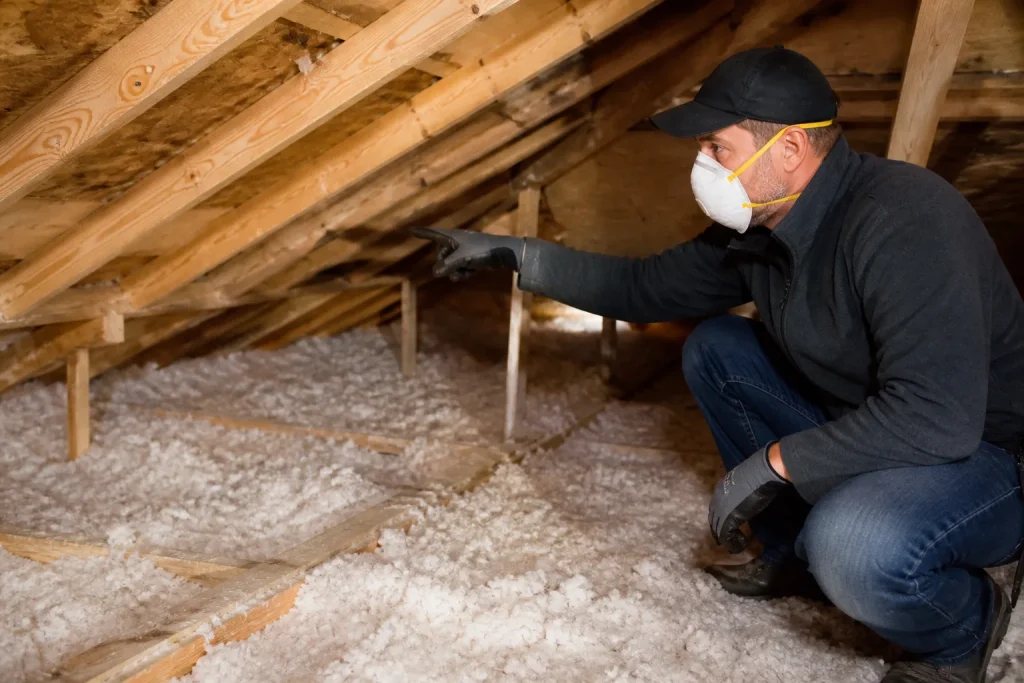
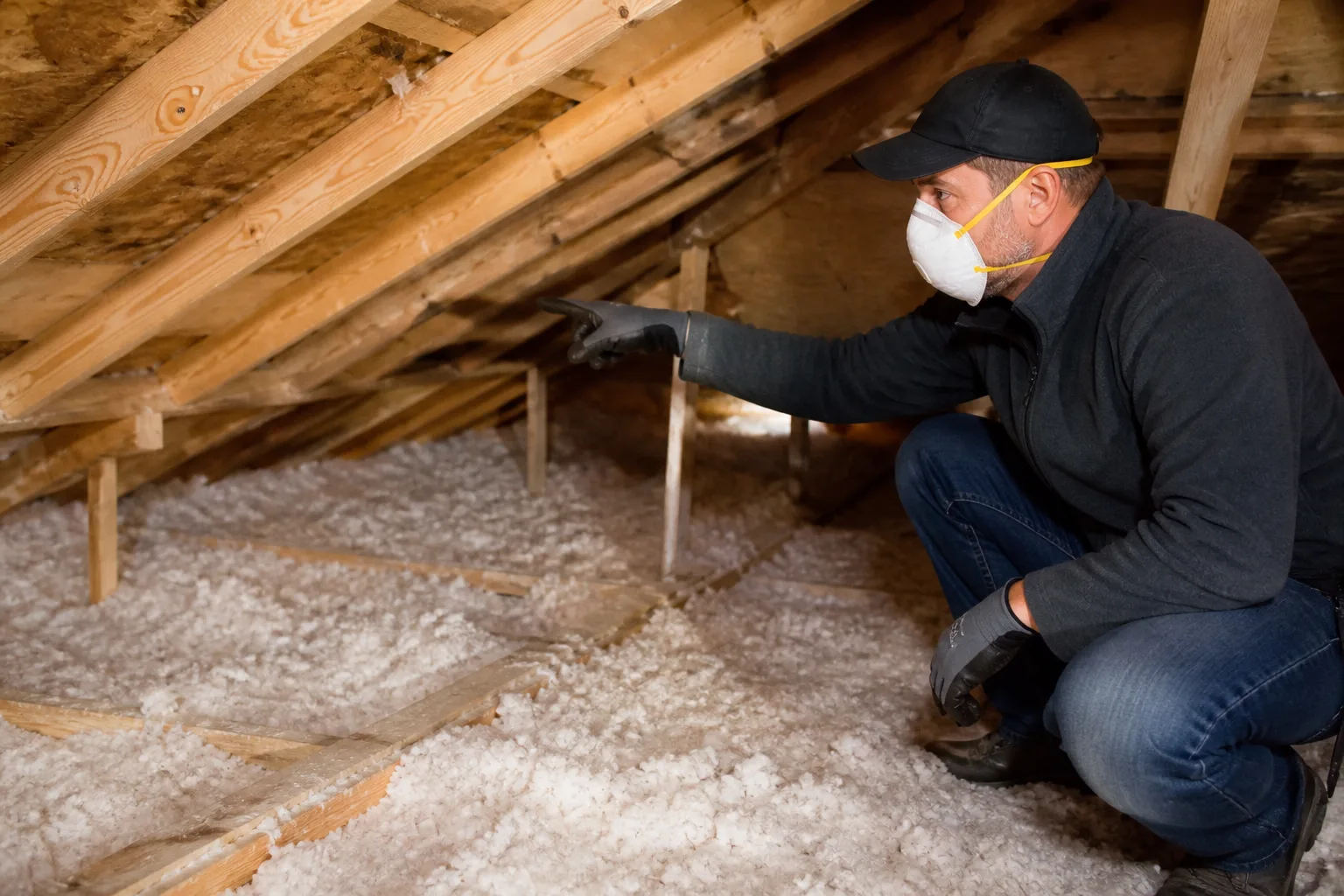
Some signs you need insulation service in Los Angeles are visible if you know where to look. Start with the attic access hatch. On a warm afternoon, place your palm flat against the hatch panel. It should feel roughly the same as the surrounding ceiling. If it’s noticeably warm, heat is pooling in the attic and the hatch itself is leaking conditioned air. A warm hatch means a hot attic. A hot attic means insufficient insulation above your living space.
Walk the top-floor rooms and look up. Blistering or peeling paint on ceilings, especially near the center of the room, is a classic Los Angeles signal of heat and moisture moving through the drywall. It’s often mistaken for a roof leak because it appears as bubbling. But a true roof leak follows rain. Blistering that worsens through dry summer heat is a thermal problem, not a water problem.
Check the ductwork if you can see it from a pull-down ladder. Ducts running through unconditioned attic space in Los Angeles reach brutal temperatures by mid-afternoon. If you see condensation on the exterior of those ducts in summer, you’ve got hot attic air meeting cold duct surfaces. That condensation drips, and in older homes it soaks into the insulation below, which then compresses and loses R-value. One problem leads to two. In our experience, duct sweating is a reliable early warning that the attic’s thermal boundary has failed.
Rodents in the Attic Are an Insulation Problem Wearing a Pest Problem’s Clothes
Pest activity in an attic is unpleasant on its own. But what Los Angeles homeowners miss is that rodents are a direct sign the insulation needs service. Rats and squirrels tunnel through blown-in fiberglass and cellulose, compressing it into dense mats and leaving trails of urine and droppings that degrade the material. Insulation that’s been tunneled through and soiled does not perform at its rated R-value. Not even close.
We’ve pulled old batt sections out of Los Angeles attics where a single squirrel nest had reduced the effective thermal barrier to almost nothing across a four-foot square area. The homeowner knew about the squirrel. They didn’t know the squirrel had quietly disabled their attic’s insulation. By the time we arrived, their bedroom directly below that nest ran six degrees warmer than the hallway.
The sequence matters here. You can’t simply set traps and call it done. Compressed, contaminated insulation has to be removed and replaced with fresh material installed to current standards. That’s where brands like CertainTeed and GreenFiber come in. We work with eight insulation manufacturers so the material recommendation fits the home’s construction and budget, not whatever happens to be on the truck that week.
Your Attic Was Insulated Before 2005: Here’s What That Means
Insulation settles. Blown-in fiberglass and cellulose both lose depth over time as gravity compresses them, and every inch of lost depth is lost R-value. An LA attic insulated before 2005 is now, at minimum, 20 years into that settling process. California’s Title 24 energy standards have also tightened significantly since then. The practical result: a home that met code when it was built in 1998 is likely well below today’s minimum for attic insulation performance.
What does that gap cost you? Consider this. Current California guidance recommends R-38 or higher for most attics, depending on the climate zone. A 1990s-era attic in Los Angeles often starts at R-19 or less, and years of settling may have knocked it below R-13 in spots. That’s roughly a third of the thermal resistance the house should have. Every hour your AC runs, it’s fighting the difference between what was installed and what’s actually up there.
None of this means old insulation was defective. It means insulation is a wear item with a service life, not a permanent fixture. If your attic hasn’t been inspected since the Clinton administration, the question isn’t whether it’s underperforming. It’s by how much.
When to Call a Pro
Some of these checks you can do from the hallway with a palm and a notepad. Others need a ladder, a headlamp, and someone who knows what compressed fiberglass looks like versus healthy coverage. If you’ve got rodent damage, visible settling, condensation on ducts, or a bill pattern that jumped without explanation, that’s the moment to bring in a professional. Attic work in Los Angeles involves navigating roof lines, avoiding recessed lighting fixtures improperly buried in insulation, and assessing whether existing material is safe to leave in place. It’s not a job where guessing pays off.
If you’re in the Los Angeles area, we handle attic insulation and spray foam insulation exclusively. That focus is deliberate. We’re not an HVAC company that also does insulation. We’re an insulation company that understands exactly how your attic affects the HVAC system you already have. You can see more about our approach on the Woolsey Attic Insulation home page or read specifics on Attic Insulation in Los Angeles and Spray Foam Insulation in Los Angeles.
The Bottom Line
Insulation failure in Los Angeles rarely announces itself with a draft. It hides in utility bills that climb without reason, an AC that cycles too long on mild days, a warm attic hatch at 4 p.m., paint that blisters on top-floor ceilings, and rodent damage that quietly destroyed the thermal barrier years before you saw a single dropping. The earlier you catch these signs, the cheaper the fix and the sooner your HVAC system gets to run the way it was sized to run.
If any of this sounds familiar, we’d rather look at your attic than have you guess for another summer. Every job starts with a written price before any work begins, and every installation includes our 365-Day Done Right Promise in writing. If you’re in Los Angeles and want a straight answer, Woolsey Attic Insulation offers free estimates. Call (325) 240-5411 and we’ll come take a look.
Frequently Asked Questions
Bad attic insulation shows up in specific ways: top-floor rooms that run noticeably warmer than the rest of the house, an AC that cycles more than 15 to 18 minutes per hour on a mild Los Angeles day, ceiling paint that blisters in summer, and utility bills that climb without a matching change in thermostat settings. A professional attic inspection confirms the diagnosis in about 30 minutes. Call (325) 240-5411 if you’d like us to check yours.
Most attic insulation jobs in Los Angeles run between $1,500 and $4,500 depending on attic size, access difficulty, and whether old material needs removal first. Spray foam costs more than blown-in fiberglass or cellulose. What you should demand regardless of material is a written price before any work starts. That’s how we work on every job, no exceptions. Call (325) 240-5411 for an exact number for your attic.
In many cases, yes. Basic blown-in insulation on an accessible attic can be completed same-day in Los Angeles. Jobs requiring old insulation removal, rodent remediation, or spray foam installation typically take longer. When you call us, we’ll give you a clear window for when we can start and how long the work will take, in writing, before you commit to anything.
It depends on the condition. If the existing insulation is dry, uncontaminated, and simply settled, topping it off with additional material is the most cost-effective fix. If it’s been compressed by rodents, soaked by condensation or roof leaks, or contaminated with pest waste, replacement is the honest answer. Replacing bad insulation with material like CertainTeed or GreenFiber installed to current R-value standards costs more upfront but performs correctly. Call (325) 240-5411 and we’ll tell you honestly which path your attic needs.
Written by Glenn Hartley, Owner at Woolsey Attic Insulation, serving Los Angeles since 2002.
Need Insulation Help?
Call Woolsey Attic Insulation - licensed & insured, here with fast after-hours help in Los Angeles.
(325) 240-5411