
Owens Corning Attic Insulation in Los Angeles: A Homeowner’s Guide
That pink fiberglass batt at Home Depot and the blown-in fiberglass an insulation contractor installs both carry the Owens Corning name, but they’re almost two separate buying decisions. R-values per inch, install methods, and long-term performance differ enough that knowing which product you’re actually getting quoted for changes the job, the price, and the comfort you’ll feel in July. If you’d rather skip the research and just get a straight answer for your house, call (325) 240-5411 and we’ll walk you through it free.
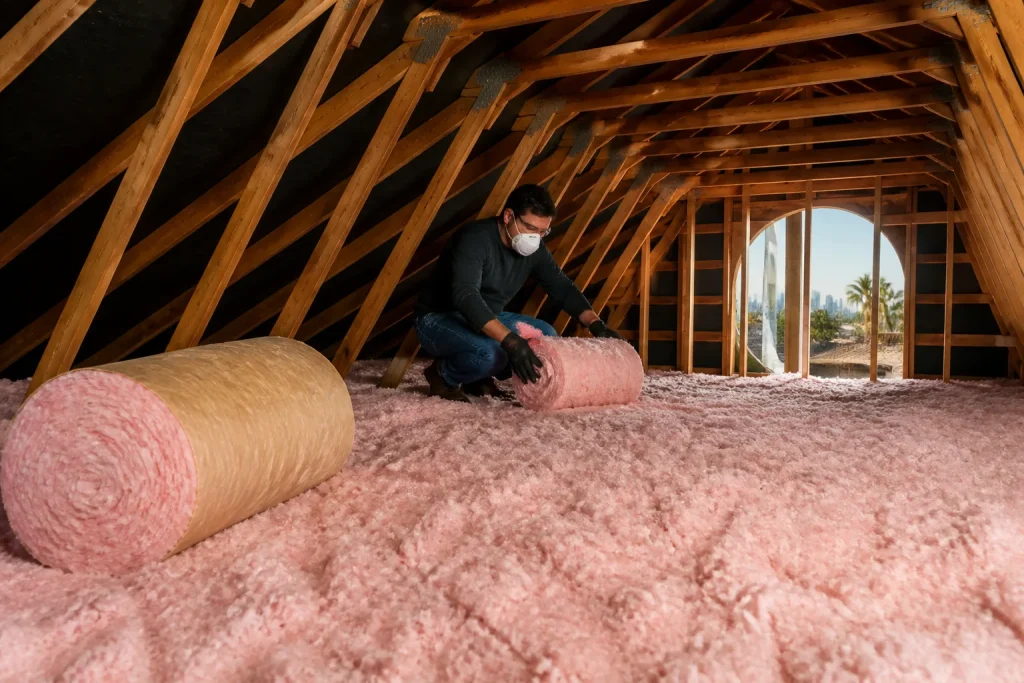
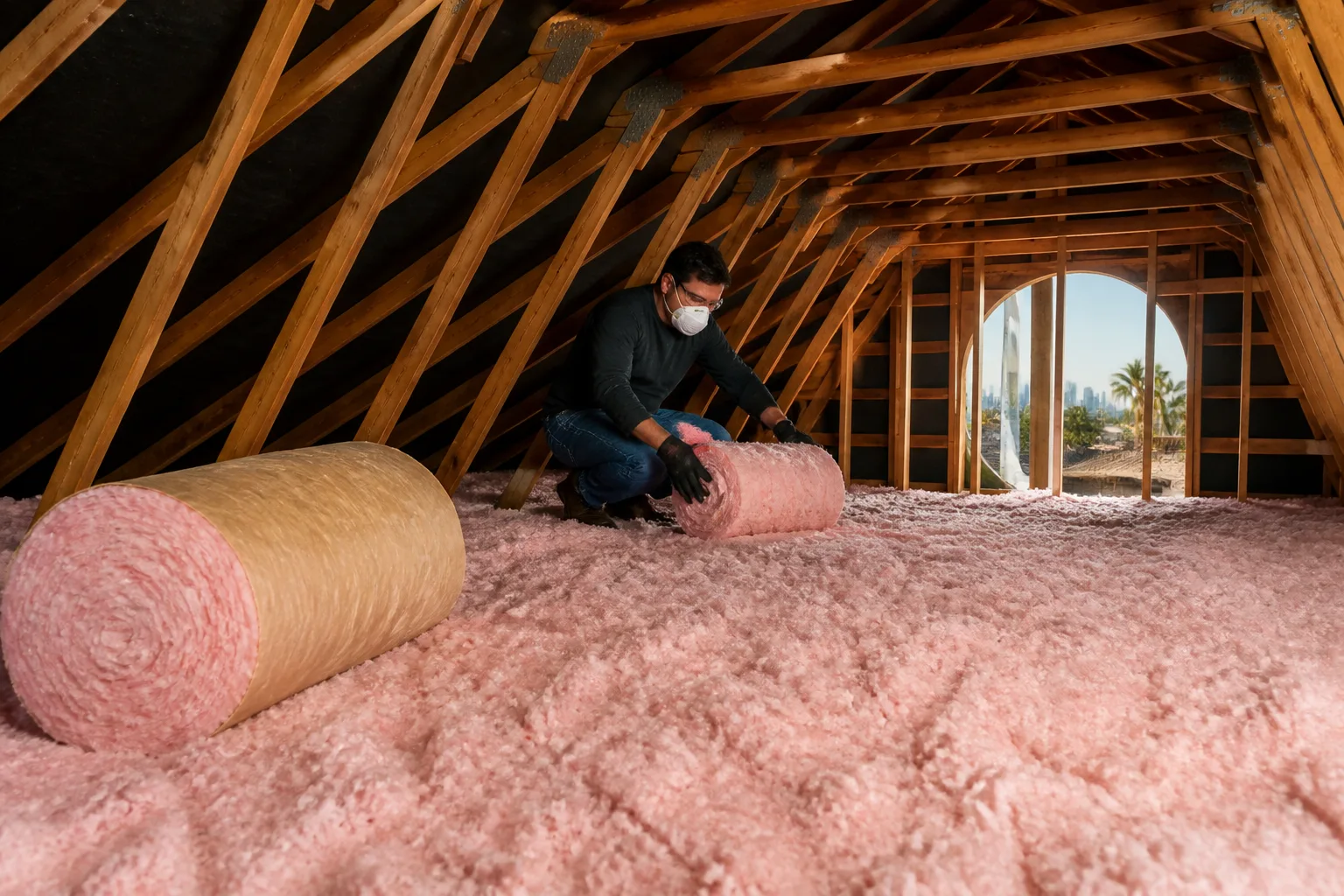
Most Los Angeles homeowners know Owens Corning from those pink plastic-wrapped rolls in the big-box aisle. That’s fair. But the Owens Corning product line a professional insulation contractor reaches for on an LA attic job is usually AttiCat blown-in fiberglass, not the batts. Understanding the difference between those two materials, what code actually requires in Los Angeles County, and what to look for in a contractor quote will save you from paying for R-38 and getting R-25.
What Owens Corning Products Are Actually Available for LA Attics
Owens Corning makes two families of fiberglass insulation that matter for a Los Angeles attic: batts and blown-in. Batts come in pre-cut pink rectangles, usually 15 or 23 inches wide to fit between standard framing. Blown-in AttiCat comes as compressed pucks you feed through a machine that fluffs them into loose fill. The two install differently, price differently, and perform differently in a vented Southern California attic.
The key number homeowners ask about is R-value per inch. Owens Corning batts range from R-13 to R-30 depending on thickness, and most are R-3.1 to R-3.7 per inch. AttiCat blown-in fiberglass settles around R-2.7 to R-3.2 per inch once installed, but because it’s blown, you control how deep it goes. That depth flexibility is exactly why blown-in is the more practical path to hitting the R-38 minimum Los Angeles County requires under Title 24. Batts top out at R-30 in most residential widths, and trying to layer them to reach R-38 against an attic floor creates gaps and compression that eat the R-value you paid for.
We’ve pulled plenty of batt jobs out of LA attics where the fiberglass looked fine from below but was compressed under flooring boards, pushed tight around can lights, or just never made full contact with the ceiling drywall. Blown-in doesn’t have that problem. It fills irregular cavities, settles into the joist bays, and covers everything. For most Los Angeles homes, especially ones built before batt insulation was code, blown-in AttiCat is the right call.
How Pink Fiberglass Actually Performs in LA’s Climate
Here’s something most manufacturer marketing glosses over: fiberglass insulation is tested and marketed primarily for cold-climate heating seasons. The pink stuff’s job in Minnesota is keeping heat in. In Los Angeles, where summer attic temperatures regularly climb past 140 degrees, the priority flips. You’re not keeping heat from leaving the house; you’re keeping radiant heat from the roof deck out of the living space below.
Fiberglass works in LA, but it works differently than in cold climates, and that difference matters when you’re comparing quotes. Blown-in fiberglass is a thermal barrier, not an air barrier. It slows conductive heat transfer, but it doesn’t stop air from moving through it. In a vented Los Angeles attic, that’s usually fine because the attic itself is designed to breathe. Ridge vents, eave vents, and gable vents pull hot air out before it sits on the insulation. What fiberglass won’t do is seal small gaps at drywall penetrations or electrical boxes, which is where some LA homeowners notice warm spots.
Cellulose, by comparison, has a higher density and resists air movement better. It’s why some contractors in the Los Angeles market prefer it for older homes with lots of small air leaks. But cellulose is also heavier, dustier during install, and more vulnerable to moisture problems if a roof leaks. Fiberglass is hydrophobic, lighter, and won’t settle as much if blown to the correct depth. For most dry, warm LA attics, fiberglass is the simpler, lower-risk material. For houses with specific air-infiltration issues, we’ll sometimes recommend pairing blown-in fiberglass with air sealing at the ceiling plane before any insulation goes down.
Title 24 and the R-38 Requirement: What Depth Actually Means
Los Angeles County falls under California’s Title 24 energy code. For attic insulation in homes built before current code, the minimum requirement in the LA climate zone calls for R-38 at the ceiling. That’s not a suggestion, and it’s not what most older LA homes actually have. Homes built in the 1950s through 1970s, especially in neighborhoods like Northridge, Westchester, or the Fairfax district, often have R-19 or less sitting in the attic, sometimes original and sometimes blown thin decades ago.
To hit R-38 with Owens Corning AttiCat blown-in fiberglass, you need roughly 12 to 14 inches of settled depth. We’ll say it again: settled depth. Blown-in fiberglass fluffs up when it leaves the machine, then settles over the next weeks. A contractor who blows to 12 inches and calls it done is leaving you with roughly 10 to 11 inches after settling, which lands around R-30 to R-33, not R-38. The labeled R-value on the quote should state what you’re getting after settlement, not what the machine spits out on day one.
This is the most common short-install we see in Los Angeles attics. The bags say R-38, the invoice says R-38, but the settled depth measures out to R-30. The fix is simple to specify: have the contractor note the installed depth in the quote, have them mark the attic joists with a depth marker before blowing, and take a photo when the job is done. Any contractor who won’t do all three is one to skip. Attic insulation in Los Angeles doesn’t have to be a guessing game, and if the contractor you’re talking to makes it one, that’s useful information.
Fiberglass vs. Cellulose for Los Angeles Homeowners: The Honest Trade-offs
When we quote an LA attic job, homeowners usually ask us to compare fiberglass against cellulose. Both hit R-38. Both are common in Southern California. But they behave differently, and the choice matters more than most guides let on.
Fiberglass, Owens Corning included, is lighter per R-value, installs with less dust, won’t absorb water the way cellulose does, and won’t support moisture-driven settlement. The trade-off is that it’s more transparent to air movement. In a leaky old California bungalow with unsealed ceiling penetrations, fiberglass alone may not fix a comfort problem because attic air can still drift through the gaps and around the insulation. Cellulose fills tighter and resists airflow better. It’s heavier, messier during install, and can hold moisture if your roof leaks onto it. It’s also usually priced slightly lower per R-value in the LA market.
Our honest take, after twenty-plus years of Los Angeles attics: fiberglass is the smarter default for most dry-climate homes, and it’s what we’d put in our own house here. If air leakage is the real problem, the solution is air sealing first, then fiberglass to the correct depth. Cellulose has its place in specific situations, but for most LA homeowners comparing the two, fiberglass’s moisture safety and cleanliness win out. The material choice should follow a look at the attic, not a brand preference. That’s why we work with Owens Corning, Johns Manville, Knauf, Rockwool, CertainTeed, Icynene, Demilec, and GreenFiber. The right answer for a 1920s attic in Highland Park isn’t automatically the right answer for a 1990s tract home in Porter Ranch.
What to Look for in a Contractor Quote for Owens Corning Insulation in Los Angeles
If the contractor is bidding Owens Corning, the quote should tell you exactly which Owens Corning product you’re getting and how much of it. “R-38 blown-in fiberglass” isn’t specific enough. You want:
- The product name – AttiCat if it’s blown-in Owens Corning, not “pink insulation” and not an unspecified “fiberglass.”
- The installed depth in inches – Written on the quote, not estimated verbally. For AttiCat to hit R-38, that number needs to be 12 to 14 inches settled.
- Coverage area in square feet – So you can compare the price per square foot across bids.
- Baffles and air sealing – Does the quote include keeping eave vents clear and sealing the big bypasses before blowing? If not, the quote is cheaper for a reason.
- The settled R-value in writing – If it says “R-38 installed,” ask them to write that it’s R-38 after settlement and that they’ll verify depth with a marked ruler or gauge.
We’re not saying every contractor who skips these details is trying to short you. Some genuinely don’t know their own math. But you should still require the written detail. It’s your attic and your utility bill. This is also the point where the Kingswell Way comes in: a written price before any work starts, a real arrival window, a clean job site, and a written guarantee on the work, with a free return visit if anything fails within the guarantee period. That’s 365 days, in writing, on every job. No door-step price changes. No voicemail roulette.
If you’re not confident reading an attic insulation quote, or you want a second pair of eyes on one you’ve received, we offer free estimates. Call (325) 240-5411 and a live person answers, any hour. We’ll tell you what we’d recommend and put the number in writing before we leave.
The Bottom Line
Owens Corning makes solid fiberglass insulation, but the retail batts and the professional blown-in AttiCat product are different materials with different installed R-values. In Los Angeles, code requires R-38 at the attic ceiling, and hitting that number honestly means 12 to 14 inches of settled depth. Fiberglass makes sense for most dry LA attics, cellulose has its place, and the deciding factor should be your house, not a truck full of whatever the contractor stocks.
If you’re in Los Angeles and need attic insulation, Woolsey Attic Insulation home is where you’ll find us. Free estimates, written pricing, and no pressure. Call (325) 240-5411 to schedule. If you’re comparing blown-in fiberglass against spray foam, see spray foam insulation in Los Angeles for the honest breakdown of when foam earns its premium and when it doesn’t.
Frequently Asked Questions
Most Owens Corning AttiCat blown-in jobs in Los Angeles run between $1,200 and $3,500 depending on attic square footage, existing insulation depth, and whether air sealing is included. We give a written price before any work starts, so call (325) 240-5411 to get your exact number.
Owens Corning is well-known and makes a consistent fiberglass product, but “better” depends on the job. We install Owens Corning alongside Johns Manville, Knauf, Rockwool, CertainTeed, Icynene, Demilec, and GreenFiber so we can match the material to the house. For most Los Angeles attics, AttiCat blown-in fiberglass is a reliable way to hit R-38.
In many cases, yes. An average-sized LA attic with blown-in AttiCat insulation takes about half a day to insulate once access is set. We answer phones 24/7, so call (325) 240-5411 to see how soon we can get to your neighborhood.
If you already have some insulation, the job usually costs less than starting from bare drywall because we’re topping off rather than starting fresh. Most top-off jobs in Los Angeles land between $900 and $2,200. The only way to know your number is a quick attic measurement, which we do free. Call (325) 240-5411.
Written by Glenn Hartley, Owner at Woolsey Attic Insulation, serving Los Angeles since 2002.
Need Insulation Help?
Call Woolsey Attic Insulation - licensed & insured, here with fast after-hours help in Los Angeles.
(325) 240-5411