
Spray Foam Insulation: Repair or Replace? How Los Angeles Homeowners Decide
Most spray foam problems in Los Angeles homes don’t require a full tear-out. They require a targeted fix. The honest answer to “repair or replace” depends on one thing: what the foam is actually doing. A quarter-inch shrinkage gap along a joist is usually a simple fill job. Two inches of delaminated open-cell foam that has wicked moisture behind a roof deck is a replacement. If you’d rather skip the diagnosis and get a straight answer, call (325) 240-5411 and we’ll take a look.
First, Know What Kind of Foam You Have
Spray foam comes in two basic forms: open-cell and closed-cell. Open-cell foam is soft, spongy, and roughly half the price per board foot. It’s typically installed in attics and walls where sound dampening and air sealing matter more than maximum R-value per inch. Closed-cell foam is dense, rigid, and acts as both an air barrier and a vapor barrier. In Los Angeles, closed-cell is common on roof decks and rim joists where moisture resistance matters.
Why does this matter for the repair-or-replace question? Because the two foam types fail differently. Open-cell foam absorbs water. Closed-cell foam doesn’t. Pull back a section of open-cell foam that has been exposed to a roof leak or persistent condensation and you’ll find it heavy, darkened, and sometimes crumbling. That’s not a repair situation. That’s removal.
Closed-cell foam, by contrast, rarely absorbs moisture. Its failures tend to be mechanical: shrinkage gaps at the edges, or sections that have pulled away from the substrate because the surface wasn’t properly prepared before installation. Those are often fixable.
The Three Failure Types You’ll Actually See
In our experience across Los Angeles attics, spray foam failures fall into three buckets. Knowing which one you’re dealing with tells you whether to repair or replace.
1. Shrinkage gaps. Foam cures in seconds, but it continues to cure and shrink slightly over the following weeks and months. A gap of a quarter-inch to a half-inch between the foam and a joist or rafter is common, especially in attics that hit 140 degrees in August. That gap breaks the air seal. The fix is straightforward: install a bead of compatible closed-cell foam into the gap. No tear-out needed.
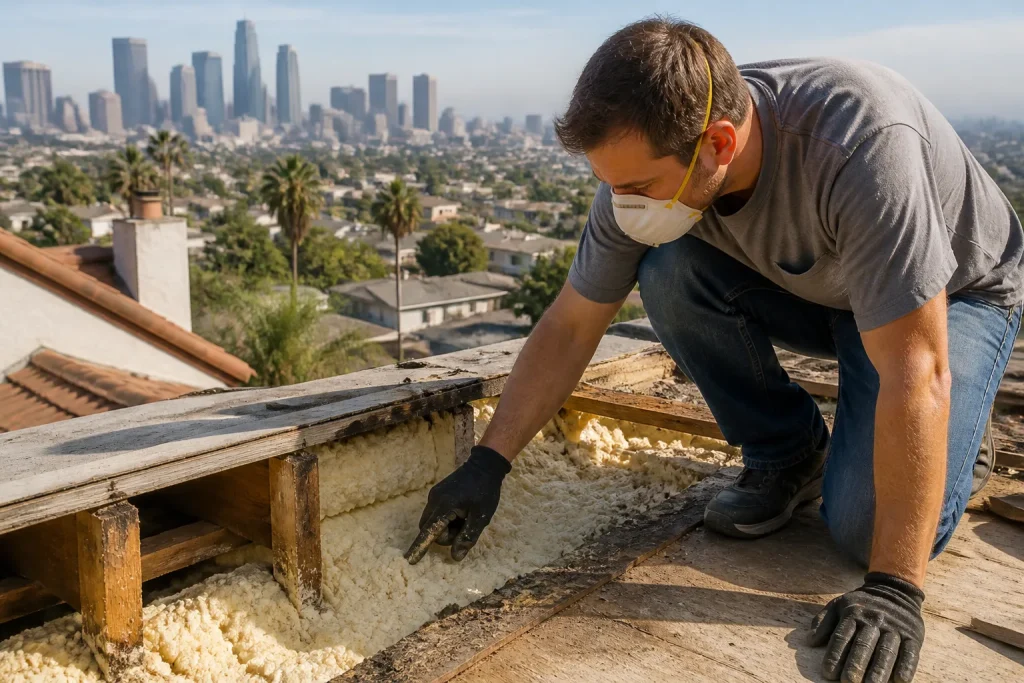
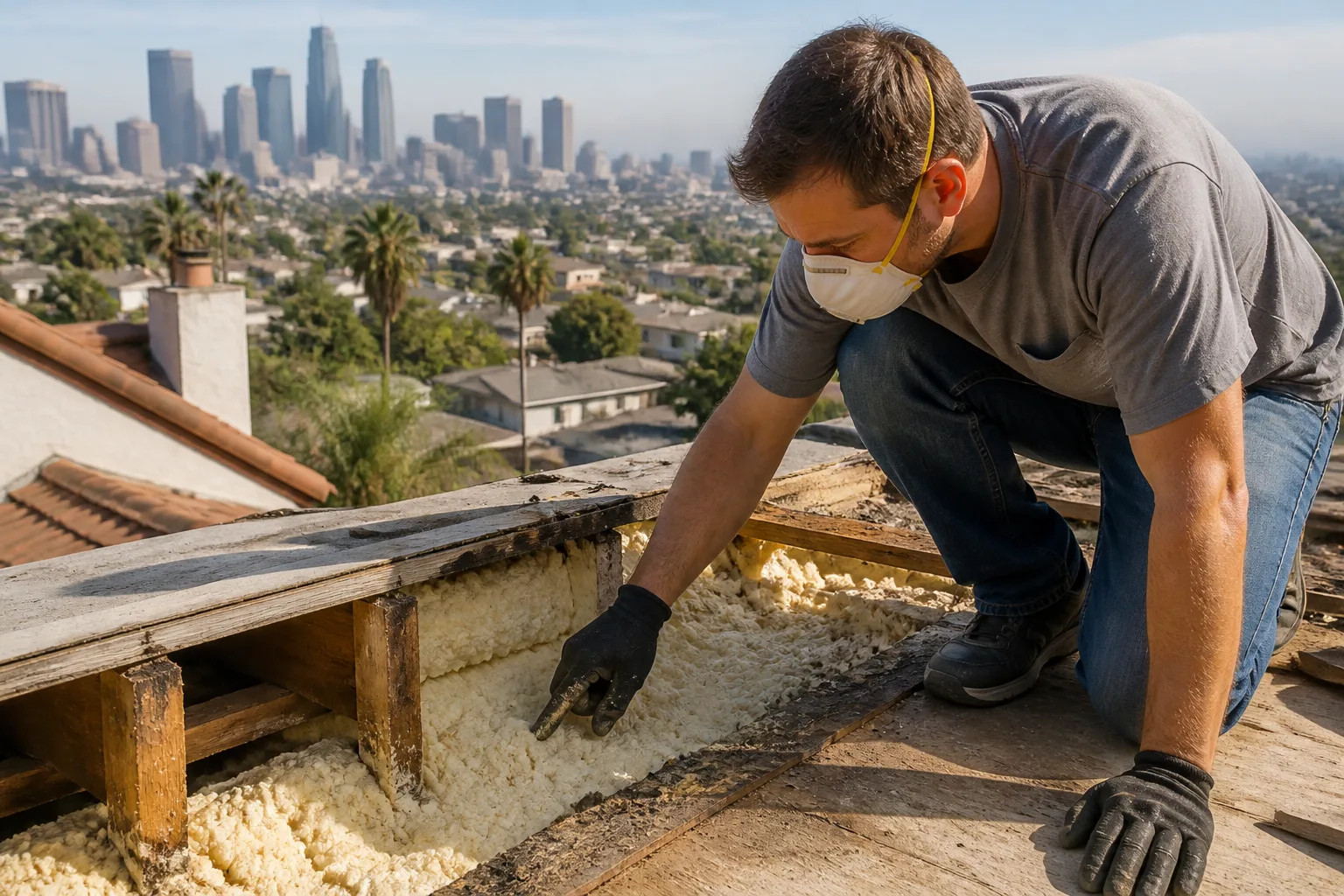
2. Delamination from the substrate. This is where a section of foam has separated from the wood it was sprayed onto. We see this most often on roof decks where the installer sprayed over dusty or damp wood. The foam didn’t bond correctly on day one, and over time the whole section peels away. If the detached area is localized and the foam itself is dry and intact, you can often remove just that section, prep the surface properly, and re-spray. Full replacement is overkill for a six-square-foot delamination.
3. Moisture-saturated open-cell foam. This is the one that justifies replacement. Open-cell foam that has absorbed water loses its R-value and becomes a habitat for mold. You can’t dry it out effectively, and you can’t just spray over it. The saturated section has to come out. And here’s the key question a good contractor will ask: where did the water come from? If the leak that soaked the foam hasn’t been fixed, new foam will fail the same way.
How Much Does Spray Foam Repair Cost in Los Angeles?
Repair pricing in Los Angeles runs lower than full replacement, but it’s not pocket change either. You’re paying for material, prep work, and the skill to match the existing foam type correctly. Here’s a realistic breakdown:
- Small shrinkage gap fill (under 10 linear feet): $200 – $600
- Localized delamination repair (under 50 square feet): $800 – $1,800
- Moisture remediation and partial removal (100 – 300 square feet): $2,500 – $6,000
- Full attic spray foam replacement (1,000 – 1,500 square feet): $6,000 – $14,000
Those ranges reflect what we see in neighborhoods from Sherman Oaks to Pasadena. The exact number for your home depends on foam type, accessibility, and how much prep the existing surface needs. At Woolsey Attic Insulation, you get a written price before any work starts. No door-step adjustments, no “we found something extra” phone call three hours into the job.
For context on broader attic work, see Attic Insulation in Los Angeles.
What LA’s Climate Does to Spray Foam
Los Angeles doesn’t get cold, but it does get hot. Attic temperatures in the San Fernando Valley routinely climb past 130 degrees in July and August. At night, temperatures drop 40 to 50 degrees. That daily cycle forces every material in your attic to expand and contract, including spray foam.
Foam that was installed correctly handles this movement. Closed-cell foam is rigid enough to hold its shape while flexing at the bond line. Open-cell foam is flexible enough to absorb the movement without cracking. So when does thermal movement indicate a problem?
If you see uniform hairline cracks along the surface of closed-cell foam, that’s usually cosmetic. The foam is doing its job. If you see persistent gaps that open and close with the seasons at the intersection of foam and framing, that points to a bond failure or inadequate foam thickness at the edges. If you see sections of open-cell foam that have darkened or feel damp to the touch in the morning, you’re looking at condensation, and that’s a moisture management problem that foam alone won’t solve.
A quick story: we pulled a section of open-cell foam out of a garage ceiling over in El Sereno last year where the foam had absorbed so much moisture that it sagged under its own weight. The homeowner assumed the whole garage ceiling needed new foam. Turned out the real problem was a bathroom exhaust vent that terminated inside the garage instead of outside. We replaced about 80 square feet of foam and the vent issue got corrected. The rest of the installation was fine. That’s the difference a real diagnosis makes.
For a deeper look at how spray foam performs in LA’s specific climate, visit our Spray Foam Insulation in Los Angeles page.
When Repair Is the Legitimate Answer
Repair isn’t a compromise. Done properly, it restores the air seal and thermal performance of the original installation. Here are the conditions where we recommend repair over replacement:
- The failing area is localized, not systemic. One bad section of foam in an otherwise solid installation is a repair.
- The foam is dry. No discoloration, no odor, no weight gain from absorbed moisture.
- The original foam thickness meets the R-value target for your space. If the original installer sprayed a proper 5.5 inches of open-cell or 3 inches of closed-cell, the foam is doing its thermal job everywhere except the failed section.
- The substrate is sound. If the wood behind the foam is dry and structurally intact, re-bonding new foam to it is straightforward.
- The gap is accessible. Shrinkage gaps along exposed joists or rafters are quick work. Gaps buried behind drywall are a different story.
Adding closed-cell foam over a shrinkage gap is both thermally and structurally sound when the existing foam around the gap is bonded well. The new foam locks into the old and restores the continuous air barrier. We use materials from brands like Demilec and Icynene, which bond reliably to existing closed-cell foam when surface prep is done correctly. The brand matters less than the prep. A clean, dry, dust-free surface is what makes the repair hold.
When Replacement Is the Honest Answer
Some foam installations can’t be saved. Recognizing the difference is what separates a trustworthy assessment from a quote that jumps straight to a five-figure tear-out. Here’s when replacement is genuinely warranted:
- Moisture has penetrated open-cell foam. Once open-cell foam has absorbed water, its insulating value drops and mold becomes a real risk. The saturated section has to come out. No amount of patching fixes wet foam.
- The original installation was too thin. Some LA homeowners discover their attic was sprayed with two inches of open-cell foam when the space needs five or more to meet code. That’s not a failed installation in the traditional sense, but it’s underperforming. Adding more open-cell foam on top is sometimes possible. If it’s wet or deteriorated, it’s a start-over job.
- Delamination is widespread. If foam is peeling away across most of the roof deck or along multiple joist bays, the original bond failed everywhere. Patching section after section costs more than a clean replacement.
- The foam is brittle and crumbling. Spray foam exposed to prolonged UV light degrades. We occasionally see attic installations where skylights or vents let direct sun hit the foam for years. That foam turns brown and crumbly. It’s done.
If a contractor hands you a replacement quote without climbing into the attic and physically examining the foam, that’s a red flag in our book. A legitimate assessment involves poking at the foam, checking moisture levels, measuring the thickness, and identifying the root cause of the failure. If the quote skips diagnosis and jumps straight to “we need to remove everything,” get a second opinion. The second opinion might tell you the same thing, but at least you’ll know why.
How to Read a Repair or Replace Proposal
Los Angeles homeowners get handed a lot of insulation quotes. Some are detailed and honest. Others are one page with a number at the bottom. Here’s what a trustworthy written assessment includes:
- A specific description of the failure. “Open-cell foam in the northeast quadrant of the attic has absorbed moisture and is darkened.” Not “insulation is old and needs attention.”
- Square footage of the affected area. Numbers. Measured, not eyeballed.
- Root cause identified. A leak, a vent issue, condensation from an unsealed attic hatch, or a bond failure. If the proposal doesn’t address why the foam failed, the person writing it probably doesn’t know.
- A line-item breakdown. Material, labor, disposal, and any prep work listed separately.
- The guarantee in writing. At Woolsey, every repair and installation includes the Kingswell Guarantee: a written price, a committed arrival window, a clean job site, a written guarantee on the work, and a free return visit if the repair fails within 365 days.
A proposal that reads “remove and replace all attic insulation: $12,400” with no explanation of what’s actually wrong should get filed in the recycling bin. That’s a sales number, not an assessment.
When a job gets complicated, whether it’s a full removal or a tricky partial repair, we lean on materials from manufacturers like CertainTeed and GreenFiber for attic work alongside spray foam products from Icynene and Demilec. We work with eight brands total, which means the material recommendation fits the house, not the warehouse inventory.
The Bottom Line
Most spray foam failures in Los Angeles are partial, local, and repairable. Shrinkage gaps get filled. Delaminated sections get re-sprayed. What genuinely requires replacement is moisture-saturated open-cell foam, widespread bond failure, or an installation that was too thin to begin with. The fastest way to know which situation you have is to get someone in the attic who will show you the problem before quoting a number.
If you’re in Los Angeles and you’re staring at a quote that either feels too big or skips the diagnosis entirely, give us a call. Woolsey Attic Insulation offers free estimates. You’ll get a written price before any work starts, and the number won’t move when the crew shows up. Call (325) 240-5411 and tell us what you’re seeing. We’ll tell you straight whether it’s a repair or a replacement.
Frequently Asked Questions
Yes, in most cases spray foam can be repaired rather than replaced. Shrinkage gaps, localized delamination, and small sections of dry, deteriorated foam can all be treated with targeted fixes using compatible closed-cell foam. Full replacement is only necessary when open-cell foam has absorbed moisture, bond failure is widespread, or the original installation was too thin to meet R-value requirements. Call (325) 240-5411 for a free assessment and we’ll tell you which category your attic falls into.
Removing moisture-saturated open-cell foam in Los Angeles typically runs $2,500 to $6,000 for a partial removal of 100 to 300 square feet. A full attic replacement of 1,000 to 1,500 square feet generally costs $6,000 to $14,000 depending on foam type and accessibility. These are realistic ranges for the Los Angeles market as of 2025. For an exact written quote, call (325) 240-5411.
Failed spray foam shows up as gaps between the foam and framing, sections that have pulled away from the wood, darkened or damp areas, and foam that crumbles when touched. Hairline surface cracks on closed-cell foam are usually cosmetic and don’t require action. Persistent gaps at joists and rafters indicate a bond failure or thermal movement issue that needs attention. If you’re seeing any of these signs, call (325) 240-5411 and we’ll inspect what’s actually happening in your attic.
Closed-cell spray foam is generally the better choice for Los Angeles attic roof decks because it acts as both an air barrier and a vapor barrier, which matters in a climate with hot summers and cool nights. Open-cell foam works well for interior walls and sound control but absorbs moisture if a leak develops. If open-cell foam has gotten wet, it usually needs to be removed and replaced rather than patched. For guidance on your specific home in Los Angeles, call (325) 240-5411 for a free estimate.
Written by Glenn Hartley, Owner at Woolsey Attic Insulation, serving Los Angeles since 2002.
Need Insulation Help?
Call Woolsey Attic Insulation - licensed & insured, here with fast after-hours help in Los Angeles.
(325) 240-5411