
Rockwool Attic Insulation in Los Angeles: A Homeowner’s Guide
Rockwool attic insulation costs $1.10 to $2.30 per square foot installed in Los Angeles, and it’s the only common attic material that genuinely doesn’t burn. Most LA attics need 10 to 14 inches of it to hit the Title 24 R-38 standard. If you’d rather not spend your weekend in a 130-degree attic, call Woolsey Attic Insulation home at (325) 240-5411 and we’ll give you a written price before any work starts.
Here’s the thing most insulation guides won’t tell you: Rockwool won’t stop a wildfire from taking your home. Nothing short of a sprinkler system and a defensible-space miracle does that. But Rockwool will slow fire spread through an attic cavity long enough to matter, and unlike borate-treated cellulose, it achieves that without any chemical additive that degrades over time. The fire resistance is baked into the material itself, because the material started as volcanic rock and steel slag. That’s worth understanding before you spend a dollar on any attic upgrade in this city.
Key Takeaways:
- Rockwool is non-combustible by composition, not by chemical treatment
- You need roughly 10-14 inches in an LA attic to meet R-38, depending on the product
- It costs more than fiberglass or cellulose, but the fire and noise benefits are measurable
- It’s not the right choice for every home, and we’ll tell you when it isn’t
What “Non-Combustible” Actually Means for Rockwool
When we say Rockwool doesn’t burn, we mean it passes ASTM E136, which is the test that defines a material as non-combustible. The test puts a small sample in a furnace at 750°C (about 1,382°F) and measures whether it flames, whether it loses significant mass, and whether the furnace temperature rises above a set threshold. Rockwool passes because it’s spun from basalt rock and recycled slag. There’s nothing in it to ignite.
Contrast that with a Class 1 fire rating on cellulose. Class 1 is a flame-spread rating, typically measured by ASTM E84, and it’s often achieved by treating cellulose with borate, a fire retardant chemical. Borate works, but it’s a treatment, not an inherent property. Over years, especially in an attic that cycles through LA’s summer heat and winter damp, that treatment can lose some of its punch. Rockwool doesn’t have that vulnerability because the fire resistance is the material.
We should be honest about what this does and doesn’t mean for a wildfire. In a Santa Ana wind event, embers get driven into attic vents. If those embers land on a combustible material, they can ignite it. If they land on Rockwool, they sit there and go out. That’s not a guarantee your house survives, but it removes one ignition source. For homes in places like Tujunga, Porter Ranch, or the canyons off the 405, that’s a real difference.
R-Value Per Inch and What You Actually Need in an LA Attic
Rockwool’s R-value runs about 3.0 to 3.3 per inch for batts, and closer to 4.1 to 4.4 per inch for blown-in versions. For comparison, fiberglass batts typically deliver 2.9 to 3.8 per inch, and blown cellulose sits around 3.2 to 3.8. But the number on the bag isn’t the number you end up with after installation, and in an attic, compression is the quiet killer.
California’s Title 24 energy code requires R-38 in most existing attic applications when you’re adding insulation. To hit R-38 with Rockwool Comfortbatt, you need about 12.5 inches in a standard R-30 plus R-8 layering approach, or a single-pass job at full depth. If your attic has 2×10 joists, which handle about 9.25 inches, you’ll need to cross-layer to avoid compressing the top batt under decking or storage.
Compression matters more with Rockwool than with fiberglass because you’re paying a premium for the density. Squash a 12-inch batt into a 9-inch cavity and you’ve paid for R-38 but you’re getting R-30’s performance. We see this in older Los Angeles homes constantly. Mid-century attics in the San Fernando Valley were built for R-19 or less, and the joist spacing doesn’t always accommodate modern depth without thoughtful cross-hatching.
The Sound Attenuation Side Effect Nobody Talks About
Rockwool is dense. A cubic foot of it weighs about 2 to 3 times what blown fiberglass weighs after settling. That density does something in an LA attic that fiberglass simply doesn’t: it deadens sound transmission through the ceiling below. If you live under a flight path into Burbank, or next to the 101 in Studio City, or near the 405 in Westwood, you already know what jet noise and freeway drone do to a house at 6 a.m.
Mineral wool’s sound attenuation comes from its mass and its fibrous structure, which disrupts sound waves rather than letting them pass through air pockets. Blown fiberglass does almost nothing for sound, because it’s mostly air by volume. Cellulose does a little better, but it settles over time and loses some of that benefit. Rockwool doesn’t settle. That’s the property that earns it a place in recording studios, and it works the same way in your ceiling.
We’re not saying Rockwool turns your home into a recording booth. But in our experience, homeowners replacing old fiberglass with Rockwool in noisy parts of Los Angeles consistently report a drop in low-frequency rumble. The kind you feel more than hear. If noise is a driving concern, this is a strong reason to consider the upgrade.
Where Rockwool Earns Its Price Premium (and Where It’s Overkill)
Rockwool runs about 30% to 60% more per square foot than fiberglass batts, and 20% to 40% more than blown cellulose, installed. That’s a real difference on a 1,500-square-foot attic. So when does the premium make sense in Los Angeles?
It earns the premium when:
- Your home sits in or near a high-fire-risk zone, like the foothills of Glendale, La Crescenta, or Topanga
- You’re near a freeway, rail line, or airport and noise is a daily irritation
- You plan to use the attic for storage or a home office, where compression and settling matter more
- You have recessed lighting or other fixtures where insulation contact with heat sources is a concern
It’s overkill when:
- You’re in a newer LA home with code-built attic sealing and your main goal is hitting R-38 at the lowest cost
- Your attic is unconditioned, unused, and the home is miles from any fire-risk zone or noise source
- You’re selling within a year or two and just need a code-compliant insulation level for inspection
Our advice is honestly this: if you’re going to live in the home for five years or more, and any of the fire or noise factors apply, pay for Rockwool. If not, a quality Attic Insulation in Los Angeles job with fiberglass or cellulose will meet code and cut your cooling bills. We’ve installed all of it, and the right answer depends on your house and your street, not a sales pitch.
Comfortbatt vs. Safe’n’Sound: What Fits an LA Attic
Rockwool makes two products that matter in attics, and they’re not interchangeable. Comfortbatt is the thermal workhorse, available in R-values up to R-30 in a single batt, designed for exterior walls, cathedral ceilings, and attic floors. Safe’n’Sound is built for interior wall and floor assemblies where sound control is the primary goal, and it has a slightly lower R-value per inch.
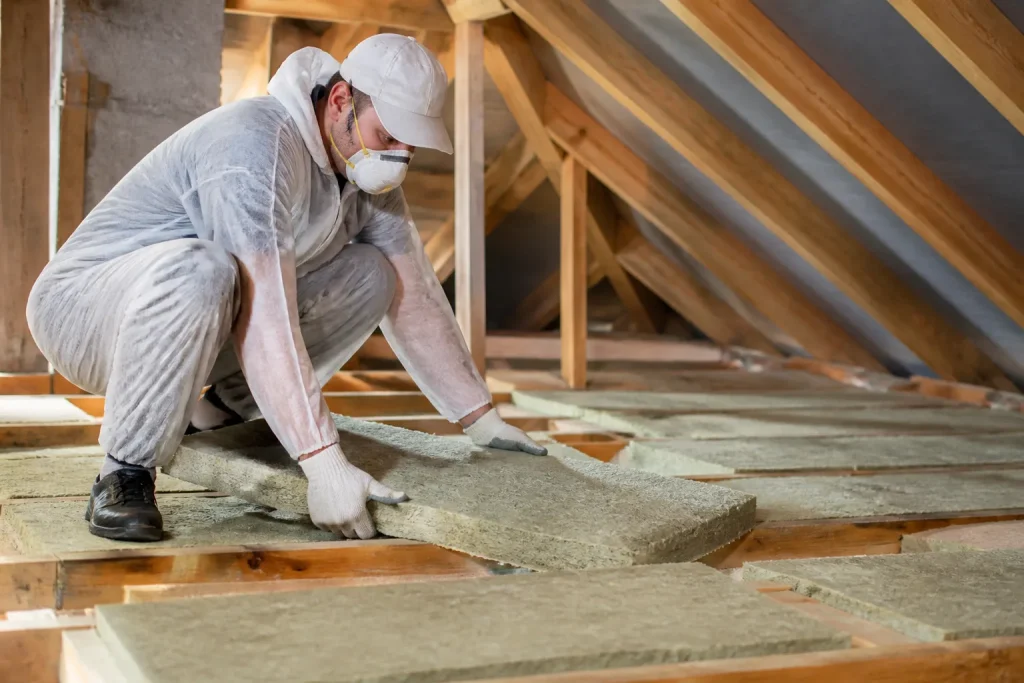
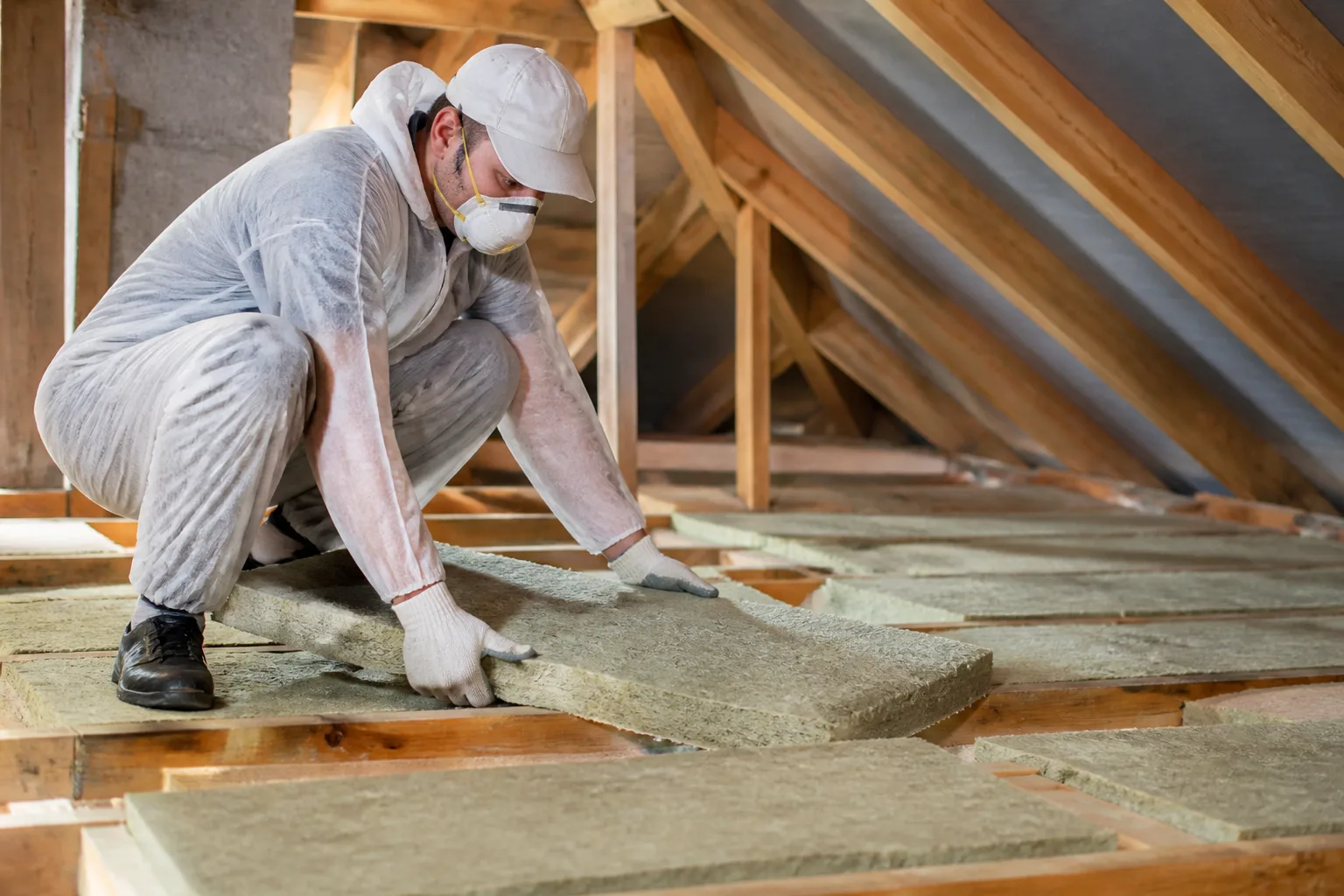
If your attic is open truss, meaning no finished floor and exposed joists, Comfortbatt is the product. You lay it between joists, cross-layer to depth, and you’re done. If your attic has plywood decking for storage, you’ve got a decision: either remove the decking to insulate under it, or insulate below the decking line and accept the lost headroom. We pull storage-decked attics in places like Mar Vista and Sherman Oaks all the time, and half the job is figuring out how to preserve usable space while still hitting R-38.
For a floored storage attic over a living space, some homeowners use Safe’n’Sound between joists under the decking for noise, then Comfortbatt cross-layered above the decking if height allows. That’s an advanced configuration and it’s not always worth the labor cost. Talk through your actual attic layout before choosing.
How the Installation Actually Goes
Rockwool installation in a Los Angeles attic is straightforward in concept but unforgiving in detail. The batts are stiff, and cutting them cleanly takes the right tools and a patient hand. Gaps around recessed lights, vent chutes, and roof penetrations undo a good chunk of the R-value if they’re not handled properly.
Before any material goes down, the attic needs air sealing. That’s true for any insulation type, but it’s especially true when you’re paying for a premium product. An air-sealed attic with mediocre insulation outperforms a leaky attic with expensive insulation every time. We seal bypasses around plumbing vents, electrical runs, and top plates before a single batt of Rockwool gets placed.
One more Los Angeles-specific note: attics here hit 130°F and hotter from May through October. Installers who aren’t used to working in that heat rush the job. We see sloppy cuts and compressed batts from crews that just want out of the attic. That’s not an apology on their behalf, it’s a reality of the trade. A good Rockwool job takes time, and that time costs money.
When to call a pro: If your attic has vermiculite insulation (common in pre-1980 LA homes), don’t disturb it yourself. It may contain asbestos, and testing is required before removal. If you have can lights rated for insulation contact, or you need new vent baffles installed, that’s also a professional job. A wrong move in a hot attic with insulation and wiring is how injuries happen, and this is one place where the training matters.
Related services in Los Angeles: If you’re weighing Rockwool against Spray Foam Insulation in Los Angeles, we walk you through both options with real numbers. Spray foam gives you a higher R-value per inch and air sealing in one step; Rockwool gives you fire and sound performance that foam doesn’t match.
The Bottom Line
Rockwool is the right Los Angeles attic insulation if fire resistance and sound control are on your list of worries. It costs more upfront, but it’s non-combustible by its very nature, it doesn’t settle, and it genuinely reduces noise in ways fiberglass can’t. If you live in the flats near a freeway or in the hills near brush, those benefits are worth the premium.
If you’re in Los Angeles and want to know whether Rockwool makes sense for your specific attic, give us a call. We’ll send a technician who shows up in a clean uniform, who is background-checked, and who will give you a written price before any work begins. No door-step surprises, no callback voicemail maze. Just a straight answer and a written guarantee on everything we install. Call Woolsey Attic Insulation at (325) 240-5411 for a free estimate.
Frequently Asked Questions
Rockwool attic insulation in Los Angeles typically runs $1.10 to $2.30 per square foot installed, depending on the R-value target, attic accessibility, and whether air sealing is included. Most whole-attic jobs run between $2,500 and $6,000 after any rebates. Call (325) 240-5411 and we’ll give you an exact written number before any work starts.
Rockwool passes ASTM E136 and is classified as non-combustible, meaning it doesn’t ignite, flame, or contribute fuel in a furnace test at 750°C. It’s made from volcanic basalt rock and steel slag, so the fire resistance is inherent to the material, not a chemical coating that can wear off. It does have a foil or paper facing on some products, which is combustible, so unfaced batts are the right choice in most attic applications.
Rockwool is better for fire resistance, sound attenuation, and resistance to settling. Fiberglass is better for upfront cost. If you live near a freeway or in a fire-risk zone and plan to stay in the home, Rockwool earns its higher price. If you’re on a tight budget in a low-risk area, a properly installed fiberglass job still meets code. For a comparison specific to your home, call (325) 240-5411.
Yes, but it requires either removing the decking to insulate beneath it, or insulating below the decking line and accepting reduced storage clearance. The right approach depends on whether you need the storage space and what R-value the current joist depth allows. We assess floored attics in Los Angeles regularly and give you a written plan based on your actual attic, not a guess.
Written by Glenn Hartley, Owner at Woolsey Attic Insulation, serving Los Angeles since 2002.
Need Insulation Help?
Call Woolsey Attic Insulation - licensed & insured, here with fast after-hours help in Los Angeles.
(325) 240-5411