
Fast, Reliable Attic Insulation Across Acton
Attic insulation in Acton isn’t a one-size-fits-all job. Most homes here sit between 2,600 and 3,400 feet, where summer afternoons climb past 100°F and winter nights drop below freezing, often within the same week. That dual-season swing means attics here need insulation that handles both radiant heat and true cold, a combination lower-elevation communities like Santa Clarita rarely deal with. We know Acton’s ranch homes, custom builds, and horse properties from the inside, so when you call (325) 240-5411, you’ll reach a live person who can talk through what your attic actually needs. We’ve been answering that phone around the clock since 2002.
Why Woolsey Attic Insulation Is Acton’s Preferred Attic Insulation Company
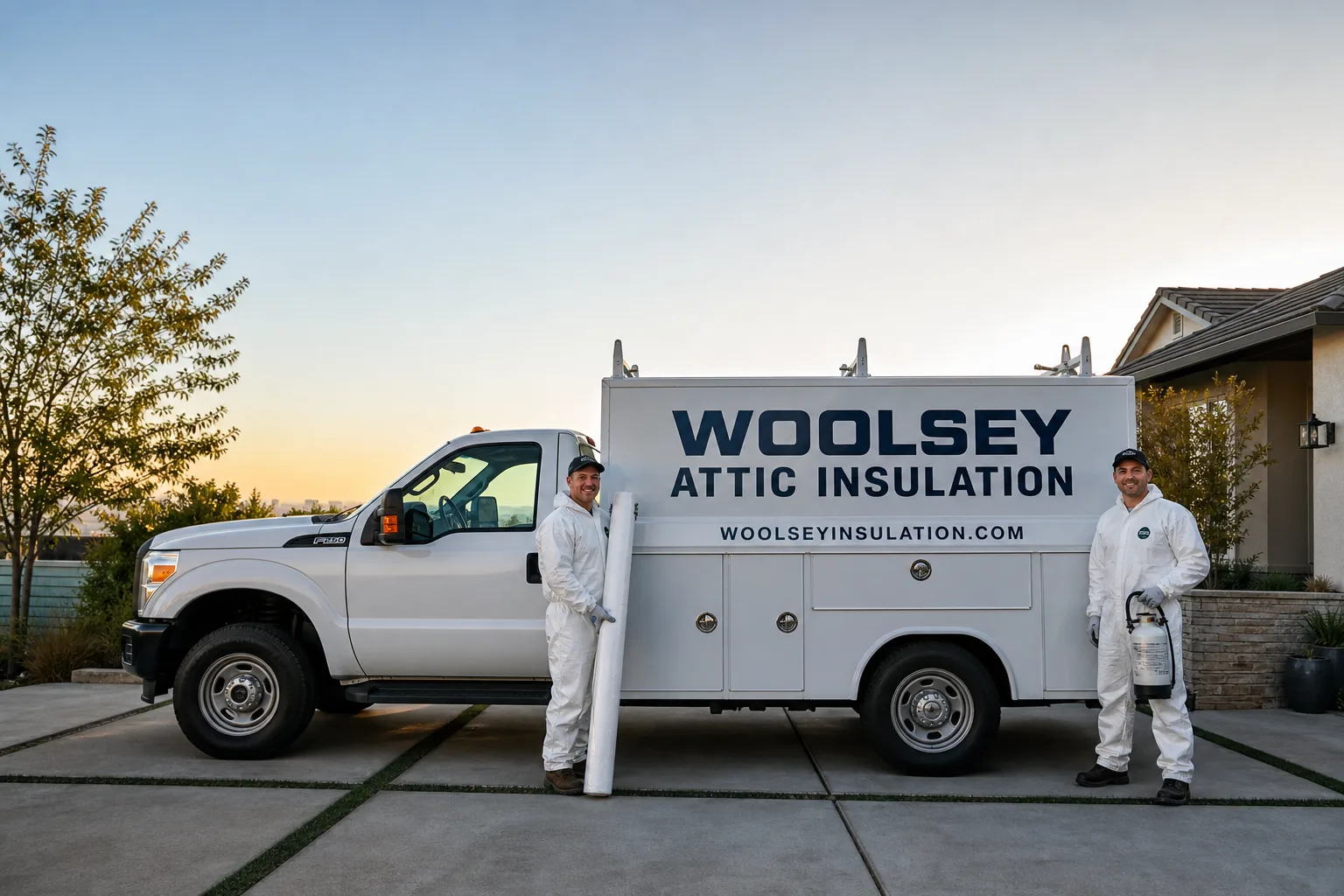
Acton homeowners tend to be specific about what they want. Many have been through a contractor who showed up late, changed the price at the door, or left a job half-finished. Woolsey doesn’t operate that way. Every job starts with a written price before any work begins, not an estimate that shifts once we’re in the attic. When you call, a live person answers, 24/7, and we give you a committed arrival window, not a four-hour range. Our technicians arrive in uniform, background-checked, and ready to explain exactly what they’re doing and why. Glenn Hartley runs the operation, and he holds every job to a standard most Acton homeowners haven’t experienced before: if something isn’t right within 365 days of the install, we come back and fix it at no charge. That’s the Kingswell Guarantee, and it’s in writing on every job.
We’re not a franchise and we don’t operate like one. Woolsey is an independently owned insulation company under the Kingswell banner, which means decisions about materials, scheduling, and follow-through happen locally. Dispatch and scheduling are coordinated from our Los Angeles office, but crews serve Acton directly. Our Attic Insulation team lives in the same climate zone you do, and they see the same problems in the field week after week.
Attic Ventilation in Acton
Attic Ventilation in Acton has to work harder than almost anywhere else in Southern California. At this elevation, daytime attic temperatures in summer can hit 140°F or more, and without steady airflow, that heat radiates down into living spaces all night, long after outdoor temperatures drop. In winter, inadequate ventilation traps moisture from cooking, showers, and respiration against cold roof sheathing, which condenses and slowly rots decking from the inside. Acton’s hard freezes make this worse, because the temperature difference between conditioned air and attic air is sharper here than in milder spots 20 miles southwest. A properly vented attic in Acton needs balanced intake at the eaves and exhaust near the ridge, sized to the roof’s pitch and square footage. When we install baffles and ventilation prep alongside new insulation, we’re restoring the airflow that 1970s and 1980s ranch homes rarely had. The job typically runs $450 to $900 for a standard ranch attic, and we write that number down before any work starts.
Eave and Soffit Vent Restoration
Many Acton homes have soffit vents that were blocked when original insulation was blown in decades ago. Rodent activity, which is common in this semi-wild setting, often clogs vent channels with debris and nesting material. We clear existing vents, install baffles to keep new insulation from covering them, and verify that air actually moves through the eave line before we call the job done.
Thermally Triggered Roof Vents
For Acton roofs with limited ridge space, mechanically assisted ventilation can compensate. These units open and close based on attic temperature, pulling hot air out during peak solar load and sealing shut during cold nights. They’re not a replacement for balanced passive airflow, but in vaulted-ceiling ranches where ridge venting is impractical, they make a measurable difference in attic temperature and moisture control.
Radiant Barrier in Acton
Radiant Barrier in Acton is one of the highest-return upgrades we install on west- and south-facing roofs. At this elevation, solar radiation is intense, and a dark comp shingle roof can hit 160°F by mid-afternoon. A radiant barrier is a reflective foil layer installed on the underside of roof rafters that bounces that heat back out through the roof deck instead of letting it soak into the insulation below. In Acton’s high-desert climate, where daily temperature swings routinely exceed 40°F, a radiant barrier works with your insulation rather than replacing it. You still need adequate insulation below, but the barrier cuts the peak heat that makes attics unbearable in July and August. Installed cost for a standard Acton ranch home typically runs $1.50 to $2.75 per square foot of attic floor area, depending on roof geometry and access. We’ll give you an exact written number after we measure, before anything gets ordered.
West-Slope Roof Deck Application
West-facing roof planes in Acton absorb the harshest solar load of the day, just as evening temperatures should theoretically be dropping. Applying radiant barrier specifically to west and south roof decks, rather than the entire attic, can cut the worst of the afternoon heat for less money than full coverage. On a 1980s ranch off Crown Valley Road, we installed this targeted approach and watched the measured attic temperature drop from 138°F to 104°F by improving airflow and adding the barrier together. That’s the difference between a bedroom that cools down after dark and one that stays hot until midnight.
Combining Barrier with Blown-In Fiberglass
A radiant barrier over an uninsulated attic floor won’t solve much. The right combination is a reflective barrier on the roof deck and a proper layer of blown-in fiberglass or upgraded batts on the attic floor. The barrier handles radiant heat, the insulation handles conductive and convective heat. Acton homeowners who do both report the biggest shift in comfort and the sharpest drop in cooling bills.
Trusted Brands We Service in Acton
We install materials from Owens Corning, Johns Manville, Knauf, and Rockwool, and we match the product to your attic, not to whatever happens to be on the truck. Acton homes vary a lot, a 1970s ranch with 2×4 framing, a custom build with vaulted ceilings, a manufactured home on a permanent foundation, and each gets a different recommendation. We stock the common materials locally and can have specialty products delivered fast. If you have a brand preference, tell us on the call and we’ll spec the job around it.
Common Attic Insulation Problems We See in Acton Homes
- Settled and displaced original blown-in insulation. Many 1980s ranch homes in Acton still carry their original blown-in cellulose or fiberglass, which has compacted to half its labeled R-value over decades of temperature cycling. Rural rodent pressure adds insult: animals tunnel through the material, leaving bare spots that radiate heat directly into the rooms below.
- Compressed and damaged R-11 batts in 2×4 framing. Homes built in the 1970s through 1990s generally got minimal insulation, often just R-11 fiberglass batts that were barely adequate for the era’s building codes, which were written before Acton’s true dual-season load was understood. Years of occasional roof leaks, rodent activity, and simple settling have left these batts compressed or missing in large sections.
- Vaulted ceiling thermal bridges. Custom ranch and horse-property homes often feature vaulted ceilings where insulation is trapped between the ceiling and roof deck, leaving little room for adequate depth. Standard batt installation in these spaces leaves channels where hot air moves freely from the attic into living areas, and a simple top-off doesn’t fix the geometry.
- Rodent-contaminated insulation in semi-wild settings. Acton’s location means attics get visited by rats, mice, squirrels, and occasionally bats. Chewed vapor barriers, urine-soaked fiberglass, and nesting debris are common finds. New insulation over contaminated material traps odor and health hazards, so proper remediation always comes first.
Pricing for Attic Insulation in Acton, CA
Most attic insulation jobs in Acton fall between $1,800 and $4,500, depending on attic size, material choice, and how much prep is involved. A straightforward blown-in fiberglass installation in a 1,200-square-foot ranch attic typically runs $2,200 to $3,200, including removal of old material when needed. Radiant barrier on top of that adds $1.50 to $2.75 per square foot of attic floor. If your attic needs rodent remediation, sealing entry points, and ventilation restoration, those line items each add a few hundred dollars to the total. Every quote is written line-by-line and delivered before work starts. Call (325) 240-5411 and we’ll walk through your specific attic, give you a real number, and schedule a measurement visit. Estimates are free.
We Also Serve Cities Near Acton
Woolsey crews regularly run to Palmdale, Lancaster, Santa Clarita, and San Fernando for the same written-price, 365-day guarantee work we do across Attic Insulation in Acton. If you’re just over the county line, call us and we’ll let you know our next available window for your area.
Serving Acton, CA - Our Local Coverage Area
We’re based in the Acton area and know this community well. Use the map below to see our service coverage - if you’re nearby, we can almost certainly help.
FAQs About Attic Insulation in Acton
Yes, it matters more than most homeowners realize. Acton sits at 2,600 to 3,400 feet, on the boundary between CEC Climate Zones 14 and 15, which means insulation here must handle both extreme summer radiant heat and genuine winter cold, including sub-freezing nights that Santa Clarita rarely sees. Attics that perform fine down the hill in the valley get overwhelmed up here because the temperature swing demands more than one season of performance from the material. The right spec is usually a higher R-value ceiling layer plus a radiant barrier on west and south roof decks, not just a top-off of whatever was already there. Call (325) 240-5411 and we’ll give you the exact written recommendation for your roof’s orientation and elevation.
Rodent damage is one of the most common problems we find in Acton attics, far more than in suburban neighborhoods down the hill. The rural, semi-wild setting means rats and mice find their way into attics through gable vents, roof junctions, and utility penetrations, and they tunnel through blown-in insulation, chew vapor barriers, and leave waste that contaminates the material. We don’t install over that. Our process is to remove the damaged material, seal the entry points, sanitize the affected area, and then install new insulation. If you suspect rodents have been in your attic, call (325) 240-5411 and we’ll do an inspection before we quote anything.
Sometimes yes, but often no, and we’ll tell you which applies to your home after looking. If the original batts are dry, uncontaminated, and sitting correctly between the joists, a layer of blown-in fiberglass on top can bring the total R-value up to modern standards without removal. But in many Acton homes we inspect, especially 1980s ranches, the original batts are compressed by rodent tunnels, water-stained, or displaced entirely. In those cases, topping off just buries the problem. We’ll give you an honest recommendation either way, and the price difference is in writing before anything starts.
Acton’s combination of extreme summer heat and hard winter freezes means your attic moves more moisture and more temperature stress than attics in Palmdale or Santa Clarita. In summer, afternoon attic temperatures can hit 140°F or higher, and without balanced airflow, that heat loads the living space all night. In winter, trapped moisture condenses against cold roof sheathing, which slowly rots the decking. Proper ventilation, balanced intake at the eaves and exhaust at the ridge, keeps both failure modes in check. We size ventilation to your specific roof pitch and attic square footage, not to a generic rule of thumb. Estimates are free at (325) 240-5411.
For most Acton homes, yes. West- and south-facing roof planes here absorb brutal afternoon solar load, and a radiant barrier on the underside of the roof deck reflects much of that heat back out before it ever reaches the insulation below. In our field measurements on Acton ranches, we’ve watched attic temperatures drop by 30°F or more when a barrier is paired with adequate insulation and ventilation. The payback comes in more comfortable rooms after dark and lower cooling costs through the summer. On vaulted-ceiling ranches where insulation depth is limited, a radiant barrier is often the single most effective upgrade we can make. Call (325) 240-5411 for a written quote after we measure your roof orientation and attic geometry.
Call our team at Woolsey Attic Insulation today for a free, no-obligation estimate on your Acton attic insulation job. We answer the phone live, 24 hours a day. Glenn Hartley and our crew will give you a written price before any work starts, arrive in the committed window, and back the job with the 365-Day Done Right Promise. That’s how we’ve operated since 2002, and it’s the only way we know to work.
Written by Glenn Hartley, Owner at Woolsey Attic Insulation, serving Acton and the surrounding high-desert communities since 2002.