
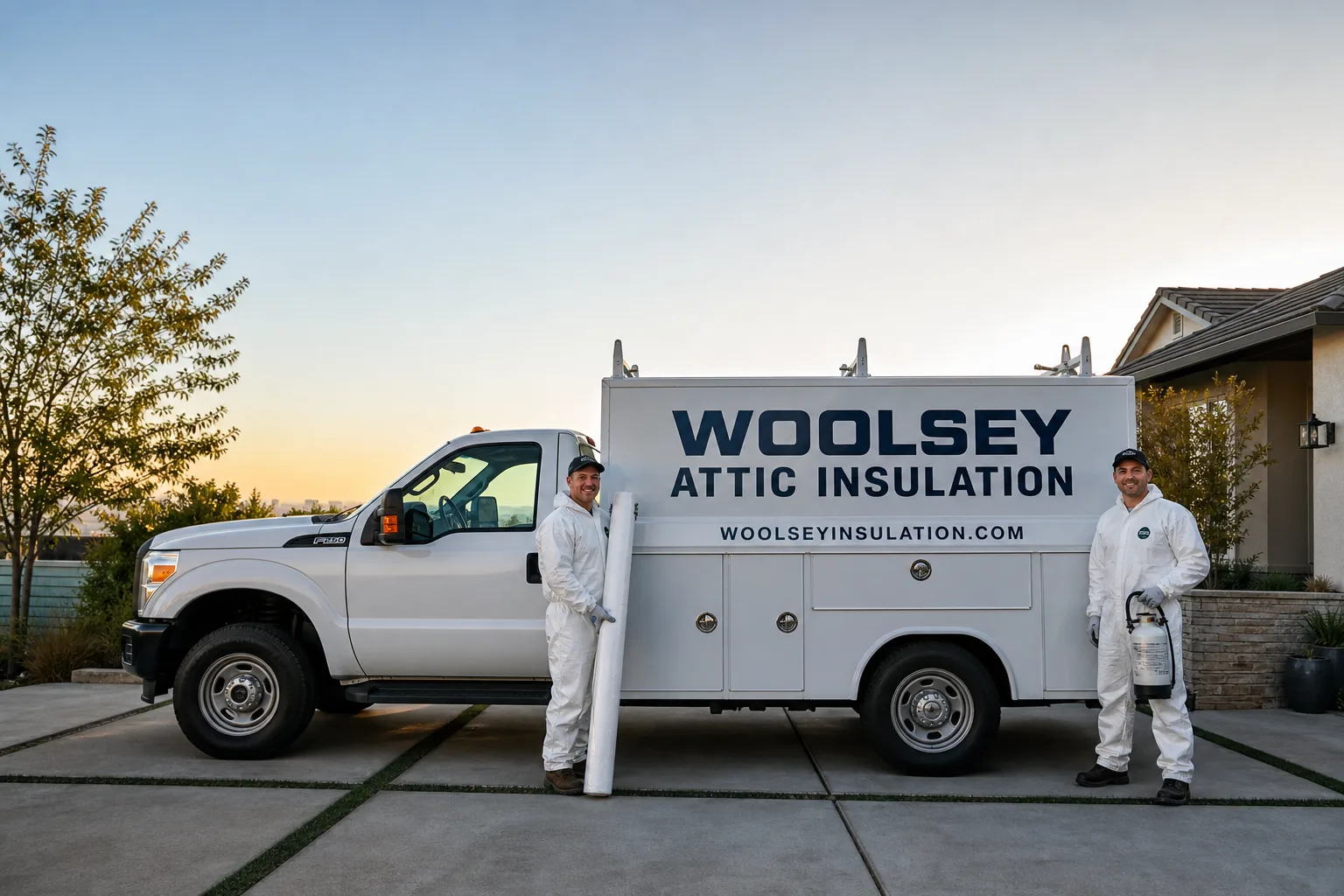
Fast, Reliable Attic Insulation Across Corona
Attic insulation in Corona isn’t a one-size-fits-all job. Homes here sit in a thermal basin where summer highs routinely hit 105 – 112°F, and the 1990s-era tract housing that fills South Corona, Sierra del Oro, and the neighborhoods along Green River Road was built to standards that simply don’t hold up anymore. We know these houses because we work on them every week. Our crews serve Corona directly from our nearby Inland Empire dispatch office, and most jobs are scheduled within days, not weeks. Call (325) 240-5411 and a real person picks up, day or night.
Most attic insulation jobs in Corona run between $1,800 and $6,400 depending on attic size, current insulation condition, and whether air sealing is needed. We give you the exact written number before any work starts. No door-step surprises. That’s how every Woolsey job runs.
Why Woolsey Attic Insulation Is Corona’s Preferred Attic Insulation Company
Corona homeowners call us because they’ve been burned before. A contractor quoted one price on the phone, changed it at the door, and left a mess in the attic. Or the work failed six months later and the phone went to voicemail. We do things differently, and we put it in writing.
Glenn Hartley leads our team with a simple rule: say the price, show up in the window, leave the attic cleaner than you found it, and stand behind the work for 365 days. Every job gets a written guarantee. If it’s not done right within that year, we come back and fix it at no charge. Not a phone call. Not a “we’ll see.” A written promise included on every installation in Corona.
Our technicians are background-checked and uniformed. You know exactly who’s walking into your home. When you call, a live person answers 24/7. No voicemail maze, no call-back window. That matters when your attic hits 160°F in August and you realize the insulation has been failing for years.
Radiant Barrier in Corona
Radiant barrier in Corona makes more sense here than almost anywhere else in Southern California. A radiant barrier is a reflective foil installed under your roof decking that bounces radiant heat back out instead of letting it soak into your attic. In a city where attic temperatures regularly reach 150 – 160°F on summer afternoons, that reflective layer directly cuts how hard your cooling system works.
Corona’s housing stock is dominated by low-slope tiled roofs on stucco tract homes. Those tiles absorb solar heat all day and radiate it down into the attic space. Combined with Santa Ana wind events that disturb loose-fill insulation, many homes are losing cooling capacity in two ways at once. A radiant barrier addresses the heat gain that insulation alone can’t stop.
How Radiant Barrier Installation Works
We staple or secure the foil to the underside of your roof rafters, leaving an air gap that’s essential for the reflective surface to work properly. In a typical Corona single-story home, most installations run $2,200 – $5,500 depending on attic square footage and roof complexity. Homes in Sierra del Oro with vaulted or complex roof lines trend toward the higher end.
Pairing Radiant Barrier With Blown-In Insulation
The two products solve different problems. Insulation slows conductive heat transfer downward into your living space. Radiant barrier stops radiant heat from ever entering the attic in the first place. In Corona’s Climate Zone 10, doing both typically cuts attic temperature by 20 – 30°F on peak summer days. We recommend the combination for most tile-roof homes built before 2008.
Attic Cleaning Services in Corona
Attic cleaning services in Corona aren’t just about tidiness. Two decades of Santa Ana wind through the Santa Ana Canyon pushes dust, grit, and fine debris into attics. Rodent activity is common in these older tract-home attics, and removal plus sanitation is a health and performance issue. If your insulation is contaminated or compacted, adding new material on top doesn’t fix the underlying problem.
A full attic cleaning in Corona typically runs $800 – $2,400 depending on attic size and contamination level. That includes removing old or damaged insulation, vacuuming debris, and sanitizing the space. For most 1990s-era homes we see, cleaning is combined with air sealing and new blown-in insulation as one complete job.
When Cleaning Becomes a Health Priority
If you’ve had rodents, birds, or raccoons in the attic, the droppings and urine soak into insulation and create a genuine air-quality issue. That contaminated air circulates through your home every time the HVAC runs. We remove the affected material entirely and prep the space for fresh insulation.
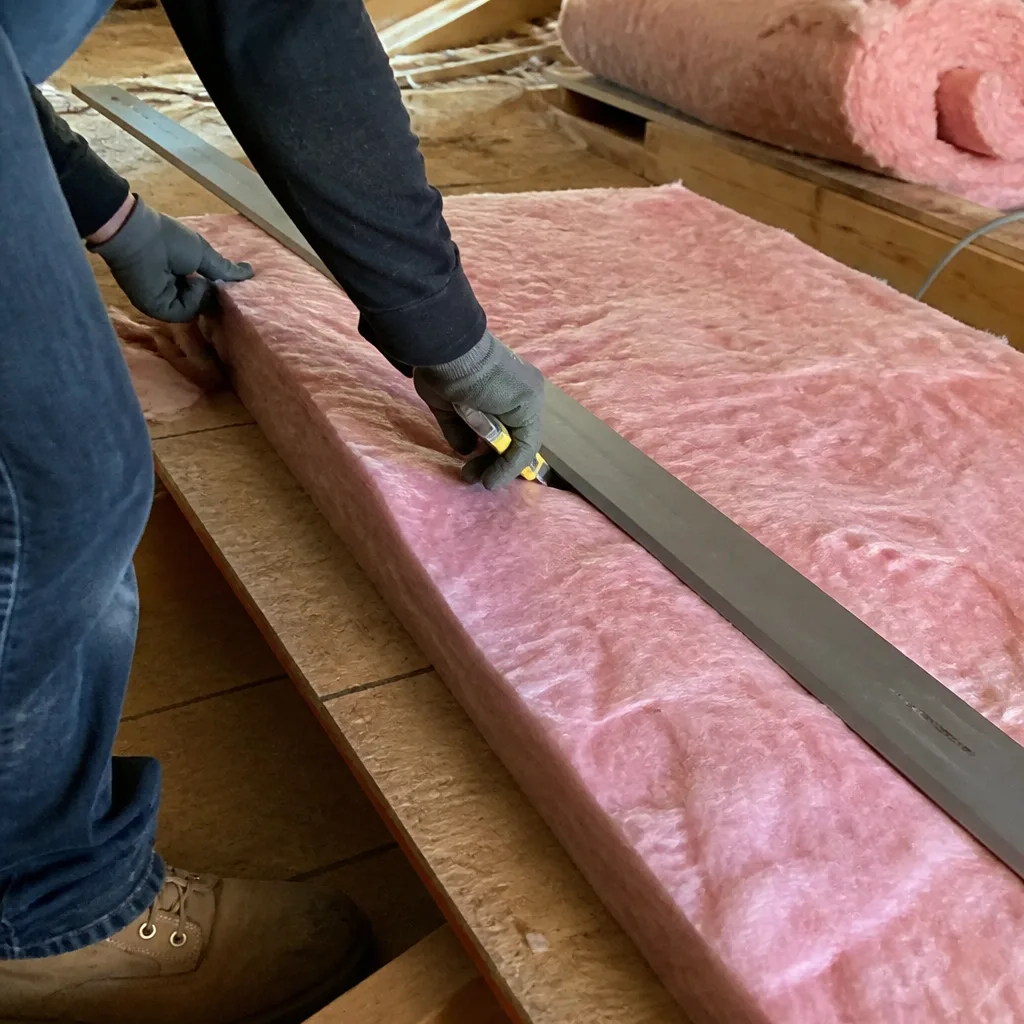
Post-Cleaning Air Sealing
Cleaning exposes the attic floor, which is exactly when air sealing should happen. Gaps around top plates, wire penetrations, and can lights let conditioned air escape into a 150°F attic all summer. We seal those openings before any new insulation goes in. Skipping this step in Corona means paying to cool air that leaks straight out through the ceiling.
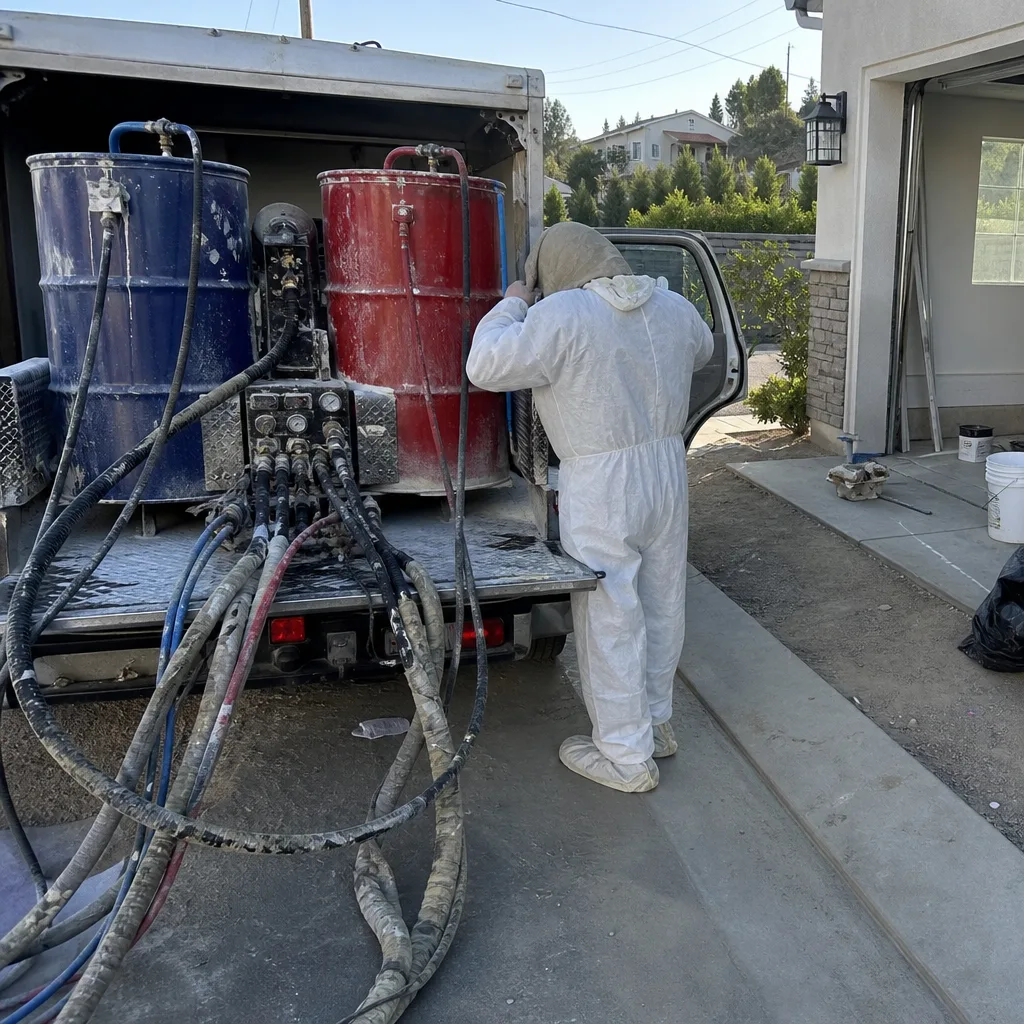
What happens when you call
- 1
A real person answersNo phone trees - you reach a local pro.
- 2
You get an upfront price rangeHonest numbers before anyone is dispatched.
- 3
A background-checked tech heads outLicensed & insured, dispatched right away.
- 4
You approve before work beginsNothing starts until you say go.
Trusted Brands We Service in Corona
We work with eight leading insulation manufacturers because no single brand fits every Corona home. Owens Corning fiberglass holds up well in high-heat attics. Johns Manville and Knauf offer excellent batt and blown-in options for tight access spaces common in low-slope roofs. Rockwool’s stone wool products perform exceptionally in the Santa Ana wind corridor because they stay put and resist moisture absorption. We stock common parts and materials for Corona jobs locally, which means faster turnaround when your attic needs attention now.
Common Attic Insulation Problems We See in Corona Homes
- Perimeter insulation migration from Santa Ana winds. High-velocity gusts funneling through the Santa Ana Canyon physically push blown fiberglass away from eave baffles, leaving the attic perimeter above exterior walls nearly bare. A depth-stick check in the center can still read R-25 while your actual exterior-wall coverage is close to zero.
- Compacted builder-grade batts from the 1988 – 2008 building boom. Those original R-19/R-30 installations have been baked by 150 – 160°F attic temperatures for two to three decades. The fiberglass settles, loses loft, and its effective R-value drops significantly below its original rating.
- HVAC retrofits and unsealed ceiling penetrations. Every new air handler, duct re-route, or recessed light added after construction disturbs the existing insulation and creates air leaks. The insulation looks fine from the attic access hatch, but conditioned air is streaming out through gaps a depth-stick can’t see.
- Attic floor air leakage driven by 40°F diurnal swings. Corona’s overnight temperature drop creates a stack effect that pulls conditioned air upward through the attic floor all summer. Without air sealing at the top plates and penetrations, even fresh R-49 insulation underperforms because air moves straight through the gaps.
Pricing for Attic Insulation in Corona, CA
Here’s what Corona homeowners can expect to pay, based on typical homes in this market. Blown-in attic insulation to bring a 1990s-era attic to current code runs $2,400 – $4,800 for a standard single-family home. Attic batt insulation for accessible attics trends $2,800 – $5,500. An attic insulation top-up, common when the center still reads adequate but perimeter coverage is shot, runs $1,200 – $2,800. Full attic insulation replacement, including removal of compacted or contaminated material, air sealing, and new blown-in insulation, runs $3,800 – $7,500. Attic baffles and ventilation prep add $400 – $1,200 depending on eave width. Radiant barrier installation runs $2,200 – $5,500. Attic cleaning services run $800 – $2,400. Every job gets a written price before work starts. Call (325) 240-5411 for an exact quote.
We Also Serve Cities Near Corona
While this page covers Attic Insulation in Corona, our teams regularly work in nearby Norco, Chino, Chino Hills, and Irvine. If you’re in one of those areas, the same written pricing and 365-day guarantee apply. Our Attic Insulation service covers the full Inland Empire corridor with the same local crews and material access.
Serving Corona, CA - Our Local Coverage Area
We’re based in the Corona area and know this community well. Use the map below to see our service coverage - if you’re nearby, we can almost certainly help.
FAQs About Attic Insulation in Corona
That’s the perimeter-versus-center split, and in Corona it’s almost always caused by Santa Ana wind events moving blown fiberglass away from your eave baffles. The center of the attic keeps its depth, so a quick depth-stick check reads R-25. But the perimeter above your exterior walls, where the ceiling meets the wall, can be down to bare drywall. The fix is re-setting eave baffles, redistributing or topping up insulation with a full perimeter pass, and air sealing the top plates. Call (325) 240-5411 and we’ll do a full attic walk instead of a single-center measurement.
Almost certainly not at its original R-value. Those late-1990s tract homes in South Corona and along Green River Road were built to the looser Title 24 standards of that era, typically R-19 or R-30 attic insulation. After 25 to 30 years under Climate Zone 10 attic temperatures of 150 – 160°F, fiberglass loses loft and compacts. The as-built R-30 now performs closer to R-19 or lower. Add in wind migration and you’re losing far more cooling efficiency than the original home design ever accounted for.
Yes, and in Corona it’s more important than the insulation itself. The temperature difference between your air-conditioned living space and a 150°F attic creates constant pressure that pulls conditioned air upward through any gap. Top plates, wire penetrations, recessed lights, and HVAC chases all leak. If you skip air sealing and just blow new insulation on top, you’ve insulated over a screen door. We always recommend sealing the attic floor before installing new material.
Both. They do different jobs. Insulation slows heat that’s already entering the attic from conducting down into your living space. A radiant barrier reflects that heat before it ever penetrates the roof decking. Under Corona’s low-slope tile roofs that soak up sun all afternoon, the combination reduces attic temperature noticeably and lets your existing insulation perform much better. For most 1990s-era Corona homes, we recommend retrofitting both together rather than just adding R-value.
More often than homeowners realize. Santa Ana wind events happen multiple times per year, and each high-velocity episode through the Santa Ana Canyon pushes loose-fill fiberglass further from the eave baffles. Over two decades, the cumulative effect leaves the perimeter above exterior walls nearly bare. If you haven’t looked at your attic perimeter in five years, it’s worth checking. Insulation doesn’t migrate back on its own.
Start With an Honest Attic Assessment in Corona
If your Corona home was built between 1988 and 2008 and you’ve never had the attic insulation checked properly, you’re likely paying to cool air that’s leaking straight through the ceiling. We’ll walk the full attic, measure the perimeter and center separately, check your eave baffles, and tell you exactly what needs to happen and what it costs. Written price first. Then the work. Then a 365-day written guarantee. Call (325) 240-5411 to schedule your evaluation.
Written by Glenn Hartley, Owner at Woolsey Attic Insulation, serving Corona with honest pricing and written guarantees on every job.