
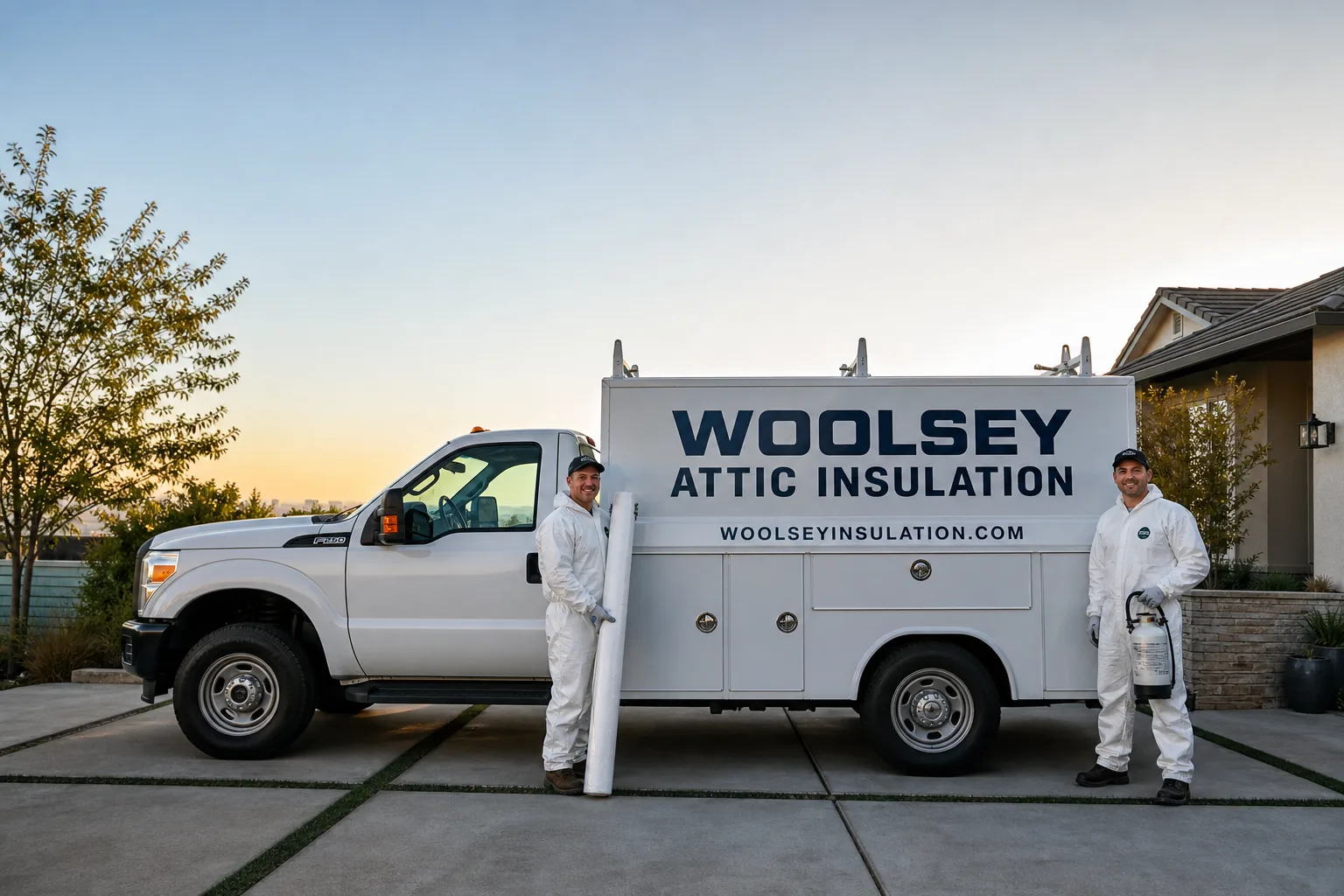
Fast, Reliable Attic Insulation Across Half Moon Bay
Most attic insulation jobs in Half Moon Bay run between $1,800 and $4,600, and you should get a written price before any material ever leaves the truck. That’s how we work at Woolsey Attic Insulation. We’re the coastside Attic Insulation specialist that shows up on time, prices the job honestly, and puts every promise in writing. If your attic is under-insulated or the existing batts have gone damp from the fog, call (325) 240-5411. A real person answers, day or night.
Half Moon Bay homes face a problem most attic insulation contractors never prepare for: the marine layer. That cool, fog-saturated air rolling in off the Pacific doesn’t just chill your windows. It pushes moisture into attics, walls, and crawl spaces in a way that fails conventional insulation faster than temperature ever could. We build coastside-specific assemblies that actually hold up here.
Why Woolsey Attic Insulation Is Half Moon Bay’s Preferred Attic Insulation Company
Led by Glenn Hartley, our team has spent years crawling through Half Moon Bay attics, from the 1920s Craftsman homes along Main Street to mid-century ranch houses out near Frenchmans Creek. We know what fails here and why. We know which insulation materials trap fog-driven moisture and which ones shed it. That local knowledge changes the recommendation every time.
Every job we run in Half Moon Bay is covered by The Kingswell Guarantee. That means a written price before any work starts. A committed arrival window we actually keep. A clean job site when we leave. A written guarantee on the work. And if something isn’t right within 365 days, we come back and fix it at no charge. No callbacks into a voicemail maze. Just a live person on the phone, 24 hours a day, 7 days a week.
Homeowners in Half Moon Bay have been let down before by contractors who changed the price at the door or never showed. We hear it on nearly every first call. Our answer is simple: the price you’re quoted is the price you pay, in writing, before anything begins. Background-checked, uniformed technicians show up on time, do the work right, and leave your attic better than they found it.
Attic Ventilation in Half Moon Bay
Attic ventilation in Half Moon Bay is not a nice-to-have; it’s the difference between a dry attic and a mold problem. The coastside’s year-round 50 – 65°F damp band keeps attic air hovering near saturation, and without a properly sized ridge-to-soffit ventilation path, that moisture condenses on the roof deck and drips back onto your insulation. In Half Moon Bay specifically, we regularly see attics where soffit vents were never installed or ridge vents are undersized for the volume of fog-laden air that moves through every morning. Ventilation here typically runs $450 – $1,400 depending on attic size and whether intake baffles need to be added.
Coastside moisture management
The goal of attic ventilation in Half Moon Bay is not just moving air. It’s keeping the roof deck dry enough that fiberglass batts don’t sag and open-cell spray foam doesn’t hold water like a sponge. We inspect the existing vent path, size the intake and exhaust openings to the attic’s square footage, and add baffles where soffit insulation would otherwise block airflow.
When older coastside homes need it
Pre-1940 Craftsman and Victorian homes near Main Street rarely had any mechanical ventilation planned. They relied on gaps and leaks that have since been sealed or covered. If your attic smells musty or you’ve found damp spots on the ceiling below the roof deck, ventilation is almost certainly part of the fix.
Radiant Barrier in Half Moon Bay
Radiant barrier in Half Moon Bay serves a different purpose than it does in, say, Sacramento or Redding. Here, a radiant barrier installed on the underside of the roof deck helps reflect what little solar gain the coastside gets and, more importantly, creates a thermal break that reduces condensation on the roof sheathing. It’s a foil-faced material that works by reflecting radiant heat rather than absorbing it. In Half Moon Bay, a radiant barrier typically costs $900 – $2,200 installed, depending on attic size and accessibility.
Does it help in a foggy climate?
Yes, when it’s paired with the right insulation and ventilation. A radiant barrier alone won’t solve a moisture problem. But combined with closed-cell spray foam and proper venting, it keeps the attic assembly drier and slightly warmer, which reduces the condensation that plagues coastside attics year-round.
Where we install it most
Mid-century ranch homes along Highway 1 and up toward El Granada are common candidates. Those homes typically have large, open attic floors and roof decks that get indirect sun through the fog. A radiant barrier stapled to the rafters there means less moisture reaching the insulation below.
Trusted Brands We Service in Half Moon Bay
We stock and install GreenFiber blown-in insulation, Owens Corning fiberglass batts, and Johns Manville products for coastside attics. That matters because the material recommendation has to fit your specific home, not whatever happens to be on the truck. For older Half Moon Bay homes with damp attics, we often specify closed-cell spray foam from Demilec or Icynene for its vapor resistance. For newer construction where moisture is less of a concern, we might recommend Knauf batts or a GreenFiber blown-in top-up. We keep local inventory staged for Half Moon Bay customers so scheduling is fast, and we don’t have to wait three days on a supply run.
Common Attic Insulation Problems We See in Half Moon Bay Homes
- Sagging, damp fiberglass batts in pre-1930 homes. Houses near Main Street and along Kelly Avenue were built without vapor barriers, and the marine layer keeps the wood frame perpetually damp. Batts sag off the roof deck and lose their R-value within a decade, sometimes less.
- Open-cell spray foam that’s holding water. Contractors who work inland in San Mateo or San Jose sometimes spec open-cell foam here because it’s code-compliant over the hill. On the coastside, fog-driven moisture condenses inside the foam, and we’ve pulled out foam that was visibly wet months after installation.
- Undersized attic ventilation in mid-century ranch homes. Homes built between 1950 and 1970 along the coastside often have soffit and ridge vents that were never sized for this climate. The attic air stays near saturation, and insulation never dries out.
- Zero insulation in older Craftsman and Victorian attics. Many Half Moon Bay homes built before 1940 have no cavity insulation at all. The first real failure when insulation is added is condensation on the roof deck, because there’s no air barrier or vapor management in the original assembly.
We were called out to a 1920s Craftsman off Main Street in downtown Half Moon Bay where the homeowner had watched three fiberglass batts sag off the roof deck and drip onto the ceiling below. After air-sealing the top plates, we pulled the damp batts, verified the deck was dry, and installed closed-cell spray foam because the foggy exterior here pushes vapor inward in a way it never does over the hill. We also added a ridge-to-soffit ventilation path with intake baffles so the attic could finally breathe, and the homeowner hasn’t seen a moisture stain since.
Pricing for Attic Insulation in Half Moon Bay, CA
Here’s what you can expect to pay for attic insulation work in Half Moon Bay:
| Service | Typical Range in Half Moon Bay |
|---|---|
| Blown-in attic insulation (new install) | $1,800 – $3,600 |
| Attic batt insulation replacement | $2,200 – $4,600 |
| Attic insulation top-up | $650 – $1,400 |
| Closed-cell spray foam (attic roof deck) | $3,500 – $7,800 |
| Attic ventilation (ridge-to-soffit) | $450 – $1,400 |
| Radiant barrier installation | $900 – $2,200 |
| Attic baffles and ventilation prep | $350 – $900 |
What actually drives the cost in Half Moon Bay is access and moisture remediation. Older Craftsman and Victorian attics with steep pitches, minimal headroom, or damp existing insulation take longer and cost more. That’s the truth. And you’ll know the exact number before we start because our written price comes first, every single time. Call (325) 240-5411 for a free estimate.
We Also Serve Cities Near Half Moon Bay
Our crews regularly cover Half Moon Bay and the surrounding coastside communities, including El Granada, Burlingame, Millbrae, and Belmont. If you’re in any of those areas and need attic insulation work, the same written price guarantee and live-answer phone apply.
Serving Half Moon Bay, CA - Our Local Coverage Area
We’re based in the Half Moon Bay area and know this community well. Use the map below to see our service coverage - if you’re nearby, we can almost certainly help.
FAQs About Attic Insulation in Half Moon Bay
Because the marine layer changes everything. Open-cell spray foam is vapor-permeable, which is fine in San Mateo where attic air dries out. In Half Moon Bay, the foggy exterior air carries enough moisture to condense inside the foam itself, and that moisture never fully leaves. Closed-cell foam or a carefully detailed vapor barrier is the right call on the coastside. Call (325) 240-5411 and we’ll explain exactly what your attic needs.
Condensation on the roof deck. Those old homes were built without vapor barriers, and once you add insulation, the attic gets slightly warmer while the roof deck stays cold and damp from the fog. Without air sealing and proper ventilation, moisture collects on the sheathing and eventually drips onto the insulation and ceiling below. We address that first, before insulation ever goes in.
Yes, and ventilation is even more important here precisely because of that. The constant low-grade heating demand means warm, moist indoor air is always migrating upward into the attic. Without adequate ridge-to-soffit ventilation in Half Moon Bay’s damp air, that moisture has nowhere to go. Ventilation is not optional on the coastside.
It is, but not for the reason people inland buy it. In Half Moon Bay, a radiant barrier’s main job is reducing condensation on the roof sheathing and keeping the attic assembly slightly warmer and drier. It works best when paired with closed-cell spray foam and proper ventilation. As a standalone upgrade, it’s less useful here than in a hot, sunny climate.
We install GreenFiber, Owens Corning, and Johns Manville products regularly, and we specify Demilec or Icynene closed-cell spray foam where vapor resistance matters. The brand has to fit the home. For a damp 1920s attic near downtown Half Moon Bay, the recommendation will be different than for a dry mid-century ranch up toward Frenchmans Creek. Call (325) 240-5411 and we’ll give you an honest material recommendation backed by a written price.
Written by Glenn Hartley, Owner at Woolsey Attic Insulation, serving Half Moon Bay and the surrounding coastside.