
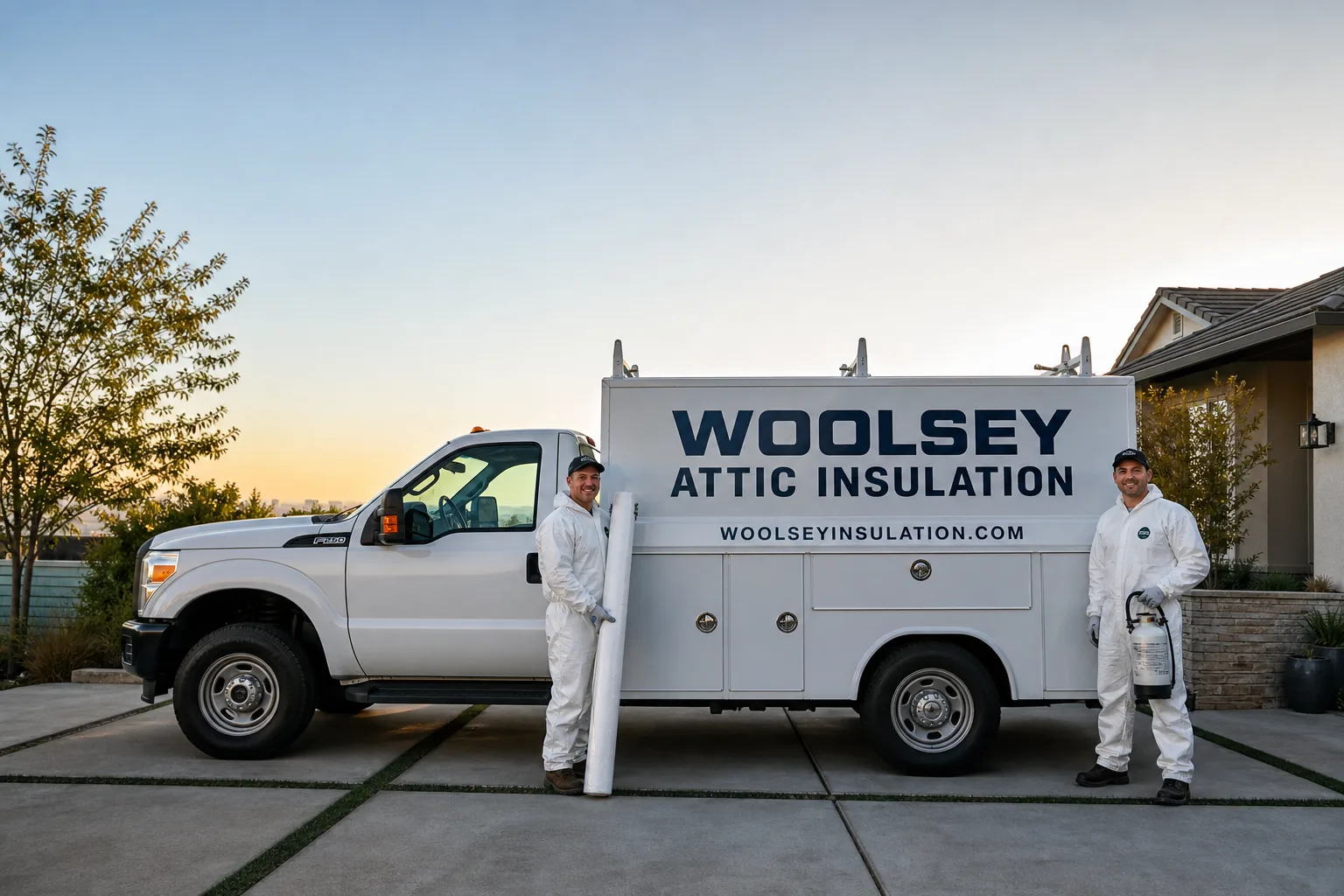
Fast, Reliable Attic Insulation Across Lake San Marcos
The central question for most Lake San Marcos homeowners isn’t whether their attic needs insulation. It’s how much, what kind, and what it’ll cost. Here’s the direct answer: most attic insulation jobs in Lake San Marcos run between $1,800 and $4,600, depending on the existing depth, the attic’s accessibility, and whether we’re doing a top-up or a full removal and replacement. We’ll give you the exact written number before any work starts. That’s the Kingswell Guarantee, and it applies to every job we do here.
Woolsey Attic Insulation has worked in Lake San Marcos long enough to know the housing stock block by block. The community was built almost entirely in the 1960s and 1970s by the original master developer, long before California’s Title 24 energy code existed. That means the majority of condominiums, townhomes, and single-story ranch homes around Lake San Marcos Drive, Via Vera Cruz, and along the lake’s western shore were framed with 2×4 walls and shallow attics that got little or no original insulation. We know where the problem spots are, because we’ve been in hundreds of those attics. Call us at (325) 240-5411 and a live person picks up, day or night.
Why Woolsey Attic Insulation Is Lake San Marcos’s Preferred Attic Insulation Company
Take a drive down Lake San Marcos Drive on a July afternoon and you’ll see the heat shimmering off the asphalt. The inland valley traps air that coastal San Diego never feels. Homes here routinely hit 95 – 105°F in summer while Encinitas sits comfortably in the 70s. That’s not a small difference. It changes what your attic needs, and it’s why generic coastal insulation advice doesn’t apply here. We account for the valley heat trap, the artificial lake’s nighttime humidity, and the vintage construction. Few insulation contractors working in Lake San Marcos can say that with specifics.
Homeowners here have told us the same story more times than we can count: a contractor gave a low verbal estimate, then raised the price at the door. Or never showed in the promised window. Or left batts sitting unevenly and never returned the callback. Woolsey was founded in 2002 under the Kingswell family of independently owned insulation companies to be the opposite. We put a written price in your hand before any work begins. We give you a real arrival window and hit it. Every job includes a written guarantee, and if anything isn’t right within 365 days, we come back and fix it at no charge. That’s the 365-Day Done Right Promise, and it’s in writing on every single job in Lake San Marcos.
Our technicians are background-checked and uniformed, so you know exactly who’s walking into your home. Glenn Hartley owns and runs this location, and he’s built the team around one principle: say what you’ll do, then do it. No door-step surprises. No voicemail mazes. Just insulation done honestly.
Radiant Barrier in Lake San Marcos
Radiant Barrier in Lake San Marcos is often sold as a standalone fix, and that’s a mistake in this particular valley. A radiant barrier is a reflective foil installed on the underside of your roof deck. It works by reflecting radiant heat back out instead of letting it radiate down into the attic. In Lake San Marcos, where the inland heat trap pushes attic temps well past 130°F on summer afternoons, reflective foil alone leaves the ceiling hot all evening because there’s no bulk insulation slowing the conducted heat. We install radiant barrier as part of a complete system, paired with enough bulk insulation to manage both the heat gain and the slightly elevated dew-point the lake pushes inland at night. A radiant barrier installation in Lake San Marcos typically runs $900 to $2,200 depending on attic size and roof configuration.
Where Radiant Barrier Actually Helps Here
Homes with west or southwest lake exposure get hammered by afternoon sun on the roof deck. Single-pane sliding glass doors facing the lake act like unshielded radiant collectors, and the attic above those living rooms cooks. Radiant barrier installed directly under the roof deck above those western exposures cuts the attic temperature measurably, and when paired with air-sealing and bulk insulation at the knee walls, it’s the most dramatic comfort improvement we can deliver in this community. We see the pattern constantly in the low-rise resort-style units along the lake’s western edge.
Radiant Barrier With Bulk Insulation, Not Instead Of It
Because Lake San Marcos sits in an inland valley with summer highs 15 – 25°F above the coast, a radiant barrier without bulk insulation leaves you with a reflective roof and a still-hot ceiling. The foil reflects radiated heat, but it doesn’t slow conducted heat. We recommend a combined approach: radiant barrier at the roof deck, air-sealing at the top plates, and dense-pack or blown-in insulation at the attic floor. That’s what actually holds the evening heat at bay. You’ll get an exact written price for the full scope before anything starts.
Attic Cleaning Services in Lake San Marcos
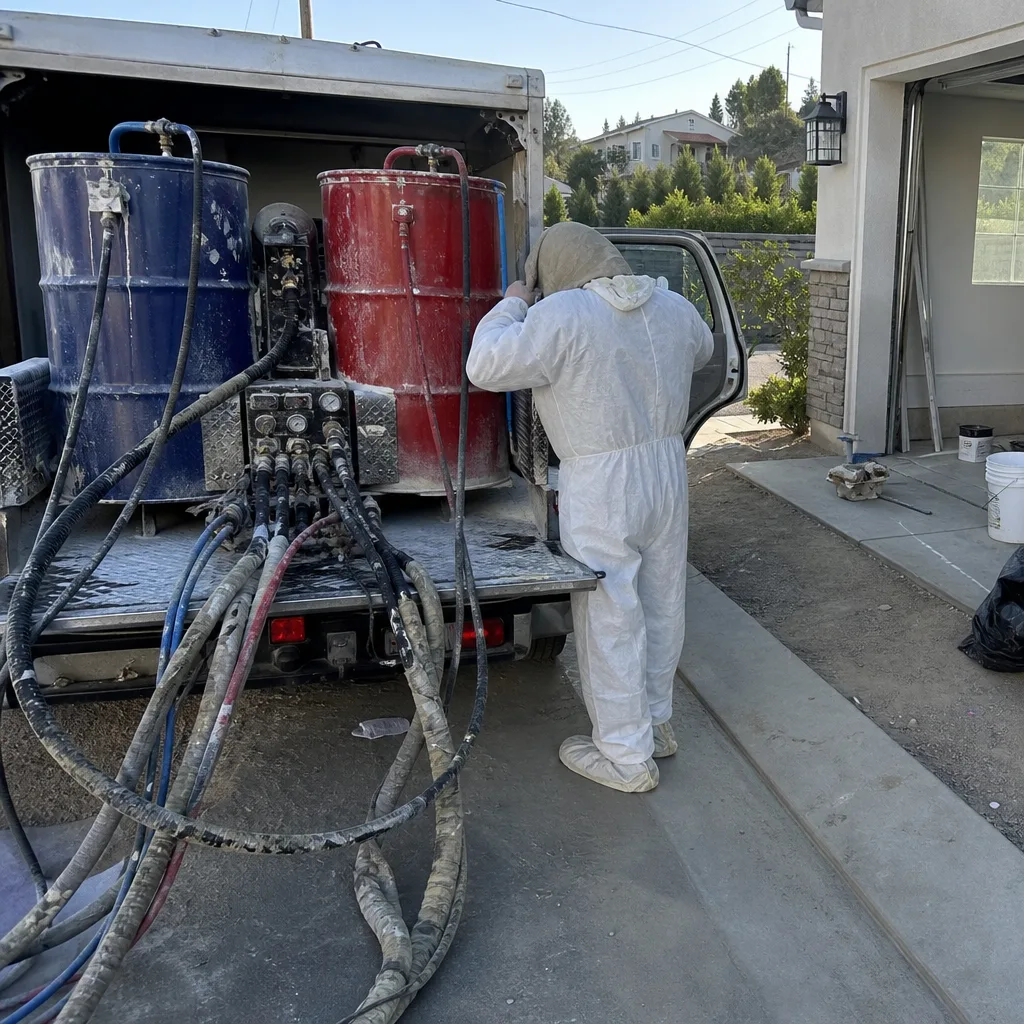
Attic Cleaning Services in Lake San Marcos matter more here than in most San Diego communities because of what decades of heat and lake-side humidity leave behind. Attics in these 1960s and 1970s homes accumulate decades of dust, old pest nesting, and degraded loose-fill insulation that’s been compressed flat. When the artificial lake raises localized humidity at night, that damp dust clings to everything and accelerates the breakdown of whatever insulation is left. Cleaning isn’t just cosmetic. It’s the prep step that makes new insulation perform. A full attic cleaning and sanitation in Lake San Marcos typically runs $700 to $1,700 depending on attic size and the condition we find.
When Lake San Marcos Attics Need Cleaning Before Insulation
If your attic has original batts that have gone dusty, compressed, or damp, blowing new insulation over them locks in the problem. Rodent droppings, old dust, and degraded fiberglass all reduce the effectiveness of whatever we install on top. We remove the old material, clean the deck, sanitize the space, and then install the new insulation to the proper depth. In the flat, low-slope sections of the low-rise resort-style units, this step is especially important because there’s so little vertical room that any debris cuts directly into the effective R-value.
Cleaning and Air-Sealing Go Together
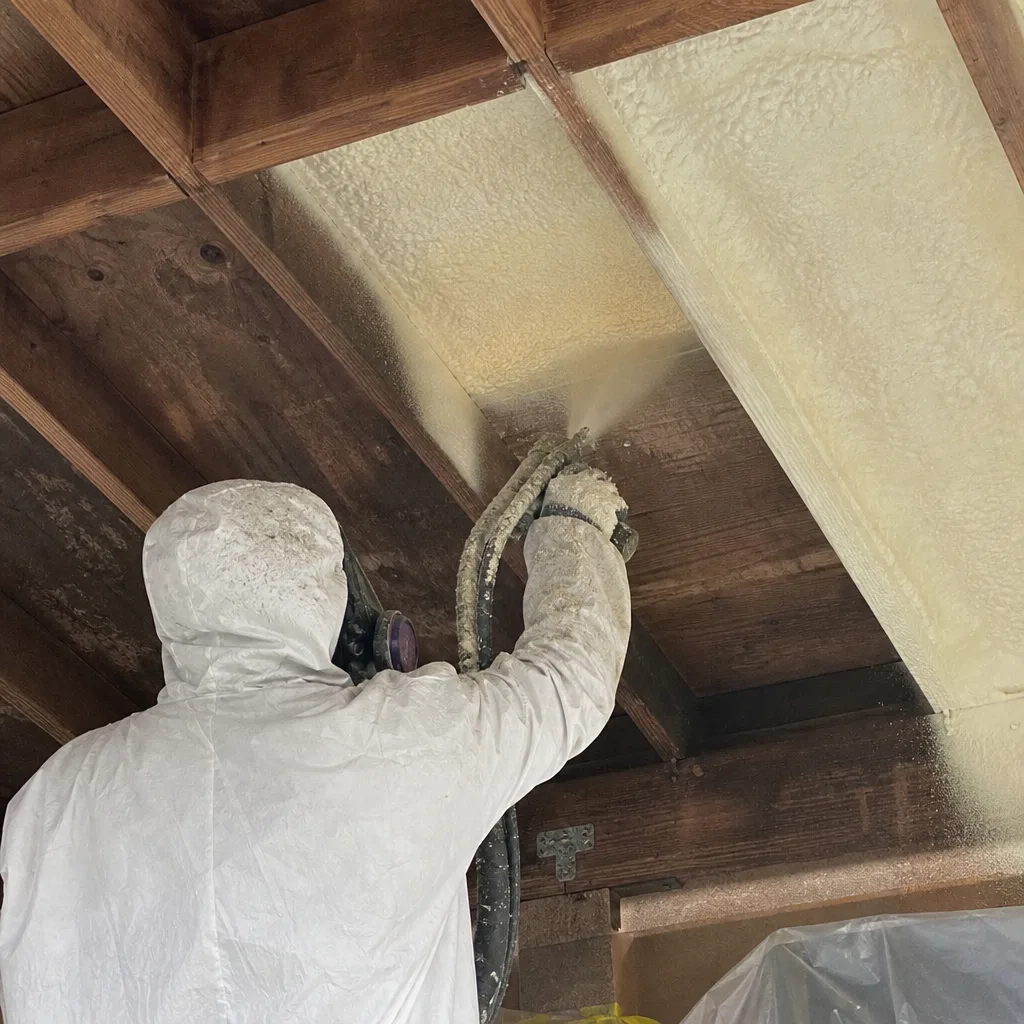
While the attic is clean and open, that’s the time to air-seal. The knee walls above west-facing lake-view living rooms are often bare 2×4 framing with no top-plate sealing. Air moves straight from the hot attic into the living space. We seal top plates, penetrations, and recessed light housings as part of the cleaning and insulation scope. It’s the single highest-value step in these specific homes, and you only get to do it once the old material is out.
What happens when you call
- 1
A real person answersNo phone trees - you reach a local pro.
- 2
You get an upfront price rangeHonest numbers before anyone is dispatched.
- 3
A background-checked tech heads outLicensed & insured, dispatched right away.
- 4
You approve before work beginsNothing starts until you say go.
Trusted Brands We Service in Lake San Marcos
We work with eight leading insulation brands, and that matters for Lake San Marcos homeowners because the right material depends on the attic, not on whatever happens to be on the truck. For shallow 1960s attics with tight clearance, we often recommend GreenFiber blown-in cellulose because it dense-packs into 2×4 cavities and shallow sections cleanly. For deeper flat sections, Owens Corning and Johns Manville batts and blown-in products give us dependable R-value per inch. We keep common materials stocked for fast turnaround, so a Lake San Marcos top-up or replacement doesn’t wait on a regional warehouse. You get a recommendation that fits your attic and your budget, with a written price before any work begins.
Common Attic Insulation Problems We See in Lake San Marcos Homes
- Bare 1960s knee walls above west-facing sliding glass doors. These were never insulated at the original build. The attic heat pours through the uncovered framing above the glass, and the living room spikes by late afternoon. We air-seal and dense-pack these sections on nearly every low-rise unit we service.
- Damp, compressed batts in shallow flat attics. The artificial lake pushes a slightly elevated dew-point inland at night. When batts were never sealed at the top plate, that moisture rides into the attic and wets the insulation over time. Compressed, damp batts lose most of their R-value.
- Radiant barrier sold alone on flat, low-slope roofs. Reflective foil without bulk insulation leaves the ceiling hot all evening in this valley’s heat-trap climate. We see these installations in Lake San Marcos and get called to add the missing bulk insulation afterward.
- Minimal-depth attic sections with no room for standard thick batts. The 2×4 framing and slab-on-grade construction in the original resort-style units leave shallow attic cavities. Standard R-38 batts don’t fit. Dense-pack or blown-in workarounds are needed, and most generic contractors don’t plan for it.
Pricing for Attic Insulation in Lake San Marcos, CA
Here are honest ranges for Lake San Marcos, based on what we actually see in this housing stock. A blown-in attic insulation top-up in a single-story ranch home runs $1,800 to $3,200. Full removal, cleaning, and replacement in the same vintage home runs $2,800 to $4,600. Dense-packing a specific knee-wall section above a lake-view living room runs $400 to $900 per wall. Radiant barrier installation runs $900 to $2,200 depending on roof area. Attic cleaning on its own runs $700 to $1,700. The exact number depends on attic access, square footage, current depth, and what we find during inspection. You’ll get a written quote before anything starts, and that price doesn’t move. Call (325) 240-5411 for a free estimate.
We Also Serve Cities Near Lake San Marcos
While this page is focused on Lake San Marcos, our crews regularly schedule work in nearby communities across the region. If you’re searching for Attic Insulation in Los Angeles, San Diego, San Jose, or San Francisco, the same Kingswell Guarantee applies: written pricing, a real arrival window, a clean job site, and a 365-day written guarantee on every job. Dispatch and scheduling are coordinated from our Los Angeles office, but the crews serving Lake San Marcos are local to this community.
Serving Lake San Marcos, CA - Our Local Coverage Area
We’re based in the Lake San Marcos area and know this community well. Use the map below to see our service coverage - if you’re nearby, we can almost certainly help.
FAQs About Attic Insulation in Lake San Marcos
Lake San Marcos sits in an inland valley that acts as a heat trap, producing summer temperatures 15 – 25°F higher than coastal communities just 10 miles west. Your attic in Lake San Marcos is exposed to significantly more heat than a coastal attic would be, which means it needs more insulation to keep the ceiling below livable. Additionally, homes here were mostly built in the 1960s and 1970s before Title 24 energy codes existed, so original insulation levels are far below what’s needed for this heat load. Call (325) 240-5411 and we’ll assess what your specific attic needs.
Yes, and it’s measurable. The lake raises localized humidity in the valley, which pushes a slightly elevated dew-point into shallow attics at night. That moisture wets uncompressed batts over time, especially where top plates were never sealed. Bulk insulation with proper air-sealing manages both the heat gain and the humidity, which is why we don’t recommend radiant barrier alone in Lake San Marcos. For an exact material recommendation based on your attic’s condition, call us for a free estimate.
Yes, and this is one of the most common calls we field in Lake San Marcos. Those west-facing sliding glass doors act as unshielded radiant heat collectors all afternoon, and the knee wall directly above the door is often bare 2×4 framing with no insulation. The heat pours through that wall into the living room. We air-seal the knee-wall top plates and dense-pack insulation into the shallow section above the door, and owners consistently report the living room stops spiking past the rest of the unit by late afternoon. Call (325) 240-5411 for a specific quote on your unit.
Yes, but it requires a different approach than a deep, walkable attic. The original 2×4 framing and shallow flat sections in these low-rise resort-style units leave no room for standard thick batts. We use dense-pack blown-in insulation or a blown-in workaround that maximizes R-value within the limited depth. The uniform build vintage in Lake San Marcos actually works in your favor here: we know the framing patterns before we even open the hatch. For a written price on your specific attic, call us today.
Usually yes to both, and here’s why. Attic cleaning removes decades of dust, degraded material, and pest debris that would otherwise sit under your new insulation. In Lake San Marcos’s heat, that old material breaks down faster and works against you. Radiant barrier makes sense on west-facing roofs with direct afternoon sun exposure, but only when paired with bulk insulation. We’ll give you a straight answer on what your attic actually needs, with a written price before any work starts. Call (325) 240-5411 and a live person answers, 24/7.
Our tech was on a call to a low-rise attached unit off Lake San Marcos Drive last summer. The original single-pane sliding glass door faced the southwest lake exposure, and the knee wall above it was bare 2×4 framing with no batt insulation at all. We air-sealed the knee-wall top plates before dense-packing GreenFiber into the shallow attic section. The owner called back three days later to say the west-facing living room had stopped spiking past the rest of the unit by late afternoon. That’s the kind of specific, patterned fix this community’s construction demands.
Written by Glenn Hartley, Owner at Woolsey Attic Insulation, serving Lake San Marcos.