
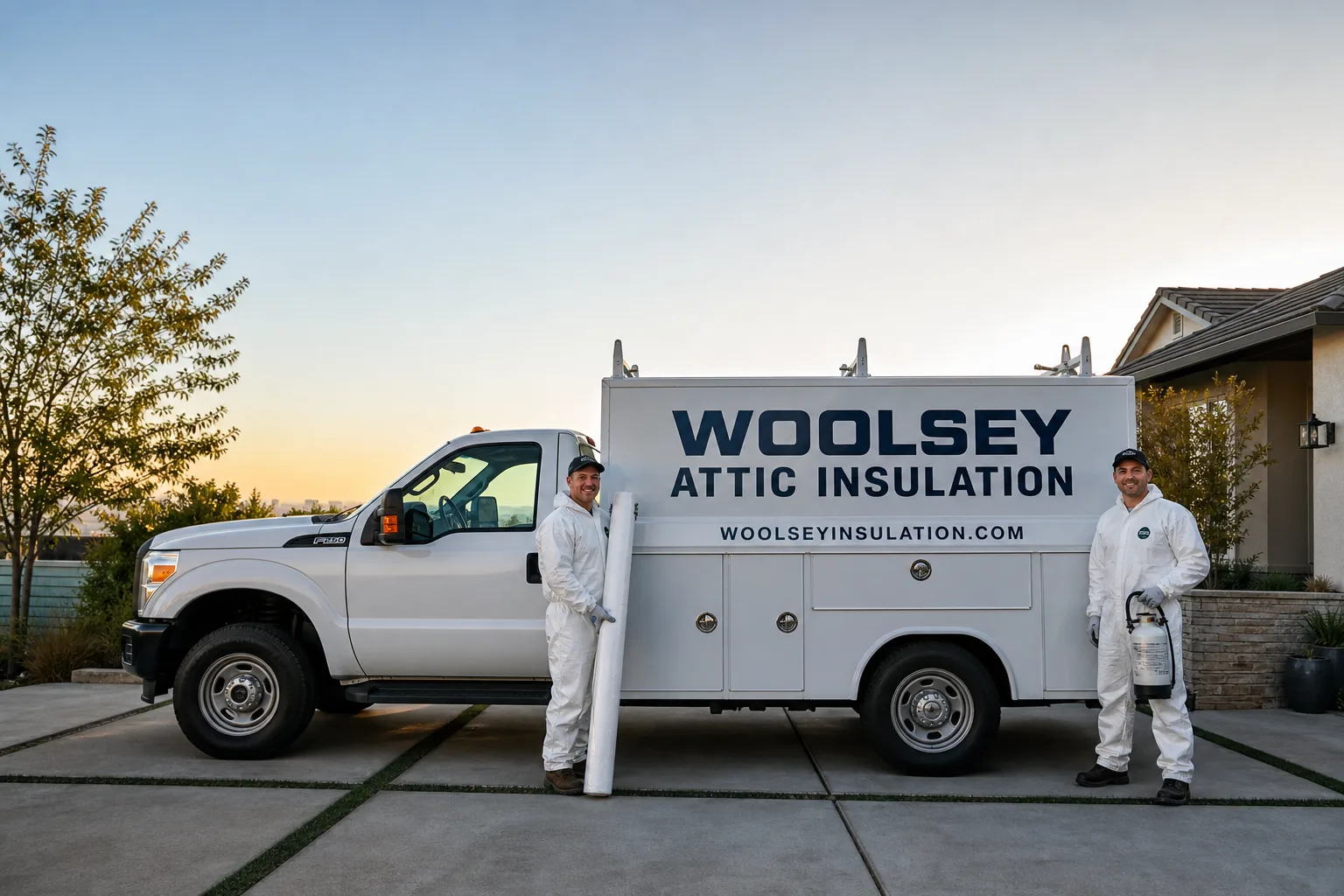
Fast, Reliable Attic Insulation Across Malibu
Attic insulation in Malibu isn’t a one-size-fits-all job. Most homes here fall into two camps: pre-1990 beach cottages along PCH with little to no insulation, or post-Woolsey rebuilds in the canyons that have to meet California’s Chapter 7A fire-resistant assembly rules. A standard fiberglass batt that works fine in Calabasas can fail inspection in Malibu Park. We know that because we’ve corrected enough of those failures to recognize them on sight. If you’re dealing with a hot upstairs, damp attic air, or an inspector’s flag, call us at (325) 240-5411 and we’ll walk you through what your house actually needs.
Why Woolsey Attic Insulation Is Malibu’s Preferred Attic Insulation Company
We built our reputation here on rebuilding trust as much as rebuilding attics. Homeowners in Malibu have been through a lot since 2018: displaced families, difficult insurance claims, contractors who vanished midway through a rebuild. When we show up, we understand the emotional weight of the house we’re standing in. That’s not something a crew from the Valley brings to a job in Point Dume.
Our customers in Malibu tell us two things consistently: the written price matched the final invoice, and the crew left the job site cleaner than they found it. That second part matters when your attic access is in a finished hallway or a bedroom closet. We run background-checked, uniformed technicians only, and a live person answers our phone 24 hours a day, seven days a week, not a voicemail tree. When you call (325) 240-5411, you get a scheduling coordinator who can book a Malibu visit without sending you through three transfer points.
We work under the Kingswell name: independently owned and operated, founded in 2002 as part of the Kingswell family of insulation companies. The Kingswell Guarantee is simple and written on every job: a committed arrival window, a clean job site, a written price before work starts, a written guarantee on the work, and a free return visit if anything fails within 365 days. Glenn Hartley leads our attic and spray foam insulation division, and he’s the person you’ll meet when the job calls for a second set of eyes on a complicated rebuild spec.
Attic Ventilation in Malibu
Attic ventilation in Malibu is where most insulation problems actually start, because ocean-facing homes pull salt-laden marine air through their vent openings every single day year-round. That air carries moisture and chloride, and both are hostile to standard vent hardware. Within three to five seasons on a PCH beach cottage, we routinely see galvanized soffit vents showing rust blooms, plastic ridge vents warping in summer heat, and fiberglass batts near the intake vents sagging from repeated dampness.
Corrosion-Resistant Vent Hardware
Our team swaps standard galvanized vents for stainless mesh screening and corrosion-resistant fasteners on ocean-facing rooflines. The difference isn’t cosmetic. Standard zinc coatings wash out quickly in salt air; stainless holds up. We also inspect the rafter bay airflow path to make sure intake and exhaust are balanced, because an attic that can’t breathe pushes damp air into the insulation and shortens its effective life dramatically.
Post-Rebuild Ventilation Correction
On a post-Woolsey rebuild in Malibu Park, our crew found the original attic venting fitted with standard plastic ridge vents and faced fiberglass batts that wouldn’t meet Chapter 7A. We switched the assembly to Rockwool mineral wool with corrosion-resistant fasteners and stainless mesh screening. We also replaced the attic access hatch gasket and added a radiant barrier in the rafter bays facing the Santa Ana-exposed roofline, then verified the ventilation balance before sign-off.
Radiant Barrier in Malibu
Radiant barrier in Malibu does the heavy lifting in canyon and hillside homes, where summer heat builds hard against the roofline and Santa Ana winds expose the attic to dry, scorching air. A properly installed radiant barrier reflects radiant heat away from the insulation below it, which keeps the attic cooler and reduces the load on your air conditioning. But the material choice matters here: standard foil-faced barrier with aluminum facing corrodes fast in salt air near the coast, so we spec heavier-gauge or coated facing for PCH-adjacent homes and standard foil for canyon properties.
Coastal Grade Foil Facing
Beachfront attics in Malibu’s Colony and along Broad Beach pull salt mist through their vents on most mornings. We use radiant barrier with coated or laminated facing on those jobs, because raw aluminum develops pinhole corrosion within a couple of seasons. The barrier still works while intact, but once pinholes form, moisture gets underneath and degrades the substrate.
Santa Ana Exposure
Hillside homes in Malibu Park, Trancas Canyon, and the roads off Kanan Dume get hit with sustained dry wind from October through January. Radiant barrier installed in those rafter bays has to withstand temperature swings of 40 degrees in a single day. We fasten it to manufacturers’ spacing specs and verify the air gap, because a barrier stapled flat against the decking loses most of its reflective value. Expect to pay $1,200 to $2,600 for a typical Malibu attic radiant barrier installation, depending on square footage and whether we’re working around existing storage or mechanicals.
Trusted Brands We Service in Malibu
We install and service attic insulation from eight major brands, but for Malibu jobs we lean on three regularly: Rockwool for its non-combustible mineral wool that satisfies Chapter 7A assembly reviews without argument; Owens Corning for high-performance fiberglass in retrofits where fire code doesn’t demand mineral wool; and GreenFiber for blown-in cellulose in mid-century beach cottages where dense-pack application tightens up old wall cavities and attic floors. We don’t push whatever’s on the truck. The material recommendation fits the house, the microclimate, and the code path the inspector is enforcing. That’s the way it should work.
Common Attic Insulation Problems We See in Malibu Homes
- Chapter 7A non-compliance on rebuilds. Post-Woolsey homes in Malibu Park and Trancas Canyon were sometimes finished with faced fiberglass batts that fail a non-combustible assembly review. That means removal and replacement with mineral wool, an expensive fix that could have been avoided at rough-in.
- Salt-air corrosion of fasteners and foil facings. Beach cottages along PCH pull marine-layer air through their vents all year. Staples rust, radiant-barrier foil pits, and insulation sags away from the decking at the eaves.
- Damp marine air in uninsulated pier-and-beam cottages. Original mid-century homes on minimal slab or pier foundations let humid ocean air migrate up into the attic. Without vapor management, mold forms on the underside of roof sheathing within a few years.
- Overheated canyon attics. Hillside homes without radiant barrier or adequate ventilation bake in summer. Attic temps above 140°F shorten shingle life and force air conditioners to work past their design load.
Pricing for Attic Insulation in Malibu, CA
A full attic insulation job in Malibu typically runs between $3,800 and $9,600, depending on square footage, access, and whether you’re doing a retrofit or bringing a rebuild up to Chapter 7A. Blown-in attic insulation runs $2,200 to $4,900 for a standard 2,000-square-foot Malibu home. Mineral wool batt installation is more, typically $4,800 to $8,500, because the material itself costs more and the labor takes longer. Radiant barrier falls between $1,200 and $2,600. Attic ventilation upgrades, including stainless vent replacement, run $800 to $2,100. Every job gets a written price before any work starts, no exceptions. Call (325) 240-5411 and Glenn or a senior estimator will give you an exact number, in writing, before anyone touches your attic.
We Also Serve Cities Near Malibu
Woolsey Attic Insulation serves homeowners throughout western Los Angeles County, including Attic Insulation work in Agoura Hills, Westlake Village, Thousand Oaks, and Calabasas. Those communities sit on the inland side of the 101, where fire codes are relaxed compared to Malibu but summer heat loads are higher. Our crews work both sides of the hills, and the material recommendations change based on which side your house sits on. If you’re in Malibu, you get the coastal and fire-zone expertise that inland companies simply don’t carry.
Serving Malibu, CA - Our Local Coverage Area
We’re based in the Malibu area and know this community well. Use the map below to see our service coverage - if you’re nearby, we can almost certainly help.
FAQs About Attic Insulation in Malibu
Yes, in most of Malibu, because the city sits almost entirely within Very High Fire Hazard Severity Zones and California Building Code Chapter 7A requires non-combustible assemblies in the wildland-urban interface. That means a mineral wool batt like Rockwool is typically the correct attic insulation material for rebuilt or newly remodeled homes in canyons and hillsides, not the fiberglass batt that would pass inspection in Calabasas or Thousand Oaks. Older pre-1990 homes grandfathered under previous codes aren’t always required to upgrade, but if your roof is opened for any reason, the inspector will usually require Chapter 7A compliance on the new assembly. Call (325) 240-5411 if you’re not sure which path your house is on; we’ll tell you straight.
Salt air matters because Malibu’s beachfront homes pull marine-layer air through their attic vents year-round, and that air carries chloride and moisture that attack standard fasteners, staples, and foil facings. Galvanized staples rust through in three to five seasons. Aluminum radiant barrier pits at the surface. Glass fiber insulation absorbs the dampness and loses loft. The fix is a combination of stainless or corrosion-resistant hardware, densely packed insulation that resists sagging, and a ventilation balance check so moist air doesn’t linger inside the attic. We spec these details on every ocean-facing job east of the pier and west of Zuma.
Yes, if your home sits in a canyon or hillside where summer attic temps regularly climb above 130°F, and especially if your roofline faces the Santa Ana exposure. A well-installed radiant barrier with the right air gap can drop attic temperature 20 to 30 degrees, which takes measurable strain off your air conditioner. The materials run $1,200 to $2,600 for a typical Malibu attic, and the payback is fastest on hillside homes with full sun exposure and ductwork running through the attic space. Call (325) 240-5411 and we’ll tell you if your rafter bays are a good fit before you spend anything.
Yes, and we go back and forth between both job types in the same week. One day we’re pulling non-compliant fiberglass batts out of a Malibu Park rebuild that failed a Chapter 7A review and reinstalling Rockwool mineral wool with stainless fasteners. The next day we’re in a 1962 beach cottage on Las Flores Canyon Road, dense-packing GreenFiber cellulose into wall cavities that never held insulation at all. The materials and the code path are completely different, but the process is the same: written price first, arrival window second, clean site at the end, written guarantee on every job.
Three problems dominate: rusted vent hardware near the coast, unbalanced airflow in mid-century cottages where there’s intake but not enough exhaust, and plastic ridge vents warping and cracking on canyon homes with sustained sun exposure. The rust issue is a materials fix; the airflow issue is a design calculation; the warping issue is a product selection problem. All three are solved by measuring the attic’s net free vent area and matching it to the square footage, then installing hardware that survives the salt air or the sun, whichever your location dictates. Every job includes a ventilation check, not just an insulation installation.
Call Woolsey Attic Insulation for Your Malibu Attic
If your attic is too hot, too damp, under-insulated, or flagged by an inspector, we’re the Malibu crew that will give you a straight answer and a written price before any work begins. Glenn Hartley and our Attic Insulation team know the difference between what a beach cottage needs and what a canyon rebuild demands, and we’ll never sell you a material your house doesn’t need. Call (325) 240-5411 now for a free estimate. A live person answers, day or night.
Written by Glenn Hartley, Owner at Woolsey Attic Insulation, serving Malibu since 2002.