
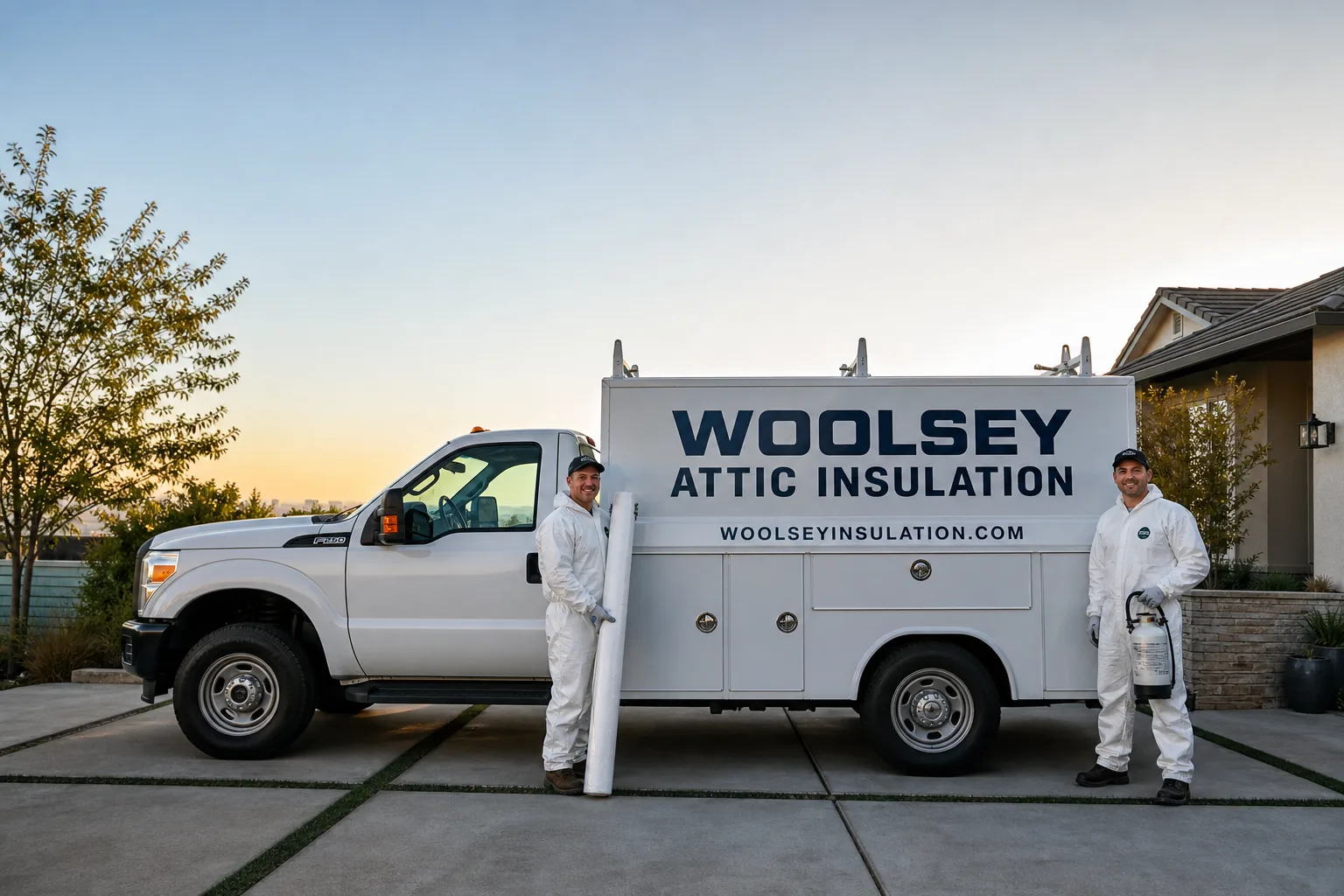
Fast, Reliable Attic Insulation Across Santa Monica
Most attic insulation jobs in Santa Monica run between $1,800 and $4,200 depending on attic size, existing insulation condition, and material choice, and we hand you a written line-item price before any work starts. That number matters less than what’s behind it: a crew that shows up when we say, a job site left cleaner than we found it, and a guarantee in writing that covers the work for 365 days. If you’re dealing with damp, compressed insulation in a 1920s bungalow north of Montana Avenue or a 1960s apartment building in Sunset Park, call (325) 240-5411 and a live person answers, day or night.
We know Santa Monica attics differently than a crew that mostly works Culver City or El Segundo. The marine layer changes how insulation performs. Salt air changes what it does to hardware over time. And the city’s Green Building Ordinance changes what you’re legally required to fix when you pull a permit. That’s the page you’re on, and that’s the job we do.
Why Woolsey Attic Insulation Is Santa Monica’s Preferred Attic Insulation Company
Woolsey Attic Insulation is part of the Kingswell family of independently owned and operated insulation companies, founded in 2002. Glenn Hartley leads our team, and he built the company around a single observation: homeowners in coastal cities like Santa Monica get burned by vague promises. The Kingswell Guarantee exists to fix that. You get a written price before work starts, a committed arrival window, a clean job site, a written guarantee on the work, and a free return visit if any repair fails within 365 days. That’s the whole arrangement, in writing, every job.
Santa Monica customers call us for two very different reasons. Some have a comfort complaint: a bedroom over the garage that never cools down, a second floor that bakes in August. Others have no comfort complaint at all, but a renovation uncovered saturated fiberglass batts or mold in the attic cavity. Both are real jobs. Both are jobs we handle. And because dispatch runs from our Los Angeles office with crews serving Santa Monica locally, we’re typically in your neighborhood faster than a national outfit that’s routing a truck from the Valley.
Our technicians arrive in uniform, background-checked, and they know the difference between a 1920s Spanish Revival in North of Montana and a 1950s wood-frame fourplex off Pico. That matters when you’re deciding whether to blow cellulose over old batts or pull everything out and start fresh. It’s not a generic recommendation. It’s a Santa Monica recommendation.
Attic Mold Removal in Santa Monica
Attic Mold Removal in Santa Monica is a moisture problem before it’s a mold problem, and that’s the critical order of operations. Salt-laden marine air gets into attic and wall cavities, condenses against cool surfaces at night, and saturates fiberglass batts, which then hold that moisture against wood framing for months at a time. By the time a homeowner notices staining on the attic sheathing or a musty smell drifting down through a bedroom ceiling, the mold has usually been growing for a while. A typical mold remediation scope in a Santa Monica attic runs between $1,200 and $3,800 depending on the square footage of affected sheathing and whether the contaminated insulation needs to come out. We remove the mold with a fungicide treatment that doesn’t just kill what’s on the surface, address the moisture entry point, and then replace the insulation with a material that won’t wick the next season’s humidity back into the assembly.
How We Identify the Moisture Source
Mold never appears randomly. In Santa Monica attics, the usual culprits are bathroom vents that terminate in the attic instead of outside, unsealed can lights that let warm indoor air into a cold nighttime attic, and inadequate ventilation at the soffits or ridge. Before we treat a single square foot of mold, we trace the moisture path and tell you what’s feeding it. Otherwise you’re just cleaning up after a leak that’s still leaking.
What Removal Actually Involves
We contain the work area so spores don’t drift into your living space, remove the contaminated insulation, treat the framing and sheathing, and haul everything out the same day. Then we air-seal the bypasses and install new insulation with a vapor retarder positioned correctly for Santa Monica’s coastal climate. The goal isn’t just a clean attic. It’s an attic that stays clean after the next June gloom settles in.
Attic Insulation Removal in Santa Monica
Attic Insulation Removal in Santa Monica happens more often than homeowners expect, and usually not because the insulation was wrong in the first place. It’s because the marine layer spent twenty years feeding moisture into the attic cavity, and those compressed, damp fiberglass batts aren’t doing thermal work anymore. They’re holding water against your ceiling joists. A full removal and replacement in a typical Santa Monica attic runs between $2,500 and $5,500 depending on attic accessibility, contamination, and the replacement material you choose. We bag and remove the old material, clean the deck, and install fresh insulation that’s sized and selected for coastal conditions, not for a house in Palm Springs.
When Removal Is the Only Honest Answer
If you can see visible mold on the batts, if rodent activity has left droppings throughout the attic, or if the insulation has compacted to less than half its original loft, blowing new material over the top doesn’t fix anything. It’s a cover-up. In Santa Monica, where salt air accelerates material breakdown, old fiberglass often looks fine from the top but is saturated and useless underneath. We’ll tell you which situation you have, and we’ll give you a written price for whichever route actually solves it.
Replacement Materials for Coastal Air
Once the old material is out, Santa Monica attics perform best with either blown-in cellulose treated for moisture resistance or closed-cell spray foam that stops air and moisture movement in one pass. The choice depends on your attic’s ventilation setup and whether you’re using the space for storage. We work with eight leading insulation brands including Johns Manville, Knauf, Rockwool, CertainTeed, Icynene, Demilec, and GreenFiber, so the recommendation fits your attic, not whatever happens to be loaded on the truck that day.
Trusted Brands We Service in Santa Monica
We install and stand behind materials from Johns Manville, Knauf, Rockwool, CertainTeed, and several other manufacturers, and we’ve chosen them for a specific reason: Santa Monica’s coastal humidity punishes cheap insulation. Johns Manville and CertainTeed make fiberglass batts with excellent moisture performance when faced correctly. Rockwool stone wool is naturally hydrophobic and handles salt air well. Knauf’s blown-in products give us flexibility on older attics with odd joist spacing. When we quote your job, the brand is named in writing, and the material choice is tied to your specific attic conditions. If you call us about an Attic Insulation project and you’re not sure which material fits, we’ll walk you through the trade-offs without turning it into a sales pitch.
Common Attic Insulation Problems We See in Santa Monica Homes
- Corroded attic hardware before thermal failure. In Santa Monica, the marine-layer humidity plus salt-laden air means attic hardware including springs, hinges, rollers, tracks, and opener chains corrodes years faster than inland, so attic work here is as much about controlling moisture and corrosion as it is about thermal resistance. We regularly see 10-year-old hardware that looks like it spent 30 years in Galveston.
- Saturated and compressed fiberglass batts. Persistent marine-layer moisture wicks into exterior walls and attic cavities, compressing fiberglass batts and eventually growing mold. On a 1920s Spanish Revival in North of Montana, our tech found the original garage-door springs and opener chain already rusted and the attic fiberglass batts compressed and damp from marine-layer humidity; we replaced the corroded hardware with galvanized springs and nylon rollers, removed the saturated batts and remediated mold, then blew in GreenFiber cellulose with a proper vapor retarder to keep the salt air from wicking into the assembly.
- Hidden damage in rent-controlled apartments. Santa Monica has a massive stock of 1950s through 1970s wood-frame apartment buildings, many frozen in near-original condition by decades of rent control and tenant-in-place constraints. Those wall cavities and attics often still have the original fiberglass, or none at all, and the first time anyone looks is usually a renovation or a leak.
- Green Building Ordinance surprises. Santa Monica’s Green Building Ordinance can trigger a full insulation upgrade when a homeowner pulls a permit for even a modest interior remodel in an older bungalow. That generates a steady stream of unexpected but required insulation scopes that a contractor in neighboring West LA or Culver City simply doesn’t see at the same frequency.
Pricing for Attic Insulation in Santa Monica, CA
We Also Serve Cities Near Santa Monica
Our teams handle attic insulation jobs throughout coastal Los Angeles County, including Marina del Rey, Culver City, Beverly Hills, and El Segundo. If you’re searching for Attic Insulation in Santa Monica, we serve the entire city from the beach to the 405, from Sunset Park up through North of Montana. The scheduling and dispatch run from our Los Angeles office, but the crews working in your attic are local to this area and know these houses.
Serving Santa Monica, CA - Our Local Coverage Area
We’re based in the Santa Monica area and know this community well. Use the map below to see our service coverage - if you’re nearby, we can almost certainly help.
FAQs About Attic Insulation in Santa Monica
Does Santa Monica’s mild coastal climate mean my attic insulation is fine as-is?
No. Santa Monica’s famously narrow, marine-layer-locked temperature band with summer highs rarely topping 78°F and winters rarely dipping below 50°F actually masks insulation problems because you never get the obvious thermal complaint of a cold bedroom in January. Meanwhile the coastal humidity is saturating your attic batts and corroding your attic hardware. The city’s Green Building Ordinance means nearly any permitted renovation triggers mandatory insulation upgrades, so even a modest remodel can require a scope you weren’t planning on. If you own an older Santa Monica home and haven’t looked in the attic in five years, call (325) 240-5411 for an inspection.
Why do attic springs and opener chains rust so fast in Santa Monica?
The salt-laden marine air is the culprit. Santa Monica sits directly in the marine layer’s path, and that persistent coastal humidity plus salt accelerates corrosion on any exposed metal in the attic: springs, hinges, roller brackets, track fasteners, and opener chains all degrade years faster than they would in Culver City or Beverly Hills. We address it by specifying galvanized or coated springs, stainless hardware where it matters, and nylon rollers that don’t rust at all. But the bigger fix is moisture control in the attic itself, because the same air that’s rusting your hardware is also soaking your insulation.
Can Santa Monica’s Green Building Ordinance require me to upgrade insulation during a remodel?
Yes, and it catches people off guard more than any other local code requirement we see. The ordinance is a reach code that exceeds California Title 24 minimums, and pulling a permit for an interior remodel in an older bungalow can trigger a full insulation upgrade as a condition of permit approval. A homeowner who planned a kitchen refresh suddenly has a required insulation scope on their hands. We handle those jobs frequently, and because we write a guaranteed price before any work starts, you’ll know exactly what the compliance piece costs before you commit to the remodel.
What insulation materials work best for Santa Monica’s coastal humidity?
The best material depends on your attic’s ventilation and whether you’re air-sealing the space, but in coastal conditions we most often recommend either closed-cell spray foam or blown-in cellulose with a properly positioned vapor retarder. Closed-cell spray foam acts as an air barrier, a vapor barrier, and insulation in one pass, and it doesn’t wick or absorb moisture the way fiberglass does. Blown-in cellulose from GreenFiber or similar treated products performs well in vented attics when paired with a vapor retarder placed on the warm side of the assembly. The key in Santa Monica is moisture management first, thermal performance second.
How do you handle attic mold found during an insulation job in Santa Monica?
If we find mold during an insulation inspection or removal, we stop and show you exactly what we found. Then we give you a written price for the combined scope: mold treatment, insulation removal, air-sealing, and new insulation. We never cover mold with new insulation. We contain the area, treat the sheathing with a fungicide, remove the contaminated material, and then address the moisture source that caused it. Most combined mold and insulation jobs in Santa Monica finish in one or two days. Call (325) 240-5411 for a free estimate, and we’ll give you a number that won’t change at the door.
Call Woolsey Attic Insulation for Your Santa Monica Attic
If your Santa Monica attic has damp insulation, mold, corrosion on hardware, or you’re staring at a Green Building Ordinance requirement after pulling a remodel permit, we’ll give you a written price before any work starts and a 365-day guarantee in writing when it’s done. Glenn Hartley and the Woolsey team answer the phone 24/7 at (325) 240-5411. Call now for a free estimate and we’ll set a real arrival window.
Written by Glenn Hartley, Owner at Woolsey Attic Insulation, serving Santa Monica and the surrounding coastal communities.