
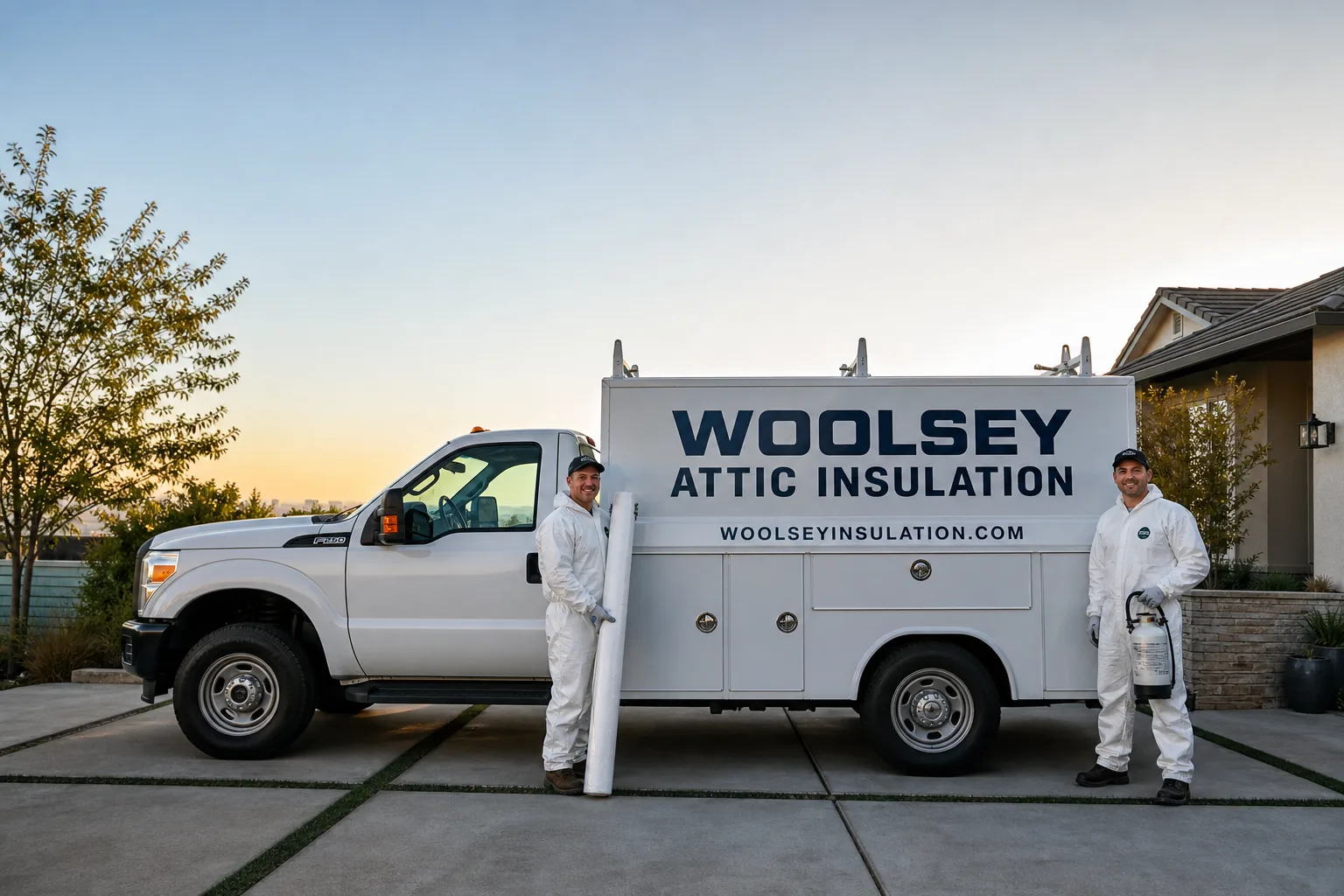
Fast, Reliable Attic Insulation Across Wildomar
Most attic insulation jobs in Wildomar run between $1,800 and $4,500 for a full top-up or replacement, and we give you the exact written number before a single bag of material leaves the truck. Wildomar’s thermal-corridor geography means your attic hits 150°F+ more afternoons than not in summer, and homes built in the 1990s and 2000s are now 20 to 30 years past their original insulation’s useful life. We serve the full Wildomar area including the hillside streets off Clinton Keith Road and the acreage lots east of the 15. Call (325) 240-5411 and a live person picks up, any hour, any day.
Why Woolsey Attic Insulation Is Wildomar’s Preferred Attic Insulation Company
Wildomar homeowners call us because the math of this valley is unforgiving. The same afternoon thermals that make Lake Elsinore a paragliding destination slam into Wildomar’s western hillside streets, pressurizing attic spaces and pushing conditioned air out of every unsealed crack. Glenn Hartley, who leads Woolsey Attic Insulation, has made sure every crew that rolls into Wildomar understands that dynamic before they even open the attic hatch. We’re not just adding R-value; we’re fixing how these specific homes breathe under thermal load.
The Kingswell Guarantee is in writing on every Wildomar job: a written price before work starts, a committed arrival window, a clean job site when we leave, and a 365-day guarantee on the work. If it’s not done right within that year, we come back and make it right at no charge. No voicemail maze, no door-step price adjustment, no vanishing act after the check clears. Dispatch for Wildomar is coordinated from the Inland Empire Riverside-San Bernardino office, and crews run Wildomar routes daily.
Attic Mold Removal in Wildomar
Attic Mold Removal in Wildomar usually means removing moisture-laden insulation, treating the affected framing, and correcting the ventilation problem that let condensation form in the first place. Wildomar’s concrete tile roofs soak up heat all afternoon and then cool fast after sunset, and without proper soffit-to-ridge airflow that thermal swing sweats inside the attic cavity. We see it most often in 1990s tract homes where the original baffles are missing or blocked by settled insulation. Most attic mold removal jobs in Wildomar run $900 to $2,800 depending on attic size and how far the growth has spread into the framing.
How We Handle Mold in Wildomar Attics
The process starts with removing contaminated insulation so the treatment actually reaches the wood. Then we treat the sheathing and framing, seal the penetration points that let moist house air rise into the attic, and set new baffles before blowing fresh insulation back in. A mold removal that skips the ventilation fix is a mold recurrence waiting for the next cool, damp December night.
When Mold Means Remove, Not Just Treat
If the mold has worked into the underside of the roof deck or the insulation itself is saturated with moisture and compressed, we recommend full removal and replacement. Blowing new insulation over moldy old batting just buries the problem and gives it a nice warm place to keep growing. We inspect first, show you what we found, and then give you the written price before any work begins.
Attic Insulation Removal in Wildomar
Attic Insulation Removal in Wildomar is a job we do weekly, and it’s the right call for most 1990s-era homes around here. The original fiberglass batts those builders put in have spent 20 to 30 years cycling between freezing winter nights and 150°F summer afternoons, and they’re now settled to an R-value in the mid-teens to low 20s. The sticker from the builder doesn’t reflect what’s actually up there anymore. Most attic insulation removal in Wildomar runs $1,000 to $2,400, then we blow new material to R-38 or better on top of a sealed, baffled attic floor.
Rodent Damage and Contamination
Wildomar’s semi-rural edges and hillside lots mean rats, mice, and even squirrels get into attic cavities through the same gaps that leak air. Their droppings and urine compress insulation, destroy R-value, and make the attic a health hazard every time the HVAC kicks on and stirs up particulates. Removal, sanitizing, sealing entry points, and re-insulating is the only complete fix.
Preparing for Air Sealing and Baffle Work
You can’t seal top plates and can-light housings through a foot of old blown-in material or settled batting. Removal gives our crew a clean attic floor to work on, so the air sealing actually gets done right instead of just being punched through existing insulation. Every removal we do in Wildomar ends with baffles set at every soffit vent so the new blown-in material can’t short-circuit the tile roof’s ventilation path again.
Trusted Brands We Service in Wildomar
We install and service Attic Insulation using materials from Owens Corning, Johns Manville, and GreenFiber, and the brand we recommend depends on your attic’s geometry, your roof’s ventilation, and what your home actually needs. The choice is never about what happens to be on the truck that day. For Wildomar hillside homes where air sealing matters as much as R-value, we often pair a GreenFiber dense-pack cellulose top-up with a full top-plate and can-light sealing pass. For standard 2×4 or 2×6 tract attics, blown-in fiberglass from Owens Corning or Johns Manville gets you to R-38 at a lower cost. We stock materials locally for Wildomar routes, so once your written price is set, we can usually schedule the same week.
Common Attic Insulation Problems We See in Wildomar Homes
- Settled 1990s-era fiberglass batts: The builder’s original R-30 or R-38 estimate is now an R-19-ish compressed mess after decades of Wildomar’s 150°F attic cycling. Most homes we inspect in Wildomar are sitting at half their intended R-value.
- Wind-driven infiltration on hillside streets: Homes off Gunnerson Lane and the western slope get pressurized by afternoon valley thermals, pulling cooled air out through unsealed top plates and can-light gaps. Those homes need air sealing as much as insulation, which surprises a lot of homeowners.
- Baffles blocked by old blown-in insulation: Concrete tile roofs in Wildomar depend on soffit-to-ridge airflow to shed all the radiant heat they absorb each afternoon. Without baffles, the insulation blocks the soffit vents and the attic cooks all night.
- Vermiculite or early-era blown fiberglass from pre-1990 builds: The older ranch and manufactured homes on Wildomar’s acreage lots often have little to no insulation at all, or material that’s been compressed by years of rodents and foot traffic. Full removal and a fresh R-38+ blow-in is the standard fix.
Pricing for Attic Insulation in Wildomar, CA
Here are the honest numbers for this market. A straightforward blown-in top-up to R-38 over an existing 1,200 to 1,800 square foot attic runs $1,200 to $2,000. Full removal of old, contaminated, or settled insulation plus a fresh blow-in to R-38 typically lands between $2,000 and $4,500 depending on attic size, access difficulty, and how much air sealing we do at the same time. Attic mold removal and treatment runs $900 to $2,800. These are Wildomar-specific ranges, not national averages, and they’re shaped by our actual labor and material costs here. The written price you get before work starts is the price you pay. Free estimates, upfront numbers, no door-step surprises. Call (325) 240-5411 to schedule one.
We Also Serve Cities Near Wildomar
Our crews run daily routes through Wildomar and the surrounding Inland Empire communities. If you’re in Murrieta, Lake Elsinore, Menifee, or Temecula, we send the same background-checked, uniformed technicians with the same written-price guarantee. Call (325) 240-5411 from anywhere in the area and a live person answers.
Serving Wildomar, CA - Our Local Coverage Area
We’re based in the Wildomar area and know this community well. Use the map below to see our service coverage - if you’re nearby, we can almost certainly help.
FAQs About Attic Insulation in Wildomar
Yes, in most cases the original material has settled to R-19 to R-25 after 20 to 30 years of Wildomar’s extreme thermal cycling. The builder’s sticker might say R-38, but fiberglass batts lose loft and R-value as they compress, and 150°F attic temperatures accelerate that process. We inspect and measure before recommending anything, and the written report shows you exactly what’s up there now.
On those hillside properties, air sealing often matters more than adding insulation. The afternoon valley thermals that funnel up the western slopes pressurize your attic cavity and push conditioned air out through unsealed top plates, can lights, and wiring penetrations. R-38 insulation can’t stop a leak. Sealing can. Call (325) 240-5411 and we’ll explain what’s happening in your specific attic.
Because you’d be burying compressed, sometimes contaminated material under a fresh layer and locking in the problem. Removal gives us a clean surface to seal penetrations, set baffles, and verify the attic floor is actually ready for new insulation. If your old material has rodent contamination, moisture damage, or mold, topping it off is the wrong fix, and in Wildomar we see all three regularly.
150°F is common for Wildomar attics in mid-summer, but it’s also a sign your ventilation and insulation are failing to manage the heat. A properly baffled, R-38-insulated attic with functioning soffit-to-ridge airflow will run closer to 120 – 130°F on a 105°F afternoon, and more importantly, it won’t radiate that heat back into your living space all evening. If your attic is hitting 150°F and your upstairs stays hot after sunset, call (325) 240-5411.
Yes. We work on Wildomar’s older ranch and manufactured homes on the acreage lots east of the 15, and those jobs often need more than a simple top-up. Those homes frequently have little to no wall insulation, undersized attic cavities, and decades of rodent traffic through the insulation. Full removal and a proper blow-in to R-38 is what we recommend, and the written price covers the whole job before we start.
Written by Glenn Hartley, Owner at Woolsey Attic Insulation, serving Wildomar and the surrounding Inland Empire communities.