
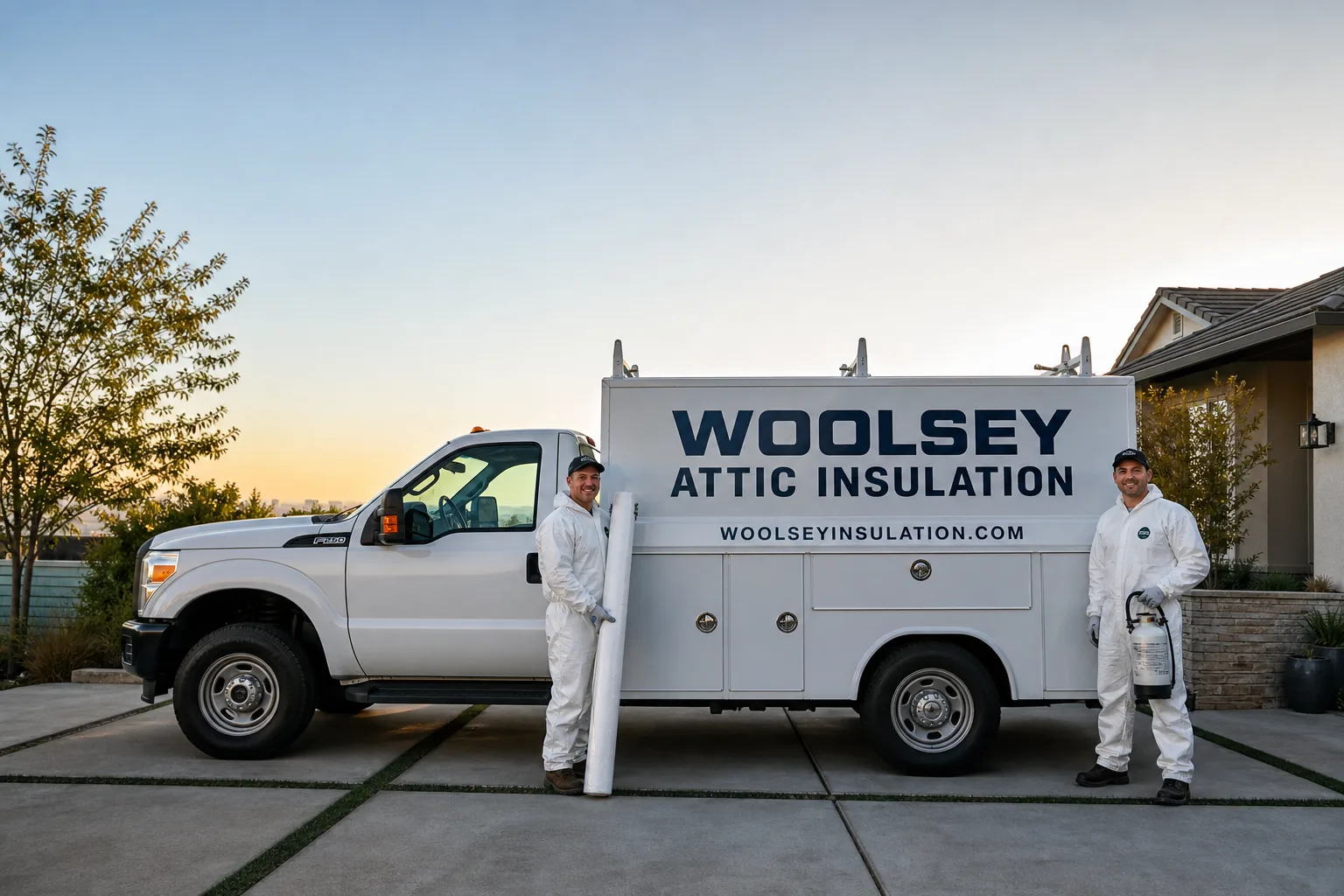
Fast, Reliable Attic Insulation Across Alpine
Most attic insulation jobs in Alpine run between $1,800 and $4,200 for blown-in installation, and between $2,500 and $6,500 when old material needs removal first. We give you the exact written number before any work starts, not an estimate that shifts at the door. Alpine’s elevation and fire-zone designation make insulation decisions here different from anywhere else in San Diego County, and we plan every job around those specifics. Call (325) 240-5411 for a free estimate and a straight answer about what your attic actually needs.
Why Woolsey Attic Insulation Is Alpine’s Preferred Attic Insulation Company
Alpine homeowners deal with temperature swings that coastal San Diego never sees. A 30 to 40 degree diurnal swing in summer means your attic bakes at noon and chills by midnight. Low-20s winter nights mean heat escapes through every unsealed gap. We understand that because we work in Alpine attics regularly, not occasionally.
Our Attic Insulation crews know what post-Cedar Fire rebuilds look like inside the attic: fast-blow fiberglass batts that settled years ago, recessed can lights leaking air, attic hatches with no weatherstripping, top plates never sealed. Glenn Hartley leads the team with a simple rule: show up in the committed window, give a written price first, leave the house cleaner than we found it, and put the guarantee in writing. Every job. No exceptions.
We answer the phone with a live person 24 hours a day, 7 days a week. When you call about your attic at 9pm on a Sunday, you get a real human who can schedule a visit to Alpine, not a voicemail maze.
Alpine sits at roughly 1,800 feet elevation inside a designated Wildland-Urban Interface fire-hazard zone. Summer highs push past 95 to 100 degrees. Winter nights dip into the low 20s. That thermal range means insulation here must handle genuine year-round heating and cooling loads, not just the mild coastal cycle most San Diego insulation companies build for. We plan Alpine jobs accordingly.
Attic Insulation Removal in Alpine
Attic Insulation Removal in Alpine is a job we handle constantly, particularly in homes rebuilt between 2004 and 2007 after the Cedar Fire. Those builds went up fast under 2003 Title 24 rules. Twenty years later, the fiberglass batts have settled, shifted, and stopped doing their job. When you need removal, we vacuum out the old material, inspect what’s underneath, and prepare the attic for new insulation that actually fits your home’s thermal reality.
A full removal in Alpine typically runs $1,800 to $3,200 depending on attic size and material condition. If you’re adding new insulation on top of old, that’s a different conversation. But when old batts are compressed, rodent-damaged, or saturated with dust and debris from decades of Santa Ana winds, removal is the honest starting point.
Post-Cedar Fire Rebuilds
Homes from 2004 to 2007 look newer than they perform. The insulation was installed fast, often with poor coverage at edges and around penetrations. Recessed light cans act like chimneys for conditioned air. The attic hatch leaks. Top plates were rarely sealed. We find these failure points on nearly every rebuild we inspect in Alpine.
Pre-Fire Ranch Construction
Original 1960s through 1980s rural ranch homes on Alpine’s larger lots often have fiberglass batts that were never installed correctly in the first place. Paper facing torn, batts shoved around framing, gaps at every corner. Alpine’s freeze-thaw cycle and summer heat have spent decades exposing those gaps. Removal and replacement is the only real fix.
Blown In Insulation in Alpine
Blown In Insulation in Alpine is the workhorse recommendation for most attics we see. It fills irregular spaces that batts can’t, it achieves a consistent R-value across the entire attic floor, and it’s the fastest path to real comfort in Alpine’s climate. A typical blown-in job here runs $1,800 to $4,200 depending on square footage and target R-value. We write that number down before work starts and it doesn’t change.
We blow in either fiberglass (GreenFiber or Owens Corning) or mineral wool (Rockwool) depending on the fire-hazard conversation. In Alpine’s WUI zone, Rockwool’s fire resistance is a genuine selling point. It doesn’t burn. For homes where budget is the priority and the attic is properly sealed, fiberglass performs well and costs less.
Air Sealing Before You Blow
Blowing new insulation over unsealed bypasses wastes your money. Alpine’s cold winter nights pull warm air through every gap, and no amount of insulation stops air movement. We seal top plates, wire penetrations, recessed cans, and the attic hatch before we blow. That’s the difference between a job that lowers your SDG&E bill and one that just makes your attic look different.
Top-Up for Existing Homes
If your attic has old batts that are still in decent shape but just not thick enough, a top-up with blown-in insulation gets you to current recommended R-values without a full removal. In Alpine’s summer heat and winter cold, moving from R-19 to R-38 or R-49 changes what your HVAC system has to do every single day. Top-ups typically run $1,200 to $2,600.
Trusted Brands We Service in Alpine
We work with eight leading insulation brands and choose based on what your Alpine home actually needs. For blown-in fiberglass, we use Owens Corning or GreenFiber. For fire-resistant mineral wool, we install Rockwool. For batt jobs, Johns Manville and Knauf are in the truck. We stock material locally for Alpine customers, which means faster scheduling and no waiting on a warehouse two hours away. The brand recommendation comes from your house, not from whatever is already loaded on the truck that morning.
Common Attic Insulation Problems We See in Alpine Homes
- Settled 2003 Title 24 fiberglass. Homes rebuilt after the Cedar Fire got fast-blow batts that have compressed and shifted over 20 years. A home that looks like it should perform well often tests like a 1970s build.
- Recessed light and hatch bypasses. Nearly every Alpine rebuild we inspect has unsealed can lights and an attic hatch with zero weatherstripping. These are direct paths for conditioned air to escape year-round.
- Original ranch-era batts failing. Pre-fire 1960s to 1980s homes frequently have fiberglass that was never installed correctly. Torn facing, gaps at framing, insulation falling away from eaves. Alpine’s temperature swings expose every one of those gaps.
- Santa Ana wind loading. Fall winds funnel through the chaparral and spike cooling loads just as people think summer is over. An unsealed, under-insulated attic loses that fight immediately, and your AC runs harder than it should.
Pricing for Attic Insulation in Alpine, CA
Here’s what you can expect in Alpine specifically. Blown-in attic insulation runs $1,800 to $4,200 for most homes. Attic insulation removal runs $1,800 to $3,200. A top-up over existing insulation runs $1,200 to $2,600. Batt installation for new builds or small spaces runs $900 to $2,100. What moves the number: attic square footage, target R-value, access difficulty, and whether removal or air sealing is needed first. We give you the written price before any work starts, and it doesn’t change. Call (325) 240-5411 to schedule a free estimate. You’ll get the exact number on paper, not a range over the phone.
We Also Serve Cities Near Alpine
Woolsey crews regularly work in Alpine and the surrounding communities. You’ll find us in Jamul, Lakeside, El Cajon, and Santee throughout the week. Scheduling is coordinated from the brand’s San Diego office, with crews dispatched locally to Alpine daily. If you’re in one of those nearby cities, the same written-price guarantee applies.
Serving Alpine, CA - Our Local Coverage Area
We’re based in the Alpine area and know this community well. Use the map below to see our service coverage - if you’re nearby, we can almost certainly help.
FAQs About Attic Insulation in Alpine
Yes, it should. Homes inside Alpine’s WUI fire-hazard zone benefit from fire-resistant insulation products like Rockwool mineral wool or fire-rated closed-cell spray foam. These materials don’t feed a fire the way standard fiberglass facings can, and they’re a routine spec here that rarely comes up 20 miles west in El Cajon or La Mesa. During your estimate, we’ll talk through whether fire-rated material makes sense for your specific location and roof assembly. Call (325) 240-5411 and we’ll walk through it with you.
Because it was built fast under 2003 Title 24 rules, with fiberglass batts and almost no air sealing. Recessed light penetrations, attic access hatches, and top-plate bypasses were left open on most rebuilds in Alpine. A blower-door test on these homes consistently shows leakage far worse than the home’s age suggests. We’ve measured it on a 2005 ranch off Alpine Boulevard ourselves. The fix is air sealing before insulation, and we can do both.
Alpine’s 30 to 40 degree summer diurnal swing and low-20s winter nights put genuine year-round loads on your attic. Coastal homes never see sustained freezing temperatures. Alpine homes do, every winter. That means insulation here has to perform against heating loss in January and cooling loss in August, not just one or the other. A level of insulation that’s adequate in El Cajon underperforms in Alpine because the thermal range is wider at both ends.
If the old insulation is compressed, rodent-damaged, or saturated from years of dust and Santa Ana wind, yes. Blowing new insulation over failed material doesn’t restore performance. Removal in Alpine runs $1,800 to $3,200, and it’s the right call when the existing batts have settled beyond usefulness. We’ll tell you honestly if your old insulation can support a top-up instead. Call (325) 240-5411 and we’ll inspect it for free.
They do. Santa Ana winds funnel through Alpine’s chaparral terrain every fall and push hot, dry air against your home just as cooling season feels like it’s ending. An unsealed attic with gaps at penetrations and a leaky hatch turns those winds into a measurable cooling load. Sealed, properly insulated attics handle it. Unsealed ones make your AC run harder, often into October when you assumed the bills would drop.
Written by Glenn Hartley, Owner at Woolsey Attic Insulation, serving Alpine and the surrounding San Diego County communities.