
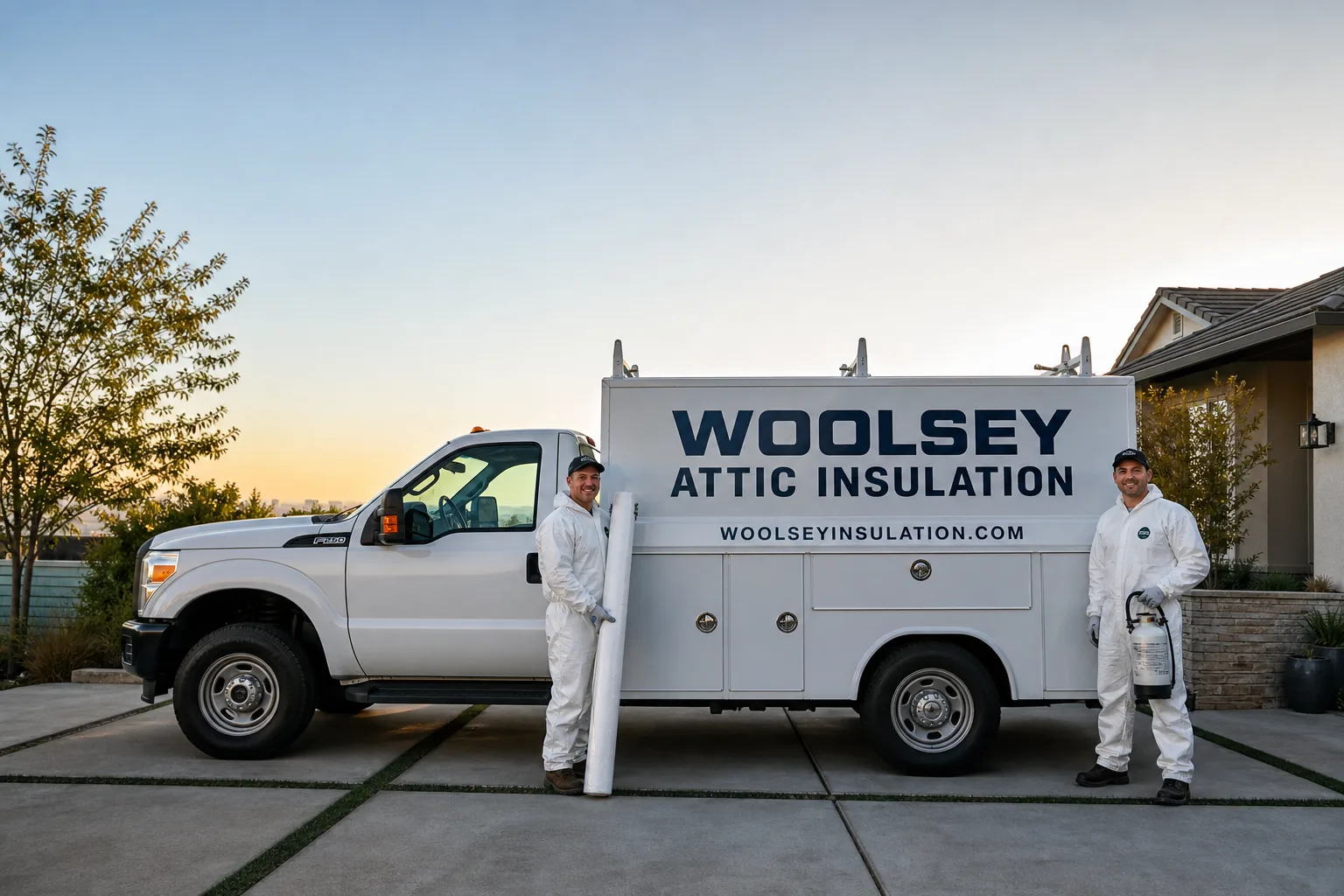
Fast, Reliable Attic Insulation Across Costa Mesa
Attic insulation in Costa Mesa fails differently than almost anywhere else in Orange County. The marine layer that rolls in most mornings pushes moisture into original 1950s and 60s fiberglass batts, compacting them flat and quietly erasing their R-value while homeowners assume the mild coastal climate means insulation barely matters. At Woolsey Attic Insulation, we know these Westside and Mesa Verde attics intimately. We write the price before we touch anything, show up in the window we gave you, and back every job with a written 365-day guarantee. Call (325) 240-5411 for a free estimate.
Why Woolsey Attic Insulation Is Costa Mesa’s Preferred Attic Insulation Company
Costa Mesa homeowners have dealt with too many contractors who quote one number on the phone and a different one at the door. We do not play that game. Our Attic Insulation crews arrive in uniform, pass background checks, and carry a written price that matches the one you approved before scheduling. When we work a tract home near Tanager Park or a 1960s ranch off Harbor Boulevard, we already know what we are likely to find before we open the hatch: damp, compacted kraft-faced batts doing almost nothing.
Led by Glenn Hartley, our team answers the phone live, 24 hours a day. No voicemail tree. No call-back window. You call, a real person picks up. That matters when you discover your attic insulation failed a Title 24 inspection during a remodel and you need answers now. Costa Mesa is where we do some of our most technically interesting work, because the failure pattern here is moisture-driven, not heat-driven. It takes local experience to spot it.
Attic Mold Removal in Costa Mesa
Attic Mold Removal in Costa Mesa is a job we handle routinely, because the same marine-layer moisture that mats down insulation also feeds mold growth on rafters, sheathing, and the kraft paper facing on old batts. Westside homes built in the 1950s often lack adequate attic ventilation. Add daily humidity swings from the coast, and condensation becomes a regular event. When mold takes hold, it is not just an odor problem. It degrades insulation, stains framing, and can trigger respiratory issues for the household.
Most attic mold remediation in Costa Mesa runs between $1,200 and $3,800 depending on the affected square footage and whether the insulation itself must be removed. We treat the source, not just the symptom. That means addressing ventilation and moisture entry before we spray and seal. Our written estimate covers the full scope.
What Mold Removal Involves
We remove contaminated insulation, treat the affected wood surfaces, and address whatever is letting moisture accumulate. Without fixing the airflow problem, mold returns within a season. We check baffles, ridge vents, and soffit vents as part of the job.
When Costa Mesa Homeowners Need It
Dark staining on roof sheathing, a musty smell from the hatch, or visible spots on exposed insulation all point to mold. Homes near Fairview Park and the Talbert Nature Preserve sit especially deep in the marine-layer band and see more condensation than neighborhoods slightly further inland. Call (325) 240-5411 if you suspect mold; we will tell you honestly whether removal is needed or if the issue is ventilation alone.
Attic Insulation Removal in Costa Mesa
Attic Insulation Removal in Costa Mesa is rarely about the insulation being old. It is about it being wet, compacted, or contaminated. The original fiberglass batts installed in Mesa Verde and Westside tract homes from the 1950s and 60s have absorbed decades of marine-layer humidity. They look intact from the hatch, but when you touch them they are heavy, flat, and doing almost nothing thermally. Some we pull out are damp to the touch even in August.
Removal typically runs $1.50 to $3.50 per square foot in Costa Mesa, depending on attic access, depth, and whether mold or rodent contamination is present. On a typical 1,200-square-foot attic, expect $1,800 to $4,200 for full removal and disposal. We give you the exact written number before any work starts.
Why Removal Precedes a Proper Upgrade
You cannot fix moisture-degraded batts by adding more insulation on top. The old material stays matted and damp underneath, creating a perfect environment for continued mold growth and hiding the problem from view. We remove it first, then assess what the attic actually needs.
The Mesa Verde Pattern We See Repeatedly
We recently worked an attic in Mesa Verde where the original kraft-faced batts looked fine from the hatch but were damp and compacted flat from decades of marine-layer cycling. We removed the degraded batts, treated for moisture-related issues, and installed Owens Corning blown-in fiberglass to bring the attic back toward R-38. The homeowner was surprised that nothing had visibly failed. The moisture had been quietly doing the damage since the 1960s.
Trusted Brands We Service in Costa Mesa
We work with eight leading insulation brands including Owens Corning, Johns Manville, Knauf, and GreenFiber. That means the material recommendation fits your Costa Mesa home’s specific attic, not whatever happens to be on the truck that day. We stock fast-turn parts and materials for the most common Costa Mesa housing types, so we are not waiting on a supplier when your remodel deadline or Title 24 compliance window is closing. Whether it is blown-in fiberglass for a standard tract attic or spray foam for a shallow 1960s rafter bay, we match the material to the job and put it in writing.
Common Attic Insulation Problems We See in Costa Mesa Homes
- Marine-layer moisture absorption. Daily cool-morning and warm-afternoon cycles push humidity into original batts. They mat down and lose effective R-value without any visible failure from the hatch.
- Compaction of 1950s kraft-faced batts. Decades of moisture cycling flatten the original fiberglass in Westside Costa Mesa and Mesa Verde tract attics. The thermal performance drops quietly over decades.
- Shallow rafter bays in flat-roof and vaulted additions. Those 1960s ranches with awkward additions often cannot reach current R-38 with batts alone. Spray foam becomes the practical answer when the cavity is too shallow for conventional insulation.
- Title 24 trigger gaps. A permitted remodel or HVAC replacement forces an insulation upgrade on homes that have never been touched since original construction. That is often when homeowners first learn their old batts have been performing at near zero.
Pricing for Attic Insulation in Costa Mesa, CA
Blown-in attic insulation in Costa Mesa typically runs $1,800 to $3,200 for a 1,200-square-foot attic. Batt insulation for the same space lands between $1,400 and $2,600. Top-up work, where you add fresh material over existing but still-functional insulation, runs $800 to $1,800. Full replacement including removal of degraded batts runs $3,500 to $6,800 depending on access and contamination. Spray foam for shallow rafter bays runs $3.50 to $6.50 per board foot. Every job receives a written price before any work starts. No door-step changes. Call (325) 240-5411 for your exact number.
We Also Serve Cities Near Costa Mesa
From the coastal marine layer in Newport Beach to the slightly warmer inland pockets of Fountain Valley and Huntington Beach, we run crews throughout the area. Santa Ana homeowners face drier, hotter attic conditions, but the same need for honest pricing applies. Read more about how we serve Costa Mesa and the surrounding communities, or call (325) 240-5411 to schedule.
Serving Costa Mesa, CA - Our Local Coverage Area
We’re based in the Costa Mesa area and know this community well. Use the map below to see our service coverage - if you’re nearby, we can almost certainly help.
FAQs About Attic Insulation in Costa Mesa
Because moisture, not heat, is the main degradation force in Costa Mesa’s marine-layer zone. Original 1950s and 60s batts absorb daily humidity swings. They compact flat and lose effective R-value while appearing intact from the hatch. The insulation has not visibly failed, but it is doing almost nothing thermally. Call (325) 240-5411 and we will inspect it honestly.
Yes, if the old material is damp, compacted, or mold-contaminated. Adding new insulation over degraded batts traps moisture and hides the problem. In most Costa Mesa homes built before 1975, we recommend removal first. The exact condition of your attic determines the right path. Estimates are free and written.
The marine layer delivers near-daily humidity swings. Cool, moist mornings alternate with warmer afternoons, pulling airborne moisture into attic assemblies. Fiberglass batts absorb that moisture, mat down, and lose loft. Over decades, the R-value degrades to near zero. This is a fundamentally different failure pattern than the dry-heat degradation seen just 15 miles inland in Anaheim or Orange.
It depends on rafter depth. Many shallow cavities from that era cannot physically hold enough batt insulation to reach current R-38 standards. Spray foam applied at 2 to 3 inches can hit the required thermal levels in shallow bays. We will tell you what is achievable before quoting a price. Call (325) 240-5411 for an assessment.
Yes, if the project requires a permit. Title 24 compliance applies to most permitted remodels and HVAC replacements in Costa Mesa. That often means bringing attic insulation up to current standards on homes that have never been touched since original construction. We help homeowners through that process regularly. Call (325) 240-5411 and ask for a Title 24 insulation assessment.
Written by Glenn Hartley, Owner at Woolsey Attic Insulation, serving Costa Mesa with written pricing and guaranteed work on every job.