
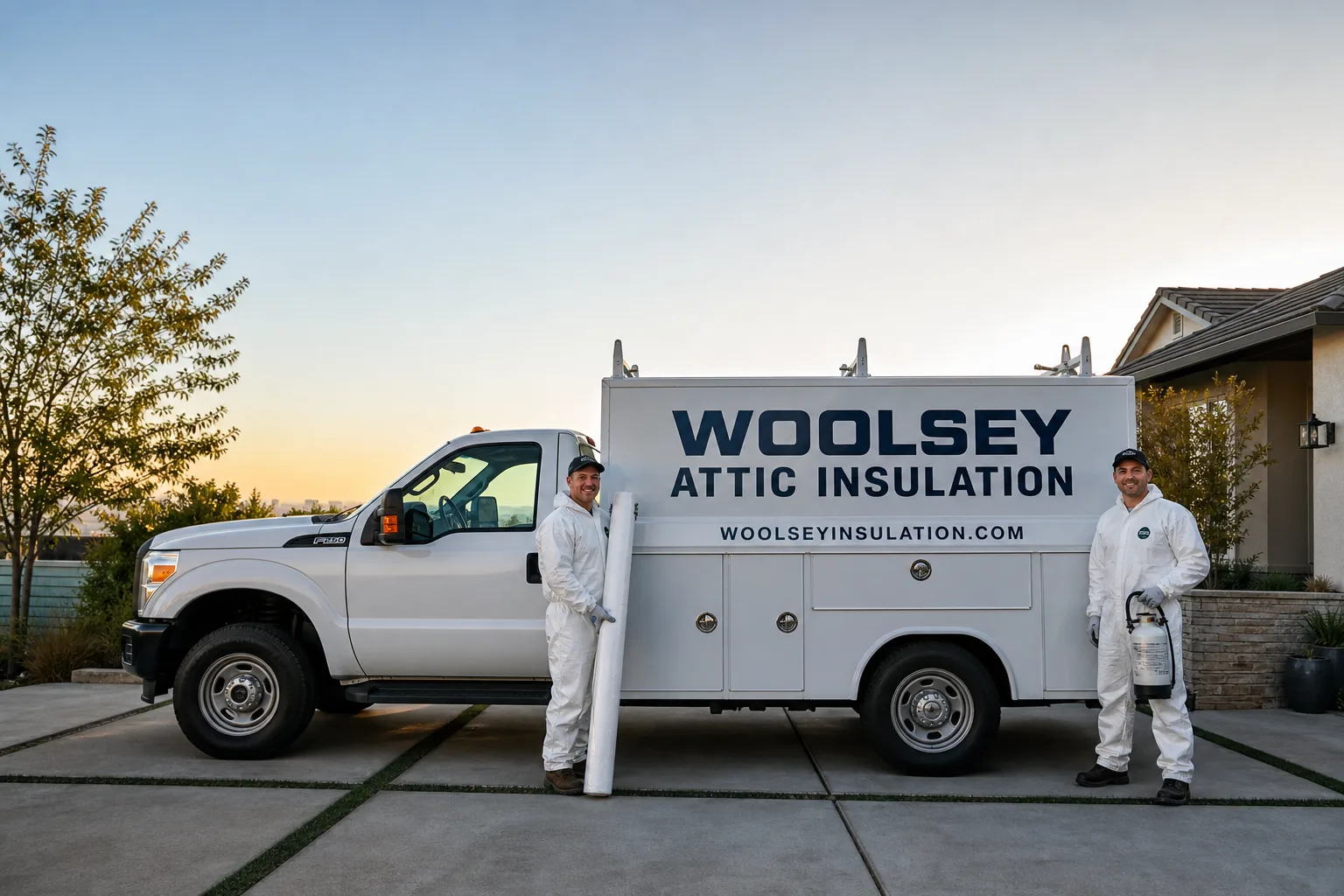
Fast, Reliable Attic Insulation Across Homeland
Attic insulation in Homeland usually means working on a manufactured home built in the 1970s or 80s, and that changes the whole job. Most attic work here runs $1,400 – $3,200 for a full removal-and-reinstall, while a top-up over existing insulation runs $700 – $1,500. We coordinate dispatch from our Inland Empire office so a crew can be in Homeland the same day in most cases. Call (325) 240-5411 and a live person answers, 24/7. You will get a written price before any work starts.
We are Woolsey Attic Insulation. We work on Attic Insulation every day, and we know the manufactured-home envelope better than most crews in Riverside County. Homeland’s housing stock is dominated by double-wides with 2×3 wall cavities, low-pitch roof decks, and vented crawl spaces with belly board that has seen better decades. That means attic insulation here is never just an attic job. It is half of a ceiling-and-floor system that fails together, and we scope it that way from the first visit.
Why Woolsey Attic Insulation Is Homeland’s Preferred Attic Insulation Company
Homeland homeowners call us because the first question we answer is the one about price. Every job gets a written number before any material lands on the property. No door-step adjustments, no “we found something once we opened it up” surprises. That matters in a community where many homes are older manufactured units and the budget is real.
Our technicians are background-checked and uniformed, so the person who walks through your door is the person we described on the phone. Glenn Hartley leads our crews, and the standard he sets is simple: treat a 1980 double-wide off Stetson Avenue with the same care as a new build anywhere else. The Kingswell Guarantee backs that up. Written price, committed arrival window, clean job site, written guarantee, and a free return visit if anything fails within 365 days. Every job, no exceptions.
Attic Mold Removal in Homeland
Attic mold removal in Homeland is a frequent call from manufactured home communities, and it is almost always tied to the same root cause: the low-pitch roof cavity traps heat and any moisture that gets past a torn belly board or a failing roof vent. Mold grows on the underside of roof sheathing and on old fiberglass batts. Left alone, it degrades the R-value of whatever insulation is up there and irritates the air that circulates through the home. Removal costs in Homeland typically run $1,100 – $2,600 depending on attic size and how far the mold has spread, and we always scope it with the insulation replacement that follows, because removing moldy batts and leaving the attic empty is only half a fix.
The Kingswell Way applies here the same as anywhere: we tell you the written price for mold removal before we start, we show up in the window we gave you, and we leave the attic cleaner than we found it. The guarantee is in writing, 365 days. If the mold comes back because our prep work failed, we return and re-treat at no charge.
How We Handle Mold in Low-Pitch Attics
Manufactured home attics in Homeland rarely have standing room. Crawl access through a small hatch is the norm. Our crews use HEPA-filtered vacuums and targeted antimicrobial treatment rather than ripping out sheathing that is still structurally sound. Glenn Hartley’s rule is that if the sheathing holds a screw, you clean it, you do not replace it.
When Mold Removal Precedes New Insulation
You do not blow new insulation over moldy batts. The spores stay, the moisture stays, and the new material becomes a breeding ground. If a Homeland homeowner is planning a top-up and we find mold during the attic inspection, we stop and quote the removal first. No one wants to pay twice.
Attic Insulation Removal in Homeland
Attic insulation removal in Homeland means pulling out old, compressed, rodent-damaged, or moldy batts before new insulation goes in. We do full removal on most 1970s – 80s manufactured homes because the original R-11 fiberglass is almost never worth saving. Homeland’s summer heat compresses those batts over the years, and by the time we open the attic, most of them are performing at half their rated value or less. Full removal and disposal in Homeland typically runs $900 – $1,800, and then the new insulation install is a separate line item, so you always see exactly what each part costs. We write that price down before any work begins.
Removal on a manufactured home requires care. The low-pitch attic means we work from the ceiling framing, and the last thing a homeowner wants is a boot through the ceiling drywall or damage to the truss chords. Our crews walk the framing, never the deck, and we lay down protection under the access hatch. The Kingswell Guarantee covers the clean job site and the written guarantee on the work, including free return visits within 365 days if something is not right.
Removing Batts Without Damaging the Roof Structure
We never cut trusses or sister new framing to create access that was not designed into the home. Manufactured home roof assemblies are engineered lighter than stick-frame construction, and modifying them can void HUD certification. Removal is about careful extraction, not demolition.
What We Do With the Old Insulation
Everything we pull out gets bagged, carried down the ladder, and hauled away. We do not leave fiberglass debris in your yard or crawl space. If the old batts are moldy or rodent-soiled, the bags are sealed before they leave the attic. The job site is cleaner when we leave than when we arrived, and that is a written part of the guarantee.
Trusted Brands We Service in Homeland
We work with eight insulation brands, and we choose the material based on what the home actually needs. For Homeland’s low-pitch manufactured roofs, blown-in GreenFiber cellulose or Owens Corning fiberglass are the usual choices because they fill a shallow cavity evenly. For belly wrap replacement under the floor deck, we typically pair Johns Manville or Knauf batt insulation with a new re-strapped belly board. We keep material on hand for Homeland crews so there is no week-long wait for a common order. The brand is a tool, not a religion. The home decides.
Common Attic Insulation Problems We See in Homeland Homes
- Compressed original R-11 batts in low-pitch cavities. Decades of San Jacinto Valley heat settle the original fiberglass until it is about half its rated value. A 1979 double-wide may have been built with R-11 but is effectively running R-6, and the homeowner feels it in both the July attic heat and the January floor chill.
- Torn or missing belly board under the floor deck. Rodents, moisture, and age open the underside of the home. Wind-washing then strips heat from the floor system, and no amount of attic insulation will fix that. The ceiling and the floor are one envelope in a manufactured home.
- Mold on roof sheathing from trapped heat and moisture. The low-pitch roof cavity does not breathe well, especially in Homeland’s 105°F summers. If a roof vent is blocked or the belly board has let moisture migrate upward, mold follows. We see it most often in older units in the manufactured home parks off State Street and near the 74 corridor.
- Undersized wall cavities that leak air at the top plate. Those 2×3 or 2×4 walls were never designed for modern insulation values. Air moves from the vented crawl space up through the wall cavities into the attic. Sealing the top plates is a small job with an outsized effect on both summer cooling and winter heating.
Pricing for Attic Insulation in Homeland, CA
A full attic insulation job in Homeland, including removal of old batts and install of new blown-in material, runs $1,800 – $3,200 on most manufactured homes. A top-up over existing insulation, which only makes sense when the old material is clean and dry, runs $700 – $1,500. Belly wrap replacement underneath the floor deck is a separate line item, typically $1,200 – $2,400 depending on the home’s underside access and how much insulation has fallen out. Mold removal runs $1,100 – $2,600 when needed before insulation work. Every quote includes the written guarantee, and the price we hand you is the price you pay. Call (325) 240-5411 for a free estimate, and we will come out and give you the exact number.
There is no “cheapest in town” game here. We give you the honest range before we start, and then we put the exact figure in writing. That is the whole point.
We Also Serve Cities Near Homeland
Woolsey crews cover Homeland and the surrounding Riverside County communities, including Nuevo, Menifee, Hemet, and San Jacinto. If you live in one of those areas and you are dealing with an attic that bakes in summer and a floor that chills in winter, give us a call and we will send someone out for a free estimate.
Serving Homeland, CA - Our Local Coverage Area
We’re based in the Homeland area and know this community well. Use the map below to see our service coverage - if you’re nearby, we can almost certainly help.
FAQs About Attic Insulation in Homeland
Because the ceiling and floor are one envelope. On a 1970s – 80s double-wide, the original belly board under the floor deck is almost always torn, sagging, or missing in sections. If we insulate the attic only, the floor still leaks heat into the vented crawl space all winter. Scoping both together is the only way to actually fix the home’s thermal performance. Call us at (325) 240-5411 and we will inspect both zones before we quote anything.
Homeland sits at about 1,500 feet in the interior San Jacinto Valley, and it gets over 105°F in summer and into the mid-20s in winter. That swing is wider than coastal Riverside County cities get. For a low-pitch manufactured home attic, we typically recommend the attic reach at least R-38 in the ceiling where framing depth allows. With a shallow 2×6 or 2×8 cavity, blown-in fiberglass or cellulose fills what space exists, and the belly wrap below handles the floor side. The exact recommendation comes with the free estimate.
Yes. We work entirely from the existing access hatch and the ceiling framing. We do not cut trusses, modify roof members, or disturb the HUD-certified structure. The low pitch means we move carefully, but removal is a controlled vacuum-and-bag process. If your attic is tight or has no proper access, we will say so during the inspection and quote the work honestly, even when the honest answer is “this is not a DIY access situation.”
Attic mold on a manufactured home usually shows up as black or gray staining on the underside of the roof sheathing, often concentrated near the eaves or roof vents. It can also grow on old fiberglass batts, especially where the batt faces the sheathing. If contamination covers more than a few square feet, or if the insulation itself is moldy, the old material has to come out before new insulation goes in. The free inspection includes a look at the entire attic so you know what you are dealing with before any money is spent.
Yes, and the home decides which one makes sense. For Homeland’s shallow low-pitch attics, we usually go with blown-in Owens Corning fiberglass or GreenFiber cellulose for the ceiling cavity. Knauf and Johns Manville batts are common for belly wrap replacement under the floor. Spray foam has a role in some tighter roof assemblies, but on most 1970s – 80s manufactured homes, the vented attic design makes blown-in the better fit. The recommendation comes with a written price. Call (325) 240-5411 and we will walk you through it.
Get a Free Estimate in Homeland
If your Homeland home has an attic that never cools down in July or a floor that never warms up in January, the fix is probably bigger than just the attic. Call Woolsey Attic Insulation at (325) 240-5411 and tell us about your home. A live person answers, 24/7. We will schedule a free inspection, put a written price in your hand before any work starts, and stand behind the whole thing for 365 days after the crew leaves. That is what we do.
Written by Glenn Hartley, Owner at Woolsey Attic Insulation, serving Homeland and the surrounding Riverside County communities.