
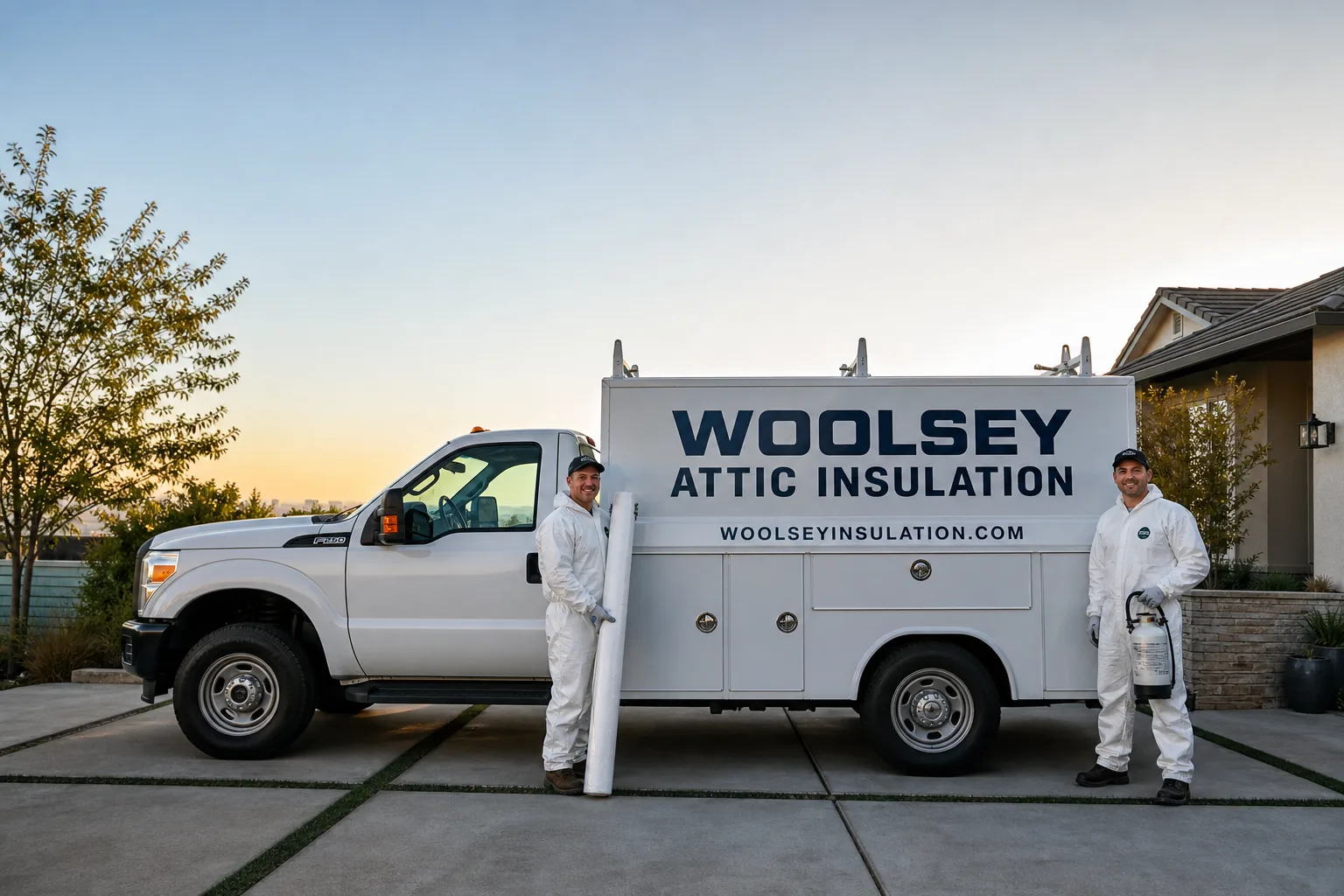
Fast, Reliable Attic Insulation Across Joshua Tree
Attic insulation in Joshua Tree usually runs between $1,800 and $4,500 for a full replacement on a typical cabin or single-story home, with top-ups and smaller jobs starting around $900. We answer the phone around the clock and can usually get a crew to Joshua Tree the same day or next morning. Call (325) 240-5411 for a written quote before anyone touches your attic. The real challenge in Joshua Tree isn’t just finding someone to blow insulation. It’s finding someone who understands why a 1950s concrete-block cabin still swings 45°F between noon and midnight even after the attic got R-38. That’s the work we do.
Joshua Tree’s altitude, its freeze-thaw cycles, and its aging homesteader housing stock change the insulation equation entirely compared to the low desert. We’ve worked in Sunfair, Flamingo Heights, and along Highway 62 enough to know exactly what’s behind those wildly fluctuating indoor temperatures. Most of the time, it’s not a simple fix, but it is a fixable one.
Why Woolsey Attic Insulation Is Joshua Tree’s Preferred Attic Insulation Company
Most of our Joshua Tree customers have been burned before. A contractor quoted a price, then changed it at the door. Or a crew showed up late, blew some fiberglass, and vanished. That’s the opposite of how we work. Woolsey Attic Insulation is part of the Kingswell family of independently owned and operated insulation companies, and our local Attic Insulation crews follow The Kingswell Way on every single job: a written price before any work starts, a committed arrival window, a clean job site, a written guarantee, and a free return visit if anything fails within 365 days.
Glenn Hartley runs our Joshua Tree service area, and he’s built the team around a simple idea: show up when you say you will, price the job honestly before touching anything, and put every promise in writing. Our technicians are background-checked and uniformed, so you know exactly who’s walking into your home. When you call (325) 240-5411, a live person picks up. No voicemail maze, no call-back window.
Attic Mold Removal in Joshua Tree
Attic mold removal in Joshua Tree is a specialized job that starts with finding why moisture got trapped in the first place. Monsoon season drives rain sideways against ridge vents and poorly flashed roof penetrations. Add a freeze-thaw cycle that pushes moisture through hairline cracks in old stucco, and you get exactly the conditions we find in Small Tract Act cabins: compacted, wetted insulation quietly growing mold near the ridge while the homeowner wonders why the house smells musty every time the heat kicks on. We pull the contaminated material, treat the affected framing and sheathing, and prep the space for clean, dry insulation. Most attic mold removal jobs in Joshua Tree run $1,200 to $2,800 depending on square footage and how far the growth has spread.
What We Check Before Treating Mold
A mold bloom is a symptom, not the root problem. Before any treatment, we inspect ridge vents, gable vents, roof flashing, and the vapor profile of the existing insulation. In a single-wythe block cabin, we also check whether daytime heat is driving moisture into the attic cavity and condensing against cold framing at night. That’s common in Joshua Tree’s 40 – 50°F diurnal swings. If we skip that step, the mold returns next season.
When Mold Removal Is Not Enough
If the roof decking has been wet for years, sometimes the only honest answer is cutting out and replacing sections of sheathing before reinsulating. We’ll tell you that before we start, in writing, with the cost attached. No discovering it halfway through and changing the number at the door. The written price we give you is the price you pay.
Attic Insulation Removal in Joshua Tree
Attic insulation removal in Joshua Tree is often the necessary first step before a meaningful retrofit, especially in cabins built between 1938 and 1976 under the Small Tract Act. Those structures were originally framed and sealed as bare-bones desert retreats, with whatever insulation was added later often poorly installed and repeatedly wetted by monsoon intrusion or roof leaks. When old cellulose or fiberglass gets wet, it compacts to a fraction of its rated R-value and becomes a thermal dead zone. Blowing new material on top without removing the failed layer just buries the problem. Removal jobs in Joshua Tree typically run $1,000 to $2,400, depending on attic access and the depth of contamination.
Full Removal vs. Targeted Spot Removal
Not every attic needs a full gut. In some Joshua Tree cabins, only a section near the ridge or around a vent penetration has failed. We pull what’s compromised, leave what’s dry and functional, and document both with photos before we proceed. That keeps the project honest and the cost proportional to the actual problem.
What Happens After Removal
Once the old material is bagged and carried out, we sanitize the attic cavity and check for air leaks at top plates, wiring penetrations, and that classic Mojave culprit: the unsealed gap where roof framing meets the exterior block wall. Then we install fresh material matched to the structure. For most Joshua Tree cabins, that means blown-in fiberglass from Owens Corning or Johns Manville paired with air-sealing, and in some cases rigid foam board on exposed block surfaces to break the thermal bridge.
Trusted Brands We Service in Joshua Tree
We install and service insulation from GreenFiber, Owens Corning, Johns Manville, and Knauf, and we stock parts and materials locally so Joshua Tree customers aren’t waiting on a truck from down the hill. The material recommendation always follows the structure, not the other way around. A single-wythe block cabin near the west entrance of the National Park needs a different approach than a stucco ranch on a paved street in Yucca Mesa, and we’ll tell you exactly why. We’re not married to a single product line. We’re married to the building actually performing.
Common Attic Insulation Problems We See in Joshua Tree Homes
- Bare single-wythe concrete block walls. These Small Tract Act cabins have wall R-values near R-2, which means heat pours through the walls all day and radiates back out all night. An attic-only job leaves a massive thermal bypass that shows up instantly on the utility bill.
- Wetted, compacted original insulation. Monsoon bursts and decades of roof leaks flatten old fiberglass and cellulose to a fraction of its rated R-value. We regularly find material that was once R-30 performing like R-8.
- Radiant heat gain through low-slope desert roofs. Unshaded roof decks in Joshua Tree hit surface temperatures that overwhelm undersized batts. The ceiling becomes a radiator by 3 p.m., even with air conditioning running.
- Airbnb retrofits done in a weekend. Short-term rental investors often blow insulation in without air-sealing or addressing the wall bypass. We get called after the first guest review mentions the cabin never cools down.
Pricing for Attic Insulation in Joshua Tree, CA
Here’s the honest range for Joshua Tree. Full attic insulation replacement on a typical 1,000 – 1,500 square foot cabin or single-story home runs $1,800 to $4,500. Attic top-ups over existing dry insulation run $900 to $1,800. Attic mold removal runs $1,200 to $2,800. Attic insulation removal as a standalone job runs $1,000 to $2,400. Blown-in installation using Owens Corning or Johns Manville material typically sits at the lower end, while spray foam or rigid board solutions for block-wall bypasses push toward the higher end. Every job gets a written price before any work starts, and that’s The Kingswell Way. Call (325) 240-5411 and tell us what you’re seeing. We’ll give you an exact number, in writing, for free.
We Also Serve Cities Near Joshua Tree
Our crews work throughout the high desert, including Joshua Tree and the surrounding communities of Yucca Valley, Twentynine Palms, Desert Hot Springs, and Thousand Palms. If you’re in any of those areas and wondering whether your attic is actually doing its job, call (325) 240-5411. Same-day dispatch is available throughout the basin.
Serving Joshua Tree, CA - Our Local Coverage Area
We’re based in the Joshua Tree area and know this community well. Use the map below to see our service coverage - if you’re nearby, we can almost certainly help.
FAQs About Attic Insulation in Joshua Tree
The attic was likely insulated without addressing the walls. Joshua Tree’s Small Tract Act cabins sit on single-wythe concrete block with an R-value near R-2, so even a perfect R-38 attic leaves the entire wall system acting as a thermal bridge. Guests feel 106°F afternoons and 52°F nights swinging straight through the block. The fix involves air-sealing the attic and adding rigid foam board to exposed block surfaces, not just more fiberglass overhead. Call (325) 240-5411 and we’ll walk the property and show you exactly where the heat is moving.
Yes. At 2,700 feet with 40 – 50°F diurnal swings and regular winter freezes, insulation here has to perform bidirectionally against radiant daytime heat and conductive overnight cold. Dense-packed cellulose from GreenFiber handles the swing well, while Owens Corning and Johns Manville blown fiberglass with proper air-sealing covers most cabin applications. Spray foam earns its cost on single-wythe block structures where air movement through the wall cavity is the dominant loss. The material matters less than getting the envelope right. We’ll give you a written recommendation and the exact cost before any work starts.
Remove it when it’s been wetted, compacted, or has visible mold. In Joshua Tree, monsoon intrusion and decades of roof leaks on homesteader cabins mean we often find material that’s lost 70% of its R-value and is actively feeding a mold bloom. Adding on top just buries the problem and adds weight to a roof deck that was never built for much. If you see musty smells, dark staining near the ridge, or wildly inconsistent room temperatures, call (325) 240-5411 for an inspection. We’ll show you photos of what’s actually up there and give you a written price for removal and replacement.
It comes down to the block walls. If the single-wythe CMU is structurally sound and the roof framing is intact, the cabin is almost always a retrofit candidate. We add rigid foam to the exposed block kneewalls, air-seal the attic floor, and blow fresh material to the correct depth. If the roof decking has been wetted for years and the sheathing is soft or the block has spalled badly, that’s a bigger conversation about roof structure that goes beyond insulation. We’ll tell you honestly which situation you’re in.
We work with GreenFiber, Owens Corning, Johns Manville, and Knauf, among eight leading manufacturers we stock and install. The choice is driven by the structure: dense-packed GreenFiber cellulose handles the freeze-thaw cycle in wood-frame cabins, Owens Corning and Johns Manville fiberglass cover standard attic retrofits, and rigid board pairs with block walls to break thermal bridging. We’ll recommend the right material for your specific cabin and put the written price in your hand before anything goes into the attic. Call (325) 240-5411 for a free estimate.
Written by Glenn Hartley, Owner at Woolsey Attic Insulation, serving Joshua Tree and the surrounding high desert communities. We’re part of the Kingswell family of independently owned and operated insulation companies, founded in 2002. Every job gets a written price before work starts and a written guarantee that lasts 365 days. If it’s not right, we come back and fix it. That’s the whole point.