
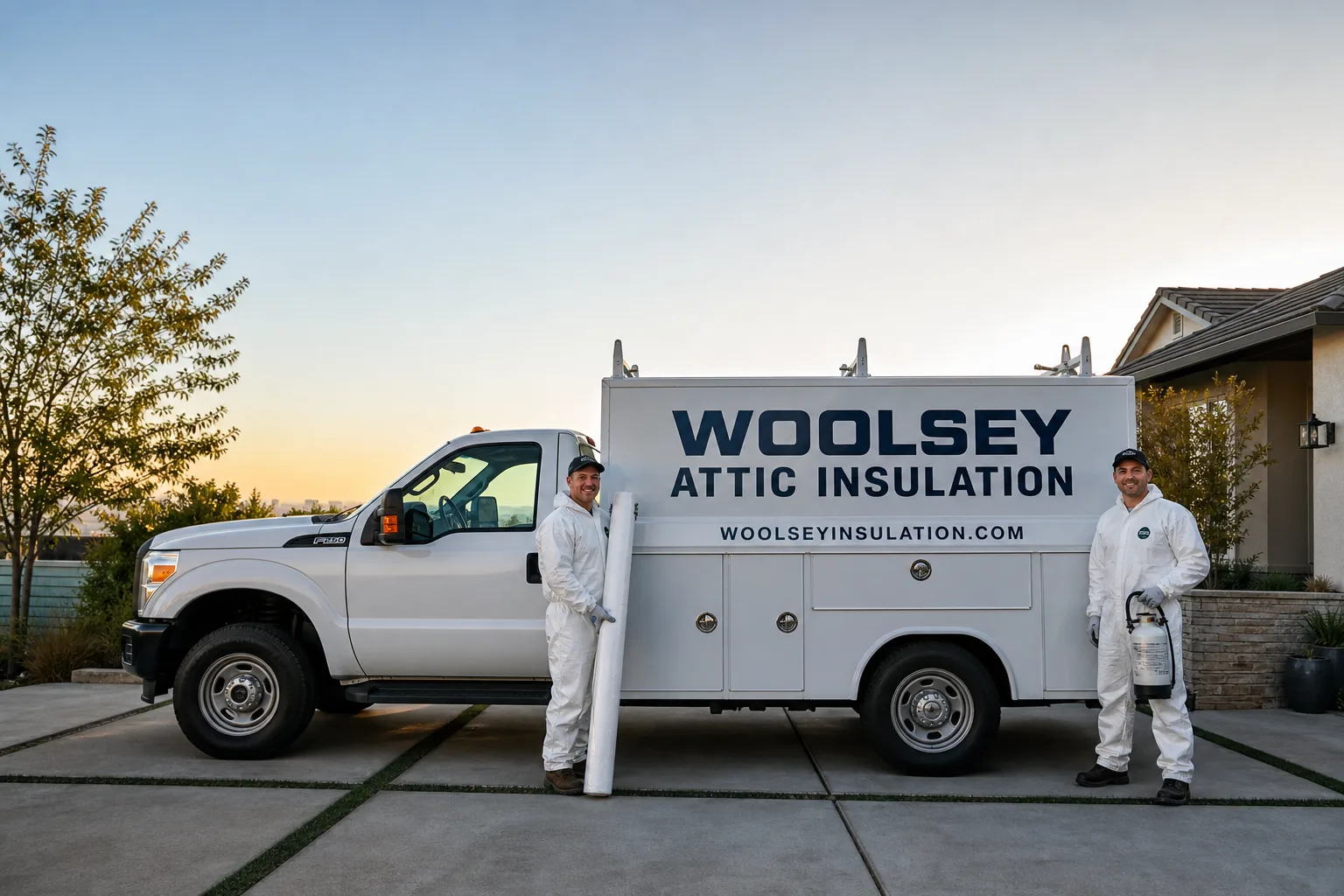
Fast, Reliable Attic Insulation Across La Mesa
Most attic insulation jobs in La Mesa run between $1,400 and $4,200, depending on the size of the attic, the type of material you choose, and whether old insulation needs to come out first. We give you the exact written number before any work starts, not an estimate that drifts once the crew arrives. That’s how Woolsey Attic Insulation has always run jobs here, from the flat streets near La Mesa Village up through the hillside lots climbing toward Grossmont. If your attic is original to a 1950s or 60s stucco ranch, there’s a good chance it’s doing almost nothing for you in August. Call (325) 240-5411 and we’ll tell you straight what’s going on up there.
Why Woolsey Attic Insulation Is La Mesa’s Preferred Attic Insulation Company
We know La Mesa homes because we’ve been in hundreds of them, mostly the post-war stucco ranches and hillside builds that define the city between Fletcher Parkway and the 94. Those houses share a common history: built fast, insulated light, and never revisited. Our crews have pulled back attic hatches on streets near Lake Murray and Helix Charter High School and found the same thing again and again: original fiberglass compressed to two inches of fluff, or blown-in material that has settled into low, useless drifts between the joists.
Every La Mesa homeowner we work for gets the same setup. A written price before the first trip is even scheduled. A committed arrival window we actually hit. Uniformed, background-checked technicians who tell you their name before they step inside. And a 365-day guarantee in writing, included on every job. If the repair or installation isn’t right within a year, we come back and fix it at no charge. That’s the Kingswell Guarantee, and it applies in La Mesa exactly as it does everywhere else we work.
Dispatch for La Mesa is coordinated from the brand’s San Diego office, so scheduling is fast and calls get answered by a live person around the clock. No voicemail maze when you call on a Saturday afternoon with a 150°F attic and a second-story bedroom that won’t cool below 82.
Attic Insulation Removal in La Mesa
Attic insulation removal in La Mesa usually means clearing out original 1950s-70s fiberglass batts or settled blown-in material so a modern air seal and insulation layer can go in properly. We see this need most often on older hillside homes climbing toward Grossmont, where decades of temperature swings have compressed batts to near-nothing and Santa Ana winds have pushed loose fill away from the ceiling plane. Removal and disposal of old attic insulation in La Mesa typically runs $1.00 to $2.50 per square foot, with most full attics landing between $1,200 and $2,800.
When Removal Beats Topping Off
If the old material is wet, moldy, packed with rodent droppings, or has compressed below about 50% of its original thickness, adding new insulation on top just buries a problem. You’re better off starting clean. We remove the old material, assess the ceiling plane, then air-seal before anything new goes in.
Air Sealing Baked In
Removal in La Mesa almost always reveals gaps that were never sealed when the house was built: top plates, plumbing penetrations, bath fan boxes that vent into the insulation itself. We seal those before new material goes down. It’s the step that separates a comfort upgrade from a real fix.
Blown In Insulation in La Mesa
Blown in insulation in La Mesa is the workhorse solution for most of the city’s older attics, especially the post-WWII stucco ranches that make up so much of the housing stock between La Mesa Village and the eastern hills. It fills odd cavities, covers irregular joist spacing, and reaches the tight spots batts can’t. A blown-in fiberglass or cellulose attic project in La Mesa typically lands between $1.50 and $3.00 per square foot installed, or roughly $1,600 to $3,800 for the average 1,200-square-foot ranch attic, including air-sealing prep where needed.
Blown-In Over an Older Bay
When we remove failed batts in a 1960s La Mesa home and then blow in fresh cellulose or fiberglass, the difference is immediate. The material settles into a continuous thermal blanket that monofills across the joists and leaves no gaps. GreenFiber gets used a lot here because it’s dense, fire-treated, and does a strong job in attics that run hotter than the coast.
Reaching the Tight-Spot Attics
Some of the hillside homes off broad streets east of downtown La Mesa have shallow attics with awkward rooflines and knee walls. Blown-in is often the only practical way to get full coverage in those spaces. Our crews work with hose rigs that reach into all of it, no matter how low the slope.
Trusted Brands We Service in La Mesa
We work with eight leading insulation brands, including Owens Corning, Johns Manville, Knauf, Rockwool, CertainTeed, Icynene, Demilec, and GreenFiber. That isn’t a list we flash for credibility. It means the material recommendation fits your home, not whatever happens to be stacked in the truck that week. For La Mesa’s older stucco ranches with shallow attic depth, dense-pack GreenFiber or Johns Manville blown-in fiberglass commonly make the most sense. CertainTeed batts serve the rare La Mesa attic with wide, clean joist bays. The brand choice is always tied to what’s actually up there, and we explain why we’re recommending it before anything gets ordered.
Common Attic Insulation Problems We See in La Mesa Homes
- Settled blown-in insulation on hillside streets. On sloped lots climbing toward Grossmont, we routinely find blown-in material that has settled to 2 to 3 inches of effective depth. The original install never anticipated La Mesa’s inland heat, and after 40 or 50 years it’s doing almost nothing at the ceiling plane.
- Original R-11 fiberglass batts, drastically undersized. Most 1950s-70s tract homes in La Mesa were insulated under the old assumption that San Diego’s mild coast needed nothing more. But La Mesa sits 8 to 10 miles inland, where summer afternoons run 15 to 20°F hotter than Pacific Beach. R-11 is nowhere near enough for that.
- Santa Ana damage shifting and compacting older batts. Fall’s dry, gusty conditions create rapid temperature swings that cause older fiberglass batts to shift inside attic and wall cavities, leaving exposed gaps along the joists. The same wind events expose air-sealing flaws you’d never notice in April.
- Bath and kitchen exhaust fans venting into the attic. On older La Mesa ranch homes, ductwork for exhaust fans frequently terminates in the attic instead of outside. Warm, moist air gets pumped into the insulation, matting it down and promoting mold growth in the exact space you’re trying to keep dry and stable.
Pricing for Attic Insulation in La Mesa, CA
Most full attic insulation replacements in La Mesa run between $1,600 and $4,200. Blown-in insulation generally lands at $1.50 to $3.00 per square foot. Removal of old, failed material typically adds $1.00 to $2.50 per square foot. Attic size, access difficulty, and the condition of what’s up there drive the final number, but you’ll know that number in writing before we schedule anything. What you will not get is a low phone quote that inflates when the crew walks your attic stairs, or a door-step renegotiation. Call (325) 240-5411 for a free estimate on your La Mesa home, and we’ll tell you exactly what the job needs and what it costs.
We Also Serve Cities Near La Mesa
Our crews cover La Mesa and the surrounding East County communities, including Attic Insulation in La Mesa and the nearby neighborhoods of Spring Valley, Lemon Grove, El Cajon, and Santee. If you’re anywhere in the corridor between the 94 and the 8, your attic is well within our territory, and the same written-price guarantee applies. Woolsey’s full Attic Insulation service coverage reaches every street in this part of San Diego County.
Serving La Mesa, CA - Our Local Coverage Area
We’re based in the La Mesa area and know this community well. Use the map below to see our service coverage - if you’re nearby, we can almost certainly help.
FAQs About Attic Insulation in La Mesa
Because La Mesa sits 8 to 10 miles inland in an inland valley that regularly runs 15 to 20°F hotter on summer afternoons than the coast, yet your house was built and insulated with coastal assumptions. The original attic insulation in most 1960s La Mesa ranches is R-11 or less, which is drastically undersized for the actual thermal load your home faces. A friend in Pacific Beach gets the marine layer and a sea breeze. You get mid-90s to low-100s afternoons and an attic that can hit 150°F. Fixing the attic insulation is the single largest comfort improvement we can make on those homes, and it’s the one that finally lets the AC stop running all afternoon. Call (325) 240-5411 for a free look at what’s up there.
The simplest check: measure it. Most blown-in insulation installed in the 1960s and 70s on La Mesa hillside homes has settled to just 2 to 3 inches of effective depth, which gives you roughly R-6 to R-9 of protection at the ceiling. You might as well have a thin blanket over the house in August. If you can see the joists poking through the top of the insulation, or if the material looks low and uneven, it’s failed. We’ll measure it, tell you the current effective R-value, and quote you a fix in writing. The estimate is free.
Only if the old batts are dry, clean, and still holding most of their original loft. In most 1950s La Mesa stucco homes we inspect, the original fiberglass has compressed to 2 inches or less, or it’s been soaked by a vent fan or roof leak, or there’s rodent activity throughout. Topping that off traps moisture, hides damage, and creates a false sense of improvement. Usually the right move is removal first, then air sealing, then fresh blown-in material. We’ll show you what’s up there and give you a straight recommendation, not a sales pitch.
California Title 24 currently calls for something in the R-30 to R-38 range for attics in San Diego County, but given La Mesa’s inland-valley heat and 150°F+ attic temperatures, we lean toward the top of that range. R-38 is a realistic target for most La Mesa homes. Compare that to the R-11 original batts in most 1950s-70s ranches here, and the gap explains exactly why your summer electric bills look the way they do. We’ll recommend the right target for your specific house after seeing the attic.
Yes, in two ways. First, the rapid temperature swings and very low humidity during Santa Ana events cause older fiberglass batts to shift and compact inside wall and attic cavities, opening gaps that let heat pour in. Second, the dry wind pressurizes attics and exposes air-sealing weaknesses around top plates, can lights, and vent penetrations that you’d never notice on a mild day. Homes that got air-sealed properly and insulated to a modern R-value ride through Santa Ana weeks noticeably better. If your house has been through 20 or 30 of those wind seasons with original insulation, it’s due for a look. Call (325) 240-5411 and we’ll get you on the schedule.
Written by Glenn Hartley, Owner at Woolsey Attic Insulation, serving La Mesa and East County San Diego.