
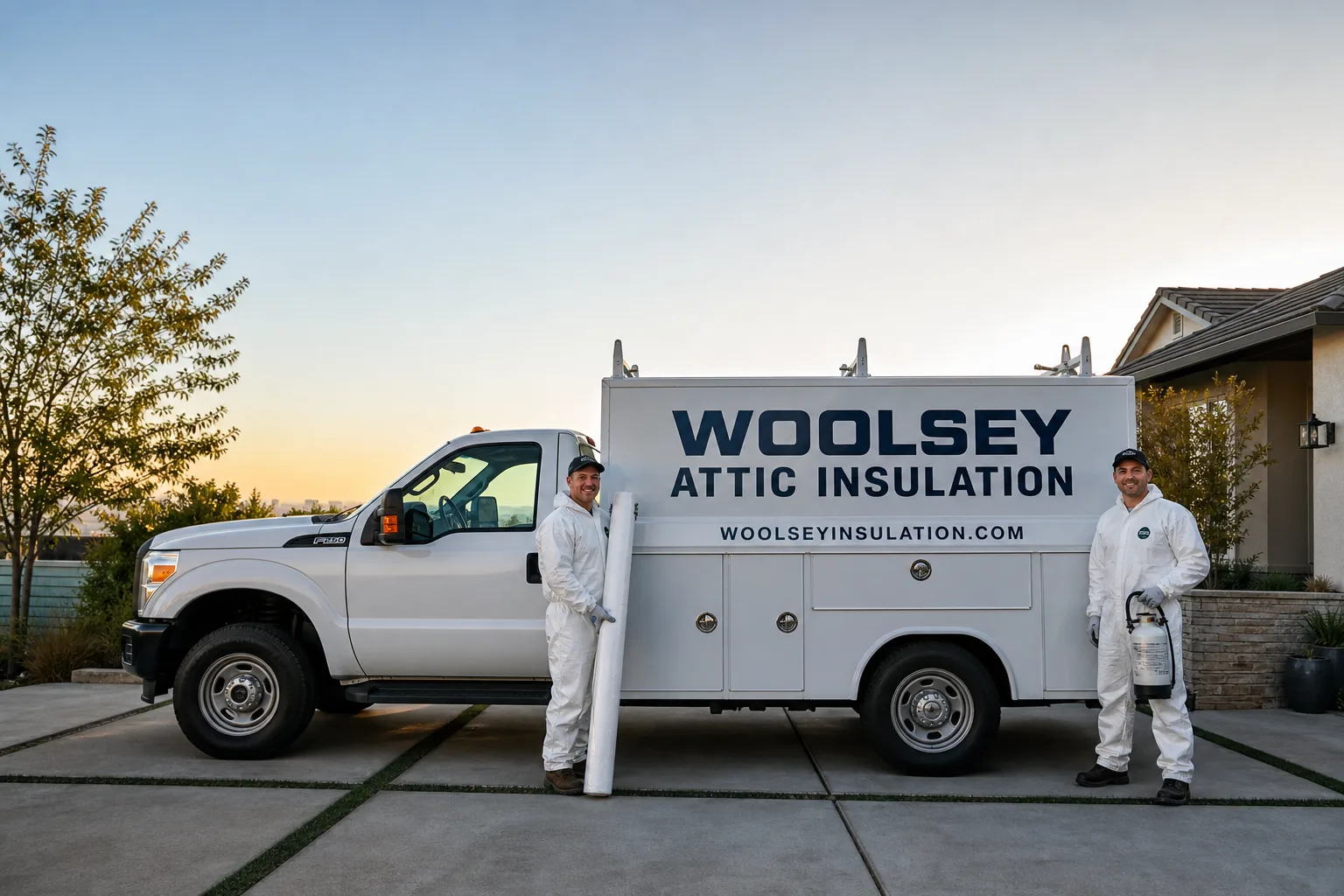
Fast, Reliable Attic Insulation Across Mission Viejo
Most attic insulation jobs in Mission Viejo run between $1,800 and $4,200 for a typical 1,500 to 2,200 square foot home. That’s the honest range before any fine print. We give you a written price before a single piece of material leaves our truck. No door-step surprises, no “discovered” extra charges after we open the hatch. If you’re tired of rooms that won’t hold temperature and you want a crew that shows up when they say they will, call us at (325) 240-5411. We serve every corner of Mission Viejo, from the tracts off Marguerite Parkway to the hillside homes above Oso Creek.
Why Woolsey Attic Insulation Is Mission Viejo’s Preferred Attic Insulation Company
Mission Viejo homes were built fast and built well, but almost all of them share the same attic story. The original fiberglass batts went in between 1965 and 1985, and they’ve been settling ever since. We know this because we walk the same attics week after week across this city, and the pattern holds: the eave corners are nearly bare, the middle is thin, and the homeowner can’t figure out why the AC runs nonstop. That’s not guesswork. That’s a master-planned community aging all at once, and it means the diagnosis is usually the same before we even climb the ladder.
You’ll always know who’s walking into your home. Every technician is background-checked and wears a Woolsey uniform. Glenn Hartley, who leads our team, set the standard years ago: say the price, show up in the window, leave the attic cleaner than you found it, and put the guarantee in writing. Every job carries The Kingswell Guarantee: a written price before work starts, a committed arrival window, and a 365-Day Done Right Promise. If it’s not right within a year, we come back and fix it at no charge. That’s not a slogan. It’s in writing, on every job, no exceptions.
When you call Woolsey, a live person picks up. 24 hours a day, 7 days a week. Not an automated system, not a voicemail box. You’ll speak to someone who can schedule your attic assessment in Mission Viejo and answer your questions without transferring you three times. For homeowners who’ve been through the contractor wringer before, that alone changes the whole conversation.
Attic Ventilation in Mission Viejo
Attic ventilation in Mission Viejo is not optional hardware; it’s the difference between an attic that works with your insulation and one that cooks it. A properly vented attic in this part of the Saddleback Valley needs both intake and exhaust: intake at the eave or soffit, exhaust at or near the ridge. In most Mission Viejo homes, the original venting was minimal, and decades of repainting, reroofing, and gutter replacement have plugged whatever was there. When attic air stagnates at 130°F or more, the insulation above your ceiling is fighting a losing battle, and your HVAC ductwork is soaking up heat the entire time it runs.
A standard attic ventilation job in Mission Viejo typically runs $350 to $950 for adding soffit vents and a ridge vent on a standard hip or gable roof. Larger homes or tile roof retrofits land closer to $1,200. You’ll get the exact written number before we touch anything. We assess the existing ventilation, identify blocked or inadequate venting, and size the upgrade to the attic volume and roof configuration, not a one-size-fits-all template.
Ventilation and Your Insulation
Even the best Attic Insulation loses its edge fast when the attic can’t breathe. Trapped heat radiates downward through the ceiling plane, making rooms feel warmer than the thermostat says. In Mission Viejo’s summer, when valley heat regularly pushes past 100°F, a poorly vented attic can run 40 to 50 degrees hotter than the outdoor air. That heat soaks into the insulation, compresses the fibers over time, and shortens the useful life of whatever R-value you paid for. Ventilation is the quiet partner that makes insulation actually perform.
Signs Your Mission Viejo Attic Needs Venting Work
Look for these markers: rooms that stay hot after sunset, attic access panels that feel warm to the touch, and moisture stains or rust on the underside of roof decking. During Santa Ana conditions, the wind drives pressure differences that make poor venting even more obvious. You may notice the AC cycling harder than your neighbors’ despite similar square footage. If any of that sounds familiar, the attic venting is worth checking before you spend another summer dollar on cooling.
Radiant Barrier in Mission Viejo
Radiant barrier in Mission Viejo is one of the smartest upgrades you can make to a valley home, and it’s cheap relative to what it prevents. A radiant barrier is a thin, reflective material stapled to the underside of the roof rafters. It bounces radiant heat back out of the attic rather than letting it absorb into the insulation and ceiling below. In Mission Viejo, where the Saddleback Valley funnels intense afternoon sun and Santa Ana winds spike temperatures in fall, a radiant barrier can lower attic temps by 20 to 30 degrees on a hot day. That’s less heat soaking into your ducts and living space, and less wear on the AC.
Radiant barrier installation in Mission Viejo generally runs $900 to $2,100 for a standard tract home attic. The spread depends on attic access, roof pitch, and whether we’re combining it with an insulation top-up or replacement. When we do both at once, you save on the labor overlap and the attic gets the full treatment in one trip.
How Radiant Barrier Works With Existing Insulation
Radiant barrier doesn’t replace insulation; it makes the insulation you’ve got work better. Fiberglass batts slow conductive heat, but they don’t stop radiant heat from the roof deck. On a 100-degree Mission Viejo afternoon, the roof sheathing can hit 150°F. The radiant barrier stops most of that heat before it ever reaches the insulation. This matters far more in valley heat than in coastal Orange County cities. Homes in Costa Mesa or Huntington Beach get the marine layer; Mission Viejo doesn’t. We see this difference in attics all summer long.
“Won’t Cool Down” Rooms and the Radiant Barrier Fix
When we’re called out to a Mission Viejo home where the back bedrooms won’t hold temperature, the story is usually the same. We were out in the tracts off Marguerite Parkway where a homeowner had just replaced the HVAC system but the back bedrooms still wouldn’t hold temperature. Up in the attic, the original 1970s batts had settled to nearly nothing in the corners and along the eaves, leaving the new ductwork exposed to 100-degree attic air, and we blew in Owens Corning fiberglass to restore even coverage over the whole run. Then we added a radiant barrier against the rafters. The next week the house held setpoint for the first time since the system swap. If you’re in a home built between 1965 and 1985, your attic is likely due for the same assessment.
Trusted Brands We Service in Mission Viejo
We work with Owens Corning, Johns Manville, and Knauf, and we carry enough stock to handle most Mission Viejo jobs without waiting on a slow warehouse order. The material recommendation follows the home, not whatever happens to be on the truck. A 1970s tract home with standard 2×4 ceiling joists and an existing R-11 batt layer calls for a different approach than a cathedral ceiling or a flat roof addition. When you book an assessment, we’ll tell you which material fits your attic and why, and the price stays exactly where we quoted it. No substitution at the door, no “upgrade” pressure halfway through the job.
Common Attic Insulation Problems We See in Mission Viejo Homes
- Settled and compressed batts at the eaves and corners. The original R-11 to R-19 fiberglass in 1965 – 1985 tract homes compresses over decades, leaving near-zero R-value exactly where Santa Ana wind infiltration pulls heat out. We find this pattern across entire subdivisions.
- HVAC replaced, insulation ignored. A new furnace or air handler went in, but the surrounding insulation stayed in its degraded state. The new ductwork sits in a thermally bypassed attic, and the homeowner blames the HVAC when the attic is the real problem.
- Saddleback Valley heat degrading insulation faster. Valley summers push attic temps past 130°F repeatedly. That thermal cycling breaks down batt fibers faster than in coastal cities just 10 to 15 miles west, which is why Mission Viejo attics often look older than their calendar age.
- Blocked or missing attic ventilation. The original venting was minimal at best, and years of reroofing and painting have closed off much of it. Stagnant, superheated air accelerates insulation breakdown and makes rooms feel hotter than they should.
Pricing for Attic Insulation in Mission Viejo, CA
Here’s what you can expect in this market. A blown-in attic insulation top-up for a standard Mission Viejo tract home typically runs $1,200 to $2,400. A full replacement, where we remove degraded material and start fresh with new blown-in fiberglass or batts, runs $2,500 to $4,200. Attic baffles and vent prep add $200 to $500, depending on the roofline. Radiant barrier runs $900 to $2,100 as a standalone, and less when bundled with insulation work. Every quote is written, itemized, and locked before work starts. You’ll never see a higher number at the door. Call (325) 240-5411 and we’ll schedule your attic assessment at a time that works for you.
We Also Serve Cities Near Mission Viejo
Woolsey crews cover the whole Saddleback Valley. If you’re in Lake Forest, Laguna Hills, Rancho Santa Margarita, or Ladera Ranch, the same written-price guarantee and 365-Day Done Right Promise applies. We schedule around your day, not ours, and dispatch is coordinated from our Los Angeles office while crews serve Mission Viejo and the surrounding area locally. Because Mission Viejo sits at the center of this cluster of master-planned communities, we can often combine inspections for neighbors or family members across these cities in the same week.
Serving Mission Viejo, CA - Our Local Coverage Area
We’re based in the Mission Viejo area and know this community well. Use the map below to see our service coverage - if you’re nearby, we can almost certainly help.
FAQs About Attic Insulation in Mission Viejo
Yes, almost certainly. Homes built in Mission Viejo between 1965 and 1985 were typically fitted with R-11 to R-19 fiberglass batts, well below California’s current R-38 attic requirement. Those batts have had 40 to 60 years to settle, compress, and lose R-value. What’s there now is likely performing at a fraction of its original rating, especially along the eaves and corners. The quickest way to know is an attic assessment; we’ll show you exactly what’s up there and give you a written quote for bringing it to current standard. Call (325) 240-5411 and we’ll schedule it.
In Mission Viejo, yes, it’s one of the most common causes. When attic insulation has settled or degraded, the conditioned air your HVAC produces leaks heat into the attic before it ever reaches the back bedrooms. New ductwork sitting in a 130-degree attic with thin insulation above it is working against the entire thermal envelope. We see this pattern constantly in the city’s tract subdivisions. The fix is restoring even attic insulation coverage, and often adding a radiant barrier. We’ll give you a straight answer from the attic, not from the AC unit.
Mission Viejo sits inland in the Saddleback Valley, several degrees warmer on summer afternoons than coastal cities 10 to 15 miles west. The marine layer that moderates Huntington Beach and Costa Mesa doesn’t reach this far inland with the same consistency, and Santa Ana winds strip away whatever cooling effect does arrive. That means attic temperatures in Mission Viejo spike higher and stay high longer, which ages insulation faster and makes the R-value you have work harder than it would at the coast. The same insulation that’s marginal in Costa Mesa is simply inadequate here.
We’d love to, but most Mission Viejo wall cavities are 2×4 framed, which caps wall insulation at R-13 to R-15 no matter what material goes in. Adding wall insulation to an existing stucco tract home requires invasive work that’s rarely worth the cost for the modest gain. Our focus is attic insulation and spray foam insulation, and that’s where the biggest energy wins are in this valley climate. We’ll tell you honestly if wall insulation isn’t the right spend, and we’ll focus your budget where it actually moves the needle.
Both have value, but in Mission Viejo’s heat, the radiant barrier often delivers the most noticeable difference for the dollar. Insulation slows conductive heat from the attic into the living space. A radiant barrier stops radiant heat from the roof deck before it ever reaches the insulation. In valley heat, the roof sheathing can hit 150°F, and that radiant load is what makes back bedrooms feel like ovens. We recommend both when the budget allows, and we’ll quote them separately so you can decide with real numbers in front of you.
Written by Glenn Hartley, Owner at Woolsey Attic Insulation, serving Mission Viejo.