
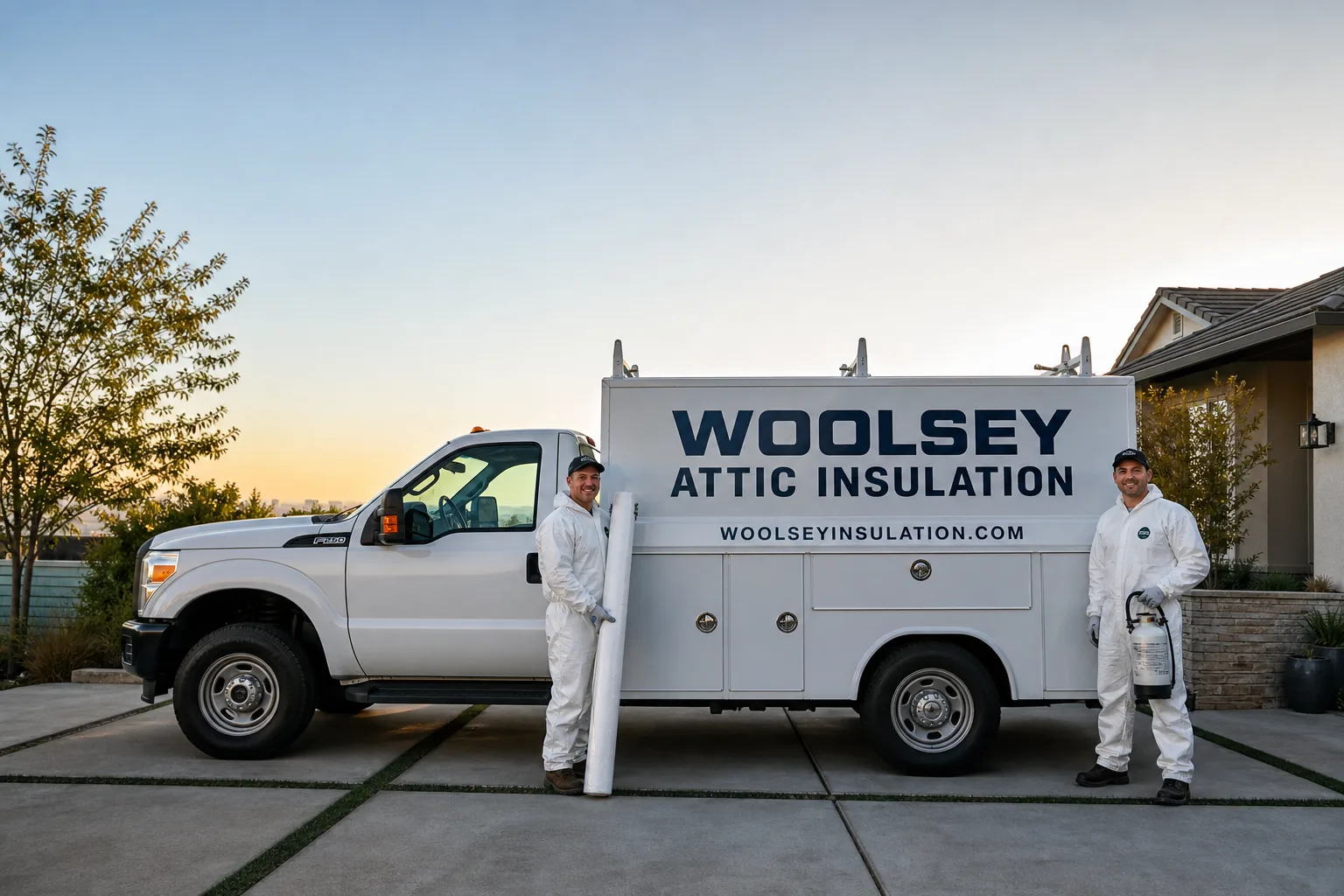
Fast, Reliable Attic Insulation Across Rolling Hills Estates
Attic insulation in Rolling Hills Estates typically costs between $1,800 and $4,200 for a full retrofit of a single-story ranch, with blown-in projects on 1,500 to 2,500 square-foot homes landing most often between $2,200 and $3,400. We give you the exact written number before any work starts, not after we’ve opened the attic. If you’re dealing with damp, failing insulation in a hillside home off Crest Road or along Palos Verdes Drive North, call (325) 240-5411 and we’ll schedule a walkthrough.
Rolling Hills Estates attics don’t behave like attics in Torrance or Gardena. The marine layer that sits over the peninsula longer than anywhere else in the South Bay pushes moisture into joist bays and subfloor cavities in ways that flat-land homes never experience. We’ve spent years mapping how the graded hillside pads and split-floor construction here change the insulation equation. That local knowledge is why homeowners call us first when bedrooms won’t hold temperature through June gloom or when energy bills climb despite a newer HVAC system.
Why Woolsey Attic Insulation Is Rolling Hills Estates’s Preferred Attic Insulation Company
The Kingswell Guarantee is what sets us apart in Rolling Hills Estates. Every job gets a written price before work begins, a committed arrival window, a clean job site, and a written guarantee covering the work for 365 days. If something isn’t right, we come back and fix it at no charge. That’s in writing, on every job, no exceptions. Glenn Hartley leads our team, and he insists on that standard because he knows what it’s like to hire a contractor who promises one thing and delivers another.
Rolling Hills Estates homeowners tell us the same story over and over: a contractor quoted a price on the phone, changed it at the door, and left a job that failed within months. We answer the phone with a live person 24 hours a day, 7 days a week. No voicemail maze. No call-back window. When you call about attic insulation in Rolling Hills Estates, you talk to someone who can actually help.
Our technicians arrive background-checked and uniformed. You know exactly who’s walking into your home. And because we work with eight leading insulation brands, including Owens Corning, Johns Manville, and Rockwool, the material we recommend fits your house and your peninsula microclimate, not whatever happens to be on the truck.
Attic Insulation Removal in Rolling Hills Estates
Attic Insulation Removal in Rolling Hills Estates is the first step on nearly every older ranch home we service, because the original 1955 – 1975 construction left attics with thin, failing material that’s often been sitting under decades of marine-layer humidity. We remove the old batts or loose fill, inspect the joist bays for moisture damage and bypasses, and prep the space for new insulation. A full removal on a typical Rolling Hills Estates ranch runs between $900 and $1,800, depending on attic size and material condition.
When Old Insulation Has to Come Out
You can’t blow new insulation over moisture-degraded batts and expect it to perform. The damp material keeps decaying underneath, the R-value stays collapsed, and the trapped humidity continues working on the roof decking. We see this constantly in Rolling Hills Estates attics over vented crawl spaces, where hillside moisture rises straight into the joist bays. If the batts are stained, sagging, or smell musty, they need to come out before anything new goes in.
Air-Sealing During Removal
Removal gives us the only real chance to air-seal the attic floor: top plates, wire penetrations, can lights, and especially the slab-to-crawl-space transition that defines split-floor homes on graded pads. Closing those bypasses is what keeps the marine layer’s damp air from moving into your living space in the first place. Skipping it means the new insulation just filters that same wet air, and you’re back to square one within a couple of seasons.
Blown In Insulation in Rolling Hills Estates
Blown In Insulation in Rolling Hills Estates is the workhorse retrofit for these older ranch homes, because it fills the irregular joist bays and odd transitions that batt insulation can’t handle cleanly. We typically blow GreenFiber or Johns Manville loose fill to a uniform depth that meets current Title 24 energy code for the climate zone. A standard single-story Rolling Hills Estates attic runs between $1,400 and $2,800 for blown-in insulation, including removal of old material when needed.
Why Blown-In Works on Hillside Homes
Split-floor construction means the thermal boundary isn’t a clean rectangle. Blown-in insulation conforms to the changing depths and the mid-house transition where the slab end meets the vented crawl-space end. Batts leave gaps at those junctions. Loose fill doesn’t. That’s why we lead with blown-in on nearly every Palos Verdes Peninsula retrofit we quote.
Depth and R-Value Targets
For Rolling Hills Estates, we target R-38 to R-49 in the attic, which translates to roughly 13 to 17 inches of blown-in fiberglass or cellulose depending on the material. The marine layer’s humidity means depth isn’t the only variable, ventilation and air-sealing matter just as much. We’ll walk you through the exact number for your attic before anything is ordered.
Trusted Brands We Service in Rolling Hills Estates
We install and service materials from Owens Corning, Johns Manville, Knauf, and Rockwool, and we keep common stock available for Rolling Hills Estates jobs so we’re not waiting on a distributor when your attic is already opened up. Different peninsula attics call for different products: a vented ranch with a tight roof pitch might take Rockwool batts beautifully, while a split-floor hillside home usually calls for blown-in GreenFiber or Johns Manville. We’ll recommend the right material for your house’s specific moisture profile, not whatever’s on the truck. For a free estimate on Attic Insulation work in Rolling Hills Estates, call (325) 240-5411.
Common Attic Insulation Problems We See in Rolling Hills Estates Homes
- Moisture-degraded batts over vented crawl spaces. Hillside humidity rises into joist bays and saturates fiberglass batts, collapsing their R-value to a fraction of the label. The fix is removal, air-sealing, and blown-in replacement at proper depth.
- Condensation at the slab-to-crawl-space transition. The mid-house thermal boundary is where cold marine air meets warm interior air, and condensation forms on unsealed bypasses. Contractors who don’t recognize the split-floor condition leave this gap open and the homeowner gets damp ceilings and cold floors.
- Original construction with little or no attic insulation. Homes built between 1955 and 1975 on the peninsula often had minimal ceiling insulation because developers sold the “perfect” climate. The marine layer proves otherwise, and these attics bleed conditioned air year-round.
- Poorly vented attics trapping peninsula humidity. The marine layer sits here longer than in flat nearby cities, and attics without adequate baffles and airflow hold that dampness. Insulation can’t perform when it’s wet, no matter the brand or R-value.
Pricing for Attic Insulation in Rolling Hills Estates, CA
Most attic insulation jobs in Rolling Hills Estates run between $1,800 and $4,200, and the exact scope depends on what’s in your attic right now, its size, and the moisture condition of the existing material. A straight blown-in top-up over clean, dry insulation runs $1,200 to $2,000. Full removal of degraded batts plus air-sealing and new blown-in at R-38 to R-49 runs $2,200 to $3,400 on a standard ranch. Split-floor homes with significant bypass sealing can push toward $4,200. Every quote is written, detailed, and delivered before any work starts. Call (325) 240-5411 for a free estimate, and we’ll give you the exact number for your house.
We Also Serve Cities Near Rolling Hills Estates
Our Attic Insulation in Rolling Hills Estates crews also cover nearby communities along the peninsula and across the South Bay, including Los Angeles, San Diego, San Jose, and San Francisco. If you’re in a neighboring city with a hillside or coastal moisture problem, call (325) 240-5411 and we’ll tell you honestly whether we can help.
Serving Rolling Hills Estates, CA - Our Local Coverage Area
We’re based in the Rolling Hills Estates area and know this community well. Use the map below to see our service coverage - if you’re nearby, we can almost certainly help.
FAQs About Attic Insulation in Rolling Hills Estates
The marine layer sits over the Palos Verdes Peninsula longer than it does over flat inland cities, and that cool, wet air gets drawn into attics and crawl spaces through stack effect and wind-driven pressure. In Rolling Hills Estates specifically, homes on graded hillside pads have vented crawl spaces on one end that channel humid air upward into the attic, where it hits cooler roof decking and condenses. That’s why damp insulation is so common here even though it rarely rains. Call (325) 240-5411 and we’ll inspect your attic’s moisture profile and show you exactly where the wet air is entering.
Yes, it changes everything. The thermal and moisture boundary shifts mid-house, and standard attic treatment that ignores that transition leaves a cold, damp gap right where the two foundation types meet. We air-seal that slab-to-crawl-space junction before any insulation goes in, then blow loose fill to a uniform depth that accounts for the changing boundary. Most peninsula contractors don’t recognize the split-floor condition at all. We do, because we work on these hillside homes constantly. For a written estimate that factors in your home’s specific configuration, call (325) 240-5411.
Not if the old batts have been exposed to peninsula moisture for 50 years. Blowing new insulation over degraded, damp material just hides the problem, it doesn’t fix it. The R-value stays collapsed, the moisture keeps working on the decking, and you’ve spent money on a job that won’t perform. In Rolling Hills Estates, we almost always recommend removal first because the marine layer’s humidity has already compromised the original insulation. We’ll show you the condition before anything comes out, and you’ll get a written price for the full scope before work starts. Call (325) 240-5411 to schedule a look.
Walk to the low side of your house and look underneath. If part of the foundation is concrete slab meeting the ground and another part is open crawl space with vents, you have a split-floor condition. You’ll often notice the signs inside too: floors that are cold over the crawl-space end, damp smells in closets near the transition, or condensation on windows in rooms that sit over the vented half. In Rolling Hills Estates, many of these gaps have never been air-sealed, and they’ve been bleeding conditioned air into the attic for decades. We can assess the transition during a walkthrough. Call (325) 240-5411 and we’ll tell you exactly what you’re working with.
Brand matters less than material type and installation details, but we do lean on products that handle humidity well. Rockwool batts resist moisture absorption and hold their shape in vented attics, while GreenFiber cellulose and Johns Manville fiberglass blown-in fill irregular split-floor transitions cleanly. The real variable on the peninsula is air-sealing and ventilation, not the label on the bag. We’ll recommend the right product for your house’s specific conditions and put every recommendation in writing. For a free estimate, call (325) 240-5411.
Written by Glenn Hartley, Owner at Woolsey Attic Insulation, serving Rolling Hills Estates with the Kingswell Guarantee: written pricing before work starts, a committed arrival window, a clean job site, and a 365-day written guarantee on every job.