
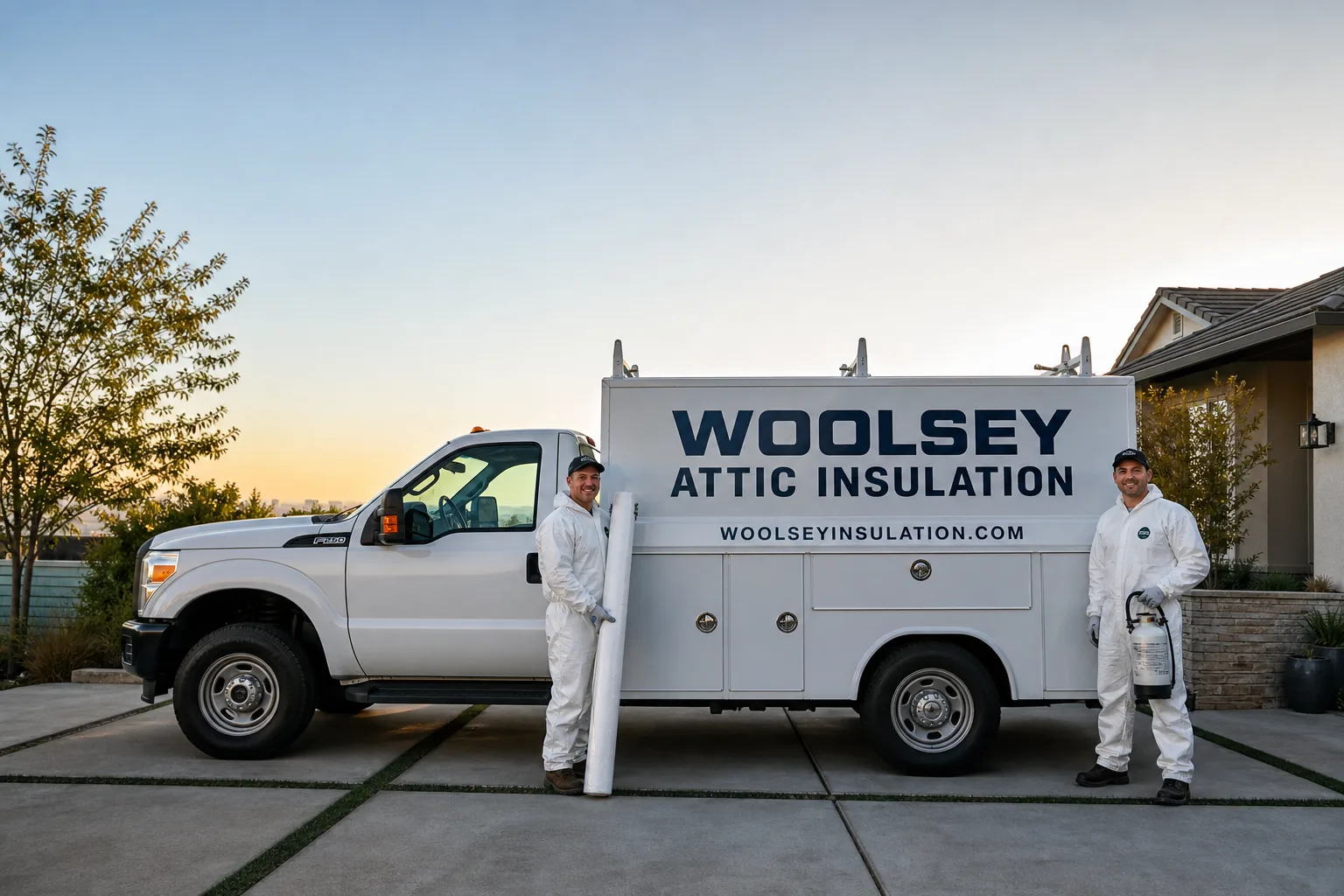
Fast, Reliable Attic Insulation Across Seal Beach
Attic insulation in Seal Beach costs most homeowners between $1,400 and $3,200 for a full removal and reinstall, while top-ups run $600 to $1,300 depending on square footage. Those are real numbers for this city, not national averages. The coastal marine layer here means moisture control matters just as much as R-value, and older housing stock near the pier needs a different approach than the Leisure World mutuals east of Pacific Coast Highway. We’re Woolsey Attic Insulation, and we serve Seal Beach from the Kingswell family’s Los Angeles office with local crews who know this city block by block. Call (325) 240-5411 and you’ll get a live person, any hour, any day.
Why Woolsey Attic Insulation Is Seal Beach’s Attic Insulation Company
We walk into Seal Beach attics expecting coastal air, old framing, and paperwork. That last part surprises people. In Leisure World, you can’t just schedule insulation work. Your mutual’s board of directors has to approve it in writing, and if the attic space spans multiple units, facilities management coordinates access. We’ve done this enough times to know the workflow cold, and we prepare the documentation your board needs before you ask for it. That’s not something every insulation contractor knows, and it’s why Seal Beach homeowners and mutual boards call us back.
Our crews are background-checked and uniformed. You know exactly who’s walking through your door. Every job starts with a written price, delivered before any work begins, so the number you approve is the number you pay. If something isn’t right within 365 days, we come back and fix it at no charge, in writing. That’s the Kingswell Guarantee, and it applies to every Seal Beach job, whether it’s a small top-up in Old Town or a full removal in a Leisure World mutual.
Glenn Hartley leads our team, and he holds every job to the same standard: say the price, show up in the window, leave it cleaner than you found it, put the guarantee in writing. Wool was the first insulation. Woolsey keeps the idea in the name.
Attic Insulation Removal in Seal Beach
Attic insulation removal in Seal Beach is often the right first step when old fiberglass or cellulose has been compressed, water-damaged, or infiltrated by rodent activity, and on this coastline it’s frequently all three. In the Leisure World units built between 1968 and 1975, original fiberglass batts were often stuffed into cavities too small for them, which crushes the loft that gives insulation its R-value. Add years of salt-laden air moving through the attic and you get batts that are holding moisture against framing instead of shedding it. We pull the old material out completely, bag it, and prep the cavities for new insulation that actually performs.
What Full Removal Involves
We suction out the existing insulation with a commercial vacuum system, then inspect the decking, wiring, and framing underneath. This is when we find things that surprise homeowners: rusted fasteners, damp top plates, gaps at party walls in the shared Leisure World attics. We document everything with photos, which matters if your mutual board wants records for the building’s maintenance file. The cavity is then ready for new material, whether that’s blown-in loose-fill or fresh batts.
When Removal Beats a Top-Up
If your original 1969 batts are damp or showing black staining along the edges, topping them off just buries the problem under clean material. The moisture stays, the mold keeps growing, and the new insulation can’t do its job. Removal is the honest fix. In Seal Beach specifically, where marine-layer humidity makes moisture entrapment a real failure mode, we recommend removal more often than our crews do in inland cities like Cypress or Westminster.
Blown In Insulation in Seal Beach
Blown in insulation in Seal Beach is our most-requested installation method for both the Leisure World mutuals and the older cottages in Old Town, because it fills irregular cavities completely and gets into the corners where batts leave gaps. Loose-fill insulation, typically fiberglass or cellulose, is blown through a hose into the attic cavity at a controlled density. We use GreenFiber cellulose on most Seal Beach jobs because it performs well in coastal humidity when paired with proper air sealing, and it’s made from recycled materials, which appeals to a lot of Seal Beach homeowners.
Why Loose-Fill Works in Coastal Attics
Blown-in insulation settles into a continuous blanket with no seams, which is exactly what you want when coastal air is trying to find every path through your attic floor. The key is pairing it with proper rim joist sealing, especially in the Old Town cottages near the pier, where balloon framing lets air move from the crawlspace to the attic with nothing much stopping it. We air-seal before we blow, every time.
R-Value for Seal Beach Homes
For most Seal Beach attics, we recommend R-38 to R-49, which is the U.S. Department of Energy’s range for this climate zone. Older homes that have never been insulated might start from R-0 and go straight to R-49 in one pass. The cost in Seal Beach runs about $1.20 to $1.80 per square foot for blown-in cellulose including air sealing, which puts most attics between $1,200 and $2,800 depending on size and access conditions.
Trusted Brands We Service in Seal Beach
We install and service insulation from Owens Corning, GreenFiber, Johns Manville, and Knauf, among others. We’re not married to one manufacturer, because the right material for a dry inland attic isn’t necessarily right for a salt-air coastal crawlspace. For Seal Beach specifically, we stock GreenFiber loose-fill and Owens Corning batts at our local supply points, which means we don’t have to wait on a truck from Riverside to start your job. Material choice gets written into your quote before we ever touch a ladder. If you already have a preferred brand, we’ll work with it; if you don’t, we’ll recommend the one that fits your attic, not whatever happens to be on the truck.
Common Attic Insulation Problems We See in Seal Beach Homes
- Compressed original fiberglass in Leisure World units. The circa-1968 – 1975 stacked cooperatives were built with batts crammed into undersized ceiling cavities. Crushed fiberglass loses most of its R-value, so the attic insulation reads R-30 on paper but performs like R-11.
- Moisture staining along top plates and rim joists. The persistent marine layer pushes humid air into attic and crawlspace framing, and when it meets a cold surface it condenses. We see staining on top plates in Old Town cottages near the pier that has been there for decades, slowly softening the lumber.
- Gaps at party walls in shared Leisure World attics. When one unit’s contractor insulates without coordinating through facilities management, the work often stops at the unit line and leaves a vertical gap at the party wall. Coastal air moves right through that gap and the neighboring unit stays hot and damp.
- Zero insulation in pre-1950s beach cottages. Old Town Seal Beach homes near the pier were built when insulation wasn’t code, and many still have nothing between the ceiling and the roof deck. In summer the attic hits 130 degrees and the living space bakes; in the marine layer it gets clammy and cold.
Our crew was called to a Leisure World mutual near St. Andrews Drive where an original 1969 stacked unit had fiberglass batts compressed into undersized ceiling cavities and salt-laden marine-layer air was driving moisture through the rim joist area, leaving visible staining on the top-plate framing. We pulled the compressed batts, documented the moisture pattern for the mutual’s board packet, and after facilities management cleared shared-attic access, blew in GreenFiber loose-fill to the correct R-value and sealed the rim joist with a faced vapor-retarding assembly rated for coastal humidity. The board signed off on the same scope for six adjoining units in the mutual.
Pricing for Attic Insulation in Seal Beach, CA
Here are the numbers we quote most often in Seal Beach. Attic insulation removal runs $1.50 to $2.50 per square foot. Blown-in installation including air sealing runs $1.20 to $1.80 per square foot. A top-up of R-19 over existing R-30 runs $0.90 to $1.40 per square foot. For a typical 1,200-square-foot attic, that puts full removal and reinstallation between $1,800 and $3,200, and a top-up between $1,000 and $1,700. What changes the price in Seal Beach specifically: shared-attic access in Leisure World that requires facilities management coordination, the age and condition of existing insulation, and whether your crawlspace or rim joists need sealing alongside the attic work. You’ll get a written price before any work starts. Not an estimate after the fact. The number you approve is the number you pay. Call (325) 240-5411 for a free, exact quote on your Seal Beach attic.
We Also Serve Cities Near Seal Beach
Our crews reach Seal Beach daily and also cover Attic Insulation in Seal Beach neighbors including Los Alamitos, Cypress, Hawaiian Gardens, and Westminster. If you’re in one of those cities, the same Attic Insulation standards apply: written pricing, a live person answering the phone, and the 365-Day Done Right Promise on every job. Call us and tell us which city you’re calling from.
Serving Seal Beach, CA - Our Local Coverage Area
We’re based in the Seal Beach area and know this community well. Use the map below to see our service coverage - if you’re nearby, we can almost certainly help.
FAQs About Attic Insulation in Seal Beach
Yes. In Seal Beach’s Leisure World, a resident cannot unilaterally authorize an attic insulation retrofit; your mutual’s board of directors must approve it in writing, and any shared attic space spanning multiple units requires coordination through Leisure World facilities management. We prepare the documentation your board needs, including material specs, R-value targets, and a scope of work, so the approval process doesn’t stall. Call (325) 240-5411 and we’ll walk you through what your mutual’s packet should include.
Salt-laden marine-layer air raises outdoor relative humidity well above what inland Orange County cities experience, and that moisture moves through attics, crawlspaces, and rim joists by vapor drive. Unfaced or open-cell insulation can trap that moisture against framing, causing rot and mold. We spec faced, vapor-retarding assemblies and pair insulation with air sealing so coastal humidity moves out of the attic instead of condensing in it.
If the original batts are dry and uncompressed, a top-up is sometimes workable. But in most of Seal Beach’s Leisure World units we’ve inspected, the batts are compressed into undersized cavities and have been absorbing marine-layer moisture for over 50 years, which means topping them off would trap the problem. We’ll inspect the existing material and tell you honestly whether removal is required. The written recommendation comes with your quote at no charge.
Yes. We work regularly in the pre-1950s beach cottages near the pier, where balloon framing and absent original insulation are the norm. Those homes need air sealing first, especially at the crawlspace and rim joist level, before any insulation goes in. We coordinate access through narrow attics and work around the tight lot conditions common on those streets.
We install Owens Corning, GreenFiber, Johns Manville, and Knauf, plus several others. For Seal Beach’s coastal humidity, we most often recommend GreenFiber loose-fill cellulose paired with proper air sealing, but the material choice goes in your written quote before work starts. If your mutual board has a material preference, we’ll spec it and document it in the board packet.
If you’re in Seal Beach and your attic needs attention, call (325) 240-5411 now. You’ll reach a live person, get a straight answer, and receive a written price before any work begins. That’s how we’ve done every Seal Beach job, and that’s how we’ll do yours.
Written by Glenn Hartley, Owner at Woolsey Attic Insulation, serving Seal Beach as part of the Kingswell family of independently owned and operated insulation companies since 2002.