
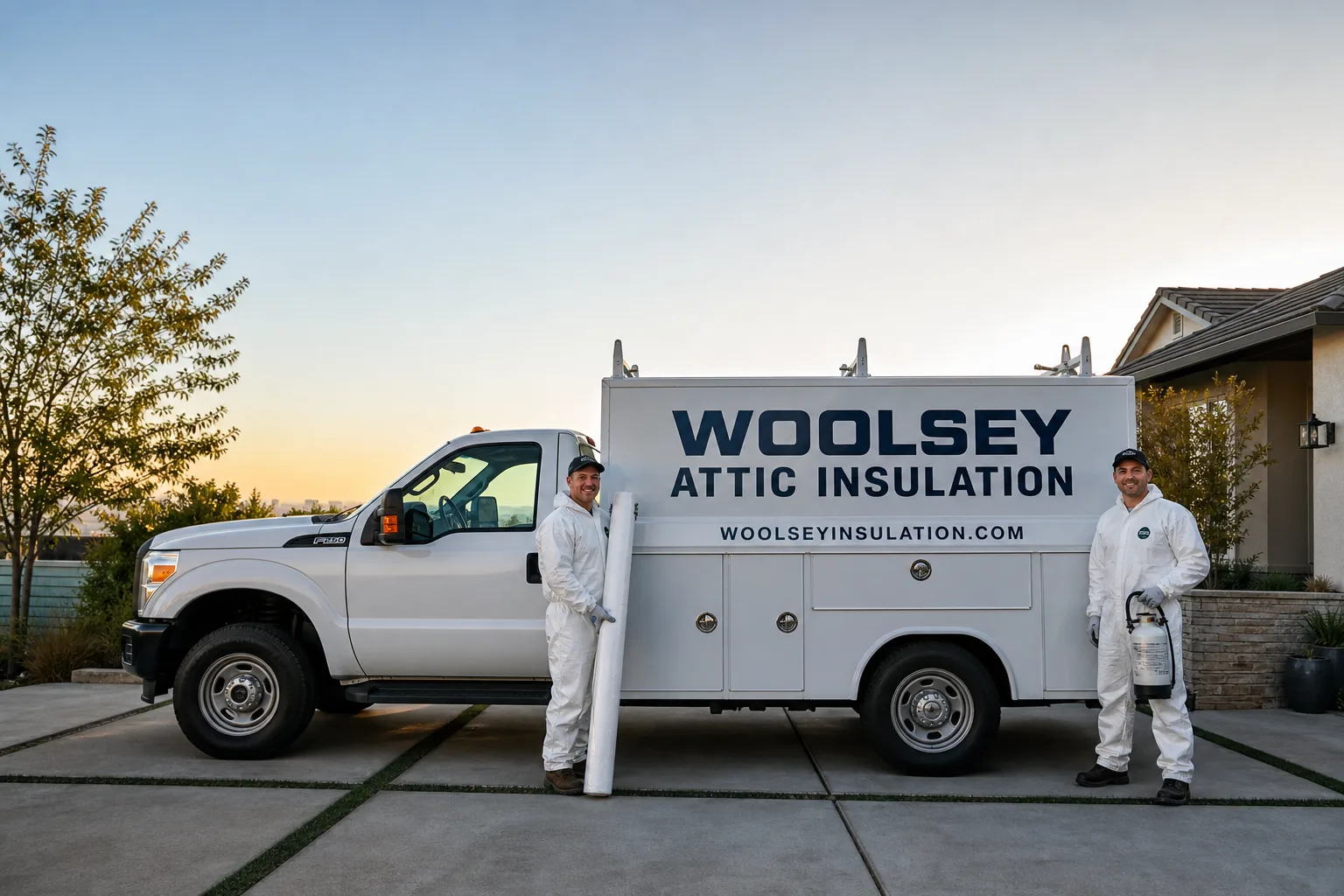
Fast, Reliable Attic Insulation Across South San Francisco
Attic insulation in South San Francisco typically costs $1,800 to $4,600 depending on attic size, existing insulation depth, and whether air sealing gets bundled in. Most jobs are completed in a single day. The wind that funnels through the San Bruno Gap doesn’t just make this city colder than its neighbors a few miles south; it finds every unsealed top plate, every recessed light penetration, and every gap around a plumbing vent, then pushes the air you paid to heat straight out through your roof. That’s why our Attic Insulation team treats air sealing as the first scope item here, not an upsell. If your attic in South San Francisco has old, slumped insulation or bare joists, call (325) 240-5411 for a written price before any work starts.
Key takeaways:
- Typical attic insulation jobs in South San Francisco run $1,800 to $4,600, with a written quote delivered before work begins.
- Post-WWII Sunshine Gardens and Buri Buri homes usually need air sealing before blown-in insulation goes down.
- Same-day and next-day availability is standard for most South San Francisco attics.
- Every job includes the 365-Day Done Right Promise in writing.
Why Woolsey Attic Insulation Is South San Francisco’s Preferred Attic Insulation Company
We’re the Kingswell Guarantee company for a reason. Before any crew member steps onto your South San Francisco property, you receive a written price. Before the work starts, you receive a committed arrival window. After the work is done, you receive a written guarantee covering 365 days, with a free return visit if anything fails within that year. South San Francisco homeowners who’ve dealt with door-step price changes or insulation crews that never showed don’t have to gamble again. You’ll know exactly who’s walking into your home, too: background-checked, uniformed technicians on every job, and a live person answers our phone 24/7 when you call (325) 240-5411.
Glenn Hartley leads our South San Francisco work with a plain-spoken approach: explain what’s wrong, tell you what it costs, fix it, stand behind it. The Kingswell name goes back to 2002, and every Woolsey location remains independently owned and operated under that banner. We’re not a franchise rolling crews through town; we’re a local insulation team that knows the direct-stucco, no-vapor-barrier homes in Sunshine Gardens as well as the tract layouts in Buri Buri and Paradise Valley.
Insulation Contractors in South San Francisco
Insulation contractors in South San Francisco need to understand one thing before quoting any attic job: most of the housing stock here went up between 1940 and 1965, before Title 24 energy codes existed, so a large share of these attics have either nothing between the joists or a thin layer of mineral wool that’s long since slumped and lost its R-value. In Sunshine Gardens and Buri Buri specifically, the wall assembly runs stucco directly over wood sheathing, with no house wrap and no vapor barrier between studs and stucco skin. That’s a construction detail few contractors outside this city deal with routinely, and it changes how we scope attic work.
Blown-In and Batt Installation
Most South San Francisco attics get blown-in fiberglass or cellulose because it fills irregular joist bays and reaches under low-slope roof framing where batts won’t sit flat. For attics with limited headroom, we install batt or roll products from Johns Manville, Owens Corning, or Knauf. Single-day installation is typical for a one-story tract home in Sunshine Gardens.
Top-Up and Replacement
If you already have insulation but it measures under R-30, we can top it up rather than remove it. Old mineral wool or kraft-faced batts that have compressed to R-11 or worse usually get pulled and replaced. A top-up in South San Francisco runs $900 to $1,600 for a typical 1,200-square-foot attic; full replacement with air sealing lands between $2,800 and $4,600.
Attic Ventilation in South San Francisco
Attic ventilation in South San Francisco isn’t optional; it’s the difference between a dry attic and one that grows mold by August. The San Bruno Gap pushes a persistent marine layer through this city, and that fog sits low into summer mornings. When warm interior air finds its way into an unventilated attic and meets those cool, fog-saturated roof surfaces, condensation forms. In older direct-stucco homes with no vapor barrier, that moisture doesn’t have a drying path. That’s the root of the peeling paint and musty bedrooms we see on the north walls of Sunshine Gardens homes.
Baffle Installation and Soffit Repair
Low-slope post-WWII roofs often have soffit vents that get blocked when insulation is blown in without baffles, which kills the intake-air path that these damp attics need. We install baffles at every rafter bay and confirm ridge or gable exhaust before blowing anything in. Without that prep, you’re just stacking insulation on top of a moisture problem.
Ridge-to-Soffit Vent Paths
Many 1950s attics in Buri Buri and Paradise Valley have no ridge vent at all, just gable vents that don’t move enough air for the fog load this city carries. We open a continuous ridge vent or add gable fans where the framing allows, then verify the path from soffit to ridge with a smoke test before the insulation goes down. Ventilation-only retrofits run $700 to $1,400 on most of these homes.
Trusted Brands We Service in South San Francisco
We work with eight leading insulation brands: Owens Corning, Johns Manville, Knauf, Rockwool, CertainTeed, Icynene, Demilec, and GreenFiber. For South San Francisco’s older housing stock, that matters because the material recommendation should fit the home, not whatever happens to be on the truck that day. A direct-stucco 1952 Sunshine Gardens tract home with a tight attic needs different materials than a 1980s Paradise Valley split-level. We stock fiberglass and cellulose locally, so most jobs start next day. GreenFiber’s cellulose works well for dense-packed retrofits in enclosed wall cavities, and Owens Corning’s blown-in fiberglass covers the majority of open-attic top-ups we do here.
Common Attic Insulation Problems We See in South San Francisco Homes
- Wind-driven air infiltration through unsealed top plates. The San Bruno Gap pushes northwest wind through these attics year-round. Without foam-sealed top plates and can-light penetrations, conditioned air escapes continuously, and insulation alone won’t stop it.
- Missing vapor barriers behind direct-applied stucco. In Sunshine Gardens and Buri Buri, stucco sits directly on wood sheathing with no wrap. Adding attic insulation without addressing the wall moisture path can trap fog-driven condensation and feed mold on the back of exterior walls.
- Blocked soffit vents from previous blown-in jobs. We regularly find insulation packed into soffit cavities in these low-slope attics. That kills the intake path the marine layer needs for drying, and attic temperatures spike in July.
- Slumped mineral wool from the 1940s and 1950s. Original insulation in these worker housing tracts has compressed to R-11 or worse over 70 years, and in many cases was installed without any air barrier at all. Replacement plus air sealing restores both thermal performance and moisture control.
In Sunshine Gardens we opened a 1952 stucco tract home off Chestnut Avenue where the attic had old mineral wool batt slumped between joists and no air barrier at the top plates, and the homeowner reported musty bedrooms and peeling exterior paint on the north wall. We air-sealed the top plates and can lights with foam, installed baffles and a ridge-to-soffit vent path, then blew in Owens Corning fiberglass to R-38, and the musty smell and wall condensation cleared within a season. A few blocks over in Buri Buri we hit the same direct-stucco, no-vapor-barrier assembly and had to plan the venting before we could insulate.
Pricing for Attic Insulation in South San Francisco, CA
Expect to pay $1,800 to $4,600 for a full attic insulation job in South San Francisco. A simple blown-in top-up on a 1,000- to 1,200-square-foot attic lands between $900 and $1,600. Air sealing adds $500 to $900, and ventilation work (baffles, ridge vent, soffit repair) runs $700 to $1,400 depending on the roof. The homes that need the most work are the 1940s-to-1960s direct-stucco tracts in Sunshine Gardens, Buri Buri, and Paradise Valley, because they usually require air sealing before anything gets blown in. The Kingswell Way applies to every one of these jobs: say the price in writing, show up in the window, leave it cleaner than you found it, put the guarantee in writing, and come back if it fails within 365 days. Call (325) 240-5411 for a free estimate with no door-step surprises.
We Also Serve Cities Near South San Francisco
Our crews work in Daly City, San Bruno, Millbrae, and Pacifica, covering the north Peninsula corridor where the same fog and wind conditions shape insulation needs. If you’re in any of those cities, the same Kingswell Guarantee applies: written price, committed arrival window, written guarantee on every job. Attic Insulation in South San Francisco and the surrounding area is what we do every day.
Serving South San Francisco, CA - Our Local Coverage Area
We’re based in the South San Francisco area and know this community well. Use the map below to see our service coverage - if you’re nearby, we can almost certainly help.
FAQs About Attic Insulation in South San Francisco
Because the wind-driven infiltration through the San Bruno Gap bypasses insulation entirely. Air leaks through top plates, can-light penetrations, and plumbing vents, carrying conditioned air straight out of your attic regardless of how much insulation sits on the joists. In South San Francisco, air sealing is the first scope item, not an add-on. Call (325) 240-5411 and we’ll inspect your attic’s air leakage points before quoting anything.
Yes, and we do it regularly. The direct-stucco assembly without a vapor barrier means we plan ventilation and air sealing before blowing insulation in, but it doesn’t prevent attic work. The key is doing the vent path and top-plate sealing first so the new insulation doesn’t trap fog-driven moisture against the sheathing. Estimates are free.
The marine layer that sits over South San Francisco most mornings means moisture management drives material choice. We lean toward blown-in fiberglass for open attics because it doesn’t absorb water like some cellulose blends can in humid, low-ventilation spaces. For enclosed wall cavities, dense-packed GreenFiber cellulose works well. We’ll tell you exactly which material fits your attic after seeing it. Call for a written quote.
Most have either nothing or a thin layer of mineral wool that’s compressed below R-15. Some have partial batts that were added piecemeal over decades. The majority we inspect in these neighborhoods measure well under today’s R-38 code level and need either a top-up or full replacement. We give you the exact written number before any work starts.
Sometimes, but not always. Ventilation handles the fog-load and condensation cycle in the attic itself, but if the issue is moisture migrating from the conditioned space through unsealed top plates or from the direct-stucco wall assembly below, ventilation is only half the fix. We’ll tell you plainly which it is after an inspection, and the quote comes in writing before you commit to anything.
Written by Glenn Hartley, Owner at Woolsey Attic Insulation. We install and service attic insulation and spray foam insulation throughout South San Francisco, with every job covered by the 365-Day Done Right Promise and the Kingswell Guarantee.