
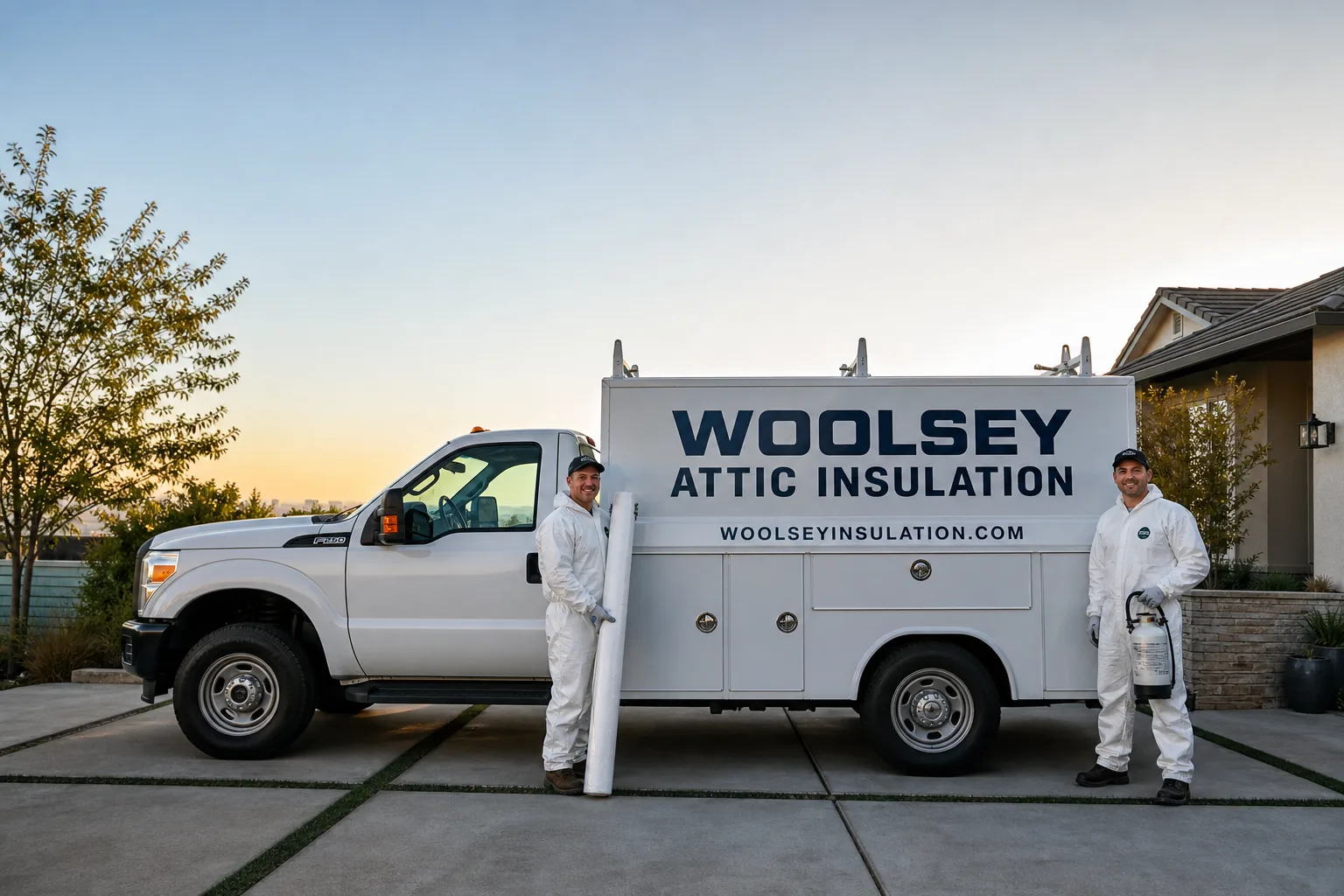
Fast, Reliable Attic Insulation Across Spring Valley Lake
Attic insulation in Spring Valley Lake usually costs between $1,800 and $4,600 for a full upgrade, with top-ups and smaller repairs running $600 to $1,400. Most jobs are completed in a single day. The catch in this community is that the original mid-1970s through late-1980s homes were built with R-19 attic batts that have settled, compressed, and stopped doing their job under a 2,800-foot High Desert climate that swings from 108°F summers to single-digit wind-chill winters. If you’re noticing upstairs rooms that won’t cool down or heat bills that climb every year, call Woolsey Attic Insulation at (325) 240-5411. A real person answers, day or night.
Why Woolsey Attic Insulation Is Spring Valley Lake’s Preferred Attic Insulation Company
Woolsey Attic Insulation focuses on one trade: attic and spray foam insulation. That narrow focus matters in Spring Valley Lake, where the housing stock has a very specific set of problems that a general contractor won’t catch. Glenn Hartley leads our Spring Valley Lake work, and the crews who show up at your door are background-checked, uniformed, and trained to diagnose the exact failure modes these 1970s and 80s homes develop.
We’ve walked through enough Spring Valley Lake attics to know what we’re going to find before we climb the ladder. Settled R-19 batts crushed to three or four inches. Pull-down stairs with no gasket. Blocked soffits on lake-view homes. The specifics change house to house, but the pattern is consistent across the community’s original construction. That local repetition means we can give you an honest written price before any work starts, not a guess.
Every Woolsey job is backed by The Kingswell Guarantee. You get a written price before work begins, a committed arrival window, a clean job site, and a written guarantee on the installation. If something isn’t right within 365 days, we come back and fix it at no charge. That’s not marketing language. It’s in writing on every job we do in Spring Valley Lake.
Insulation Contractors in Spring Valley Lake
Insulation Contractors in Spring Valley Lake are easy to find and hard to trust. Most generalists will quote a job without ever looking at what’s actually in your attic. Woolsey does it differently. We start with a full attic inspection, measure what’s there, identify where the thermal gaps are, and then give you a written number. The job itself typically involves removing or topping up existing insulation, sealing the attic floor penetrations, installing baffles where needed, and bringing the assembly up to a level that actually handles Spring Valley Lake’s four-season swing. A full replacement with blown-in fiberglass or cellulose in a standard Spring Valley Lake single-story runs $2,400 to $4,600. A top-up over existing material runs $900 to $1,800.
Blown-In and Batt Installation
We install blown-in fiberglass, blown-in cellulose, fiberglass batts, and spray foam depending on what the attic actually needs. In most Spring Valley Lake homes, blown-in fiberglass from Owens Corning or Johns Manville gives the best balance of coverage, R-value per dollar, and long-term performance. We’ll tell you honestly which material fits your house, not what happens to be loaded on the truck that day.
Attic Air Sealing and Prep
Before we put insulation in, we seal the leaks that make insulation underperform. Wiring penetrations, plumbing chases, recessed light housings, attic hatches. Air sealing is the difference between an attic that holds its temperature and one that keeps leaking heat into the living space. In Spring Valley Lake’s original 2×4-framed homes, this step matters more than most homeowners expect.
Attic Ventilation in Spring Valley Lake
Attic Ventilation in Spring Valley Lake is not a nice-to-have. It’s the difference between a dry attic and a damp, sagging one. Because this community sits at roughly 2,800 feet in the Mojave High Desert, attics here bake in the summer and then deal with freezing nights. Without a proper vent path from soffit to ridge, that trapped heat and trapped moisture degrade insulation and decking fast. Ventilation upgrades for a typical Spring Valley Lake home run $400 to $1,200, depending on the existing roof configuration and whether baffles need to be retrofitted in every bay.
Soffit-to-Ridge Vent Path
Most of the original homes in Spring Valley Lake have soffit vents that were either never adequate or have been blocked by decades of insulation that drifted over them. We install baffles at the soffits, clear the intake path, and make sure the upper exhaust is working. A proper soffit-to-ridge path drops attic temperatures by 30 to 40 degrees in July, which directly lowers the cooling load on your AC.
Moisture Control for Lake-View Homes
The west-shore and south-shore homes near the reservoir have a problem that doesn’t exist four blocks inland. Evening evaporation from the lake pushes humidity into unventilated or barely-vented attic spaces. That humidity condenses into the insulation. We address this with a combination of vent path correction and, where needed, upgrading to moisture-resistant insulation materials like Rockwool batts or closed-cell spray foam.
Trusted Brands We Service in Spring Valley Lake
Woolsey works with eight leading insulation manufacturers so the material recommendation fits your home, not our inventory. For Spring Valley Lake’s specific conditions, we frequently specify Johns Manville blown-in fiberglass for its coverage and R-value stability, Knauf batts for wall cavities and tight spaces, and Rockwool for lake-view homes where moisture resistance matters. CertainTeed products are another regular choice for standard attic replacements. Because we stock materials locally and dispatch crews to Spring Valley Lake regularly, most jobs are scheduled within days, not weeks.
Common Attic Insulation Problems We See in Spring Valley Lake Homes
- Settled and crushed builder-grade R-19 batts. After 30 to 40 years of HVAC techs, cable installers, and plumbers crawling through attics, the original fiberglass batts in most Spring Valley Lake homes have settled to three or four inches. That leaves the top plates and ceiling plane exposed to the full 40 to 50 degree daily temperature swing the High Desert throws at this community.
- Damp insulation on south and west shore lake-view homes. Evening evaporation off the 185-acre reservoir pushes moisture into attic spaces that were never designed to handle humidity. The result is clumped, sagging batts that read like a roof leak but are actually a ventilation and vapor-barrier failure.
- Underinsulated attic hatches and pull-down stairs. The original attic access in these 1970s and 80s homes is often a plywood panel with no gasket and no insulation cap. That single square opening leaks heat all year, and it’s frequently the fastest, cheapest fix on the whole job.
- Blocked soffit intakes from drifted insulation. Insulation that’s been blown or shifted over the decades migrates right over the soffit vents, choking off the intake air. Without that intake, the attic can’t breathe, and everything above the ceiling traps heat and moisture.
Pricing for Attic Insulation in Spring Valley Lake, CA
A full attic insulation replacement in Spring Valley Lake typically runs $2,400 to $4,600, depending on square footage and the condition of what’s already up there. Top-ups over existing material run $900 to $1,800. Attic air sealing as a standalone job runs $500 to $1,200. Ventilation correction (baffles plus clearing soffits) runs $400 to $1,200. The biggest cost variables are attic size, whether the old insulation needs full removal, and whether you need moisture control work near the lake. We give you the exact written number before any work starts. Call (325) 240-5411 and we’ll schedule a free attic assessment in Spring Valley Lake.
We Also Serve Cities Near Spring Valley Lake
Woolsey’s Attic Insulation crews work across Southern California. Beyond Spring Valley Lake, we serve Los Angeles, San Diego, San Jose, and San Francisco, with the same written pricing and 365-Day Done Right Promise on every job.
Serving Spring Valley Lake, CA - Our Local Coverage Area
We’re based in the Spring Valley Lake area and know this community well. Use the map below to see our service coverage - if you’re nearby, we can almost certainly help.
FAQs About Attic Insulation in Spring Valley Lake
You almost always need to address what’s underneath before adding anything. In the late 1970s homes around Spring Valley Lake, the original R-19 batts have typically settled to three or four inches and compressed under years of foot traffic from HVAC work, cable runs, and wiring projects. Adding new insulation on top of compressed, dirty, potentially moisture-damaged batts doesn’t fix the thermal gaps at the top plates and ceiling plane. We recommend a full removal and replacement in most cases. Call (325) 240-5411 and we’ll tell you honestly what your attic actually needs after a real inspection.
That’s the reservoir effect. Spring Valley Lake’s man-made lake is a humidity source that the surrounding High Desert doesn’t share. Evening evaporation off the water pushes moisture into unventilated or poorly sealed attic spaces on the south and west shores. The original 1970s builders didn’t design for this because, in a desert, they didn’t think they had to. The fix is a corrected vent path, proper baffles, and in some cases a moisture-resistant material upgrade. We see this exact failure mode repeatedly in lake-view homes and we know how to solve it.
Yes, and it’s more significant than most homeowners think. The original attic access in Spring Valley Lake’s 1970s and 80s homes is usually an uninsulated plywood panel with no gasket. That single opening leaks heat all year and is one of the fastest fixes we do. Properly insulating and gasketing the hatch takes an hour and costs a fraction of the full attic job, and it pays for itself quickly in season.
We install blown-in fiberglass, blown-in cellulose, fiberglass batts, and spray foam. For most Spring Valley Lake homes, Owens Corning or Johns Manville blown-in fiberglass is the right call for coverage and value. For lake-adjacent homes with moisture exposure, we often recommend Rockwool batts or closed-cell spray foam for their moisture resistance. CertainTeed products also appear regularly in our recommendations. The material depends on your specific attic, not on what we happen to have in stock.
Absolutely. Many Spring Valley Lake homeowners start with visible upgrades like garage door openers and work their way through the house. But the attic insulation is often the biggest single energy improvement you can make in these original 1970s and 80s homes. If you’re already investing in the house, doing the attic at the same time means one coordinated project, one scheduled crew, and one set of disruptions. Call (325) 240-5411 and we’ll work with your timeline.
Written by Glenn Hartley, Owner at Woolsey Attic Insulation, serving Spring Valley Lake and surrounding communities.