
5 Mistakes to Avoid With Attic Insulation
The most expensive attic insulation mistake in Los Angeles isn’t choosing the wrong material. It’s adding new insulation on top of old insulation that’s already become a nest for rodents, because you can’t see what’s underneath until the crew pulls it. Most “mistakes to avoid” lists rehash the same ventilation cliché, but a 1960s California ranch has different failure points than a Chicago two-story, and it deserves advice written for it. Here are the five errors we see most often in LA attics, the ones that cost homeowners real money in cooling bills, cleanup, and do-overs. If you’d rather not deal with any of this yourself, call (325) 240-5411 and we’ll walk you through it.
Key Takeaways
- Layering new insulation over old contaminated insulation is a uniquely common LA mistake tied to the age of our housing stock. Have the old material inspected, not just topped off.
- Blocking soffit vents during a blown-in install silently kills attic ventilation and drives up cooling costs in hot California summers.
- Skipping the air-sealing pass before adding insulation is an order-of-operations error that costs more in AC bills than the insulation ever saves.
- Recessed lights in LA homes built before 2005 are often non-IC rated and need to be identified before insulation goes anywhere near them.
- A verbal quote means nothing. Get the price, the scope, and the guarantee in writing before any work starts.
1. Layering New Insulation Over Old, Contaminated Fill
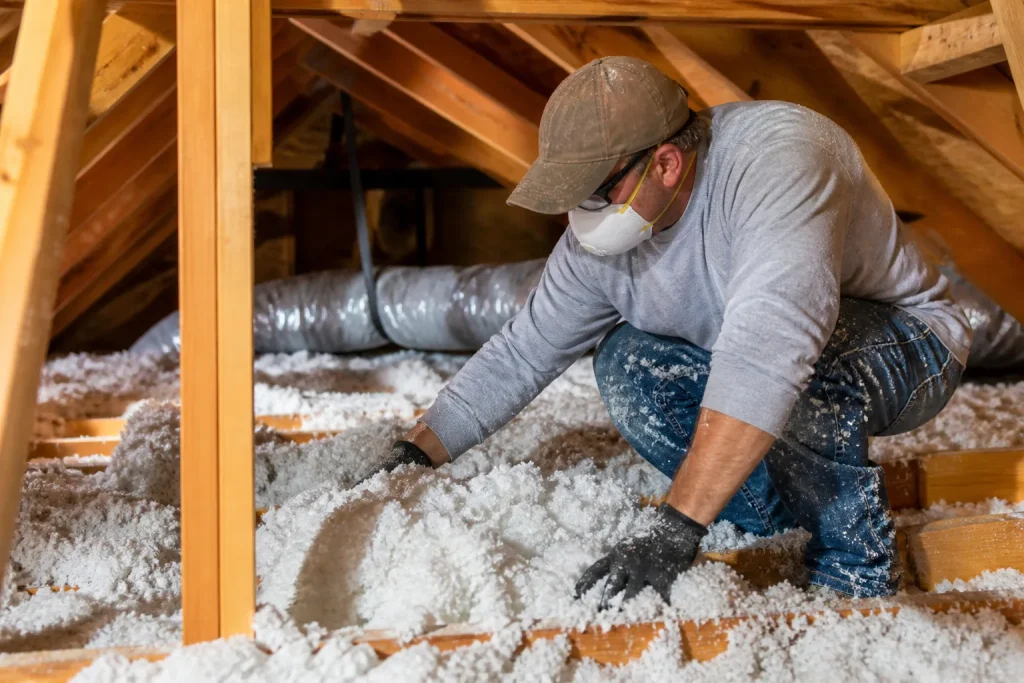
Here’s the scenario we see over and over across Los Angeles. A homeowner buys a 1960s ranch in the Valley or a 1970s two-story in the South Bay. The attic has whatever insulation the original builder blew in, now compressed to half its original thickness. Rodents have been through it at some point. Maybe a raccoon got in through a gable vent. The homeowner gets a quote for “topping off” the attic to R-38 or R-60, and the crew simply blows new fiberglass right on top of the old stuff.
That’s the mistake. The old insulation is now a permanent layer of contamination under your new insulation. Rat droppings, urine-soaked fiberglass, and compressed material that’s lost its loft don’t just disappear because you covered them. The new insulation sits on top, loses performance because the old layer can’t hold its R-value, and the odor and allergen problem gets sealed in rather than solved.
In Los Angeles specifically, this matters more than in most cities because our housing stock skews old. A huge share of LA homes were built between 1950 and 1980, and many of those attics have never been fully cleaned out. The right move is removal first: vacuum out the old material, treat for pests if needed, air-seal, and then install fresh insulation. Yes, it costs more than topping off. But it’s the difference between a 30-year fix and a problem that comes back in three.
2. Blocking Soffit Vents During Installation
Soffit vents are the intake side of your attic’s ventilation system. Warm air exits through ridge vents or gable vents up high, and cooler outside air gets pulled in through the soffits down low. When that intake is blocked, the whole system stalls. In a Los Angeles summer, when attic temperatures can hit 130 degrees or higher, a stalled ventilation system means your AC works harder, your shingles age faster, and your insulation itself starts to underperform.
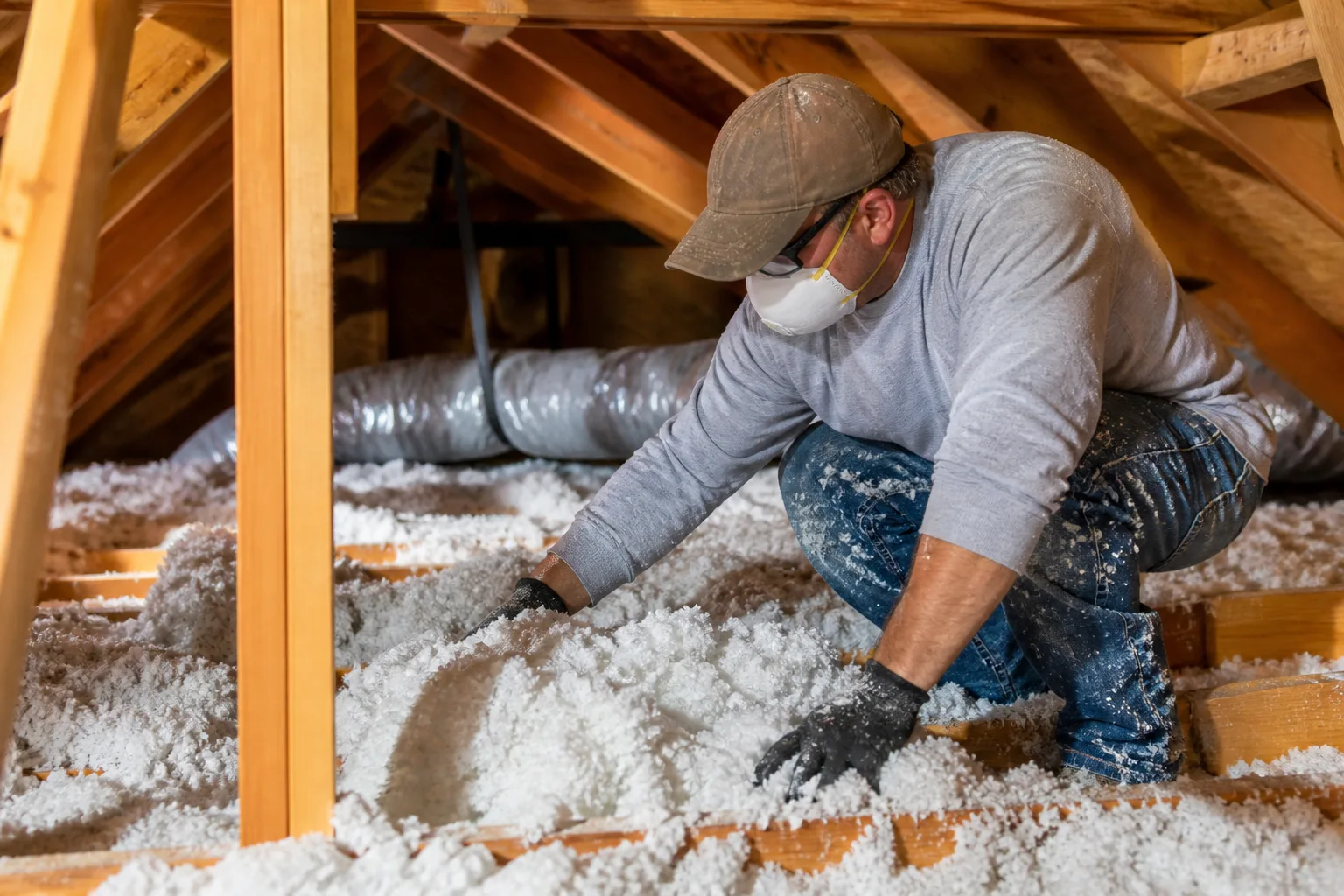
How does blocking happen during an insulation install? It’s almost always an accident of technique. Crews blowing in loose-fill fiberglass or cellulose near the eaves can inadvertently push material right over the soffit vents. Baffles, those lightweight foam or cardboard channels that hold insulation back from the eaves, don’t always get installed. Sometimes the crew assumes the old baffles are still there. Sometimes the old baffles are there but crushed. The result is the same: the attic can’t breathe.
In our work at Woolsey Attic Insulation home, we treat baffle installation as a mandatory part of every blown-in job, not an add-on. We check every soffit vent before we start and again after we’re done. The proper method is to install baffles at every rafter bay with a soffit vent, then blow insulation up to the baffle but never past it. If you’re hiring a crew for this work, ask them two questions before they start: “Will you install baffles at every vented soffit bay?” and “Will you walk the attic with me after to show me the vents are clear?” If they hesitate on either, keep looking.
3. Skipping Air Sealing Before Adding Insulation
Insulation slows heat transfer. It doesn’t stop air movement. Those are two different jobs, and a lot of Los Angeles homeowners pay for one while believing they’re getting both. Air sealing is the process of closing the actual gaps and penetrations where conditioned air escapes your living space into the attic: the tops of interior walls, around plumbing vents, around electrical boxes, around recessed light housings, around the attic hatch itself.
Here’s why the order matters. If you blow new insulation into an attic that hasn’t been air-sealed, the air leaks keep doing what they’ve always done. Conditioned air from your living room rises through the gaps, passes through your insulation, and escapes. In the summer, that’s money leaving your house in real time. The insulation helps, but it’s like adding a second blanket to a bed that’s sitting next to an open window.
The best practice is to air-seal first, then insulate. We seal the penetrations with caulk, spray foam, or weatherstripping as appropriate before installing material. It adds time to the job, but it’s the difference between an insulation project that cuts your bills and one that just makes the attic look fuller. If a contractor quotes you for insulation without mentioning air sealing at all, that’s a sign they’re quoting a material dump, not a performance upgrade.
4. Ignoring Recessed Light Cans in Pre-2005 LA Homes
Recessed light cans are metal or plastic housings that sit inside the ceiling and hold a bulb. They generate heat. And in Los Angeles homes built before roughly 2005, many of those cans are not rated to be in direct contact with insulation. In the trade, we call them non-IC rated fixtures. IC stands for “insulation contact.” An IC-rated can is designed to have insulation touching it safely. A non-IC can is not.
The fire hazard is real. Non-IC cans need clearance around them to dissipate heat. If you blow insulation directly over a non-IC can, the fixture can overheat, which in the worst case can ignite the surrounding material. Even without a fire, the trapped heat shortens bulb life and wastes energy. In older Los Angeles homes, especially the mid-century builds with original lighting, we regularly find non-IC cans hiding under either no insulation at all or a thin scattering of old material.
Before insulating around any recessed light, you have to identify whether the can is IC-rated or non-IC. The label is usually inside the housing, visible when you remove the bulb. If it says “IC” or “Type IC,” you’re fine. If it doesn’t, you need to either replace the fixture with an IC-rated retrofit or build or buy an approved barrier that maintains the required clearance. We check every can during our walkthrough and flag any fixture that needs attention before we install anything. A homeowner who wants to check their own attic can do the bulb-removal test in about two minutes per fixture.
5. Accepting a Verbal Quote
The insulation trade in Los Angeles has a reputation problem. Too many homeowners have a story that goes the same way: the salesperson walks the attic, says a number out loud, and then the invoice arrives with an extra charge for something that was “discovered” during the install. The verbal quote is worth exactly the paper it’s printed on, which is to say, nothing.
When you accept a verbal number, you’ve agreed to a price without agreeing to a scope. That means the contractor can redefine the job, and the price, at any point. The protection you need is a written quote that includes specific line items: the type of material being installed, the manufacturer, the R-value being targeted, the square footage being covered, whether removal of old insulation is included, whether air sealing is included, whether baffles are included, and exactly what the guarantee covers.
At Woolsey, this is what the Kingswell Guarantee is for. We put the price in writing before any work begins, every single job, no exceptions. No door-step surprises, no “we found something” upcharges. You know the number before the crew arrives. Along with the written price, you should expect a written guarantee on the work itself, with a specific remedy if something fails. Ours is 365 days: if it’s not done right, we come back and make it right at no charge. Glenn Hartley started insisting on this years ago because he kept hearing the same LA stories over and over: contractor changes the price at the door, never shows in the promised window, or disappears when the repair fails. The written quote is the cheapest insurance you’ll ever get on an insulation project.
The Bottom Line
The five mistakes that cost Los Angeles homeowners the most money are: layering new insulation over contaminated old fill, blocking soffit vents, skipping air sealing before insulating, ignoring non-IC recessed light cans, and accepting a verbal quote. Every one of these is preventable with a little knowledge and the right questions before the crew arrives. Ask about removal versus top-off. Ask about baffles. Ask about air sealing. Check your recessed light labels. And get everything in writing.
If you’re in Los Angeles and you’d rather have someone else handle all of this, we’re glad to walk your attic with you and show you exactly what’s up there. Attic Insulation in Los Angeles is what we do every day, and we’ll give you a written price before any work starts. For spray foam projects, you can learn more on our Spray Foam Insulation in Los Angeles page. Call (325) 240-5411 for a free estimate, and we’ll answer the phone like a person, not a voicemail.
Frequently Asked Questions
How much does attic insulation cost in Los Angeles?
Most attic insulation jobs in Los Angeles fall somewhere between $1,500 and $5,000 depending on the size of the attic, the type of material, whether old insulation needs to be removed, and whether air sealing is included. That’s a wide range, which is exactly why we give you the exact written number before any work starts. Call (325) 240-5411 and we’ll walk your attic and give you a real quote, not a ballpark.
Is it cheaper to add new insulation over old insulation?
Yes, it’s cheaper in the short term. But if the old insulation is compressed, rodent-contaminated, or full of dust and debris, topping it off means sealing those problems in under a fresh layer. You’ll likely pay for it again in performance loss, odor, or a future removal. Removal first costs more up front, but it’s the only way to get a clean, functional attic. We’ll show you what’s up there before you decide.
Can I insulate around my recessed lights?
Only if the fixtures are IC-rated. Check the label inside the housing. If it says “IC” or “Type IC,” insulation can touch it safely. If it doesn’t, the fixture needs an approved barrier or a retrofit before insulation goes anywhere near it. If you’re not sure what you’re looking at, call us and we’ll check it during the walkthrough. This one isn’t worth guessing on.
Should I air seal before or after adding insulation?
Before. Air sealing closes the gaps where conditioned air escapes, and insulation then does its job on top of that sealed surface. Doing it in the reverse order means you’re either blowing insulation over leaks that will keep leaking, or you’re pulling fresh insulation back out to reach the gaps. The order matters, and the right order is seal first, then insulate.
Do you handle insulation removal or just installation?
We handle both. Removal of old, contaminated, or underperforming insulation is a standard part of many Los Angeles attic jobs, and we quote it as a specific line item so you know exactly what you’re paying for. We carry material from Owens Corning, Johns Manville, and GreenFiber, among others, so the recommendation fits your attic rather than whatever happens to be on the truck.
Written by Glenn Hartley, Owner at Woolsey Attic Insulation, serving Los Angeles since 2002.
Need Insulation Help?
Call Woolsey Attic Insulation - licensed & insured, here with fast after-hours help in Los Angeles.
(325) 240-5411