
5 Mistakes to Avoid With Spray Foam Insulation
Most spray foam failures in Los Angeles aren’t caused by bad foam. They’re caused by what happens before the foam goes in and what nobody checks after it cures. Skip the moisture test on the substrate, push closed-cell too thick in one pass, or accept a job with no post-cure inspection window, and you can end up with rotted framing, off-ratio foam, or delamination behind a surface that looks perfect. Here are the five mistakes we see most often, and how to avoid them.
If you’d rather not sort through this on your own, call (325) 240-5411 and we’ll walk you through it. Free estimates, no pressure.
1. Skipping the Substrate Moisture Test Before Closed-Cell Application
Spray foam is an adhesive. It bonds to whatever surface it hits, and if that surface is carrying elevated moisture, the foam seals that moisture in place. Wood framing in Los Angeles doesn’t usually sit wet the way it does in Seattle, but we get El Niño winters that push rain through stucco cracks, leaky flashing, and old roof penetrations. A substrate reading above 19% on a moisture meter means the foam goes over wet wood. The foam cures fine. The wood rots behind it.
Closed-cell foam is a vapor barrier. That’s one of its selling points. But a vapor barrier over damp framing is a rot chamber, not a fix. We run a moisture meter over every surface before we spray. It takes ten minutes. Contractors who skip it are either in a hurry or don’t know why it matters. Ask before the job starts: “Are you testing substrate moisture, and what reading did you get?” If the answer is vague, find someone else.
This is the single most common spray foam mistake in Los Angeles because our dry climate makes contractors complacent. They assume the wood is dry. Most of the time it is. The problem is the one time it isn’t.
2. Applying Closed-Cell Foam Too Thick in a Single Pass
Closed-cell spray foam generates heat as it cures. The chemical reaction between the two components is exothermic, and if you lay it on too thick in one shot, that heat has nowhere to go. Most manufacturers specify maximum lift thicknesses of around 2 inches per pass. Exceed that and two things happen: the foam can scorch, and the cell structure weakens because the blowing agent expands unevenly under trapped heat.
What you get is a layer that looks uniform from the outside but has soft spots, voids, and inconsistent density inside. It won’t perform at its rated R-value. In bad cases, the foam separates from the substrate entirely.
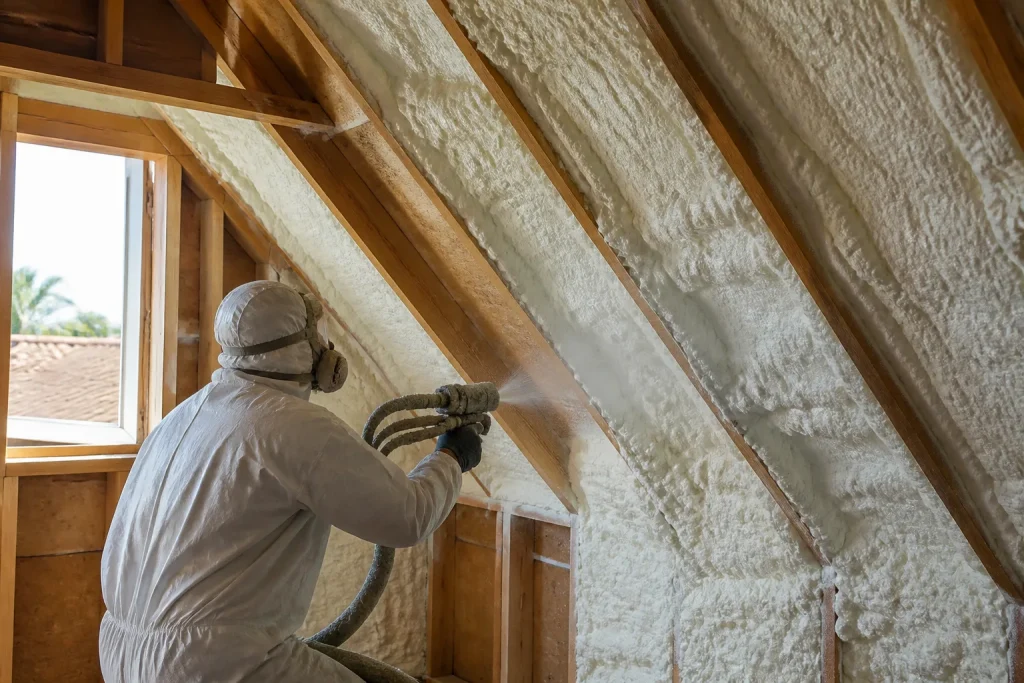
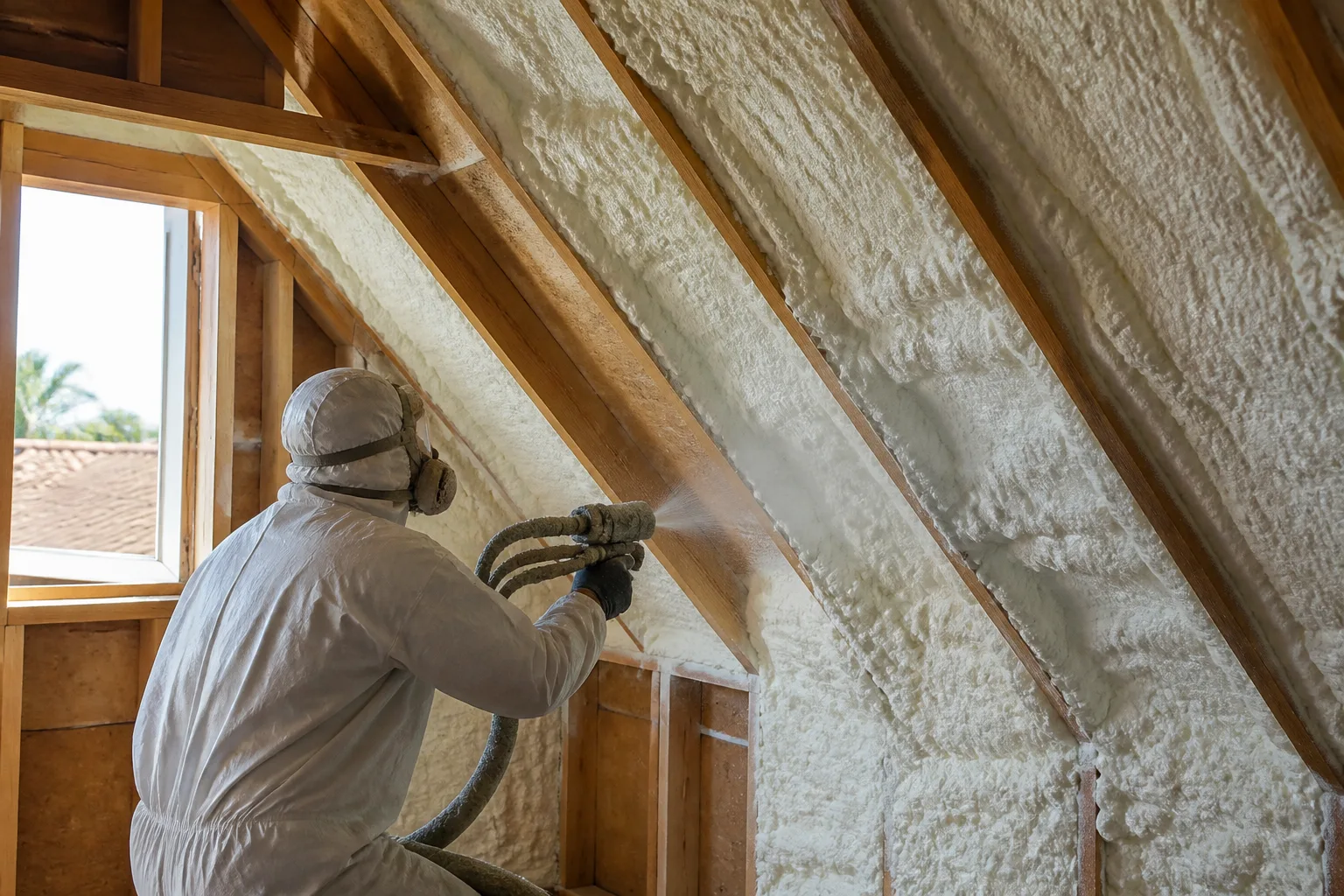
A proper closed-cell application in an attic or wall cavity goes down in multiple passes. Spray, let it cure and cool, spray again. That takes more time, which is why rushed crews push the limit. When you’re getting quotes, ask how many passes they’ll do and what lift thickness they follow per their material’s spec sheet. If they can’t answer, they haven’t read it. We work with manufacturers like Demilec and Johns Manville, and their technical data sheets spell out maximum lift thickness clearly. We follow those numbers because they exist for a reason.
3. Using Open-Cell Foam in a Vented Attic
Open-cell and closed-cell foam do different jobs. Open-cell is soft, breathable, and air-sealing but not moisture-sealing. It lets vapor pass through. Closed-cell is rigid, structural, and blocks both air and vapor. Put open-cell in a vented attic, where outside air moves through soffit and ridge vents, and the foam will absorb moisture from the air movement. Over time it can sag, lose R-value, and in humid stretches of a Los Angeles summer, hold water against the roof decking.
The tell-tale sign is an open-cell job that looks spongy or darker in spots a year after installation, especially near the eaves. That’s moisture loading. In a vented attic, open-cell needs a vapor barrier on the conditioned side or it needs to be in an unvented assembly designed for it. In most Los Angeles attics, closed-cell is the better fit, and blown-in fiberglass from Owens Corning or GreenFiber often does the job for a lower cost when air sealing is done separately.
The wrong foam type for the application is an expensive error because removal is difficult. Spray foam doesn’t peel off. It has to be cut, scraped, or in bad cases, the affected roof decking replaced. We’d rather have an honest conversation about material choice before the job than charge you to undo a mistake after.
4. Not Confirming the Installer’s Chemical Mixing Ratio
Spray foam comes out of a gun as two liquid components, usually called A and B. They mix at the gun tip in a precise ratio, typically 1:1 for most residential formulations. If the proportioning equipment drifts, if one barrel runs hotter than the other, or if the lines aren’t heated correctly, the mix goes off. The foam still sprays. It just cures wrong.
Off-ratio foam looks and feels different. Properly cured closed-cell foam is firm, with a uniform color and a consistent cell structure when you cut into it. Off-ratio foam can be brittle, discolored in streaks, or oddly soft in spots. It may have a sour chemical smell that lingers for weeks. It underperforms and can shrink after curing.
You can check this on job day. Ask the installer to show you a test spray on a piece of cardboard before they hit the actual surfaces. A good crew does this anyway. Look for even color, quick rise, and a firm, dry surface within a few minutes. We pull a sample on every spray foam job in Los Angeles before we touch the attic, because it’s the cheapest quality check that exists and it catches proportioner problems in real time.
5. Accepting No Post-Cure Inspection Window
Spray foam can look perfect on day one and develop problems on day ninety. Shrinkage, delamination from the substrate, cracking at joints, and cell collapse all take time to show up. That’s why a legitimate guarantee on spray foam work includes a defined inspection window, not just a handshake.
Our 365-Day Done Right Promise covers exactly this. If your spray foam shrinks, delaminates, or doesn’t cure properly within 365 days of installation, we come back and make it right at no charge. It’s in writing, on every job. That means the inspection window isn’t theoretical. You have a year to see how the foam performs through a full cycle of Los Angeles seasons, including the summer heat that stresses roof decks and the winter rains that test air seals.
Ask any contractor what their post-cure inspection window is and what it covers. If they don’t have one, walk away. Spray foam is a long-term product. The workmanship guarantee should match the product lifespan, not end when the crew backs out of the driveway.
When to Call a Pro
Most of the mistakes above happen because spray foam looks simple from the outside. It’s not. The substrate testing, the pass thickness, the material selection, the equipment calibration, and the guarantee terms all require training and experience. If you’re in Los Angeles and you’re considering spray foam for your attic, the cheapest insurance is a contractor who can explain their process before the job starts.
We’re glad to talk through it with you. Related services in Los Angeles include our Spray Foam Insulation in Los Angeles installations and our Attic Insulation in Los Angeles work, which often pairs air sealing with blown-in fiberglass for homeowners who don’t need full foam coverage.
The Bottom Line
Spray foam mistakes are process failures, not product failures. Skip the moisture reading and you rot the framing. Push closed-cell too thick and you get weak foam that looks fine. Pick the wrong foam type and you’re paying for removal later. Ignore the mixing ratio and you get a lemon. Accept no inspection window and you own every problem that shows up after the truck leaves.
Every one of these is avoidable with a contractor who documents what they’re doing and stands behind it in writing. If you’re in Los Angeles and you want spray foam done right, Woolsey Attic Insulation home is where you’ll find us. Call (325) 240-5411 for a free estimate, and you’ll get a written price before any work starts. That’s The Kingswell Way, and it’s been that way since 2002.
Frequently Asked Questions
Closed-cell spray foam should be applied in lifts of about 2 inches per pass, per most manufacturer specifications. Thicker single passes trap heat during the exothermic cure, which can damage the foam’s cell structure, cause off-ratio curing, and reduce its effective R-value. Multiple passes with cooling time between them produce a stronger, more consistent layer.
Off-ratio spray foam often looks streaky, brittle, or unusually soft in spots compared to properly cured foam. It may have a lingering chemical odor and can shrink after curing. A test spray on cardboard before the actual application will show even color, quick rise, and a firm dry surface when the mix ratio is correct. Call (325) 240-5411 if you suspect your existing spray foam wasn’t mixed properly; we’ll inspect it and give you an honest read.
Open-cell spray foam can be used in an attic only when the assembly is designed for it, typically an unvented attic. In a vented attic common in Los Angeles homes, open-cell foam absorbs moisture from moving air, which leads to sagging, R-value loss, and potential moisture damage. Closed-cell foam or blown-in fiberglass with proper air sealing is usually the better fit for vented Los Angeles attics.
A spray foam workmanship guarantee should cover at least one full year, giving the foam time to cycle through seasonal temperature and humidity changes. Shrinkage, delamination, and curing problems often appear within the first several months. At Woolsey, our 365-Day Done Right Promise covers any spray foam issue within a year of installation, and it’s in writing on every job. Call (325) 240-5411 for details on what we cover.
Written by Glenn Hartley, Owner at Woolsey Attic Insulation, serving Los Angeles since 2002.
Need Insulation Help?
Call Woolsey Attic Insulation - licensed & insured, here with fast after-hours help in Los Angeles.
(325) 240-5411