
Attic Insulation: Repair or Replace? How Los Angeles Homeowners Decide
The honest answer is that most Los Angeles attics fall somewhere in the middle: repair is genuinely viable when the damage is localized, the material is dry and uncontaminated, and most of the insulation still holds its original R-value. But when moisture, rodents, or wildfire smoke have compromised the material, or when the existing R-value was too low to begin with, full replacement is the only recommendation that serves you. If you’d rather skip the research and get a straight read on your attic, call (325) 240-5411 for a free estimate.
Here’s the thing we’ve learned after more than two decades in Los Angeles attics: a contractor who always recommends full replacement and a contractor who always recommends a quick top-off are both telling you something about their business model, not your attic. The replacement guy has a crew and a quota. The repair guy is chasing easy jobs. Your attic deserves better than a default answer.
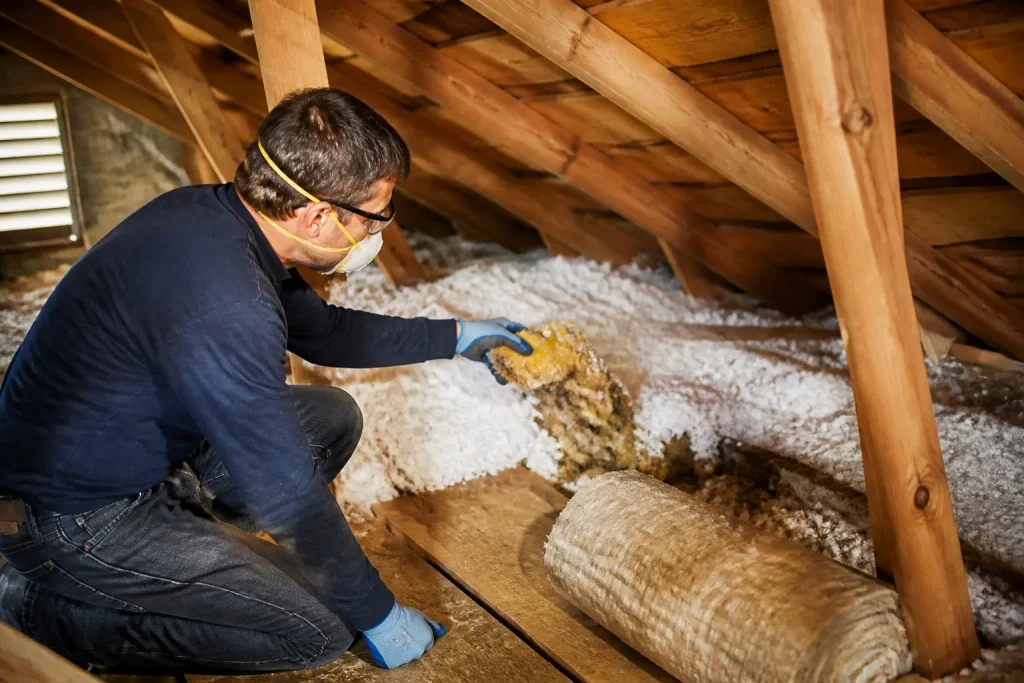
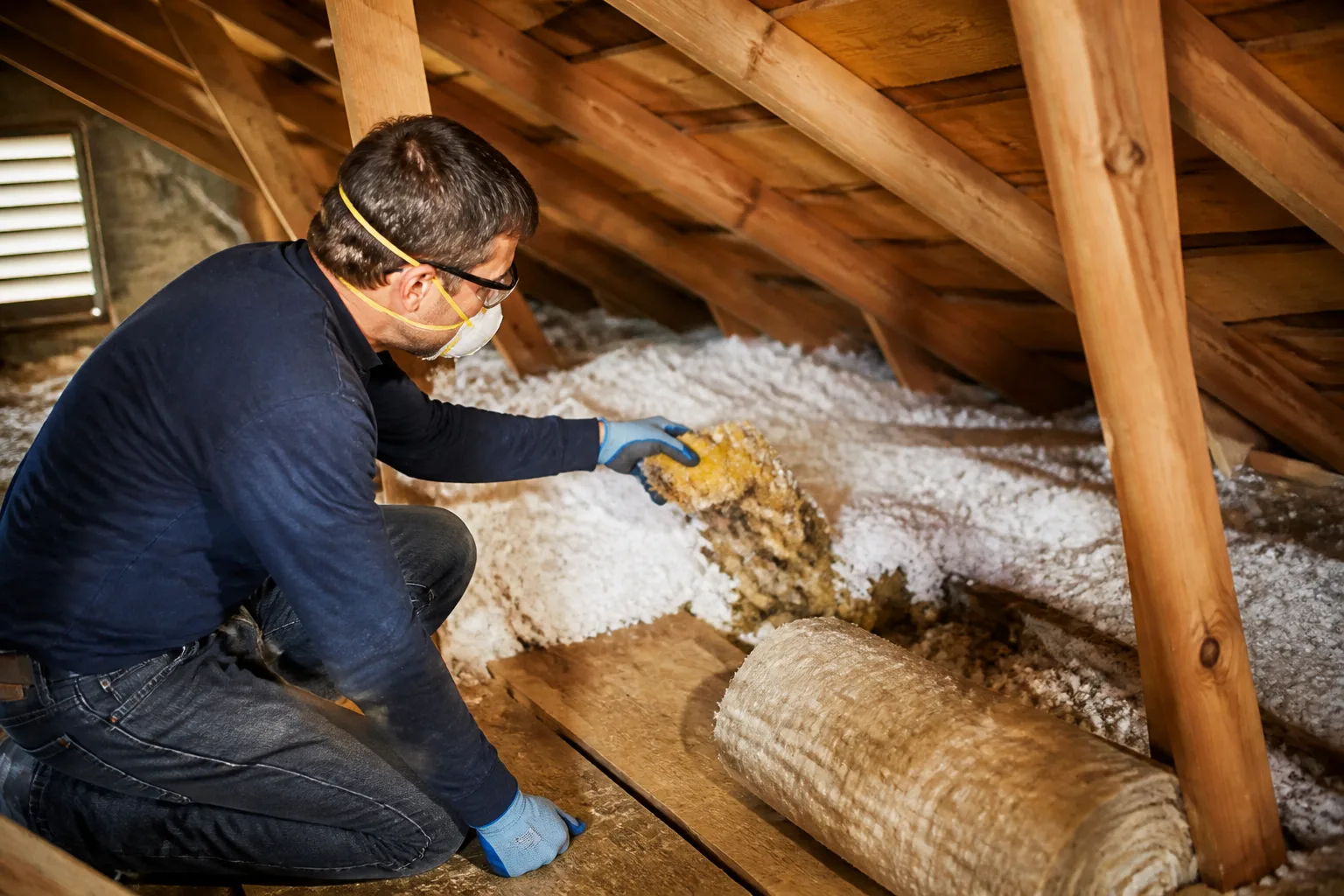
We pulled a rat-nested batt out of an attic in Encino last month that looked fine from the hatch. The homeowner had been told by another company that he just needed six more inches of blown-in on top. The problem was what was underneath: rodent urine had saturated the fiberglass, the kraft paper facing was crumbling, and the smell was working its way into the hallway. Topping that off would have sealed the problem in, not solved it. That job needed full removal and replacement, and the homeowner was glad someone finally told him the truth.
The Decision Framework: Four Questions That Settle It
Before any contractor gives you a repair-or-replace recommendation, walk through these four questions yourself. They’ll put you on solid footing before the first estimate lands. In Los Angeles, where homes range from 1920s Spanish bungalows in Highland Park to 1980s tract builds in Van Nuys, the answers vary wildly from one attic to the next.
Question 1: Where is the damage? If the problem is confined to one section, say, the corner above a leaky roof vent or the area around a bathroom exhaust fan that was vented into the attic instead of outside, repair is often the right call. You’re fixing a localized failure, not a systemic one.
Question 2: Is the material dry? Insulation that has been wet, even once, loses its loft and its R-value. Fiberglass batts flatten. Cellulose clumps and settles. Moisture also invites mold. If a moisture meter shows elevated readings across large sections of the attic, repair won’t cut it.
Question 3: Has anything been living in it? Rodent urine and feces in insulation is a health issue, not a performance issue. No legitimate contractor should recommend blowing new material over contaminated insulation. It has to come out, the space has to be cleaned and sanitized, and then new material goes in.
Question 4: What’s the current R-value? Building code for climate zone 9, which covers Los Angeles, calls for R-30 to R-38 in attics. If your attic is sitting at R-11 or R-13, which we see constantly in older LA homes, you’re not repairing a problem. You’re starting from a deficit. That’s a replacement conversation.
When Repair Makes Genuine Sense: Four Conditions
Repair is not a dirty word. Done right, it extends the life of a good system without wasting money. Here are the four conditions that make repair the honest recommendation:
- Localized damage only. A small section of compressed batts, a spot where a contractor stepped through the ceiling, or an area around a recessed light that wasn’t boxed properly. The rest of the attic is intact.
- Intact R-value across most of the attic. A documented depth reading shows the insulation is still performing at or near its original spec. For blown-in fiberglass, that’s roughly R-2.2 to R-2.7 per inch. For cellulose, R-3.2 to R-3.8 per inch.
- No moisture or pest contamination. A moisture meter reading is normal, and there’s no sign of rodent activity, old nests, or droppings.
- Accessible damaged sections. The areas that need attention are reachable without tearing out large amounts of good material to get to them.
When all four conditions hold, repair is a smart, cost-effective choice. We’ve done plenty of repairs in Los Angeles homes where the fix took half a day and the homeowner got another ten years out of the system. No upsell, no pressure, just what the attic needed.
When Full Replacement Is the Only Honest Call: Three Deal-Breakers
There are three things we find in Los Angeles attics that make repair a waste of money. If any one of these shows up, full removal and replacement is the only recommendation we’ll make, and any contractor who tells you otherwise is not being straight with you.
1. Rodent contamination. This is the big one, and it’s far more common in Los Angeles than homeowners expect. Rats and mice get into attics through roof vents, gaps around conduit, and openings around plumbing stacks. Once they’re in, they nest in the insulation. Their urine and feces carry hantavirus and other pathogens. You cannot clean contaminated fiberglass or cellulose. It has to be removed, bagged, and disposed of. Then the space gets sanitized and sealed, and new material goes in.
2. Moisture-compromised batts or blown-in. A roof leak that went unnoticed for a season, a bathroom fan vented into the attic, or condensation from an uninsulated AC duct in a hot Los Angeles summer. Any of these can soak insulation and destroy its thermal performance. Wet fiberglass batts never recover their loft. Wet cellulose settles into a dense, almost papery mat. If a moisture meter shows elevated readings across wide areas, replacement is the only fix.
3. Pre-existing R-value below R-19. Plenty of Los Angeles homes built before the 1980s have attics with R-11 or R-13, or sometimes just a few inches of old rock wool that has settled to almost nothing. Adding six inches of new material on top of R-11 gets you to somewhere around R-24 or R-25. That’s better than nothing, but it still falls short of the R-30 minimum for climate zone 9. You’d be spending money to end up below code. In that situation, the honest move is to remove the old material, air-seal the attic floor, and install new insulation to proper depth.
How to Get an Objective Read: Two Data Points That Remove the Guesswork
Here’s the part most Los Angeles homeowners miss: you don’t have to take a contractor’s word for it. Two measurements turn a subjective sales pitch into an objective conversation.
First, ask for a moisture meter reading. A legitimate insulation contractor carries a moisture meter and will check the material in multiple spots across the attic. Not just one spot near the hatch. Multiple spots. Dry material reads below 10% moisture content on most meters. Anything above that tells you something is wrong, and you should ask where the moisture is coming from before spending a dollar on either repair or replacement.
Second, ask for a documented R-value depth reading. The contractor should measure the depth of the existing insulation in several places and convert that to an R-value estimate. For blown-in fiberglass, multiply the depth in inches by roughly 2.5. For cellulose, multiply by roughly 3.5. If the contractor won’t put these numbers in writing, or acts like you’re asking for something unusual, that’s a red flag. The Kingswell Way, which is how we run every job at Woolsey Attic Insulation home, starts with exactly this: documented measurements, a written price, and a clear explanation of what we found and why we recommend what we recommend.
These two data points, moisture content and R-value depth, take the subjectivity out of the repair-or-replace question. Any contractor worth hiring will provide both without hesitation.
The Cost Math: When Repair Stops Making Financial Sense
Money matters, and the repair-or-replace decision should account for it. Here’s the framework we use, and it works for any Los Angeles homeowner.
Get both quotes in writing. Compare the repair number against the full-replacement number. If the repair will cost more than 60% of what full replacement costs, the math almost always favors replacement. Here’s why: a repaired system still has a limited remaining useful life. You might get five or eight more years out of it. A full replacement, done right, gets you 20 to 30 years. When the repair is cheap relative to replacement, say 20 or 30%, it makes sense to extend the life of what’s there. But once you’re paying more than 60% of replacement cost for a repair, you’re betting a lot of money on a system that’s already shown you it can fail.
Let’s put numbers to it. If full replacement in a typical 1,500-square-foot Los Angeles attic runs $3,500 to $6,000 depending on material choice and attic conditions, then a repair quote of $2,500 or more should give you pause. You’d be spending nearly the cost of a brand-new system to keep an old one limping along. A $700 repair for a localized compression issue? Completely different conversation. That’s a smart fix.
We work with material from Owens Corning, Johns Manville, and GreenFiber, among others, because the right material for a Northridge home with a furnace-in-attic setup is not necessarily the right material for a Silver Lake bungalow with no AC. The material choice affects the quote, and we’ll walk you through that math before you sign anything.
The Wildfire Smoke Factor: Something Los Angeles Homeowners Can’t Ignore
Here’s a factor that most attic insulation guides never mention, and it matters specifically in Los Angeles. Wildfire smoke. The 2025 fire seasons blanketed the basin with smoke for weeks. Smoke doesn’t just stain walls. It infiltrates attics through vents, and those fine particulates settle into insulation.
Visually intact insulation can be compromised by smoke. The particulates embed in the fibers. The material holds odor. In some cases, the chemical residue from burned structures, plastics, and treated woods can linger. If your attic insulation smells like a campfire months after the last big fire season, that’s not a cosmetic issue. It’s a sign the material has absorbed something that should not be in your home’s air envelope.
A legitimate contractor can test for this. We use a combination of visual inspection, odor assessment, and moisture meter readings to determine whether smoke contamination is present. If the material tests as contaminated, the recommendation is removal and replacement, not cover-up. Topping off smoke-compromised insulation just puts a clean layer over a dirty problem, and the smell will find its way back through.
If you live in a Los Angeles neighborhood that sat under smoke for an extended period, West Hills, Tarzana, parts of Pasadena, the eastern San Fernando Valley, ask your contractor about it directly. Don’t wait for them to bring it up.
When to Call a Pro
Attic insulation is one of those trades that looks simple from the outside and gets complicated fast. We’ve seen homeowners try to repair or top off their own insulation and end up with compressed batts that perform worse than before, or with new material blown over a moisture problem that then spread into the ceiling drywall. If any of the three deal-breakers apply, rodent contamination, moisture damage, or low starting R-value, this is not a DIY job. Contaminated insulation removal requires proper protective equipment and disposal protocols. Moisture problems require finding the source, not just replacing the material.
And if you’re not sure what’s up there, that’s exactly what a pro should tell you. A good contractor starts with the measurements, explains the findings in plain English, and gives you a written price before any work starts. If you’re in Los Angeles and want that kind of honest read on your attic, Attic Insulation in Los Angeles is what we do every day. If you’re considering Spray Foam Insulation in Los Angeles as part of the replacement, we can walk you through whether open-cell or closed-cell makes sense for your specific attic and budget.
The Bottom Line
The repair-or-replace decision comes down to four questions: Is the damage localized or systemic? Is the material dry? Has anything been living in it? And what R-value are you starting from? If the damage is limited, the material is dry and uncontaminated, and the R-value is adequate, repair makes sense. If any of the deal-breakers show up, rodent contamination, moisture, or a starting R-value below R-19, full replacement is the honest call.
Get the two data points. Ask for a moisture meter reading and a documented R-value depth reading. If a contractor won’t provide both in writing, find another contractor. And if you’re in Los Angeles, factor in the wildfire smoke question. Attics that have been through recent fire seasons need a closer look than attics elsewhere.
If you’re in Los Angeles and need help deciding what your attic actually needs, Woolsey Attic Insulation offers free estimates. Call (325) 240-5411 and a real person will answer. We’ll measure, document, and give you a written price before any work starts. No pressure, no upsell. Just the truth about your attic.
Frequently Asked Questions
Attic insulation repair in Los Angeles typically runs between $500 and $2,500 depending on the size of the affected area, the type of material, and whether any prep work like pest cleanup or moisture remediation is needed. Full replacement for an average 1,500-square-foot LA home usually lands between $3,500 and $6,000 depending on material choice and attic conditions. Call (325) 240-5411 for an exact written quote, free of charge.
Repair is cheaper in the short term when the damage is localized and the rest of the system is sound. But if the repair quote exceeds 60% of the full replacement cost, replacement is the smarter long-term investment. A repaired system might last five to eight more years. A new installation lasts 20 to 30. Run the math on the quotes you receive, and if the numbers are close, replacement wins.
No. Rodent-contaminated insulation cannot be repaired or cleaned effectively. The urine and feces penetrate the fibers, and the health risk is not manageable by spot treatment. The contaminated material must be removed, bagged, and disposed of properly, the space sanitized and sealed, and new insulation installed. Any contractor who offers to blow new material over rodent contamination is cutting a corner that will come back to haunt you.
Yes, prolonged smoke exposure can compromise attic insulation even when the material looks visually intact. Fine particulates embed in the fibers, odor lingers, and in some cases chemical residue from burned structures settles into the material. If your attic smells smoky months after the last fire season, have a contractor test the material before deciding on repair or replacement. Call (325) 240-5411 for a free assessment.
Written by Glenn Hartley, Owner at Woolsey Attic Insulation, serving Los Angeles since 2002.
Need Insulation Help?
Call Woolsey Attic Insulation - licensed & insured, here with fast after-hours help in Los Angeles.
(325) 240-5411