
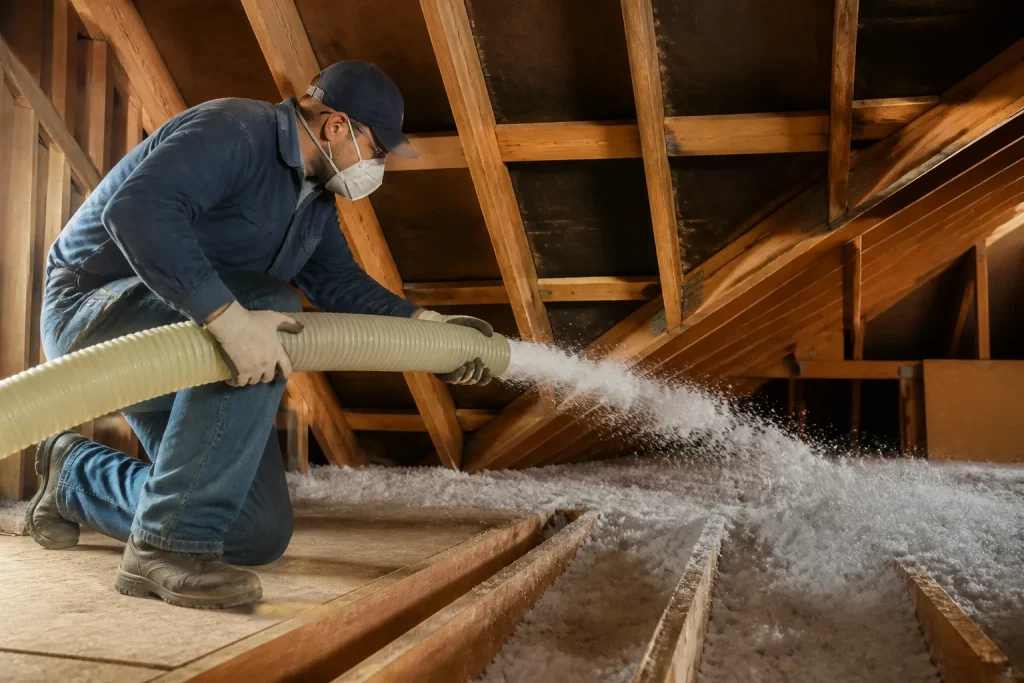
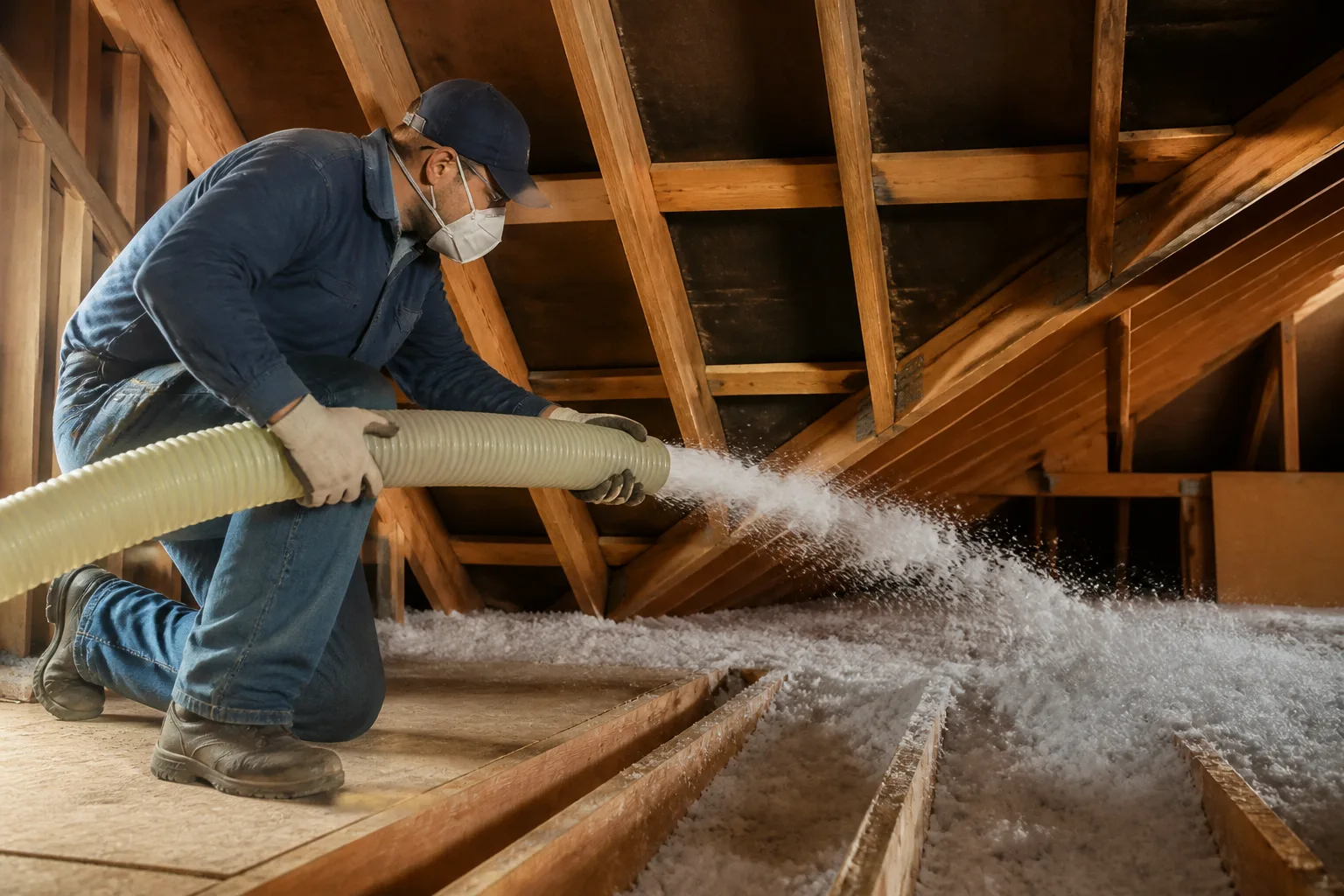
Emergency Attic Insulation Near Me: What Los Angeles Homeowners Should Do First
If you’ve just discovered soaked, shredded, or scattered attic insulation, here’s the short version: most “emergencies” aren’t true 48-hour crises, and you almost always have time to make a smart decision instead of a panicked one. Take photos, stop your HVAC from circulating attic air, and figure out which of three situations you’re actually in before calling anyone. If you’d rather not sort through this alone, call us at (325) 240-5411 and we’ll talk you through it over the phone, free.
We’ve been doing attic insulation in Los Angeles since 2002, and here’s the pattern we keep seeing: a storm rolls through Sherman Oaks, or a family in Westchester discovers rats have been nesting above the bedroom, and within hours the word “emergency” gets used to justify quotes that run 40 to 60 percent above what the same job should cost. The pressure to act immediately is real, but in most cases it’s also manufactured. Let’s break down what actually needs fast action, what doesn’t, and how to protect yourself either way.
The Three Situations That Actually Can’t Wait
When a homeowner in Los Angeles searches “emergency attic insulation near me,” they’re usually in one of three situations. Here’s our honest triage, drawn from two-plus decades of walking into attics across this city:
- Active water intrusion soaking the insulation. If a roof leak, a burst pipe, or storm damage is currently saturating your insulation, you have a real clock running. Wet fiberglass batts or blown-in attic insulation in Los Angeles stops insulating effectively almost immediately, and within 48 to 72 hours you’re looking at mold risk and structural dampness. This is the one scenario where moving quickly genuinely matters.
- Exposed or damaged wiring near insulation. If rodents chewed through wire sheathing or water has compromised an electrical connection up there, that’s a safety hazard that needs attention sooner rather than later. Don’t go poking around it yourself. Shut the power to the affected circuit if you can do so safely, and get a professional evaluation.
- Confirmed rodent activity spreading into living space. If you’ve found droppings in the kitchen, heard scratching inside walls, and confirmed that pests have colonized the attic insulation, you’ll want to address it within a few days. Contaminated insulation is a health concern, not just a comfort one. But even here, a 24-hour panic isn’t required, and it’s exactly what some operators count on.
Everything else, the vast majority of what gets labeled an emergency, can wait a week. R-value degradation from old age? That’s been happening for years; another seven days changes nothing. Uneven insulation you noticed when the weather turned? Schedule it calmly. We pulled a garage over in Eagle Rock last spring where a homeowner had been told by another company that his twenty-year-old insulation was “dangerous” and needed replacing that same afternoon. It didn’t. It was just old, and he saved $1,800 by getting a second opinion before signing anything.
What to Do In the First Hour
Whether your situation is urgent or merely annoying, the first hour should look roughly the same. These steps protect you financially and physically, and they cost nothing:
- Photograph everything. Before you touch or move anything, take wide shots and close-ups of the affected area. If you file an insurance claim, these photos are your evidence, and taking them before any contractor arrives prevents the “you can’t prove what it looked like” argument later.
- Shut off your HVAC system at the thermostat, or at minimum set the fan to “auto” instead of “on.” If you have contaminated or moldy air in the attic, a running fan distributes it through the house. This is one of the most important and least-known first steps, and it takes thirty seconds.
- Check for active water flow, not just dampness. If water is actively dripping or pooling, you have a genuine 48-hour problem and should call for professional help today. If everything is damp but stable, you have more breathing room than you might think.
- Do not disturb rodent droppings. If you see signs of pests, resist the urge to sweep or vacuum. Disturbing droppings aerosolizes particles you don’t want to breathe. Leave it for a professional with proper protective equipment.
We tell every Los Angeles homeowner the same thing: the first hour is for documentation and containment, not for hiring. You can shut off the air, take your photos, and place a call for advice, all without committing to a contractor in a state of adrenaline.
How to Vet a Contractor When You’re Under Pressure
The contractors who do well in emergencies are the same ones who do well in non-emergencies. The difference is that under pressure, it’s easier to skip the vetting. Don’t skip it. Three questions separate a legitimate emergency installer from an opportunist:
One: “Will you give me a written price before any work starts?”
If the answer is anything other than an immediate yes, that’s your exit ramp. This is the single most reliable screen in the entire insulation trade. A contractor who won’t commit to a written number before opening up the wall or entering the attic is forecasting a door-step price change. We do it differently: at Woolsey, every job gets a written price before work begins, no exceptions, even in genuinely urgent situations. The Kingswell Guarantee exists precisely because Glenn Hartley got tired of watching customers get quoted one number and charged another.
Two: “Who exactly is coming to my house?”
In an emergency, some companies dispatch whoever is available in a pickup truck, no uniform, no background check, no accountability. Ask for specifics. Our technicians are background-checked and uniformed, so you know exactly who’s walking into your home, whether it’s 2 p.m. on a Tuesday or 2 a.m. during a heatwave. If a contractor can’t tell you who you should expect at your door, you shouldn’t expect anyone good.
Three: “What’s your guarantee if this fails?”
Listen carefully to the answer. Vague reassurance isn’t a guarantee. A specific, written commitment is. We cover every installation and repair with a written guarantee and a 365-Day Done Right Promise: if it’s not right within a year, we come back and fix it at no charge, in writing, on every job. When someone won’t put the guarantee on paper, what they’re really telling you is they don’t plan to honor it.
The Insurance Documentation Trap
This is where we see Los Angeles homeowners lose more money than anywhere else: letting a contractor start work before the insurance paperwork is sorted. In the rush to “stop the damage,” an eager contractor tears out the damaged insulation, hauls it away, and starts installing new material. Then the adjuster arrives and discovers there’s nothing left to document, no evidence of the original damage, and no way to authorize the claim. You’re left holding the full bill, and the contractor’s invoice becomes a fight with your insurer instead of a covered loss.
The trap is worse in a city like Los Angeles, where home values are high and claims can run into five figures. An adjuster who finds a clean, finished attic with no photographic trail can and will deny the claim for lack of documentation. Never let anyone start work before you have either an adjuster’s authorization or a written scope you can submit. A reputable contractor will help you document the damage and will wait. Someone applying pressure to start demo immediately is applying pressure for their benefit, not yours.
Take your photos first. File the claim. Get the adjuster scheduled. Then, and only then, should work proceed. The honest contractors in this city will tell you the same thing. We certainly do.
Why a Written Quote Matters Most When You’re Most Vulnerable
An emergency is a vulnerability, and vulnerability is where pricing games thrive. When you’re stressed, tired, and worried about further damage, you’re more likely to accept “we’ll see when we get in there” as an answer. But here’s what that phrase actually means: the final number will be whatever the contractor decides it should be once the old material is out and the new material is sitting in your driveway. You’ve lost all leverage at that point.
Our commitment to written, upfront pricing exists for exactly this scenario. The price we quote before work begins is the price you pay. If the scope changes, we show you the change in writing before anything else happens. That’s The Kingswell Way: say the price, show up in the window, leave it cleaner than you found it, put the guarantee in writing, and come back if it fails.
For emergency work specifically, this matters even more because expensive decisions get made fast. We work with eight leading insulation brands including Owens Corning, Johns Manville, Demilec, and GreenFiber, and we choose the material that fits your home and your budget, not whatever happens to be on the truck that day. In an emergency, that phrase “whatever’s on the truck” is exactly how you get sold a chemically mismatched spray foam at triple the fair price.
What does emergency insulation work actually cost in Los Angeles?
Most attic insulation removal and replacement jobs in Los Angeles run between $1,800 and $4,500 depending on square footage, access difficulty, and material choice. Emergency service may carry an additional dispatch fee, but it shouldn’t double the bill. If someone quotes you $9,000 for a job that should be $3,000 and says it’s because of “emergency demand,” they’re pricing your panic, not the work. We don’t do that. We also don’t run false-scarcity games, no “only 2 slots this week.” A written, fair price, no matter how urgent your situation is.
When to call a pro: if you see active water, smell mildew, or find evidence of rodents, skip the DIY route. Contaminated or soaked insulation is heavy, hazardous to handle without a respirator, and often hides problems behind it. For genuinely dangerous situations like exposed wiring or water near electrical, call a professional immediately. Better yet, call us at (325) 240-5411 and we’ll help you assess it over the phone before you spend a dime.
Related services in Los Angeles: Spray Foam Insulation in Los Angeles for air-sealing and R-value upgrades, or visit the Woolsey Attic Insulation home page to read about how we work.
The Bottom Line
If you remember nothing else from this post, remember this: in most attic insulation “emergencies,” you have 48 to 72 hours to make a calm, informed decision, and the company that respects that timeline is the company that respects you. Take photos before anything else. Shut off the HVAC fan. Never let anyone start work before the insurance adjuster has authorized the scope. And always, always get the price in writing before the first tool comes off the truck.
In Los Angeles, where summer attics hit 140 degrees and winter rains test every roof, good attic insulation is not optional. But rushing into a bad job is often worse than waiting a day or two for a good one. If you’re facing attic insulation problems and want honest guidance from someone who’s been in thousands of LA attics, call Woolsey Attic Insulation at (325) 240-5411. We’ll answer the phone, give you a straight opinion, and quote you a written price before any work starts. The Kingswell Guarantee means you’re protected before, during, and for a full year after the job is done.
Frequently Asked Questions
In most cases within 24 to 48 hours for Los Angeles proper, faster if the situation involves active water intrusion or a safety concern. Call (325) 240-5411 and a live person, not voicemail, will give you an honest arrival estimate right on the phone.
It depends on the extent of damage and the age of the existing material. If storm or pest damage affected less than 25 percent of the attic floor and the rest is in good shape, a targeted replacement often makes sense. But if the insulation is more than 15 years old or you’re seeing moisture wicking outward, a full removal and reinstallation gets you to a known state. We’ll give you an honest written recommendation, not a sales pitch.
Often yes, specifically when the cause is a covered peril like storm damage, a sudden pipe burst, or fire. Pest damage is less frequently covered. The key is documentation: take photos immediately, file the claim promptly, and don’t let anyone remove the evidence before the adjuster documents it. We walk our customers through this process every week.
On a Woolsey job, it means this: if the installation isn’t right within 365 days, we return and make it right at no charge, in writing. That covers it. Not a vague “we stand behind our work” promise, but a specific, written commitment on every job. If you’d like to talk through what your specific project would involve, call (325) 240-5411 for a free estimate.
Written by Glenn Hartley, Owner at Woolsey Attic Insulation, serving Los Angeles since 2002.
Need Insulation Help?
Call Woolsey Attic Insulation - licensed & insured, here with fast after-hours help in Los Angeles.
(325) 240-5411