
GreenFiber Attic Insulation in Los Angeles: A Homeowner’s Guide
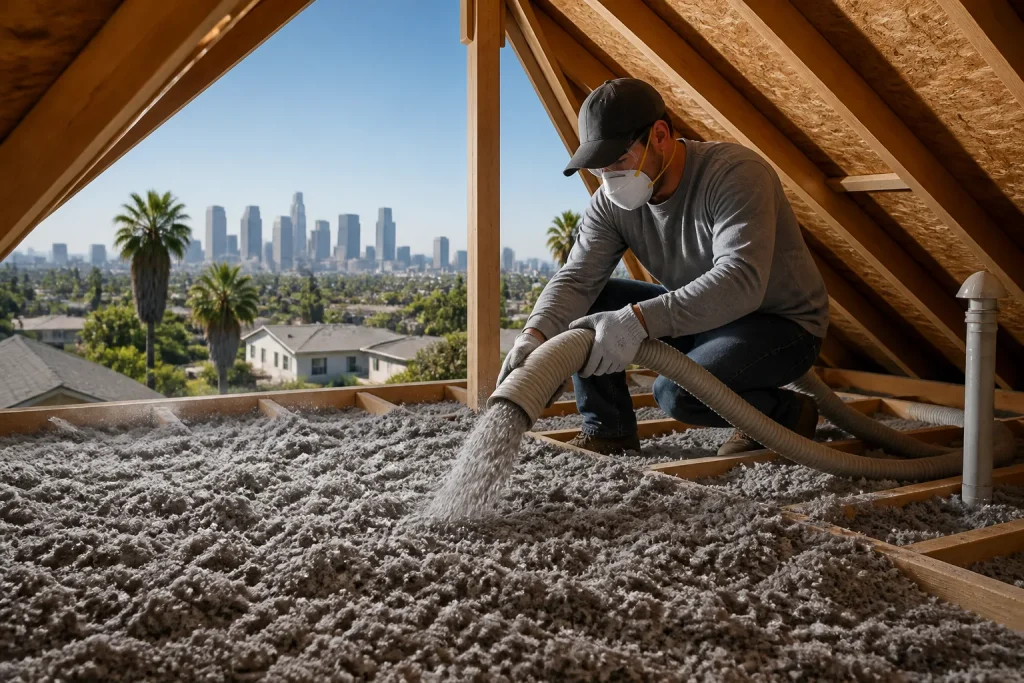
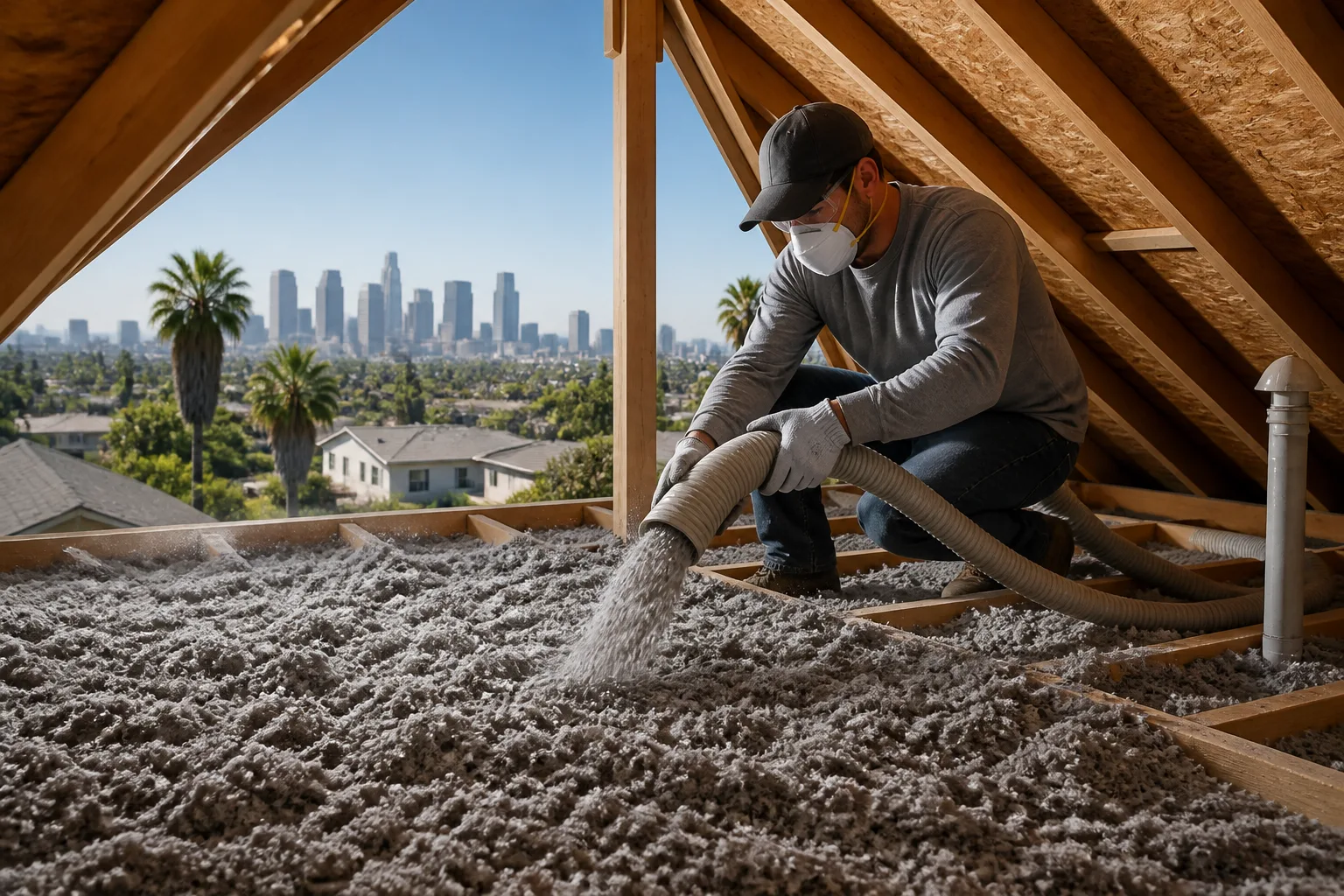
GreenFiber attic insulation in Los Angeles costs between $1,800 and $3,400 for a typical 1,500-square-foot attic, installed to Title 24 compliance depth. It’s made from roughly 85% recycled newspaper treated with borate salts, which deliver a Class 1 fire rating that matters more in Southern California wildfire country than most guides admit. If you’d rather not sort through the details yourself, call Woolsey Attic Insulation home at (325) 240-5411 and we’ll walk you through it.
Why GreenFiber’s Fire Rating Matters More in Los Angeles Than Anywhere Else
Most homeowners assume cellulose insulation is the budget option, a compromise you make when fiberglass feels too expensive. That assumption misses the most interesting thing about GreenFiber in Los Angeles: the borate treatment that gives it its Class 1 fire rating is chemically close to the same fire retardant used on timber-framed homes in wildfire zones. When an ember from a Santa Ana wind event lands on a roof, the attic is the first interior space that determines whether a fire smolders or spreads. A cellulose layer treated with borates chars and slows flame spread rather than feeding it the way untreated organic material would.
We’ve pulled old insulation out of attics in Sherman Oaks and Altadena where the difference between charred-but-contained and fully involved came down to what the material was made of. Los Angeles County fire codes have tightened since the Woolsey Fire and the Bobcat Fire, and while GreenFiber is not a fireproofing system on its own, its fire performance is a legitimate reason to consider it over untreated fiberglass in brush-adjacent neighborhoods like Porter Ranch, La Cañada Flintridge, and the hills above Glendale.
What R-Value GreenFiber Actually Delivers in LA Attics
Blown-in cellulose delivers roughly R-3.2 to R-3.8 per inch, depending on install density. Fiberglass batts, by comparison, run about R-2.9 to R-3.1 per inch but lose more effective R-value when the installer compresses them or leaves gaps around framing. Los Angeles falls in climate zone 3, and Title 24 energy standards call for R-30 to R-38 in most existing attics, with new construction needing R-38 minimum in most of LA County.
Here’s what that depth looks like for GreenFiber specifically:
- R-30 target: roughly 9 to 10 inches of settled cellulose
- R-38 target: roughly 12 to 13 inches of settled cellulose
- R-49 (overkill in LA, but some homeowners ask): roughly 15 to 16 inches settled
The word “settled” is doing real work there. GreenFiber is installed fluffy, at a depth above the target, because it compacts 15 to 20 percent in the first few months after installation. A contractor who blows to exactly 12 inches on install day is handing you something close to R-30 by the time it settles, not the R-38 you paid for. This is one of the most common problems we see when we follow behind other companies on a Attic Insulation in Los Angeles job. A written quote should state the settled depth target and the installed depth. If it doesn’t, ask for that number in writing before work starts.
How GreenFiber Handles LA’s Dry Climate and Coastal Moisture Pockets
Cellulose gets most of its market attention in humid climates, where its hygroscopic nature (it absorbs and releases moisture) makes it a better fit than fiberglass. But Los Angeles has two distinct moisture profiles, and they behave very differently.
Inland neighborhoods with less than 30 percent average humidity, places like Woodland Hills, Chatsworth, and most of the San Fernando Valley, are almost ideal for cellulose. GreenFiber’s borate treatment stays stable in dry conditions, and the material’s density does a better job of blocking radiant heat than loose fiberglass does. Heat transfer from a 140-degree attic floor in August is a real Los Angeles cooling bill problem, and dense-packed cellulose slows that heat better than fluffy fiberglass sitting loosely between joists.
Coastal neighborhoods are a different calculation. In Venice, Playa del Rey, and the marine-layer belt that runs up through Santa Monica and the Palisades, overnight humidity can spike above 70 percent for weeks at a time, especially during May Gray and June Gloom. At sustained attic humidity above 60 percent, cellulose can hold enough moisture to compromise the borate fire treatment and, in the worst cases, develop mold in the substrate beneath it. That’s not a reason to avoid GreenFiber in West LA entirely. It’s a reason to make sure the attic has working ventilation before the insulation goes in. Ridge vents, soffit vents, and in some Spanish-style homes the gable vents that often got painted shut decades ago, all need to move air before you seal in a moisture-sensitive material.
How Blown-In GreenFiber Compares to Other Options in Los Angeles Homes
GreenFiber isn’t the only material we recommend, and it shouldn’t be. Woolsey works with eight brands, including Owens Corning, Johns Manville, and Knauf, precisely because no single product fits every attic. But GreenFiber earns its place in the lineup for LA homes with these specific conditions:
- Older homes with irregular joist spacing or shallow cavities: blown-in cellulose fills odd shapes and settles into corners that batts can’t reach without compression and gaps
- Fire-zone properties: the borate treatment is a legitimate secondary fire consideration, not a sales gimmick
- Homes with existing settled or degraded insulation: GreenFiber can often be blown over the top after the old material is removed, achieving Title 24 depth at lower total cost than a full spray foam retrofit
- Noise reduction between floors: cellulose’s density gives it better sound-dampening than fiberglass batts of the same R-value
Where GreenFiber is not the best call: attics with active roof leaks, crawlspace-adjacent attic floors in older pier-and-beam LA homes, and any space where the homeowner plans a future remodel that would open the attic. In those cases we’ll often recommend spray foam or Rockwool instead. The point is that the material should fit the house, not whatever happens to be on the truck. That’s the difference between a quote that starts honest and one that changes at the door.
What a Written GreenFiber Quote Should Itemize in Los Angeles
Comparing contractor bids for blown-in cellulose in Los Angeles only works if the quotes contain the same line items. Here’s what a proper written quote for a GreenFiber job should spell out, and what you can use to compare apples-to-apples:
- Settled depth in inches and the R-value that depth achieves, not just a vague “we’ll blow it to code”
- Installed depth, which should be 15 to 20 percent above the settled target
- Whether the existing insulation is being removed or blown over. Removal adds cost but eliminates moisture and rodent problems hidden underneath
- Air sealing of the attic floor, including top plates, can lights, and plumbing penetrations. Blown-in cellulose over an unsealed attic floor loses its performance to stack effect, and every reputable Los Angeles insulation company should line-item this
- Ventilation checks, especially in coastal neighborhoods. Baffles at the eaves so the new insulation doesn’t block airflow from the soffits
- Rodent exclusion or remediation if the old insulation shows signs of activity. This is common in older LA attics and it changes both price and material choice
At Woolsey, every GreenFiber quote is delivered in writing before any work begins, under the Kingswell Guarantee. That means a written price, a committed arrival window, a clean job site, and a written guarantee that covers the work for 365 days. If it’s not done right, we come back and make it right, at no charge. That’s the whole promise. No door-step surprises, no callback maze, a live person on the phone 24/7.
When to Call a Pro
Blown-in insulation is not a DIY weekend project. The machine rental alone is a hassle, and getting the depth right without knowing how to read settled versus installed height is how homeowners end up with R-25 they paid for as R-38. More importantly, attics in Los Angeles homes built before 1990 often contain vermiculite from the Zonolite era, which can carry asbestos. Disturbing that material without testing it first is a health risk. If your attic has any chance of old vermiculite, stop and call a professional before disturbing it. The testing protocol alone is worth professional involvement.
Related services in Los Angeles: for attics where moisture sealing matters more than fire rating, see our Spray Foam Insulation in Los Angeles page, which covers closed-cell and open-cell options side by side.
The Bottom Line
GreenFiber is a smart choice for many Los Angeles attics, and its borate fire treatment makes it more relevant in this region than the recycled-newspaper marketing usually suggests. The catch is installation quality: an unsupported quote that doesn’t itemize settled depth, air sealing, and ventilation is a red flag no matter what material is on it. If you’re in Los Angeles and want a written price before any work starts, Woolsey Attic Insulation offers free estimates. Call (325) 240-5411 and a real person answers, day or night.
Frequently Asked Questions
A typical GreenFiber blown-in job in Los Angeles costs between $1,800 and $3,400, with most falling in the $2,200 to $2,800 range for a 1,500-square-foot attic at R-38 settled depth. The exact number depends on whether old insulation gets removed, whether air sealing is included, and whether rodent remediation is needed. Call (325) 240-5411 for a written quote, which we deliver before any work begins.
Yes. GreenFiber carries a Class 1 fire rating, which comes from the borate treatment applied to the recycled paper fibers. The treatment chars and slows flame spread rather than feeding it, and in Los Angeles brush-adjacent neighborhoods that’s a legitimate second-line consideration beyond just the R-value. It is not a fireproofing system on its own.
Blown-in cellulose settles 15 to 20 percent within the first few months after installation. A contractor should blow the material higher than the target depth to account for this. If a quote doesn’t state both installed depth and settled depth in writing, ask for those numbers before you sign.
It depends on your neighborhood. In dry inland Los Angeles areas like the San Fernando Valley, GreenFiber performs very well, blocking radiant heat better than loose fiberglass. In coastal neighborhoods with marine-layer humidity, it works fine as long as attic ventilation is in place first. Without working vents, cellulose can hold moisture and lose its fire-retardant properties.
Written by Glenn Hartley, Owner at Woolsey Attic Insulation, serving Los Angeles since 2002.
Need Insulation Help?
Call Woolsey Attic Insulation - licensed & insured, here with fast after-hours help in Los Angeles.
(325) 240-5411