
Radiant Barrier Installation Across the United States
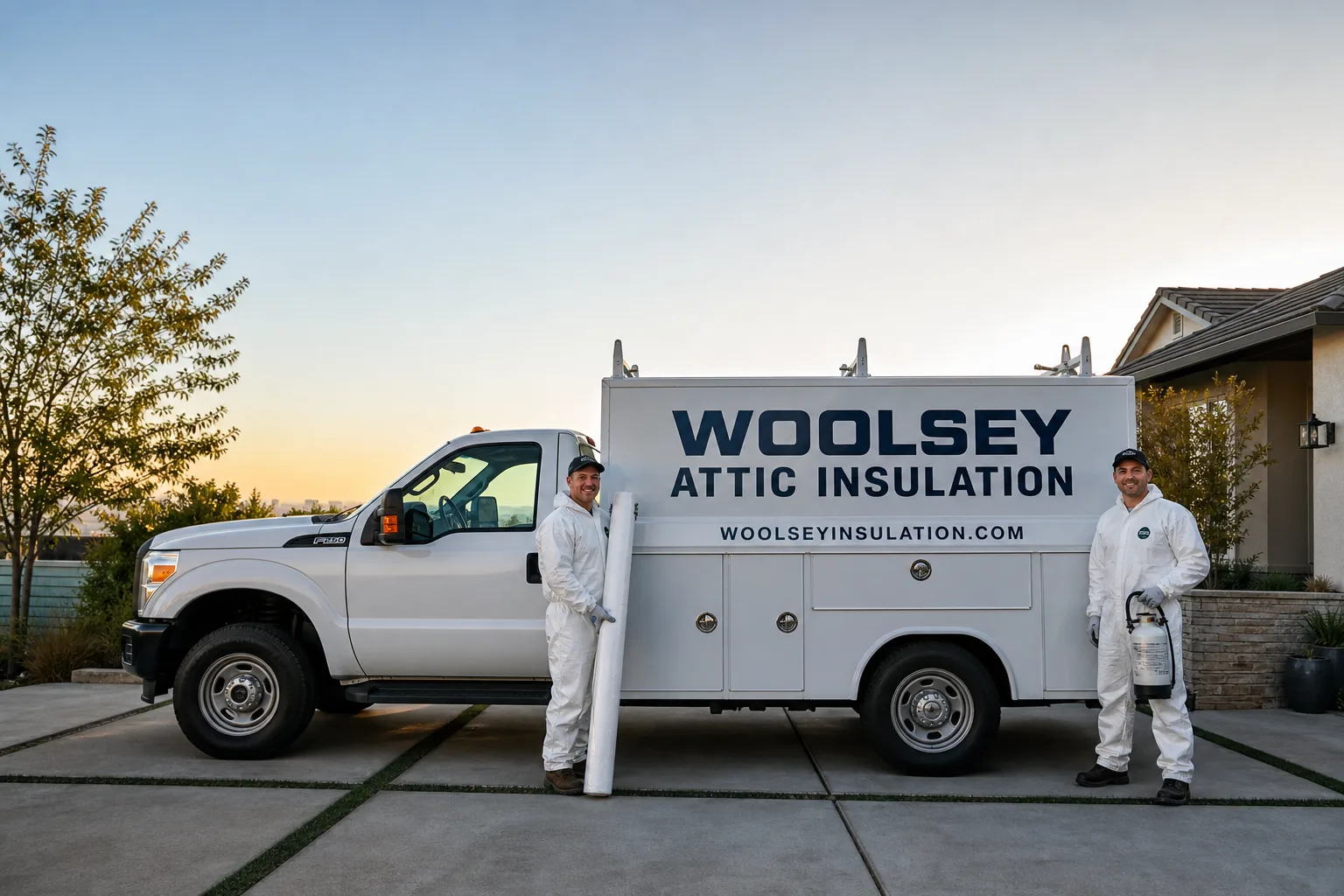
Radiant barrier installation is one of the few attic upgrades that goes after summer heat directly. On a sunny afternoon the underside of a roof deck can climb past 130 degrees, and that heat radiates down onto the attic floor and into the rooms below. A layer of reflective foil sends much of it back toward the roof before it reaches your insulation. Woolsey Attic Insulation has installed radiant barrier in attics since 2002, working as part of the Kingswell family of independently owned and operated insulation companies. We serve homeowners across the United States with background-checked, uniformed technicians and a live person answering the phone 24/7 at (325) 240-5411. You get a written price before any work begins, and every job carries the Kingswell Guarantee in writing.
Wool was the first insulation, and Woolsey kept the idea in the name. Over two decades we have learned that the best attic is a system: the right insulation depth, balanced ventilation, a tight air seal, and where the climate calls for it, a radiant barrier. Glenn Hartley leads the Woolsey team with one rule: if the number changes at the door, the deal is off. That is the Kingswell Way.
Key Takeaways
- Most radiant barrier installations run between $800 and $2,200 depending on attic size, roof pitch, and access. You get the exact written number before any work starts.
- Radiant barrier works best in hot climates and in attics with ductwork running through them, where it can lower attic temperatures by 20 to 30 degrees on a sunny afternoon.
- The 365-Day Done Right Promise covers every job in writing: if it isn’t right within a year, we come back and fix it at no charge.
- A live person answers the phone 24/7. Not a voicemail maze, not a call-back window.
What Radiant Barrier Actually Does
Radiant barrier is a reflective foil material, usually aluminum bonded to a backing, installed in the attic so it faces an open air space. Regular insulation slows heat that moves by conduction, the way warmth travels through a solid. Radiant barrier deals with a different problem: heat that travels as infrared energy across an air gap. When the sun heats your roof, the hot sheathing radiates that energy toward the cooler attic floor. Foil with low emissivity reflects most of it instead of absorbing it.
It Is Not a Replacement for Insulation
Radiant barrier does not have an R-value in the way batts or blown-in material does. It cuts the radiant heat load so the insulation below it does not have to work as hard. We will tell you plainly when a house needs more insulation first and a radiant barrier second.
Where the Savings Come From
The benefit shows up in summer cooling. A cooler attic means your air conditioner runs fewer minutes, and ducts that run through the attic carry cooler air to the rooms. Homes in the South and Southwest see the biggest return, while homes in cold northern climates usually get more from added insulation and air sealing.
Is Radiant Barrier Right for Your Home?
Radiant barrier is a good fit when your attic runs hot, your air conditioning works hard all summer, and the attic already has a reasonable amount of insulation. It is an especially smart add-on when ductwork or an air handler sits in the attic, because every degree you take off the attic air is a degree your cooling system no longer has to fight.
Good Candidates
Homes in hot or mixed-hot climates, attics with a dark or low-slope roof, houses with second-floor rooms that never cool down, and homes with attic-mounted ducts all tend to benefit. If your upstairs bedrooms are five degrees warmer than the downstairs by late afternoon, the attic is a likely cause.
When We Will Say No
If your attic has active moisture, a failing roof, or only a thin layer of insulation, spending money on foil first is the wrong order. We would rather fix the underlying problem and tell you honestly that radiant barrier can wait. Our blown-in insulation work is often the better first step.
Types of Radiant Barrier We Install
There are three common ways to put a radiant barrier into an attic, and the right one depends on your roof, your attic access, and your budget.
Foil Stapled to the Rafters
This is the most common method for existing homes. Reflective foil is stapled to the underside of the rafters so it faces the open attic air. It leaves the roof untouched and keeps an air gap between the foil and the deck, which is what makes the material work. Because the foil is perforated or vapor-permeable where needed, it does not trap moisture against the wood.
Foil on the Attic Floor
Laying foil over the existing insulation is cheaper, but dust settles on the shiny side and lowers its performance over the years. We generally steer homeowners toward the rafter method for that reason, and we will explain the trade-off if the floor method is the only option for your attic.
Radiant Barrier Roof Sheathing
For new roofs and re-decking projects, sheathing with the foil already bonded to one side is installed with the roof. If you are replacing your roof soon, tell us. Putting the barrier in at that moment can save labor.
Our Installation Process
- 1
Call and talk to a live person. No voicemail maze, no call-back window. When you call (325) 240-5411, a real person answers 24/7 and gets your situation on our schedule.
- 2
Attic inspection and written quote. A background-checked technician measures the roof deck, checks the ventilation, looks for moisture and existing insulation depth, and gives you a written price before any work starts.
- 3
Prep and protection. We lay down floor protection, clear a safe path to the work area, and check that the vents are open so the foil does not block airflow.
- 4
Installation. The crew cuts and staples the foil across the rafters, keeping the air gap and leaving soffit and ridge vents clear. We work around wiring, ducts, and framing.
- 5
Cleanup and written guarantee. We clean up before we leave and hand you the written guarantee. If anything isn’t done right within 365 days, we come back at no charge.
Radiant Barrier and Attic Ventilation
Radiant barrier and ventilation work together, and a barrier that blocks airflow can do more harm than good. Intake air at the soffits and exhaust at or near the ridge carry hot air out of the attic. The foil has to be installed so that air keeps moving along the roof deck and out the top. We check the balance of intake and exhaust on every radiant barrier job, and if a vent is blocked or missing we correct it as part of the same written scope.
Ventilation correction typically runs $300 to $1,200 on top of the barrier itself, depending on the number of vents and the roof layout. It is listed as its own line on your written quote, so you always know what you are paying for.
Radiant Barrier With Insulation and Air Sealing
The strongest attics layer several fixes in the right order. First, we stop the air leaks around plumbing stacks, can lights, and wiring with attic air sealing. Then we bring the insulation up to the R-value your climate zone calls for. Radiant barrier goes on last, as the finishing layer that handles the sun’s heat.
If the old insulation is wet, moldy, or full of pest droppings, it should come out before anything new goes in. Our insulation removal crews handle that with commercial vacuums and containment so the dust stays out of your living space. Doing the work in one visit under one written guarantee is usually cheaper than three separate calls.
How Much Does Radiant Barrier Installation Cost?
Most radiant barrier installations across the country run between $800 and $2,200 for a standard single-family home. Smaller attics with easy access land at the low end. Large attics, steep roof pitches, and tight crawl spaces push the price up because the crew spends more time on each rafter bay. Ventilation correction, if needed, adds $300 to $1,200. Insulation removal before the barrier adds $700 to $1,500. Those are the real ranges, and the exact written number for your house is what you will get before any work begins.
What affects the price: attic square footage, roof pitch, access through the hatch, the number of rafters, whether vents need work, and whether you are combining the barrier with other services. How to avoid overpaying: get a written price before work starts, ask whether the quote includes cleanup, and choose a contractor whose guarantee is printed, not spoken. Call (325) 240-5411 and we will send a technician to measure, inspect, and hand you a written number.
Signs Your Attic Needs a Radiant Barrier
- Upstairs rooms stay hot long after sunset. The attic is soaking up heat all day and releasing it into the ceiling below all evening. A barrier cuts the amount of heat that gets in to begin with.
- Your air conditioner runs nearly nonstop in summer. When the system struggles to hold the thermostat setting on a sunny day, the attic is often the reason, especially if the ducts run through it.
- The attic is too hot to stand in. If you cannot spend five minutes up there in July, the heat load on your ceiling is large. Temperatures of 130 degrees or more are common in unprotected attics.
- Cooling bills keep climbing. When your summer bills rise faster than the rate schedule, extra heat from the attic is a common cause worth checking.
- You have a dark or metal roof. Darker roofing absorbs more sun and passes more radiant heat into the attic space.
Why Homeowners Choose Woolsey
Woolsey Attic Insulation does attic work and nothing else. Every technician on your roof deck understands how foil, insulation, ventilation, and air sealing interact. That focus is why a Woolsey crew will talk you out of a barrier when it is not the right move, and why we stand behind the ones we do install.
The Kingswell Guarantee in Practice
Every job runs on The Kingswell Way: a written price before work starts, a committed arrival window, a clean job site, a written guarantee on the work, and a free return visit if anything fails within the guarantee period. That period is 365 days, in writing, on every job.
The Same Standard Everywhere
Each Kingswell location is independently owned and operated, so the crew at your door is part of your community. The standard is the same no matter where you live.
Materials and Brands
We choose materials based on what fits your attic, not what happens to be on the truck. For radiant barrier we use reflective foil products rated for attic use, with the right perforation and backing for your climate. For the insulation that goes with it, we work with eight leading brands including Knauf, Rockwool, CertainTeed, Owens Corning, Johns Manville, GreenFiber, Icynene, and Demilec. If you have a brand preference, tell us and we will work with it.
Where We Work
Woolsey Attic Insulation serves homeowners across the United States through local crews under the Kingswell banner. Wherever you are, the standard is the same: a written price before work starts, a committed arrival window, a clean job site, and a written guarantee on every job. We will connect you to the Woolsey team nearest you when you call.
Frequently Asked Questions About Radiant Barrier Installation
Radiant barrier installation is the process of fastening reflective foil in your attic, usually to the underside of the rafters, so it reflects radiant heat from the roof instead of letting it pass into your insulation and living space. It is most effective in hot climates and in attics with ductwork.
Most jobs run between $800 and $2,200, depending on attic size, roof pitch, and access. Your exact price is written down and delivered before any work begins. Call (325) 240-5411 for a free estimate.
The benefit is much smaller. Radiant barrier mainly reduces summer heat gain, so homes in hot climates get the most from it. In cold regions, added insulation and air sealing usually deliver more. We will tell you honestly which fits your house.
Most attics are finished in one day, often in four to eight hours. Larger attics, steep roofs, and jobs that include ventilation work or insulation removal can take longer. Your written quote includes a realistic timeline.
Not when it is installed correctly. We use vapor-permeable foil where needed and keep soffit and ridge vents clear so air keeps moving. We check ventilation on every job and correct it if it is lacking.
Every job includes a written guarantee for 365 days. If the installation isn’t done right within that year, we come back and make it right at no charge. That is the 365-Day Done Right Promise, printed on every job document.
Schedule Your Radiant Barrier Installation Today
If your attic bakes all summer and your air conditioner never gets a break, the fix starts with one phone call. Call (325) 240-5411 and talk to a live person, any hour of the day or night. We will schedule a visit, take measurements, and hand you a written price before any work starts. No obligation, no door-step surprises, and every job covered by the Kingswell Guarantee in writing. That is the only way we have done it since 2002, and it is the only way we will. Call today.
Written by Glenn Hartley, Owner at Woolsey Attic Insulation, serving homeowners across the United States since 2002.