
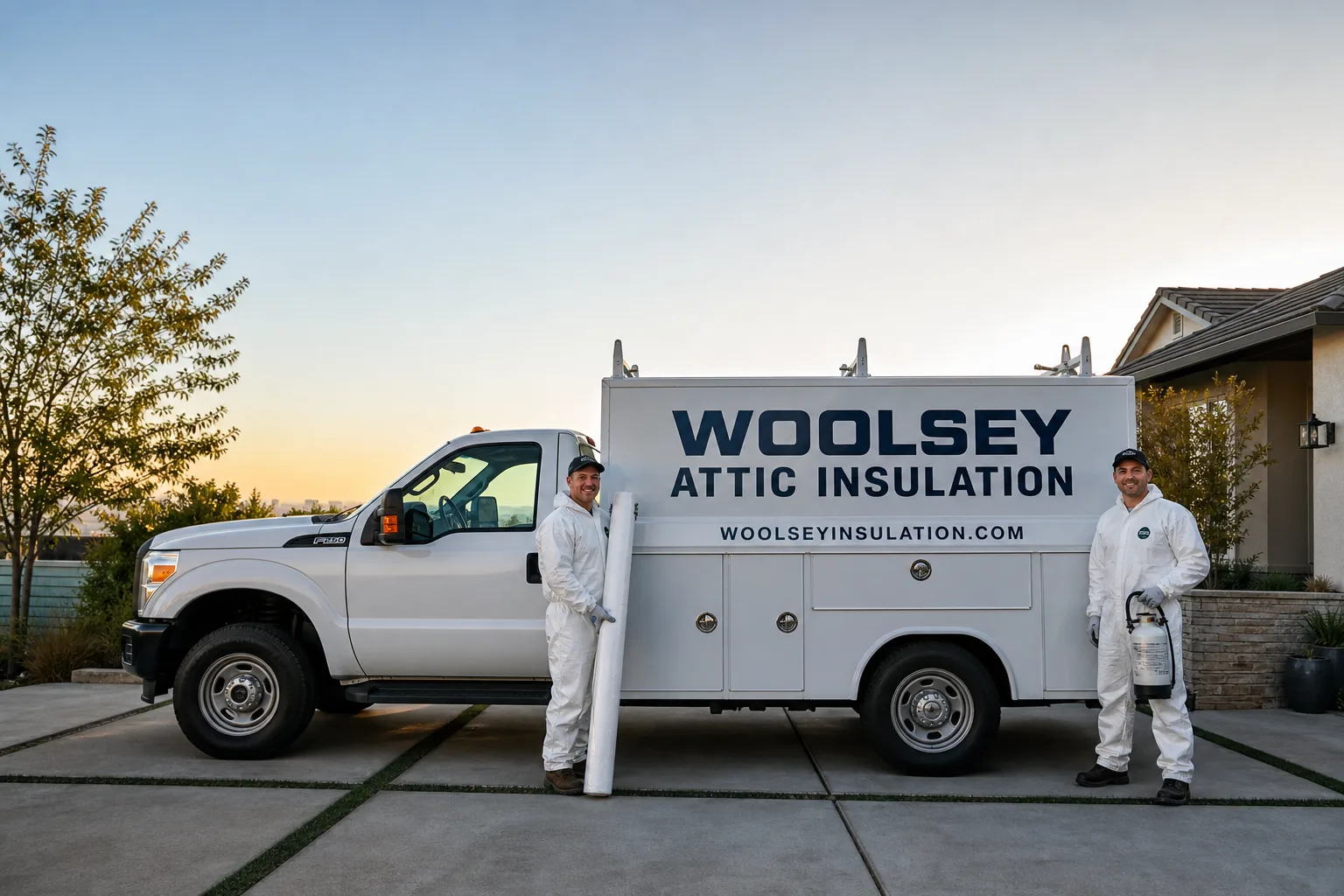
Fast, Reliable Spray Foam Insulation Across Big Bear City
Spray foam insulation in Big Bear City typically runs $2,400 to $7,800 depending on whether we’re sealing a garage ceiling, a rim joist, or a full A-frame roof deck. Most jobs are completed in one day, and we schedule crews from our Inland Empire office to serve Big Bear City homeowners weekly. The reason this town is different from anywhere else in Southern California is altitude: at 6,752 feet, your walls and roof deck have to do work that valley homes never ask of them. Call (325) 240-5411 and we’ll give you a written price before any foam is sprayed.
Glenn Hartley leads our crews, and he’s the one who signs off on every Big Bear City job before we call it done. If you’ve been putting off insulation work because past contractors left you guessing, the way we operate will feel different. You get a firm number up front. You get a real arrival window. You get the work in writing, guaranteed for 365 days.
Why Woolsey Attic Insulation Is Big Bear City’s Preferred Spray Foam Insulation Company
Woolsey Attic Insulation is an independently owned and operated insulation company under the Kingswell banner, founded in 2002. We install and service attic insulation and Spray Foam Insulation only. That narrow focus matters in Big Bear City, where the failure patterns are specific: ice dams at the eaves, foam applied too thin on sloped decks, moisture trapped behind unsealed board sheathing. A generalist simply doesn’t see enough of these cabins to know what to look for.
Our technicians are background-checked and uniformed, so when someone walks up your driveway off Big Bear Boulevard or up toward Moonridge, you know exactly who they are. Every job carries the Kingswell Guarantee: a written price before work starts, a committed arrival window, a clean job site, a written guarantee, and a free return visit if anything fails within 365 days. Calls are answered by a live person 24 hours a day, seven days a week. No voicemail maze, no call-back window.
Wool was the first insulation. Woolsey keeps the idea in the name. We work with eight leading material brands including Johns Manville, Knauf, and CertainTeed, and the recommendation you get fits the home, not whatever happens to be on the truck that day.
Garage Spray Foam Insulation in Big Bear City
Garage Spray Foam Insulation in Big Bear City is one of the most common call-outs we handle. These garages are rarely conditioned space, but in Climate Zone 16, a cold garage ceiling becomes a thermal hole that drags heated air out of the rooms above it. Half of the garages we see in Big Bear City, especially in converted summer cabins from the 1950s through the 1970s, have open framing with no ceiling material at all. That means blown-in insulation was never an option without first installing drywall or sheathing, and it also means foam has to be applied with real care around vented soffits.
Airtight Ceiling Seal
When we spray open-cell foam against an existing garage ceiling in Big Bear City, the goal is an airtight thermal boundary between the cold garage and the living space above. We check for the framing quirks that are nearly universal in these old cabins: irregular rafter spacing, shallow cavities, and unsealed penetrations where old knob-and-tube wiring once ran. In most cases, two inches of closed-cell foam is what we recommend on garage ceilings, especially when there is a bedroom above.
Expect a garage ceiling job in Big Bear City to run $1,600 to $3,400. If the ceiling is unfinished and open to the rafters, the price shifts because the surface area increases and we have to build containment around the edges.
Soffit and Ventilation Control
A mistake we see often is foam expanding into vented soffits during a garage ceiling job. It is not hard to do if the person spraying isn’t watching, and it blocks the attic ventilation that the rest of the roof depends on. We run baffles and masking before we spray, and then we inspect every soffit line when the foam has set. It’s a detail that matters in Big Bear City specifically because ridge vent airflow is the only thing keeping your roof deck dry under heavy snow.
Closed Cell Spray Foam Insulation in Big Bear City
Closed Cell Spray Foam Insulation in Big Bear City is the right material for the job more often than not. It is a two-part liquid that expands on contact and seals gaps airtight, and at roughly R-6.5 per inch, it delivers the thermal resistance mountain homes need inside shallow wall cavities that were never framed for thick insulation. The cabins and chalets here were built with two-by-four walls and no vapor barriers, which means open-cell foam in the walls is risky. Closed-cell foam acts as both the thermal and air barrier, which is exactly what these homes require.
Sloped Roof Decks and Ice Dams
On a call in the Moonridge area, we opened a 1962 A-frame rental with a vaulted ceiling that had blown-in fiberglass settled to maybe R-8, compressed further by years of snowpack. The heated space below the deck was bleeding enough warmth to melt snow at the ridge. We flashed the sloped roof deck with two inches of closed-cell foam from Owens Corning and sealed the eaves. The ridge melt stopped, and the ice dams that had been forming every winter never came back. That diagnostic, the snow-melt pattern on an A-frame ridge, is routine in Big Bear City but rare anywhere else in the region.
Closed-cell roof deck work in Big Bear City typically runs $4,200 to $7,800 depending on deck area and pitch. It’s a bigger job because it requires full containment, but it solves the problem instead of reducing it.
Shallow Wall Cavity Retrofit
If you own a cabin with two-by-four walls and you want to keep it warm through sustained sub-freezing nights, closed-cell foam is the practical answer. You get about R-23 in a 3.5-inch cavity, plus an air barrier that stops the convective heat loss that batt insulation never could. In Big Bear City’s freeze-thaw cycle, that air sealing is just as important as the R-value. Air leaks carry moisture into the wall, and when that moisture freezes and thaws, it destroys whatever insulation is in there.
Trusted Brands We Service in Big Bear City
We install and service spray foam from Johns Manville, Knauf, and CertainTeed, among others. The brand recommendation you get on your Big Bear City job depends on the application: a closed-cell wall call-out needs different chemistry than an open-cell garage ceiling, and we would rather match the material to the home than force whatever is on the truck. We keep common parts for foam rigs on hand and plan Big Bear City routes so that a return visit, if one is ever needed under the 365-Day Done Right Promise, happens fast.
Common Spray Foam Insulation Problems We See in Big Bear City Homes
- Closed-cell foam applied too thin on A-frame roof decks. Under two inches, the foam still lets warmth pass through, which means ridge melt continues and ice dams form at the eaves. We see this constantly in Big Bear City vacation rentals where a previous contractor tried to save money.
- Foam shot against unsealed board sheathing traps moisture. These legacy cabins rarely have a proper air barrier, so if we don’t seal the air leaks before spraying, the foam can hide rot behind it. Big Bear City’s snowpack adds months of moisture load that lowland homes never experience.
- Garage ceilings with open framing absorbing foam into vented soffits. In converted summer cabins, the garage often has no ceiling board, and the spray can expand into eave vents. That blocks the attic’s only drying path and creates a condensation problem that shows up as water stains months later.
- Rim joist and band board gaps at foundation level. Cold air pours in through the rim joist connection in these older cabins, and because the floor cavities are so shallow, the cold radiates straight up through the flooring. Closed-cell rim joist work seals it, but it has to be done before the first heavy freeze.
Pricing for Spray Foam Insulation in Big Bear City, CA
A garage ceiling spray foam job in Big Bear City runs $1,600 to $3,400. A rim joist and band board sealing job typically falls between $900 and $2,400. Full sloped roof deck work with closed-cell foam runs $4,200 to $7,800, and a whole-cabin retrofit that includes walls, ceilings, and rim joists lands between $6,500 and $14,000. The variables are square footage, foam thickness, access difficulty, and whether we need to remove failed insulation first. You get the exact written number before any work begins, every single time. Call (325) 240-5411 for a free estimate.
We Also Serve Cities Near Big Bear City
We handle spray foam insulation jobs throughout the San Bernardino Mountains and the surrounding high desert. If you are in Big Bear City or nearby, we route regular crews through Lucerne Valley, Running Springs, Yucaipa, and Mentone. If you live in one of those communities, the same written pricing and 365-Day Done Right Promise apply. Call us and a live person answers, day or night.
Serving Big Bear City, CA - Our Local Coverage Area
We’re based in the Big Bear City area and know this community well. Use the map below to see our service coverage - if you’re nearby, we can almost certainly help.
FAQs About Spray Foam Insulation in Big Bear City
Because the insulation you added is compressed by snowpack or applied too thin to stop heat loss through the roof deck, and the heated air inside the A-frame is still bleeding through to melt snow at the ridge. In Big Bear City’s Climate Zone 16, the fix is closed-cell foam at two inches minimum on the sloped deck, sealed at the eaves so no warm air reaches the snow. If you’ve added insulation and the ice dams are still forming, call (325) 240-5411 and we’ll diagnose the deck before you spend another dollar.
No. Open-cell foam in that application risks holding moisture against the framing because there is no vapor barrier to redirect it, and Big Bear City’s freeze-thaw cycles will work that trapped moisture through the wood repeatedly. Closed-cell foam is the correct material for those shallow wall cavities because it is an air barrier and a vapor retarder on its own. If you’re uncertain about the wall construction, we can tell you during the inspection before any foam is sprayed.
Yes, but only with correct soffit containment and a plan for what the ceiling is supposed to do. Open framing means there is no surface to stop foam expansion, so we mask and baffle the vented soffits before spraying. Applying foam directly to the rafters is common here, and it works well when the ventilation path stays clear. We will check the eaves, the ridge vent, and the framing before any material goes on.
Closed-cell foam handles it better than any other insulation because it does not absorb water and it does not settle. The freeze-thaw cycle in Big Bear City is the real enemy of batt and blown-in insulation: moisture enters, freezes, expands, and breaks down the material’s thermal ability. Closed-cell foam is rigid, so it holds the cavity shape and seals the air leaks that carry moisture in the first place.
The foam itself is the same, but the installation strategy changes. Vacation rentals cycle between full heat and full cold more often than year-round homes, which stresses deck insulation and makes ice dams at the eaves more likely. We also see rental A-frames where previous owners insulated only parts of the roof deck, leaving the ridge and eaves undone. A year-round home needs the same closed-cell minimum, but the sealing details around skylights and chimneys become more important in a rental setting. Call (325) 240-5411 and we’ll give you a written price for either scenario.
Written by Glenn Hartley, Owner at Woolsey Attic Insulation, serving Big Bear City and the San Bernardino Mountains.