
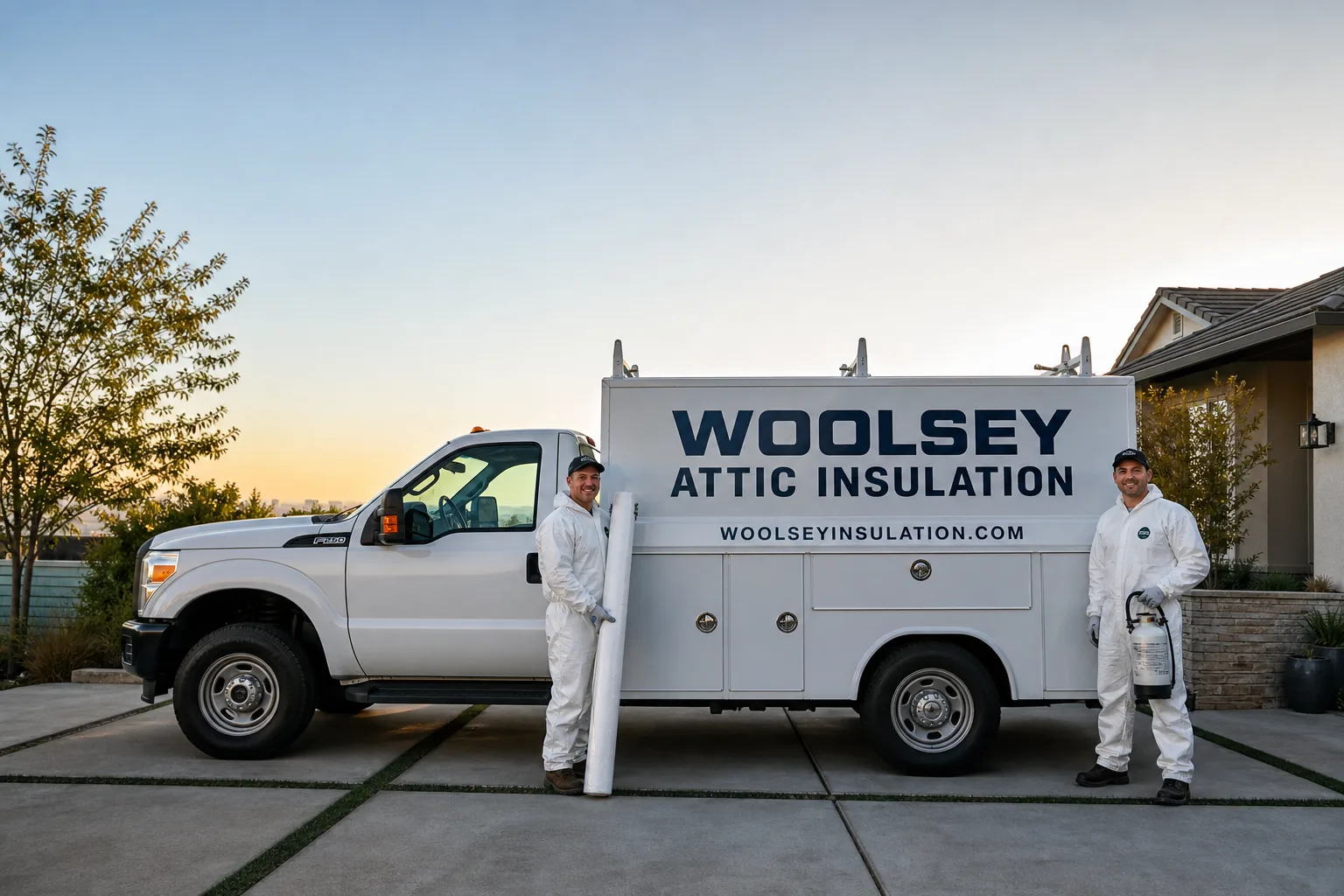
Fast, Reliable Spray Foam Insulation Across Corona
Spray foam insulation in Corona typically runs $2.40 to $5.10 per board foot for closed-cell and $1.10 to $2.40 per board foot for open-cell, with most full attic perimeter jobs landing between $2,800 and $7,200 depending on square footage and access. Our crews reach every Corona neighborhood within about 45 to 70 minutes from dispatch. That matters when your upstairs bedrooms are still holding heat at 11 p.m. and you need someone who actually picks up the phone. Call (325) 240-5411 and you’ll get a live person, day or night, plus a written price before any foam is sprayed.
Why Woolsey Attic Insulation Is Corona’s Preferred Spray Foam Insulation Company
Woolsey Attic Insulation has been doing this work since 2002, and our crews know Corona’s housing stock the way a mechanic knows a particular engine. The south side of the city, the tract homes along Foothill Parkway, the hillside lots in Sierra del Oro – those houses were built fast in the 1990s and 2000s, and their attics show it. Our Spray Foam Insulation team understands what happens to blown fiberglass after two decades of Santa Ana wind events. It doesn’t just sit there. It moves.
Every Corona job is led by Glenn Hartley. He’s the person who makes sure the written price you agreed to is the price on the final invoice. No door-step adjustments, no “we found something while we were up there” phone call that doubles the bill. Our technicians are background-checked and uniformed, so you know exactly who’s walking through your front door in Corona. And the work carries a 365-Day Done Right Promise: if something isn’t right within a year, we come back and fix it. In writing. At no charge.
Spray Foam Wall Insulation in Corona
Spray Foam Wall Insulation in Corona is one of the highest-ROI upgrades a homeowner can make here, and the reason is specific to this city. Corona sits in California Title 24 Climate Zone 10, where summer attic temperatures routinely hit 150 to 160°F. The walls of most Corona tract homes are framed with 2x4s and stuffed with builder-grade batt that slumps, compresses, and leaves the top portion of the wall cavity essentially empty. That’s where conditioned air escapes and radiant heat pushes in.
We typically use open-cell foam for interior wall cavities in Corona. It expands to fill the entire 2×4 depth, seals around electrical boxes and plumbing, and stops air movement cold. The material cost for open-cell wall work in Corona usually runs $1.10 to $2.40 per board foot, and a typical 2,000-square-foot home with full wall coverage lands between $3,000 and $6,000.
Where Foam Helps Most in Corona Walls
The top plates and wall cavities bordering the attic are the worst offenders. Hot air from the attic pushes down into those wall spaces all afternoon. Foam stops that convective loop. Homeowners in South Corona and the neighborhoods east of the 15 often tell us the biggest difference is in rooms on the west side of the house – the ones that bake from 2 p.m. until sunset.
Retrofit Open-Cell for Existing Homes
For a finished Corona home, we spray open-cell directly into wall cavities through small access points, then patch cleanly. It’s not a gut job. We can often do a full wall retrofit in one to two days, and the difference in afternoon temperatures is something you feel that same week.
Rim Joist Spray Foam in Corona
Rim Joist Spray Foam in Corona is the single most overlooked air-sealing target in the city’s 1990s and 2000s tract homes. The rim joist is the band of framing where the floor deck meets the foundation wall, and in most Corona homes it was never insulated at all. Builders left it as bare wood. The result is a continuous ring of air leakage around the entire house, pulling hot air in during summer and letting conditioned air escape year-round.
Closed-cell foam is the right material here. It seals against the foundation, adds structural rigidity, and carries an R-value of about 6.2 per inch. In Corona’s Zone 10 climate, we typically spray 2 inches of closed-cell at the rim joist. For a typical 2,500-square-foot home, rim joist work runs $1,700 to $3,400 depending on joist depth and access.
Rim Joists and Santa Ana Season
The Santa Ana winds that funnel through the Santa Ana Canyon push air hard against the rim joist. Any gap at the sill plate becomes a wind inlet. Sealing that band with foam doesn’t just stop air movement – it keeps dust, pollen, and wind-driven heat from entering the conditioned envelope.
When Builders Left It Bare
We regularly walk crawlspaces and basements in Corona where the rim joist is completely uninsulated. The homeowner had no idea. One afternoon of foam work fixes a problem that’s been costing them money every summer since the house was built.
Trusted Brands We Service in Corona
We’re not tied to a single manufacturer. Woolsey works with Owens Corning, Johns Manville, Knauf, Rockwool, CertainTeed, Icynene, Demilec, and GreenFiber – eight brands – so the foam we recommend for your Corona home is the right one for the job, not whatever happens to be on the truck. On a recent Corona job near Sierra del Oro, we used Icynene closed-cell for a perimeter band and rim joist seal after the homeowner’s original fiberglass had migrated. You don’t need to know which brand fits your project. Glenn and the crew will tell you, and the written price won’t change because of it.
Common Spray Foam Insulation Problems We See in Corona Homes
- Blown fiberglass moved off the eave baffles. Repeated Santa Ana wind events through the Santa Ana Canyon physically push attic insulation toward the center of the attic. The perimeter above your exterior walls ends up nearly bare while a quick depth check in the middle still reads R-25.
- Builder-grade batt slumped in 2×4 wall cavities. Attic temperatures of 150 to 160°F degrade fiberglass over two decades, and any HVAC or re-roof work disturbs it further. Many Corona walls have a 6 to 12 inch void at the top of the cavity where the batt has fallen away.
- Ceiling penetrations leaking air into a 40-degree-swing attic. Recessed lights, HVAC plenums, and top plates let conditioned air escape directly into the attic. In Corona’s diurnal cycle, that’s a massive daily swing. Foam without air sealing first doesn’t fix the root problem.
- Open-cell foam sprayed over an unsealed attic floor. Some contractors skip the prep and spray foam right over dirty, unsealed surfaces. The foam adheres poorly and the air leaks stay. We clean and seal first, every time.
Pricing for Spray Foam Insulation in Corona, CA
We Also Serve Cities Near Corona
If you’re in Norco, Chino, Chino Hills, or Irvine, we run crews there too. Corona is our central service anchor, but the same written pricing and 365-Day Done Right Promise follows us to every neighboring city. Scheduling is coordinated from the brand’s Inland Empire office, and crews serve Corona locally.
Serving Corona, CA - Our Local Coverage Area
We’re based in the Corona area and know this community well. Use the map below to see our service coverage - if you’re nearby, we can almost certainly help.
FAQs About Spray Foam Insulation in Corona
Why does my Corona attic still read R-25 in the middle but feel hot at the edges of the house?
Because the blown fiberglass in your attic has migrated. Santa Ana winds push loose-fill insulation toward the center of the attic, leaving the perimeter above your exterior walls nearly bare. A depth-stick check in the middle gives you a false reading. We always inspect and measure the perimeter band specifically. Call (325) 240-5411 and we’ll tell you what’s actually happening up there.
My 1998 Corona tract home has 2×4 walls with builder-grade batt. Is spray foam worth it here versus just adding attic insulation?
Yes, especially in Corona’s Climate Zone 10. Your walls are likely losing significant cooling dollars through slumping batt and empty cavity tops. Adding attic insulation alone won’t fix wall leakage. A wall retrofit with open-cell foam seals those cavities air-tight, and in Corona’s summer heat that translates directly to lower cooling costs. The exact ROI depends on your home’s exposure, which we’ll assess for free.
Can spray foam handle the Santa Ana winds that blow through Corona?
Spray foam adheres directly to the framing and doesn’t move. That’s the entire advantage over blown fiberglass in a wind corridor like the Santa Ana Canyon. Closed-cell foam at the rim joist and perimeter band stays exactly where we put it. It also seals the gaps that the wind was using to push air into your home.
Do you use open-cell or closed-cell foam in Corona attics?
For Corona attics, we use closed-cell on the perimeter band and rim joist area where moisture and wind pressure are factors. We may use open-cell for wall cavities and the main attic floor if air sealing is already handled. The choice depends on your home’s specific condition, and we’ll explain it in plain language before you sign anything.
How do you prep a Corona attic before spraying foam?
We air-seal first. Ceiling penetrations, top plates, recessed cans, HVAC plenums – all sealed before foam touches anything. Then we clean the application surface. In Corona’s dusty, wind-exposed attics, this prep step is non-negotiable. Skipping it is why some foam jobs underperform. Ours don’t.
Ready for a written price before any work starts? Call (325) 240-5411 any time. A live person answers, day or night, and Glenn Hartley will make sure the number on your estimate is the number on your invoice.
Written by Glenn Hartley, Owner at Woolsey Attic Insulation, serving Corona since 2002.