
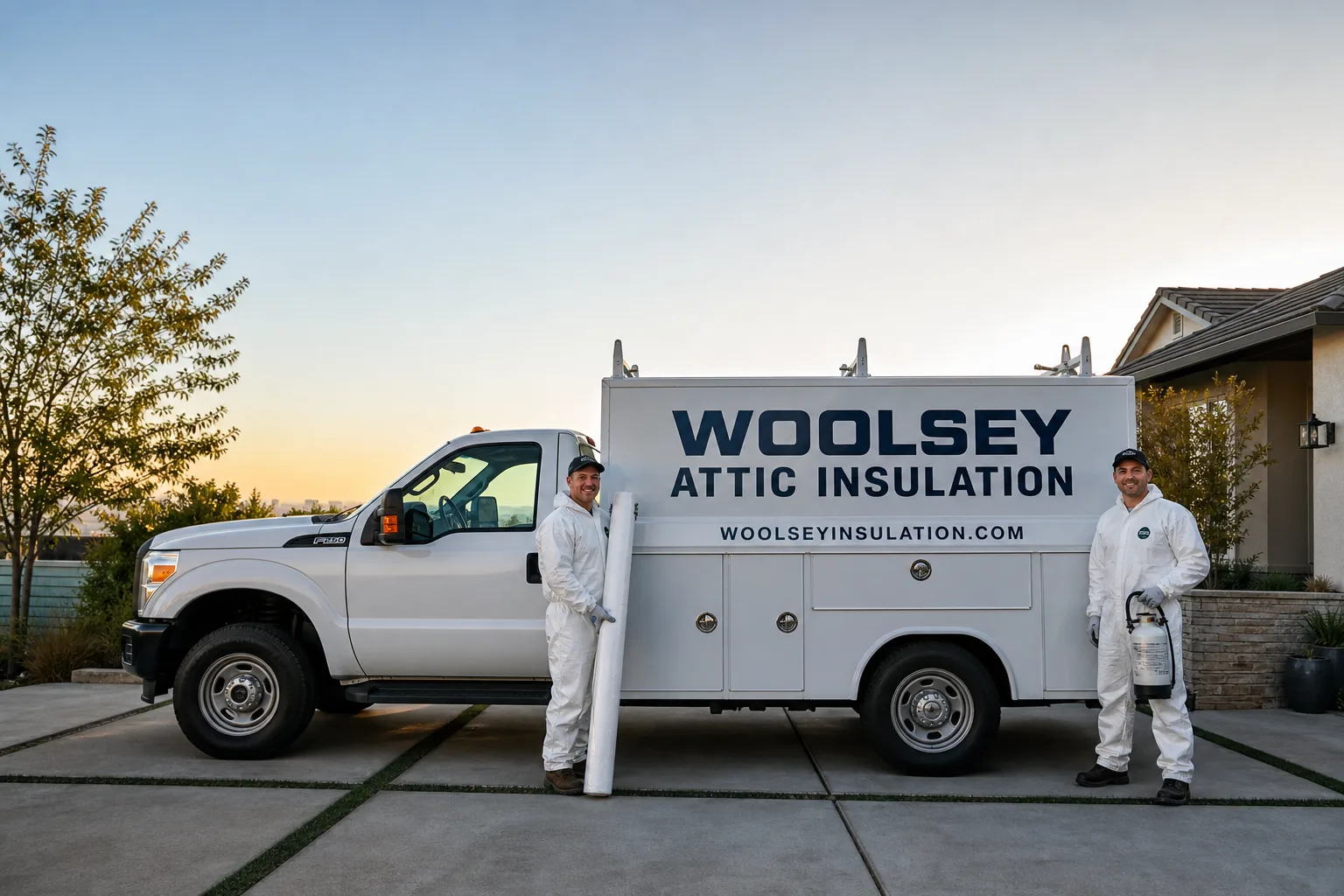
Fast, Reliable Spray Foam Insulation Across Cypress
Spray foam insulation in Cypress typically costs $2,800 to $7,400 for a full attic and $1,900 to $4,600 for wall cavities in a standard 1960s or 70s ranch, and most jobs are completed in a single day. We schedule Cypress jobs every weekday, and our crews know these tracts of Linden Street, Holder Street, and Ball Road well enough to quote accurately over the phone. Call (325) 240-5411 for a written price before any work starts, not a guess at the door.
Why Woolsey Attic Insulation Handles Spray Foam in Cypress
Cypress was built out almost entirely between 1959 and the mid-1970s, before California adopted mandatory residential insulation standards. That means the vast majority of homes walking distance from Cypress College or Oak Knoll Park still carry original fiberglass batts or nothing in the walls at all. We have spent enough hours in these attics to know what a 1968 ranch off Orange Avenue looks like before we open the hatch: compacted blow-in, unsealed can lights, and duct runs sweating in the marine-layer humidity. Glenn Hartley leads our Cypress work, and every job goes through the same discipline: written price before we touch anything, a committed arrival window, and a clean job site when we’re done.
Our Spray Foam Insulation team carries open-cell and closed-cell foam from Owens Corning, Johns Manville, and Icynene, so the material fits your house rather than whatever happens to be on the truck. Most Cypress customers call because they have felt the bedroom over the garage baking in summer or smelled that faint mustiness in the hallway when the June gloom settles in. We answer the phone with a live person, 24 hours a day. No voicemail. No call-back window. Just a real person who can tell you whether your issue sounds like a quick fix or a full re-insulation.
Spray Foam Attic Insulation in Cypress
Spray foam attic insulation in Cypress means sealing the entire thermal boundary of your attic, and for most of these 1960s and 70s ranches, that also means addressing the air leaks that came with them. A standard job runs $2,800 to $7,400 depending on square footage, roof pitch, and whether we are treating the attic floor or the roof deck itself. The first sentence you need to hear is this: the original blown fiberglass in Cypress attics has compacted to less than half its rated R-value, and the recessed lights added in the 80s and 90s cut through the ceiling drywall without any air sealing. Those holes are thermal bypasses. Spray foam closes them.
Roof Deck Application
When we spray closed-cell foam directly onto the underside of the roof deck, we create an unvented attic. That turns the attic into conditioned space, which matters a lot in Cypress because the marine layer pushes in from Seal Beach and Huntington Harbour most nights, condensing on any cool surface exposed to that damp air. An unvented attic with closed-cell foam keeps that moisture out of the fiberglass and off the framing.
Attic Floor Sealing
For homes with existing blown insulation that is too far gone to save, we remove the compacted material, air-seal every penetration, and then apply foam to the attic floor perimeter and top plates. This is the treatment that passes a Title 24 HERS inspection in Cypress, because the inspector is checking for exactly those bypasses. We quote the removal and re-insulation as one written number so there is no surprise line item.
Spray Foam Wall Insulation in Cypress
Spray foam wall insulation in Cypress is typically installed from the exterior when siding is being replaced, or from the interior during a remodel. Cost runs $1,900 to $4,600 for a typical single-story 1,200 to 1,800 square foot ranch. The framing in these homes is 2×4, not 2×6, which means the wall cavity is shallow and the foam type and application rate must be dialed in carefully. Too much foam in a 2×4 wall bows the drywall. Too dense a closed-cell on that shallow cavity leaves you with thermal bridging you paid to eliminate.
Marine-Layer Vapor Control
Cypress sits squarely in the marine-layer corridor, 7 to 10 miles inland from the Orange County coast. Overnight and morning fog keeps summer temperatures mild but drives attic and wall humidity higher than homeowners expect. A wall cavity that would perform fine with open-cell foam in Anaheim Hills needs a Class II vapor retarder or closed-cell foam here, or you will see moisture damage within a few seasons. We spec every Cypress wall job with that condensation reality in mind.
Pre-Energy-Code Tracts
Homes in the Lincoln Park tract off Walker Street, and the subdivisions around Arnold Elementary, were built before Title 24 existed. Their exterior walls typically have no insulation at all, or a thin batt that has slumped to the bottom of the cavity. Spray foam fills those 2×4 bays completely, including the irregular gaps around electrical boxes and plumbing runs that batt insulation simply cannot reach.
Trusted Brands We Service in Cypress
We work with eight leading insulation brands so the material recommendation fits the home, not the truck inventory. On Cypress jobs you will most often see Owens Corning closed-cell on roof decks, Icynene open-cell in attic floors and rim joists, and Johns Manville where a budget-conscious homeowner wants reliable performance at a moderate price. Because our Cypress scheduling is coordinated from the Los Angeles office and crews stage locally, we keep common Cypress job materials readily available, which means fewer return trips and a faster start date for you.
Common Spray Foam Insulation Problems We See in Cypress Homes
- Open-cell foam installed without a vapor retarder. In Cypress’s marine-layer attics, open-cell foam traps overnight condensation, which leads to mold on the foam surface and delamination from the sheathing within a few seasons. Closed-cell or a Class II retarder is mandatory here, and we will not install open-cell in a Cypress attic without that treatment.
- Foam sprayed over compacted original insulation and unsealed can lights. If a crew leaves the old compressed fiberglass in place and foams over it, the air paths around recessed lights and top plates stay open. The attic keeps pulling humid air up from the house, and the HERS inspector fails it. We remove, seal, then foam.
- Wall foam applied too thick for 2×4 framing. Cypress’s older wood-frame construction cannot handle the expansion pressure of a full 2×6 cavity’s worth of foam in a 2×4 wall. Drywall bows, paint cracks, and the thermal bridging at the studs defeats the point. Application rate matters more than brand.
- Attic condensation smell that returns after re-insulation. When a homeowner rushes to re-insulate without addressing the humidity source, the new foam traps the same moisture that caused the original problem. We trace the bypasses and the venting before we spray, so the fix lasts longer than the first foggy morning.
Pricing for Spray Foam Insulation in Cypress, CA
A standard Cypress attic runs $2,800 to $7,400, depending on whether we treat the attic floor or the roof deck, the square footage, and the condition of the existing insulation. Wall jobs run $1,900 to $4,600. Rim joist sealing in a crawlspace typically lands between $900 and $1,800. Garage ceiling spray foam runs $700 to $1,500. The written price we hand you before any work starts includes material, labor, prep, cleanup, and the written 365-day guarantee. We do not quote a range and then change it at the door. Call (325) 240-5411 and we will give you an exact line-item number for your Cypress home, free.
We Also Serve Cities Near Cypress
Our crews cover Cypress and the surrounding Orange County communities of La Palma, Los Alamitos, Hawaiian Gardens, and Buena Park. If you live just outside Cypress and looking for Spray Foam Insulation in Cypress level of service, call and ask. We schedule across the entire corridor every week.
Serving Cypress, CA - Our Local Coverage Area
We’re based in the Cypress area and know this community well. Use the map below to see our service coverage - if you’re nearby, we can almost certainly help.
FAQs About Spray Foam Insulation in Cypress
Cypress sits in the marine-layer corridor, about 7 to 10 miles from the coast, so the overnight and morning fog pushes humidity into attics and wall cavities that inland cities like Anaheim Hills never see. A vapor retarder or closed-cell foam prevents that condensation from being absorbed into the insulation, where it would breed mold and break down the foam bond.
Yes, that is one of the most common corrections we make in Cypress homes. We air-seal each recessed light housing and the top plates around them before spraying, which closes the thermal bypasses that have been pulling hot, humid air into your attic since the lights were first installed. It makes a measurable difference in both your HERS score and your indoor comfort.
We remove the compacted material completely before applying any new insulation. Leaving the old compressed fiberglass under new foam simply traps whatever moisture and debris is already in it, and it does not restore the R-value you paid for. Removal is part of the written quote, not an add-on.
It is practical and frequently the right call, but it requires a contractor who knows the foam expansion rate for a shallow 2×4 cavity. Done correctly, spray foam fills those thin walls completely, including the irregular gaps around electrical boxes and pipes that batt insulation misses. Done sloppily, it bows the drywall. We have been working these Cypress tracts long enough to know the difference.
We install Owens Corning closed-cell on roof decks, Icynene open-cell in attic floors and wall cavities, and Johns Manville where a homeowner wants a proven mid-range option. The brand recommendation always follows the home and the moisture conditions, not whatever is left on the truck. We will explain the recommendation in plain language before you commit.
Written by Glenn Hartley, Owner at Woolsey Attic Insulation, serving Cypress with written pricing, honest labeling, and a 365-day guarantee.