
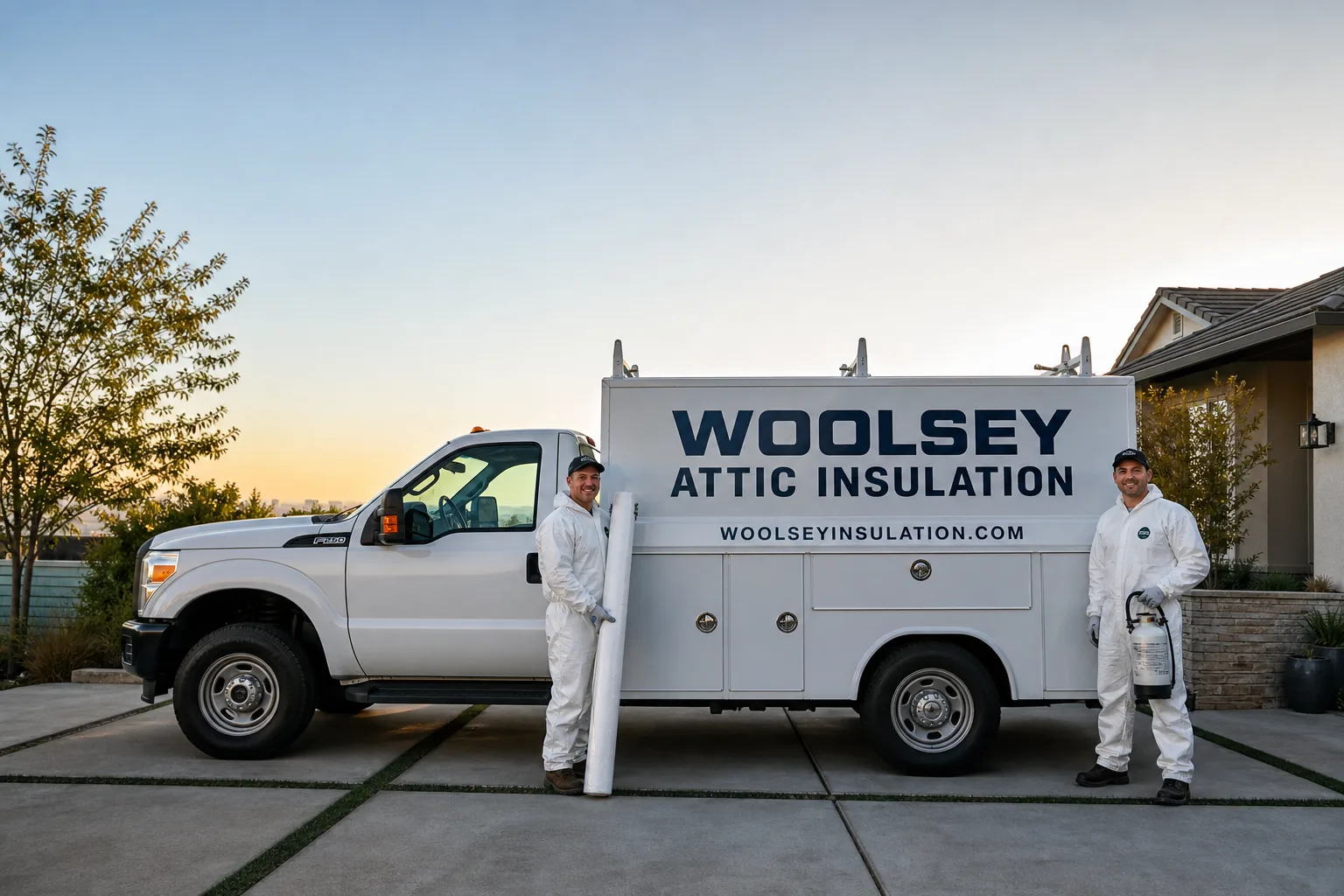
Fast, Reliable Spray Foam Insulation Across San Francisco
Spray foam insulation in San Francisco typically runs $2.50 to $7.00 per board foot installed, depending on whether you need open-cell or closed-cell foam, and most jobs are completed in one day. If you own a Victorian, Edwardian, or mid-century row house here, you already know the problem: fog-driven moisture moves through balloon-frame walls in ways that baffle contractors from drier cities. We’re Woolsey Attic Insulation, and we’ve spent years learning how San Francisco’s specific housing stock behaves so we can seal it right the first time. Call (325) 240-5411 for a free estimate with a written price before any work starts.
Why Woolsey Attic Insulation Is San Francisco’s Preferred Spray Foam Insulation Company
San Francisco homeowners keep calling us back because we show up on time, price the job in writing before touching anything, and stand behind the work for a full year with our 365-Day Done Right Promise. Glenn Hartley leads our crew, and he’s built a reputation in this city for telling homeowners the truth even when the truth is “your attic needs air-sealing before it needs foam.” We answer the phone with a live person 24 hours a day, seven days a week, which matters when you’ve got a west-facing wall beading with condensation on a foggy Outer Sunset morning and you need someone who actually picks up.
Our technicians are background-checked and uniformed, so you know exactly who’s walking through your front door. We work in tight spaces every day: narrow Inner Sunset blocks with no parking, Richmond District garages with alley access, Noe Valley flats with shared entryways. We know how to move equipment through a Victorian parlor without scuffing the original fir floors. The Kingswell Guarantee covers every job: a written price before work starts, a committed arrival window, a clean job site, and a written guarantee on the work itself.
Spray Foam Wall Insulation in San Francisco
Spray Foam Wall Insulation in San Francisco is almost always a retrofit decision driven by fog moisture and balloon-frame air paths rather than by heating load, which flips the usual playbook. In most of the country, installers push R-value. Here, we push air-sealing first, because a Victorian row house with an unsealed top plate will pull fog-saturated air down inside the wall cavity no matter how much foam you spray into the stud bays. A typical wall insulation retrofit in a San Francisco attached home runs $3,800 to $8,500, and the exact number is in your written estimate before we begin. The payoff is immediate: rooms that finally hold a steady temperature through July and August, when the marine layer sits on the city for weeks.
Open-Cell vs. Closed-Cell in Attached Row Houses
Open-cell spray foam is softer and quieter, running $2.50 to $4.00 per board foot, and it makes sense for interior party walls where you want sound dampening between units. But the fog-belt neighborhoods change the calculus. Closed-cell foam, at $4.50 to $7.00 per board foot, acts as its own vapor barrier and doesn’t absorb moisture when fog-saturated air finds a path to the sheathing. For west-facing walls in the Outer Sunset or Richmond, where the prevailing wind pushes damp air against the home for months at a time, closed-cell is usually the right call.
Why Balloon Framing Changes Everything
San Francisco’s 1880s-to-1910s row houses were built with balloon framing: wall studs run continuously from foundation to roof, and the top-plate gap at the attic floor creates an open chimney into the wall. Spraying foam into a wall cavity without first sealing that top plate is like caulking a window frame while leaving the window open. We address the top plate first, then install the foam, so the air path is actually closed.
Rim Joist Spray Foam in San Francisco
Rim Joist Spray Foam in San Francisco targets the perimeter gap between your floor joists and the foundation wall, which in this city is often the single largest unsealed air leak in the entire thermal envelope. In a city where temperatures rarely drop below 40°F, you’d think rim joists wouldn’t matter. But the marine layer keeps ambient air at 50 to 58°F with high humidity for six-plus months a year, and rim joist gaps pull that cold, damp air directly under your floors. A full rim joist spray foam job in a typical San Francisco home runs $950 to $2,200, and most of our crews finish it in four to six hours. Homeowners consistently tell us their floors feel noticeably warmer within a day, not because the air temperature changed, but because the cold draft stopped.
Why Underfloor Work Matters More Than Wall Insulation
In attached row houses, the subfloor and attic carry the highest efficiency return per dollar because exterior walls are blocked by shared party walls and protected historic facades. You can’t blow insulation into a wall that backs onto your neighbor’s unit. The rim joist, though, is fully accessible from the crawlspace or basement, and sealing it stops the stack effect that pulls fog-laden air up through the entire building shell.
Crawlspace Access on Tight San Francisco Lots
Many San Francisco homes have dirt crawlspaces with 18 to 30 inches of clearance, and some have no access hatch at all. Our crew has worked under houses in the Mission, Bernal Heights, and Glen Park where the only entry is a small hatch behind the garage water heater. We foam the rim bays from below using low-pressure closed-cell material that expands into the irregular gaps between brick foundation and old-growth fir joists, creating an airtight seal that holds for decades.
Trusted Brands We Service in San Francisco
We install and service spray foam and attic insulation from eight leading manufacturers, including Owens Corning, Johns Manville, Knauf, and Rockwool, so the material recommendation always fits the home rather than whatever happens to be on the truck. For a fog-belt Victorian in the Sunset, that might mean closed-cell Icynene against the roof sheathing. For a South Slope Edwardian with a dry attic, open-cell Demilec might be the better fit. We stock common residential products for San Francisco jobs and can typically source anything else within one to two business days from Bay Area distributors. You’ll never hear us push one brand because it’s easier for us. You’ll hear us tell you which material is right for your specific house, your specific block, and your specific moisture profile.
Common Spray Foam Insulation Problems We See in San Francisco Homes
- Open-cell foam against cold roof sheathing in fog-belt attics. When open-cell is sprayed directly on the underside of unconditioned roof decking, the foam face becomes a condensation surface every foggy morning. The decking stays wet, and within a year or two, you’ve got mold you can’t see from the access hatch.
- Foam sprayed over plaster-on-lath without sealing balloon-frame top plates. The original plaster looks fine from below, but the top-plate gap at the attic floor is still wide open. Fog-laden air keeps riding the same pathway into the wall cavity, so the room stays cold and the foam does almost nothing.
- Dense foam packed into shared party-wall cavities. Attached row houses rely on cross-ventilation through rim bays and attic spaces to dry out. When a contractor packs a party-wall cavity too tightly, it blocks that drying path and traps moisture inside the assembly. This is a failure mode we see regularly in the Inner Sunset and Richmond District.
- Saturated blown-in cellulose left in place under new spray foam. If an attic already has cellulose that’s absorbed months of fog moisture, spraying foam over it seals the moisture in. We typically recommend pulling the wet material back, addressing the air-sealing, and then reinstalling the correct insulation for the space.
Pricing for Spray Foam Insulation in San Francisco, CA
We Also Serve Cities Near San Francisco
While this page focuses on San Francisco, our crews serve homeowners in Daly City, Sausalito, South San Francisco, and Alameda as well. If you’re just across the county line and dealing with the same fog-driven moisture issues, give us a call. The same written-price guarantee applies everywhere we work, and our Spray Foam Insulation team brings the same equipment and expertise to every job.
Serving San Francisco, CA - Our Local Coverage Area
We’re based in the San Francisco area and know this community well. Use the map below to see our service coverage - if you’re nearby, we can almost certainly help.
FAQs About Spray Foam Insulation in San Francisco
Yes, and in most San Francisco row houses this is exactly what we do. The exterior walls facing the street and rear yard can be insulated from the inside by removing small sections of plaster or by drilling access holes behind baseboards, depending on the wall assembly. Shared party walls are typically left untouched both because they’re not exposed to outside air and because accessing them would require disturbing your neighbor’s side of the assembly. The bigger issue is usually the balloon-frame top plate, which we seal from the attic side before any wall work begins. Call (325) 240-5411 and we’ll walk you through what’s possible in your specific building.
The Inner Sunset and Richmond District sit in the city’s fog belt, where ambient humidity stays near 100% for months and roof sheathing never really dries out, while Oakland attics get real sun and wind-driven drying. An Inner Sunset attic needs closed-cell foam or a vented open-cell assembly with the air-sealing done first, because the failure mode here is condensation, not heat loss. In Oakland, the same product decision might be driven purely by R-value. This is exactly why we won’t give you a material recommendation over the phone without seeing your attic, your roof venting, and your neighborhood’s fog pattern.
Yes, and in densely built San Francisco neighborhoods this is often the single highest-impact job we do. Cold floors in a Victorian or Edwardian row house are usually caused by rim joist air leaks pulling fog-saturated outside air under the floor system, not by inadequate heat. Sealing the rim bays with closed-cell foam stops that draft, and most homeowners report warmer floors within 24 hours. The job takes half a day for a typical 1,200 to 1,800 square foot home and we’ll give you the written price before we start.
No, and this is one of the most common things we flag during San Francisco attic inspections. Blown-in cellulose that has absorbed months of fog moisture becomes a moisture sponge against the ceiling below, and it will not dry out on its own in a fog-belt attic. The right sequence is to pull the saturated material back, air-seal the top plate and rim bays, correct the venting strategy, then reinstall the appropriate insulation, which may be new cellulose, mineral wool, or spray foam depending on the space. We’ll tell you honestly what we found and give you the written price before any of that work begins.
We arrive with compact equipment that fits through narrow side gates and standard interior doorways, and we plan parking and access before the job by scouting the block ahead of time. For Inner Sunset flats, Noe Valley townhomes, and Mission District row houses, we typically arrange a loading window with the homeowner so our truck isn’t idling on a no-parking street. The equipment moves in once, the work happens inside, and we leave the job site cleaner than we found it. Every time. The Kingswell Guarantee includes a clean job site, and we mean it literally: no foam overspray on your sidewalk, no trash left at the curb.
If you’re ready to get an honest, written price for spray foam insulation in San Francisco, call (325) 240-5411. A live person answers 24/7, and Glenn Hartley will make sure you get straight answers about what your home actually needs.
Written by Glenn Hartley, Owner at Woolsey Attic Insulation, serving San Francisco and the surrounding Bay Area.