
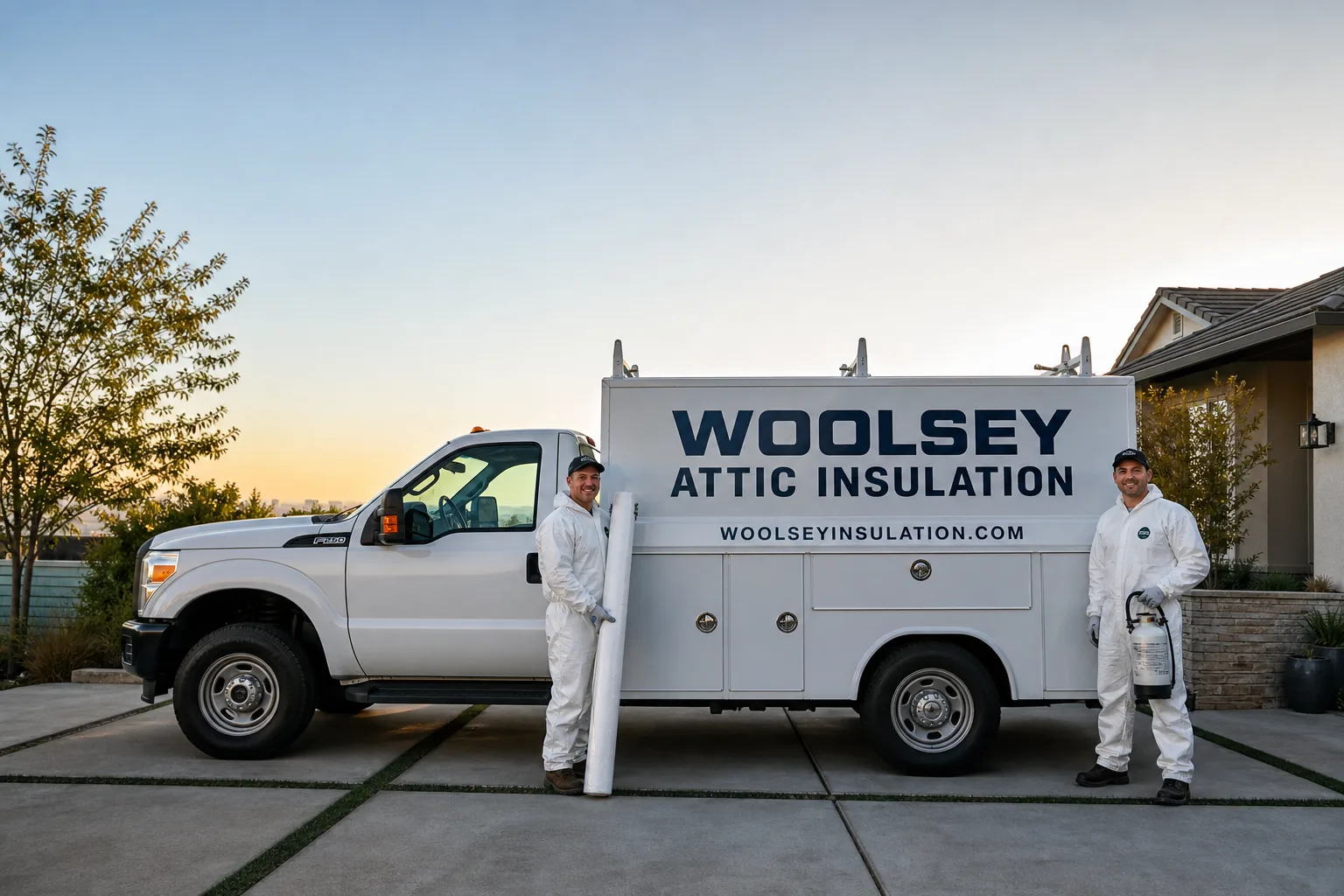
Fast, Reliable Attic Insulation Across Crestline
Attic insulation in Crestline isn’t a simple upgrade. It’s a retrofit on houses that were never built for full-time mountain living. Most homes here started as summer cabins, and the insulation story reflects that: thin batts, no air sealing, open beam ceilings with redwood tongue-and-groove that can’t just be covered up. Woolsey Attic Insulation works on these structures every week. We know what a 1960s chalet off Zurich Drive needs because we’ve been inside enough of them to see the patterns: squirrel-compacted fiberglass, zero air barriers, and homeowners paying $400+ heating bills through February. If your attic needs attention, call (325) 240-5411 and we’ll give you a written price before any work starts.
Why Woolsey Attic Insulation Is Crestline’s Preferred Attic Insulation Company
Glenn Hartley leads our Attic Insulation team with a simple approach: show up in the window we commit to, price the job in writing before touching anything, and stand behind the work for 365 days. That matters in Crestline, where homeowners have been burned by mountain contractors who treat a 45-minute drive up Highway 18 as an excuse for missed appointments and vague estimates. We don’t operate that way.
Every Crestline job gets a background-checked, uniformed technician who knows these cabins. The exposed beams, the steep lots, the crawl spaces you can barely reach, the skylights that leak heat. None of it surprises our crews. We also answer the phone with a live person 24/7, which means when a February cold snap hits and your heating system is running nonstop, you reach someone who can schedule a same-visit assessment, not a voicemail.
The Kingswell Guarantee backs every Crestline insulation job: written price first, a real arrival window, a clean job site, and a written guarantee on the work. If something isn’t right within 365 days, we come back and fix it at no charge. That’s the deal, in writing, every time.
Attic Insulation Removal in Crestline
Attic Insulation Removal in Crestline is the step most of these cabins need before any new material goes in. We’re not talking about a partial top-up. In a 1950s A-frame or a post-and-beam chalet, the existing insulation has usually been chewed through, compacted, or soaked by roof leaks that nobody caught for a decade. You can’t blow new insulation over that and expect it to perform.
A full removal job in Crestline typically runs $1,800 to $3,400 depending on attic size, access difficulty, and how much rodent contamination we’re dealing with. That includes vacuum removal, bagging, and disposal of the old material. We give you the exact written number before any work starts.
What Removal Actually Involves
Our crew vacuums out every bit of old fiberglass, cellulose, or rock wool down to the drywall or tongue-and-groove ceiling below. We bag it, carry it out through your access point (often a tight closet hatch in these older cabins), and haul it off the mountain for disposal. The goal is a clean cavity so we can see exactly what’s happening with your framing, wiring, and any pest damage.
Pest Damage and Rodent Contamination
Mountain rodents treat Crestline attics as year-round housing. Pack rats, squirrels, and mice shred insulation into nesting material and leave droppings throughout the cavity. Removal clears all of that out. We also flag any openings where rodents are getting in so you can address exclusion before new insulation goes in. Skipping this step means re-contaminating brand-new material within a season.
Blown In Insulation in Crestline
Blown In Insulation in Crestline is the right retrofit choice for most of these older cabins because it conforms to odd framing layouts, exposed beams, and irregular rafter spacing that batt insulation can’t handle cleanly. The material we blow in most often is Rockwool, which holds its R-value in cold mountain conditions and doesn’t settle the way older cellulose blends do.
A typical full-attic blown-in job in Crestline runs $2,200 to $5,600 depending on square footage, target R-value, and whether we’re also air-sealing the ceiling plane. For a 1,200-square-foot cabin attic going from R-11 to R-49, most customers land around $3,800 to $4,500. You get the exact written price before we start, along with the guarantee in writing.
Why Rockwool for Crestline Cabins
Rockwool is hydrophobic, which means it doesn’t hold moisture. That’s a real advantage in Crestline attics where winter condensation is common. It also provides some added fire resistance, which matters on forested lots with wildfire exposure. We stock Rockwool, Owens Corning, and GreenFiber, so the material recommendation fits your home rather than whatever happens to be on the truck.
Air Sealing Before Blowing In
Blowing insulation into an unsealed Crestline attic is like putting a sweater on over a windbreaker full of holes. We seal the gaps first: around recessed lights, plumbing vents, chimney chases, and beam pockets. In the post-and-beam chalets, those beam pockets matter more than anywhere else because they run straight through the ceiling plane to the outside air. Spray foam detail work there is the difference between an R-49 attic that actually performs and one that leaks heat all winter.
Trusted Brands We Service in Crestline
We install and service insulation from Johns Manville, Owens Corning, GreenFiber, Rockwool, and five other leading manufacturers. That means when a Crestline homeowner has existing Knauf batts that need matching or wants to switch to a specific blown-in product, we’re not limited to one supplier’s catalog. For these mountain cabins, we especially like Johns Manville’s blown-in fiberglass for open, straightforward attics and Rockwool for exposed-beam and moisture-prone spaces. We keep material lead times short for Crestline customers, and most jobs are scheduled within a week of the written quote.
Common Attic Insulation Problems We See in Crestline Homes
- Compressed and contaminated old insulation. Squirrels, mice, and pack rats have been nesting in Crestline attics for as long as these cabins have existed. The original batts or blown-in material gets compacted down to a fraction of its rated R-value, and the droppings create a health concern that needs removal, not covering over.
- Hidden vapor traps in original redwood ceilings. Architect-built Crestline chalets often used redwood tongue-and-groove for the visible ceiling. Adding blown-in insulation above it without a sealed air barrier can push warm, moist interior air into the wood. Over time, that causes cupping, splitting, and finish damage on the ceiling you see every day.
- Thermal bridges through skylights and clerestory glazing. Those custom wood-framed skylights on hillside chalets leak heat in ways standard attic insulation can’t address. Each frame needs spray foam detail and proper flashing before any blown-in material is added, or the whole retrofit underperforms.
- Steep-slope access limitations. Attics in Crestline’s steep-lot cabins are often tight, irregular spaces with limited access through closet hatches or gable ends. Standard insulation rigs and one-size-fits-all approaches don’t work. You need a crew that has worked these spaces before and knows how to reach every corner without damaging finished ceilings below.
Pricing for Attic Insulation in Crestline, CA
Here’s what Crestline homeowners typically pay us. Attic insulation removal runs $1,800 to $3,400. Blown-in insulation for a full attic, including air sealing, runs $2,200 to $5,600. Attic baffle and ventilation prep work adds $400 to $900 depending on how many bays need baffles. A top-up where the existing insulation is in decent shape runs $1,100 to $2,800. Square footage, access difficulty, and the amount of cleanup work drive most of the variance. Every quote is itemized and in writing before any work starts. Call (325) 240-5411 for a free estimate on your specific attic.
We Also Serve Cities Near Crestline
Our crews work throughout the San Bernardino Mountains and the Inland Empire foothills. Beyond Crestline, we regularly take care of homes in Lake Arrowhead, Running Springs, Highland, and San Bernardino. If you’re in Attic Insulation in Crestline territory or any of these neighboring communities, dispatch and scheduling are coordinated from our Inland Empire office, so you get the same written-price promise and live-answer phones no matter which side of the mountain you’re on.
Serving Crestline, CA - Our Local Coverage Area
We’re based in the Crestline area and know this community well. Use the map below to see our service coverage - if you’re nearby, we can almost certainly help.
FAQs About Attic Insulation in Crestline
No. Our removal process uses vacuum extraction that pulls insulation out from above without touching the structural beams or the finished ceiling surface below. We work carefully around exposed beams, and the Kingswell Guarantee covers any damage if something goes wrong. Call (325) 240-5411 to discuss your specific chalet layout.
Because most Crestline cabins built before 1980 have insulation that’s been compressed, rodent-contaminated, or water-damaged. Blowing new insulation over that old material traps moisture, locks in contaminants, and leaves you with an attic that still underperforms. Removal gives us a clean cavity to air-seal properly and install new material that actually hits its rated R-value. The cost of removal is almost always recovered through better performance and cleaner indoor air within a few heating seasons.
We target R-49 in the attic for year-round Crestline residences at 4,600 to 5,000 feet elevation. Older cabins that had R-11 or R-19 originally, or sometimes nothing at all, need a real jump to handle sub-freezing winter nights. R-49 blown-in Rockwool or Johns Manville fiberglass is the standard we install here, and it makes a measurable difference in both heating bills and indoor comfort during the January and February cold stretches.
Yes, and in many cases that’s exactly the right approach for architect-built chalets with exposed redwood or stained tongue-and-groove ceilings. We insulate from above, between the rafters or over the ceiling plane, while keeping the finished underside visible. The key step is sealing beam pockets and any penetrations with spray foam before blowing in material, so the visible wood doesn’t become a moisture problem. We’ve done this on post-and-beam homes throughout Crestline without touching the architectural character you bought the house for.
Almost always, yes. Squirrels, mice, and pack rats are active in Crestline attics year-round, and if we don’t identify and seal their entry points before installing new insulation, the problem comes straight back. We flag obvious entry points during removal and air-sealing work. That’s part of why the removal-and-replace approach works better here than a simple top-up: you address the whole system, not just the insulation layer. Call (325) 240-5411 and we’ll walk through what your attic actually needs.
Call Woolsey Attic Insulation for Your Crestline Attic
If your Crestline home has high heating bills, cold rooms, or an attic that hasn’t been touched in decades, we’ll give you a straight answer and a written price. No door-step changes, no vague estimates, no waiting on a call-back. The Kingswell Guarantee covers every job: written price first, a real arrival window, a clean site, and 365 days of accountability after. Call (325) 240-5411 today for a free estimate.
Written by Glenn Hartley, Owner at Woolsey Attic Insulation, serving Crestline and the San Bernardino Mountains.