
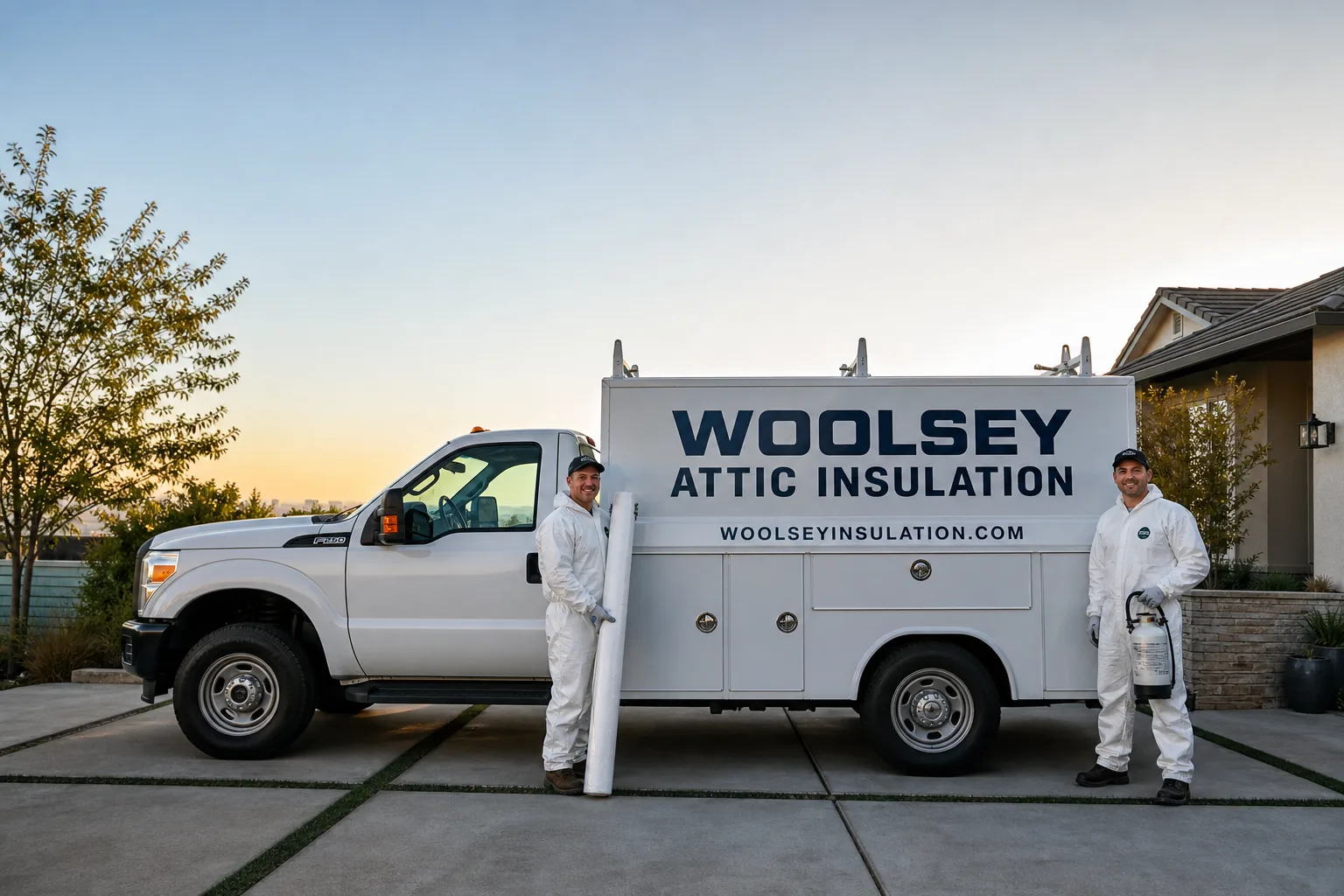
Fast, Reliable Attic Insulation Across Hemet
Attic insulation in Hemet is a different job than it is 40 miles west. The San Jacinto Valley traps heat in a way coastal cities never experience, and homes here, especially the thousands of manufactured units built between the 1970s and 1990s, age differently under that kind of sustained thermal load. We know the telltale signs: ceilings that read 120°F on a July afternoon, bedrooms that never cool below 80°F at night, and energy bills that climb every summer while the AC runs nonstop. When you call Woolsey at (325) 240-5411, you reach a live person who can schedule a real arrival window for Hemet, not a callback that might come next week. We work in Hemet regularly, we know the housing stock, and we give you a written price before any work starts.
Why Woolsey Attic Insulation Is Hemet’s Preferred Attic Insulation Company
Hemet homeowners have been through enough with contractors. A crew shows up late, the price changes at the door, and six months later the problem is back. Woolsey runs differently. Every estimate is a written number delivered before work begins, and every job carries the 365-Day Done Right Promise: if it is not right within a year, we come back and fix it at no charge. That promise is in writing, on every job, no exceptions.
Our technicians are background-checked and uniformed, so when we arrive in Hemet, you know exactly who is walking through your door. We do not send subcontractors. The people who quote the job are the people who do the job. Glenn Hartley leads the Woolsey crew, and the standard he enforces is simple: written price, real arrival window, clean job site, written guarantee. Hemet homeowners call us because they want attic insulation done once, correctly, without a second-guess.
Attic Mold Removal in Hemet
Attic mold removal in Hemet is a service we handle frequently because the valley’s winter damp and summer heat create exactly the conditions mold needs to take hold in under-ventilated attics. When warm, moist air from the living space rises into a cold attic during winter nights in the mid-20s, condensation forms on the underside of the roof decking. Over repeated cycles, that moisture supports mold growth on rafters, sheathing, and insulation. A Hemet homeowner should call us when they smell mustiness near the attic hatch, see dark staining on roof decking, or notice the insulation looks damp and matted. Mold in attic insulation cannot be cleaned effectively; the material must be removed and replaced after the moisture source is corrected.
What the Removal Involves
We remove all contaminated insulation, bag it on site, and treat the affected framing with an antimicrobial agent before any new insulation goes in. The process typically runs $1,200 to $3,800 in Hemet depending on the attic size and how far the mold has spread. We also inspect the ventilation: many Hemet attics were built with insufficient baffles, and unless airflow is corrected, mold returns within a year.
When Removal Beats Treatment
If the mold is confined to a small section of roof decking, spot treatment may be enough. But once it reaches the insulation itself, removal is the only honest answer. We will tell you which situation you have. We do not upsell removal when treatment would work, and our written price comes before we touch anything.
Attic Insulation Removal in Hemet
Attic insulation removal in Hemet is the right move when the existing material has failed, whether from mold, rodent contamination, water damage, or simple age. In this valley, the most common reason is compression: fiberglass batts and blown-in material that settled decades ago lose their loft and their R-value. We see attics across Hemet where the original insulation reads R-4 when it was installed at R-19. At that point, adding new insulation on top of failed material does not fix the problem; the old layer must come out first.
Removal for Rodent Remediation
Hemet’s manufactured-home parks and older tracts have a persistent rodent problem, and attics are the usual entry point. Rodent waste and urine soak through insulation, destroying its thermal value and creating a health hazard. Removal in these cases is not optional. We remove the contaminated material, sanitize the attic floor, and prep the space for fresh blown-in or batt insulation. Removal in Hemet typically runs $900 to $2,400 depending on attic access and how much material is up there.
Pre-Insulation Prep Work
Before any new insulation goes in, the attic should be clean and dry. We remove old material, check for wiring issues we can flag for an electrician, and confirm baffles are in place along the eaves. This prep step is what separates a 15-year insulation job from a 5-year one. Hemet homeowners who skip removal and just pile new insulation on top of failed material end up paying twice.
Trusted Brands We Service in Hemet
We install and service insulation from Owens Corning, Johns Manville, Knauf, Rockwool, CertainTeed, Icynene, Demilec, and GreenFiber. That matters in Hemet because the right material depends on the home. A 1980s manufactured unit off Stetson Avenue needs a different product than a 2005 tract home near the Hemet Valley Mall. Because we work with eight major brands rather than one, we recommend what fits your attic and your budget, not whatever happens to be on the truck. Our Attic Insulation team stocks the common batts and blown-in material for fast turnaround here, and we can order specialty products like Rockwool or Icynene spray foam with short lead times.
Common Attic Insulation Problems We See in Hemet Homes
- Compressed ceiling insulation in manufactured homes. Decades of 108 – 112°F attic heat causes fiberglass to lose its loft and settle. Original R-19 batts in a 1980s mobile home off Florida Avenue are often reading R-4 or less, which means the attic basically has no thermal barrier left.
- Torn belly boards pulling heat into living spaces. When the under-floor vapor barrier tears loose, often from rodent intrusion, it creates a chimney effect. Attic heat gets pulled down through the floor cavities, and the home never cools properly no matter how much insulation sits in the ceiling.
- Missing or blocked attic baffles. 1980s – 2000s tract homes across Hemet were built with minimal eave ventilation. When baffles are missing or insulation blocks the soffit vents, attic temperatures can exceed 140°F, radiating heat through the ceiling even when the insulation itself is adequate.
- Water-stained and mold-laden insulation. Holes in roof decking, poorly flashed vents, and winter condensation all introduce moisture. Once insulation gets wet in a Hemet attic, it mats down, grows mold, and loses thermal value permanently.
Pricing for Attic Insulation in Hemet, CA
We Also Serve Cities Near Hemet
Woolsey crews work throughout the San Jacinto Valley and surrounding areas. If you are located in San Jacinto, Homeland, Nuevo, or Menifee, we can schedule attic insulation and spray foam work with the same written-price promise and 365-Day Done Right guarantee. For full details on our local coverage and service area, see Attic Insulation in Hemet and the surrounding cities we serve.
Serving Hemet, CA - Our Local Coverage Area
We’re based in the Hemet area and know this community well. Use the map below to see our service coverage - if you’re nearby, we can almost certainly help.
FAQs About Attic Insulation in Hemet
Why do Hemet manufactured homes lose attic insulation performance faster than stick-built homes?
Manufactured homes in Hemet lose insulation performance faster because their ceiling cavities are shallower, their original insulation was often minimal from the factory, and the metal or thin-panel roof systems trap far more heat than the vented attics of stick-built homes. A 1980s mobile home’s ceiling insulation regularly compresses to R-4 or less after decades of 110°F attic heat, even if the label said R-19 when it was new. Add rodent intrusion through the belly board, and the thermal envelope fails entirely. Call (325) 240-5411 and we will tell you exactly what your attic is holding.
Does Hemet’s extreme winter cold matter for attic insulation if the main problem is summer heat?
Yes, it matters more than most people expect. Hemet winter nights drop to the mid-20s, and a poorly insulated attic lets heat escape upward all night, which means the furnace cycles constantly just to hold 68°F. The valley’s 80 – 90°F temperature swing between summer highs and winter lows means insulation works both directions. We target R-38 or better in Hemet attics specifically because it performs in both seasons, not just during the heat-sink afternoons.
My manufactured home’s belly board is torn under the floor. Can you still do an attic insulation job?
We can do the attic insulation, but we will recommend addressing the belly board as part of the same scope, because a torn under-floor vapor barrier undermines everything happening above. The chimney effect pulls attic heat down through the floor cavities and keeps the home hot no matter how much ceiling insulation you add. We coordinate with belly-repair crews in Hemet so both problems get fixed in one visit. The written estimate will spell out the attic scope and flag the belly condition separately.
How do I know if my Hemet home needs attic insulation removal before new insulation?
You need removal if the existing insulation is water-stained, moldy, saturated with rodent waste, or compressed to the point that it no longer springs back. In Hemet attics we commonly find material that reads R-4 when it was installed at R-19, and that failed layer must come out before new material goes down. The best way to know for sure is to have an attic inspected. We do that as part of every estimate, and we will show you photos of what we find before you spend a dollar.
What R-value should a Hemet attic insulation job target given the 108 – 112°F summers?
For Hemet’s summer extremes and winter dips into the 20s, we recommend R-38 as the minimum for attic insulation, with R-49 as the upgrade target for homes that are particularly heat-soaked or have older HVAC systems working hard against the valley heat. In manufactured homes, where ceiling cavity depth is limited, we use high-density blown-in fiberglass to hit the highest R-value the cavity will support, and we will tell you honestly if that number is R-30 instead of R-38. Call (325) 240-5411 for a free inspection and a written recommendation based on your specific attic.
Written by Glenn Hartley, Owner at Woolsey Attic Insulation, serving Hemet and the San Jacinto Valley with honest pricing and written guarantees on every job.