
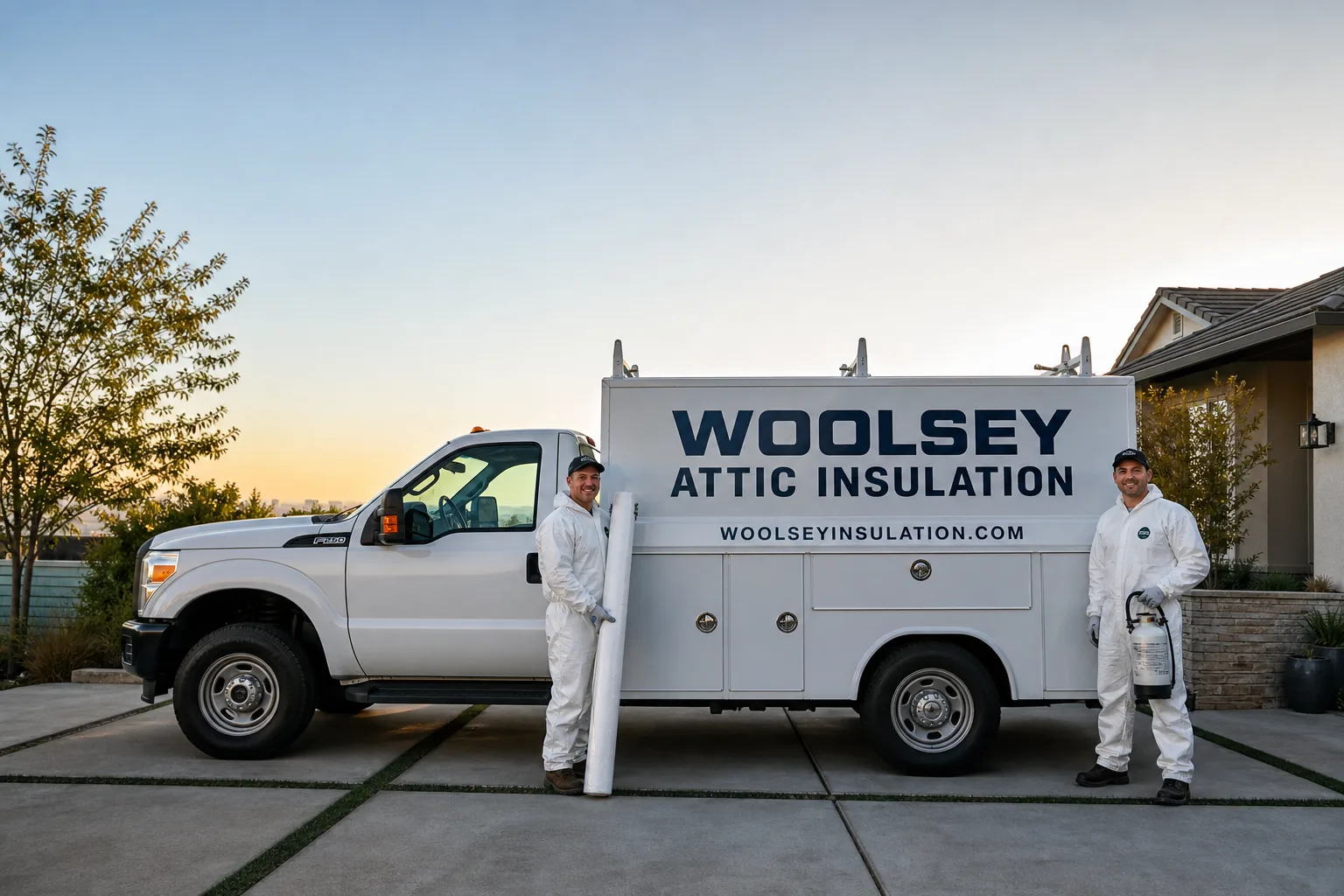
Fast, Reliable Attic Insulation Across San Bruno
Most attic insulation jobs in San Bruno run between $1,800 and $4,600, and we give you the exact written number before any work starts. That’s the Kingswell Way, and it’s been our standard since 2002. If you live in a post-WWII ranch near San Bruno Avenue or a hillside home off Crystal Springs Road, you’re dealing with the same two enemies: the San Bruno Gap’s steady ocean wind and SFO’s departure paths overhead. We answer the phone live, 24/7, at (325) 240-5411, and we’ll schedule a free attic assessment at a time that works for you.
Our Attic Insulation team works exclusively in attics and spray foam. We don’t do roofing, windows, or HVAC. That narrow focus means we’ve seen every failure mode San Bruno’s climate can throw at a ceiling plane, and we know which fix actually holds up here.
Why Woolsey Attic Insulation Is San Bruno’s Preferred Attic Insulation Company
San Bruno homeowners call us because we’re blunt about what’s actually happening above their ceilings. A loose-fill attic that’s been scoured by Gap winds isn’t a “top-up” job. It’s a ventilation and air-sealing problem with insulation on top. We say that in the first ten minutes of the walkthrough, and we put it in writing.
Every San Bruno job runs on the Kingswell Guarantee. That means a written price delivered before any work begins, a committed arrival window, a clean job site when we leave, and a written guarantee on the installation. If anything we install fails within 365 days, we come back and fix it at no charge. That’s not a sales line. It’s in the paperwork, signed, on every job.
Our technicians are background-checked and uniformed. You know exactly who’s walking through your front door, and you’ll recognize the name on the van. Glenn Hartley leads our Bay Area teams, and he holds every crew to the same standard he’d want in his own attic. When you call San Bruno, you get a real person on the line, any hour, any day.
Attic Ventilation in San Bruno
Attic ventilation in San Bruno is not optional equipment; it’s the difference between insulation that works for a decade and insulation that fails the first winter. The San Bruno Gap pushes cold marine air through eave vents with unusual force, and without proper baffling, that air scours loose-fill away from the windward side of the attic. We install vent baffles at the eave line to protect blown-in material, then verify soffit-to-ridge airflow so the attic breathes without letting the wind destroy your R-value.
Baffle Systems for Wind-Exposed Attics
Homes on the western and elevated sides of San Bruno, particularly those above the 280 corridor, get the worst of the Gap. The fix is a full-length baffle run at every rafter bay, not just a few token pieces. We pair that with top-plate air-sealing so the cavity pressure stops pulling conditioned air out of the living space.
Moisture Management in the Fog Belt
San Bruno’s persistent summer fog means attic air is frequently saturated. Without proper ventilation, that moisture condenses on roof decking and soaks into insulation. Ventilation done wrong is just as bad as none at all. We size the net-free vent area to the attic footprint and the local wind exposure, then document the before-and-after airflow so there’s no guessing.
Attic ventilation work in San Bruno typically runs $400 to $1,200, depending on attic size and the number of baffles needed.
Radiant Barrier in San Bruno
Radiant barrier in San Bruno is a smart add-on for homes with exposed roof decking, especially those in the flatlands east of El Camino Real where afternoon sun beats on composition shingles without a tall tree canopy to filter it. A radiant barrier is a reflective foil installed on the underside of the roof rafters. It reduces the radiant heat transfer from a hot roof deck into the attic, which means your insulation isn’t fighting a 130-degree radiant load every afternoon.
Pairing Radiant Barrier With Existing Loose-Fill
We often install radiant barrier in attics that already have blown-in insulation but still overheat in summer. In San Bruno’s microclimates, a west-facing attic that stays warm at 7 p.m. is a sign the roof deck is radiating heat straight into your insulation. The barrier reflects that back before it becomes a problem.
When Radiant Barrier Isn’t the First Fix
If your attic has wind-scoured loose-fill or missing baffles, radiant barrier is the wrong first step. We’ll tell you that plainly. The right sequence is air-sealing, baffles, then insulation, then radiant barrier if the roof-deck exposure warrants it. Material choice matters too: we install reflective foil products from Johns Manville and other brands we trust, never a generic product that degrades in two seasons of fog.
Radiant barrier installation in San Bruno typically runs $900 to $2,100, depending on the square footage of roof decking.
Trusted Brands We Service in San Bruno
We stock and install insulation from Owens Corning, Johns Manville, and Rockwool, among others. That matters in San Bruno because not every material handles the Gap’s wind and the fog belt’s humidity the same way. GreenFiber cellulose, for example, holds up well against wind-washing when properly baffled, while Rockwool’s density makes it a strong choice for SFO-adjacent homes that need acoustic mass overhead. The brand follows the home, not whichever pallet is sitting on the truck.
Common Attic Insulation Problems We See in San Bruno Homes
- Wind-scoured loose-fill from the San Bruno Gap. Unblocked eave vents let sustained coastal wind push blown-in insulation away from the windward side of the attic. Left alone, you end up with two inches of material on one side and a deep drift on the other.
- Bare attics in homes that got SFO-funded acoustic windows. The Residential Sound Insulation Program replaced windows and doors on qualifying homes east of El Camino Real, but the ceiling plane was rarely touched. Jet noise and heat still come straight through the attic.
- Missing top-plate air-sealing in 1940s and 1950s construction. These tract homes were built before air-sealing was standard practice. Insulation installed over a leaky ceiling plane can’t perform to its rated value, and the homeowner feels it as a drafty house no matter how much material is up there.
- Fog-belt moisture trapped against roof decking. Homes on the western side of San Bruno, where the marine layer lingers, often have insulation installed without vapor management. The result is damp, degraded material and framing you wouldn’t want to show a structural engineer.
Pricing for Attic Insulation in San Bruno, CA
Here are real numbers for the San Bruno market. Blown-in attic insulation to bring an average 1,200-square-foot ranch up to current R-value standards runs $1,500 to $2,800. A full replacement, including removal of old settled or damaged material, runs $2,500 to $4,600. Attic batt insulation for open attics with accessible joists runs $1,800 to $3,400. Top-up jobs where existing insulation is in decent shape but under-depth run $800 to $1,600. Attic baffles and ventilation prep run $400 to $1,200, and radiant barrier runs $900 to $2,100. The exact number depends on attic size, access, and what we find during the assessment. You get that number in writing, before we touch anything. Call (325) 240-5411 for a free estimate.
We Also Serve Cities Near San Bruno
Our Attic Insulation crews cover San Bruno and the surrounding peninsula. We regularly work in Millbrae, South San Francisco, Pacifica, and Daly City. If you’re close to the San Bruno border, call us and we’ll confirm coverage. The same Kingswell Guarantee applies on every job, no matter which side of the city line you’re on.
Serving San Bruno, CA - Our Local Coverage Area
We’re based in the San Bruno area and know this community well. Use the map below to see our service coverage - if you’re nearby, we can almost certainly help.
FAQs About Attic Insulation in San Bruno
Because the RSI program addressed windows and doors, not attic insulation. In a post-WWII tract home, the ceiling plane is often the largest untreated acoustic path. Jet noise comes straight through the attic, through the ceiling drywall, and into your living room. We finish the envelope by air-sealing the top plates and installing dense insulation overhead. Call (325) 240-5411 and we’ll assess what’s actually between your ceiling and the roof deck.
That’s the San Bruno Gap at work. Sustained coastal wind enters through unblocked eave vents and pushes loose-fill away from the windward side of the attic. The fix is a full baffle run at the eave line plus top-plate air-sealing, then reinstalling the insulation to a uniform depth. Without the baffles, any new insulation will drift again.
Yes, and the difference comes down to what you’re fighting. In the flatlands, the primary problem is jet noise and radiant heat from a sun-baked roof deck. Dense acoustic insulation and a radiant barrier make sense there. In the western hills, the problem is wind-washing and fog moisture, so baffles, air-sealing, and vapor management lead the scope. The insulation material follows from those priorities.
It depends on the house, not the city averages. A flatlands home with full afternoon sun and an exposed attic gets real benefit from a radiant barrier, especially if the attic stays hot into the evening. A fog-shaded hillside home with a cool roof deck does not. We’ll tell you which camp your house falls in before recommending anything.
Expect a walkthrough that checks for wind-scouring, missing baffles, unsealed top plates, and moisture damage before any material goes in. Blowing insulation over an unsealed, unbaffled attic is how San Bruno attics fail. You’ll get a written scope and a written price before any work starts, with the Kingswell Guarantee included.
Written by Glenn Hartley, Owner at Woolsey Attic Insulation, serving San Bruno since 2002.
Ready to fix the attic you’ve been ignoring? Call (325) 240-5411 for a free estimate. A real person answers, day or night. We’ll schedule the walkthrough, put the price in writing, and show up in the window we committed to.