
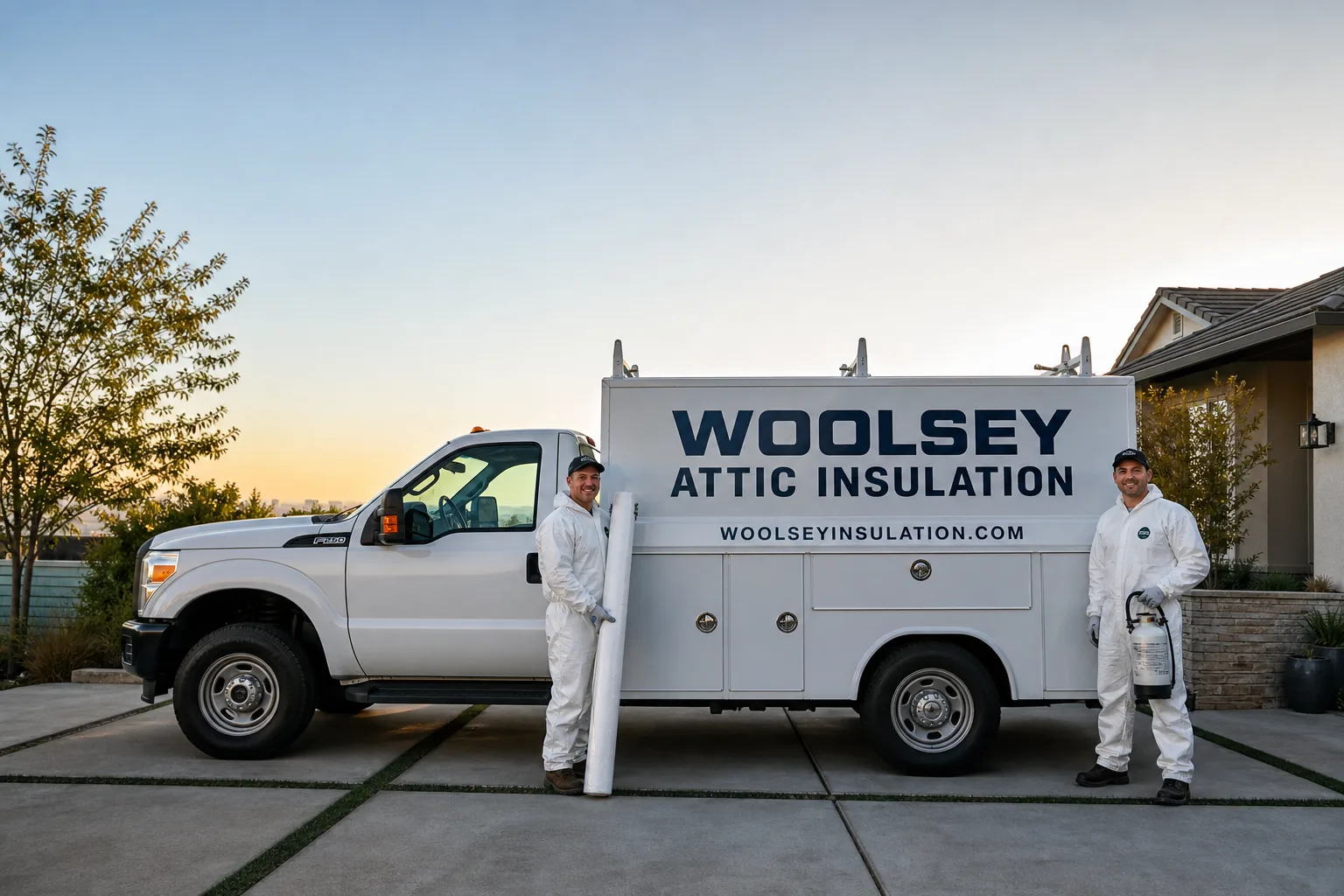
Fast, Reliable Attic Insulation Across Lucerne Valley
Attic insulation in Lucerne Valley runs between $1,800 and $6,500 for most homes, depending on attic size, existing insulation condition, and whether you’re topping up or doing a full removal and replacement. We give you the exact written number before any work starts, not after the crew shows up. Our team knows Lucerne Valley’s specific housing stock – the manufactured homes from the 70s through 90s, the custom-built desert parcels, the wind-driven belly-wrap failures – and we schedule every job with a real arrival window. Call (325) 240-5411 and a live person answers, day or night.
Why Woolsey Attic Insulation Is Lucerne Valley’s Preferred Attic Insulation Company
Lucerne Valley homeowners tend to be self-reliant. You’ve probably already diagnosed the problem before you pick up the phone. What you want is a crew that shows up ready to do the whole job in one trip, with the right material on the truck. That’s how we work. Glenn Hartley leads the Woolsey team, and the Kingswell Guarantee stands behind every job: a written price before work starts, a committed arrival window, a clean job site, and a written guarantee. If the work isn’t right within 365 days, we come back and fix it. No charge.
We’re backed by the Kingswell family of independently owned and operated insulation companies, founded in 2002. Our technicians are background-checked and uniformed – you know exactly who’s walking through your door off Highway 18 or up from Bear Valley Road. And when you call, a real person picks up. Always. No voicemail maze, no “leave a number and we’ll get back to you.”
We also stock materials from eight leading insulation brands – Owens Corning, Johns Manville, Knauf, Rockwool, CertainTeed, Icynene, Demilec, and GreenFiber – so the recommendation fits your home, not whatever happens to be on the truck. For Lucerne Valley’s manufactured homes and older custom builds, that matters more than most places.
Attic Mold Removal in Lucerne Valley
Attic mold removal in Lucerne Valley typically runs between $900 and $2,800, depending on the square footage affected and whether the mold has reached into insulation that needs pulling. The high-Mojave desert seems like an odd place for mold, but the shoulder-season swings – 40 to 50 degrees of daily temperature difference – create condensation in under-ventilated attic spaces, especially in older manufactured homes with original vents. When warm daytime air meets cold nighttime surfaces, moisture builds. Mold follows. We remove the contaminated insulation, treat the affected framing, and prep the space for fresh insulation.
What the Removal Job Involves
First we isolate the attic space and pull the contaminated insulation out by vacuum or by hand where the framing demands it. Then we treat the wood surfaces to stop the active growth. Finally we dry the space and verify ventilation is actually moving air the way it should. You don’t just want the mold gone – you want the conditions that caused it gone too.
When Lucerne Valley Homeowners Need This Done
If you’ve spotted dark staining on the underside of your roof decking, or you’re getting a musty smell that gets worse after a cold night, get it checked. Mold in an attic doesn’t stay in the attic. It moves through the house. The dry desert air doesn’t kill established attic mold – it just slows it until the next condensation cycle wakes it back up.
Attic Insulation Removal in Lucerne Valley
Attic insulation removal in Lucerne Valley costs between $1,200 and $3,400 for a full attic, with manufactured homes and smaller custom builds on the lower end and large ranch-style homes on acreage parcels on the higher end. In this climate, removal is almost always about one of three things: rodent damage, mold, or simply old fiberglass that heavy settling has turned from a thermal barrier into a thermal sieve. The UV cycling and wide temperature swings degrade 1970s through 1990s insulation far faster here than in coastal climates. What was R-19 in 1985 is often performing like R-8 today.
Full Vacuum-Out of the Attic Space
We run commercial vacuum lines up into the attic and pull everything down to the decking. That means every bit of old fiberglass, cellulose, or blown-in material is gone before the new insulation goes in. You can’t install new insulation over rodent-soiled material and call it done. It has to come out first.
Prepping for New Insulation the Same Day
The goal is one trip. Removal in the morning, new insulation in the afternoon. We book the removal and the replacement as one job, one written price, one arrival window. You don’t sit with an empty attic for a week waiting for a second appointment.
Trusted Brands We Service in Lucerne Valley
We install and service GreenFiber, Owens Corning, and Johns Manville products on Lucerne Valley jobs, and we stock common replacement materials for local customers so turnaround stays fast. On our last pre-2000 manufactured home job off Barstow Road, the homeowner had already shoveled the wind-shredded fiberglass out of the belly. Our tech rebuilt the belly wrap, re-insulated the floor system, and blew in Owens Corning attic insulation in one trip. That’s the standard. The material recommendation fits the house and the climate, not the invoice padding.
Common Attic Insulation Problems We See in Lucerne Valley Homes
- Wind-driven belly-wrap failure on pre-2000 manufactured homes. High desert winds funnel through the Lucerne Valley basin and work into skirting and belly wrap, shredding fiberglass batts until large sections of the floor system sit completely uninsulated. We find this on nearly every older mobile home job in the area.
- Settled and degraded attic insulation from extreme UV and temperature cycling. Homes built in the 1970s through 1990s often have factory or original insulation that was marginal at installation and has now baked, settled, and lost most of its R-value under 150°F attic summers and hard winter freezes.
- Radiant heat loss through under-insulated rooflines on winter nights. Lucerne Valley sits at roughly 2,900 feet elevation, so low-20s winter nights are common. When attic insulation is thin, heat pours straight through the roof – and with propane as the dominant heating fuel in this gas-line-scarce area, every lost BTU hits your wallet hard.
- Condensation-driven attic mold from harsh diurnal swings. Shoulder seasons bring 40 to 50 degree daily temperature shifts. Warm moist daytime air hits cold roof decking at night, condensation forms in under-ventilated attics, and mold takes hold.
Pricing for Attic Insulation in Lucerne Valley, CA
Here’s what Lucerne Valley homeowners can expect. A basic attic insulation top-up on a 1,200-square-foot manufactured home runs $1,200 to $2,200. Full removal and replacement on the same footprint runs $2,800 to $4,500. Larger custom homes on acreage parcels push toward $5,000 to $6,500 depending on attic square footage and access difficulty. Blown-in fiberglass or cellulose comes in lower; spray foam – a two-part liquid that expands on contact and seals gaps airtight – runs higher but delivers the dual-extreme performance Lucerne Valley’s climate demands. We write the exact number before any work starts. Free estimates. Always. Call (325) 240-5411.
We Also Serve Cities Near Lucerne Valley
Our crews work throughout the high desert and mountain communities around Lucerne Valley. That includes Attic Insulation in Lucerne Valley itself, plus Big Bear City up the hill, Apple Valley to the west, and Running Springs and Lake Arrowhead up in the San Bernardino Mountains. If you’re anywhere in the basin or the surrounding high desert, call and we’ll tell you honestly whether we can get a crew to you this week.
Our full Attic Insulation service covers every job on this page and more – same team, same written guarantee, same upfront pricing.
Serving Lucerne Valley, CA - Our Local Coverage Area
We’re based in the Lucerne Valley area and know this community well. Use the map below to see our service coverage - if you’re nearby, we can almost certainly help.
FAQs About Attic Insulation in Lucerne Valley
Because the belly wrap and skirting have almost certainly failed. High desert winds work into the skirting of pre-2000 manufactured homes, shred fiberglass batts, and leave the floor system uninsulated. We see it on nearly every older mobile home job in Lucerne Valley. The fix is rebuilding the belly wrap, re-insulating the floor cavity, and sealing the skirting against wind intrusion. Call (325) 240-5411 and we’ll give you a written price to do it right in one visit.
Yes, it has to be. Lucerne Valley’s elevation – roughly 2,900 feet – creates a dual-extreme thermal environment that low-desert neighbors don’t face as severely. Summer attics top 150°F while winter nights hit the low 20s. Insulation specs here have to handle both brutal heat gain and real cold-season heat retention simultaneously. That’s a wider performance band than Victorville or Yucca Valley demand. We spec for it accordingly.
Faster than in coastal climates, and noticeably so. The dry air accelerates settling, UV exposure breaks down the binding in older fiberglass, and 40 to 50 degree daily temperature swings in shoulder seasons mechanically stress everything from baffles to batts. Insulation installed in the 70s through 90s is typically performing at a fraction of its original R-value today.
We install Owens Corning, Johns Manville, and GreenFiber most commonly on Lucerne Valley jobs, and we can pull from five additional brands – Knauf, Rockwool, CertainTeed, Icynene, and Demilec – when a particular home needs something specific. The recommendation fits the house and the climate. Not the truck inventory.
Yes. We book removal, mold treatment, and new installation as one job with one written price. A typical full removal and replacement in Lucerne Valley runs $2,800 to $4,500 for a 1,200-square-foot manufactured home, with the mold treatment folded into that number when needed. One arrival window, one clean job site, one trip. Call (325) 240-5411 and we’ll give you the exact numbers.
Written by Glenn Hartley, Owner at Woolsey Attic Insulation, serving Lucerne Valley and the surrounding high desert communities.