
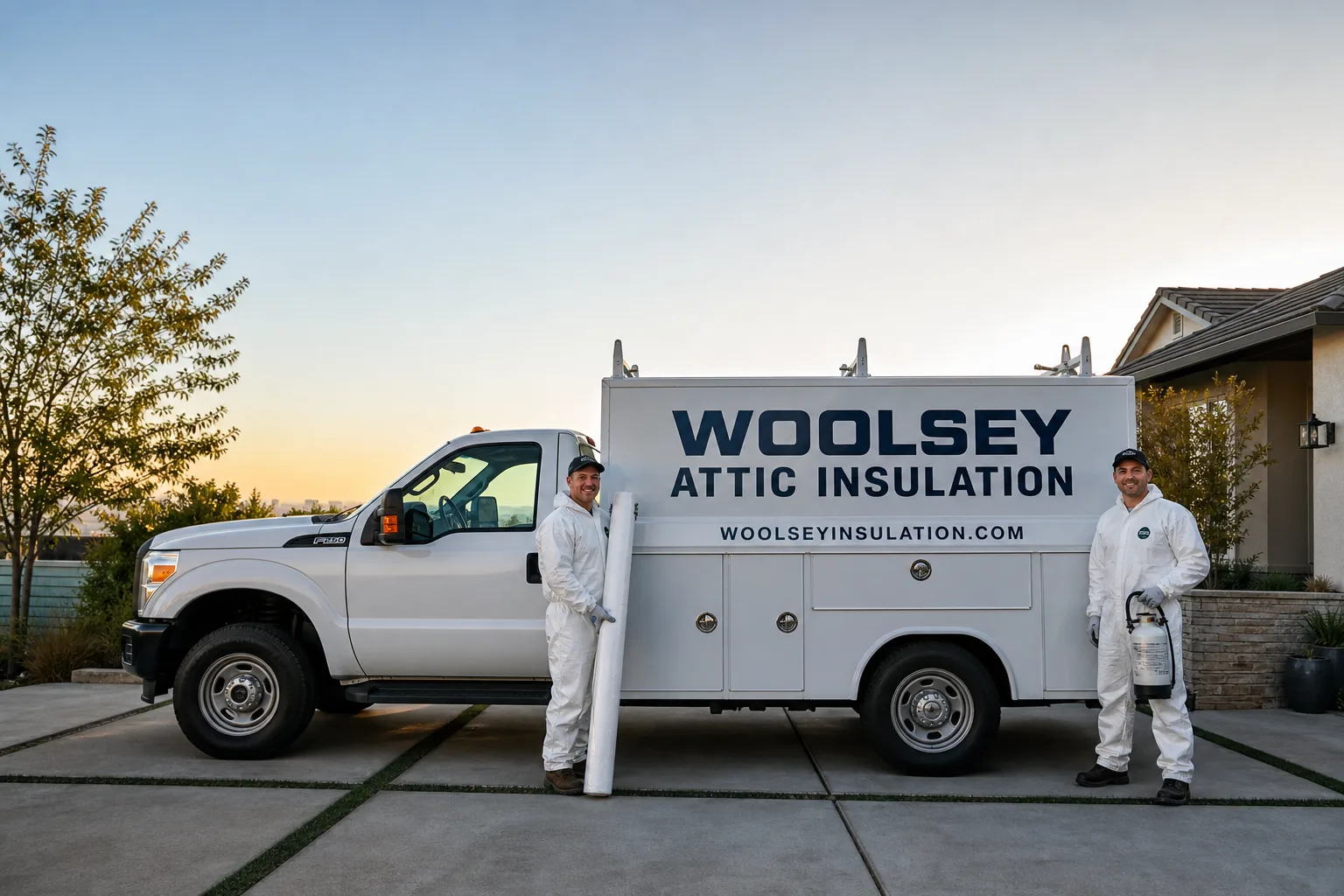
Fast, Reliable Attic Insulation Across Pleasanton
Attic insulation in Pleasanton isn’t a one-size-fits-all job, and if your home was built between 1975 and 2000, there’s a good chance the original insulation is working against you. Most Pleasanton attics in Vintage Hills, Val Vista, and the tracts off Hopyard Road still carry builder-grade R-19 to R-30 fiberglass that has compressed, settled, or was under-installed from day one. Our Attic Insulation crews work in Pleasanton every week, so we know exactly what those homes look like above the drywall. Call (325) 240-5411 for a written price before any work starts.
Why Woolsey Attic Insulation Is Pleasanton’s Preferred Attic Insulation Company
Pleasanton homeowners call us because we show up with a written price and a committed arrival window, then stand behind the work for 365 days in writing. Glenn Hartley leads our team with a simple rule: if it’s not done right, we come back and fix it at no charge. That promise matters in a city where summers push past 104°F and a bad attic job means an upstairs that won’t cool down until well after dark.
We answer the phone with a live person 24 hours a day. Not a voicemail tree. Not a call-back window. When a Pleasanton homeowner calls at 7 p.m. on a Tuesday because the upstairs hit 89°F, someone picks up and schedules a real visit. Our technicians are background-checked and uniformed, so you know exactly who’s walking through your door off Stoneridge Drive or Vineyard Avenue.
We’re independently owned and operated under the Kingswell banner, not a national chain. That means every job runs The Kingswell Way: say the price before work starts, show up in the window, leave the job site cleaner than we found it, put the guarantee in writing, and come back free if anything fails within the guarantee period.
Attic Insulation Removal in Pleasanton
Attic Insulation Removal in Pleasanton is the first step for most 1980s and 1990s tract homes where original fiberglass has compressed to half its intended depth or picked up decades of dust, rodent debris, and moisture staining. We don’t blow new material over compromised old batting and call it done. We remove the failed material first, clean the attic floor, inspect the sealed rafter bays, and prep the space for dense-pack or blown-in work. A full removal on a typical single-story Pleasanton home runs $1,900 to $3,400, depending on attic size and depth of existing material. We give you the exact number in writing before we move a single bag.
Sealed Vaulted and Cathedral Bays
The sloped ceiling cavities in Pleasanton’s California contemporary tract homes were routinely under-insulated at construction, then closed up behind drywall so nobody has seen them in decades. To remove and retrofit those bays, we cut controlled access points, extract compressed fiberglass, dense-pack with blown insulation, and reseal the ceiling plane. It’s methodical work, and it’s one of the most common recurring jobs our crews see across the east and south tracts.
Contamination and Moisture
Old attic insulation in Pleasanton homes often picks up dust from the Tri-Valley heat drawing air through every recessed can and top plate. If the material has rodent activity or water damage from a past roof issue, removal is the only honest fix. We bag and haul everything out, then air-seal the penetrations before new material goes in.
Blown In Insulation in Pleasanton
Blown In Insulation in Pleasanton is the workhorse retrofit for the city’s 1975 – 2000 housing stock. Loose-fill fiberglass or cellulose gets blown into the attic floor to a consistent depth, filling gaps, settling into odd-shaped corners, and restoring the R-value that original batts lost decades ago. A typical blow-in over an existing flat attic in Pleasanton runs $1,500 to $2,900 after old material is removed, with dense-pack of sealed vaulted bays adding depending on bay count and access. Every quote is written and delivered before work begins.
Dense-Pack for Sloped Ceilings
Pleasanton’s vaulted and cathedral ceilings present a specific problem: the rafter bays are sealed behind drywall, and the only practical way to insulate them is dense-pack. We blow material into those cavities under pressure so it fills the entire bay without leaving voids at the ridge. Done right, it transforms the temperature stability of a south-facing great room that used to bake every summer afternoon.
Trusted Material, Measured Depth
We work with GreenFiber cellulose and Owens Corning loose-fill fiberglass, depending on the attic and the budget. We mark depth gauges so every square foot of the attic floor hits its target R-value, usually R-38 in Pleasanton’s inland heat profile. No guessing. No thin spots.
Trusted Brands We Service in Pleasanton
Woolsey installs insulation from eight leading manufacturers, and for Pleasanton attics we lean on Owens Corning, Johns Manville, and GreenFiber most often. That choice isn’t about whatever happens to be on the truck. It’s about matching the material to the house: GreenFiber dense-pack for sealed cathedral bays, Owens Corning loose-fill for open flat attics, Johns Manville batts for rim joists and bulkheads. We carry the material Pleasanton jobs actually need, so there’s no week-long wait for a restock.
Common Attic Insulation Problems We See in Pleasanton Homes
- Compressed fiberglass in unseen vaulted bays. Builders in the 1980s and 90s stuffed sloped rafter bays with thin batts, then drywalled over them. Thirty years of settling leaves cavities with half the intended R-value, and you can’t see any of it from the attic hatch.
- Attic air leakage at recessed cans and top plates. Pleasanton’s summer heat finds every penetration in the ceiling plane. Before insulation can do its job, those gaps have to be sealed, or 100°F air just loads the house from above.
- Radiant heat gain through south- and west-facing roof decks. In vintage tracts like Vintage Hills, unshaded roof decks absorb full afternoon sun and radiate heat into the living space below. More R-value alone won’t fix it; the attic needs ventilation prep and sometimes a radiant barrier.
- Builder-grade R-19 that was never enough for Tri-Valley heat. The same R-19 that temps fine in Fremont or Hayward is fighting a 20°F hotter temperature gradient in Pleasanton. A compressed or settled R-19 up there means the HVAC runs all day and the upstairs still doesn’t hold temperature.
Pricing for Attic Insulation in Pleasanton, CA
Most attic insulation jobs in Pleasanton fall between $1,500 and $3,400, depending on the work. A straightforward blown-in top-up over a flat attic runs $1,500 to $2,200. Full removal plus new blown-in runs $2,200 to $3,400. Dense-packing sealed vaulted or cathedral bays runs higher than a flat attic of the same square footage because the access work is slower and the material has to be installed under pressure. Every job gets a written price before we touch anything, and that price includes the 365-day guarantee in writing.
We Also Serve Cities Near Pleasanton
Our crews work across the Tri-Valley and East Bay, so if you’re in Hayward, Dublin, Livermore, or San Ramon, we can help. See our full Attic Insulation in Pleasanton coverage for service areas and response details. If you live in one of those neighboring cities, call the same number and we’ll schedule a visit.
Serving Pleasanton, CA - Our Local Coverage Area
We’re based in the Pleasanton area and know this community well. Use the map below to see our service coverage - if you’re nearby, we can almost certainly help.
FAQs About Attic Insulation in Pleasanton
Pleasanton sits in the Livermore Valley heat pocket, which blocks the marine layer and pushes summer highs 15 to 20 degrees above what Fremont sees on the same afternoon. Your insulation is fighting a much larger temperature differential, so the same builder-grade R-19 that performs acceptably near the Bay is functionally inadequate in Pleasanton. Years of that heat load compress and degrade the material faster. Call (325) 240-5411 and we’ll assess what’s actually in your attic.
Dense-pack is blown insulation installed under pressure into sealed cavities, like the sloped rafter bays behind vaulted and cathedral ceilings. Pleasanton’s 1980s and 90s tract homes were routinely built with those bays under-insulated and then sealed behind drywall, so the only practical retrofit is to drill access points and dense-pack the full cavity. Without that work, those rooms will keep leaking heat all summer no matter how much insulation sits on the flat attic floor.
Yes, and in most Pleasanton homes built before 2000, removal is the right first step. Old fiberglass that’s compressed, dusty, or contaminated stops performing, and blowing new material over it buries the problem instead of fixing it. We remove the old material, clean the attic, air-seal the ceiling plane, and then install new insulation to the correct depth. A typical removal plus blow-in in Pleasanton runs $2,200 to $3,400.
Completely different, and the difference is access. A pre-WWII home near downtown Old Pleasanton typically has an open attic over flat ceilings, which is straightforward for removal and blow-in. A 1980s Vintage Hills tract house has sealed vaulted rafter bays that require dense-pack work and often more extensive air-sealing. We assess both on the first visit and write the scope accordingly.
We install material from Owens Corning, Johns Manville, Knauf, Rockwool, and GreenFiber, among others. For Pleasanton attics, we most often use GreenFiber blown cellulose for dense-pack sealed bays and Owens Corning loose-fill fiberglass for open flat attic floors. The written quote tells you exactly which material goes where and why.
Written by Glenn Hartley, Owner at Woolsey Attic Insulation, serving Pleasanton and the Tri-Valley.