
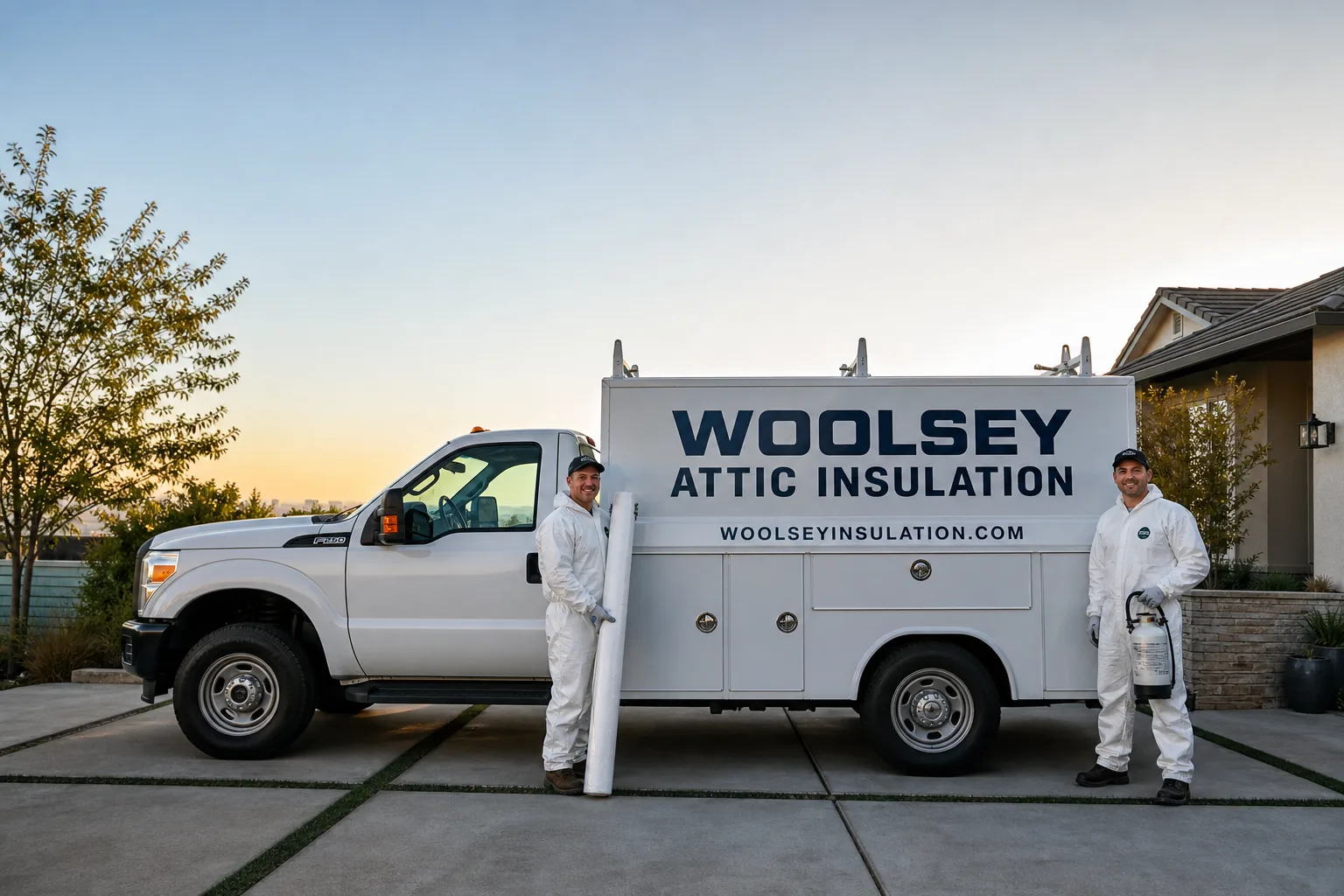
Fast, Reliable Attic Insulation Across West Hollywood
Most attic insulation jobs in West Hollywood run between $1,800 and $4,200, depending on square footage and the condition of what’s already up there. We give you the exact written number before any work starts, not after we open the hatch. Woolsey Attic Insulation has been handling Attic Insulation in occupied rent-stabilized buildings, prewar courtyard apartments, and single-family bungalows across West Hollywood for years. If you’re dealing with a hot upstairs unit on Fountain Avenue or a drafty top floor off Santa Monica Boulevard, call (325) 240-5411 and a real person answers, day or night.
Why Woolsey Attic Insulation Is West Hollywood’s Preferred Attic Insulation Company
West Hollywood is a different animal from the rest of LA. Roughly 80% of the housing stock is renter-occupied, and nearly all of it falls under the city’s Rent Stabilization Ordinance covering pre-1979 buildings. That changes how insulation gets installed. You’re not walking into an empty house in Beverly Hills. You’re coordinating tenant access, working around RSO rules, and dealing with lath-and-plaster ceilings that crack if you look at them wrong. We know this because we do it every week.
Every Woolsey job in West Hollywood starts the same way: a written price before anyone touches the attic. Glenn Hartley, who leads our crews, insists on it. Background-checked, uniformed technicians show up in a committed arrival window, do the work, clean up, and hand you a written guarantee. That guarantee is the 365-Day Done Right Promise. If the work isn’t right within a year, we come back and fix it at no charge. In writing, every time.
Attic Ventilation in West Hollywood
Attic ventilation in West Hollywood isn’t optional, especially when summer highs push into the mid-90s and the dense streetscape holds heat well after sunset. Ventilation is the system of intake and exhaust vents that moves hot air out of the attic so it doesn’t bake the ceiling below. Homes here, particularly 1950s – 1970s stucco courtyard complexes with shallow attic crawlspaces, often came with minimal or blocked venting. Most attic ventilation upgrades in West Hollywood run $600 to $1,800 depending on roof configuration and access.
Balanced Intake and Exhaust
In Spanish Colonial Revival and Mediterranean courtyard buildings, you typically have eave intakes and ridge or box exhausts. The problem we see on Fountain and Harper and Larrabee is decades of paint sealing intake vents shut. Opening those back up and verifying the exhaust path is the first move before adding insulation. If the heat can’t get out, the insulation just holds it in.
Ventilation Before Insulation
We will not blow insulation into a West Hollywood attic that has no way to breathe. In older lath-and-plaster buildings, trapped moisture from warming and cooling cycles migrates into the ceiling and loosens the plaster keys over time. Fixing ventilation first is standard practice on every Woolsey job. It’s part of the written scope, not an add-on surprise.
Radiant Barrier in West Hollywood
Radiant barrier in West Hollywood is one of the highest-return upgrades you can make on a flat or low-slope roof building, which describes a lot of the multi-unit stock here. A radiant barrier is a reflective foil material installed under the roof deck that reflects heat back out rather than letting it radiate down into the attic. Because West Hollywood sits several miles inland and regularly hits low-to-mid 90s in summer, hotter than Santa Monica or Culver City, radiant barrier work has a real cooling-load payoff. Expect to pay between $1,200 and $3,500 for a typical West Hollywood attic application.
Stapled Foil on the Roof Deck
In a standard perpendicular rafter attic, we staple the foil product across the underside of the roof deck. The key in older West Hollywood attics is that the foil needs at least a small air gap against the deck to work, and the attic must be adequately ventilated below it. This matters on low-slope Mediterranean roofs, where the cavity can be tight. We account for that in the written quote.
Radiant Barrier and Rent-Stabilized Units
Landlords of RSO buildings in West Hollywood lean on radiant barrier because it involves zero interior disruption. Tenants stay in place. No lath-and-plaster touch, no relocation, no dust in the unit. We installed this on a 1940s courtyard off Fountain where upstairs units were hitting 95°F by mid-afternoon. The barrier plus blown-in insulation brought rooms down several degrees the first hot week.
Trusted Brands We Service in West Hollywood
We’re not married to one manufacturer. Woolsey works with Owens Corning, Johns Manville, Knauf, Rockwool, CertainTeed, Icynene, Demilec, and GreenFiber. The material recommendation fits the building, not whatever happens to be on the truck. For a 1920s lath-and-plaster courtyard on Havenhurst, that might mean Knauf batt where access is decent. For a 1950s stucco complex off Crescent Heights with a tight attic, it could be GreenFiber blown-in cellulose. We stock what makes sense for West Hollywood’s older housing stock, so turnaround on repairs and top-ups is fast, not wait-two-weeks-for-a-truck fast.
Common Attic Insulation Problems We See in West Hollywood Homes
- Original lath-and-plaster ceilings with zero cavity insulation. Pre-1979 courtyard buildings were built with nothing in the walls. Blown-in settles unevenly behind plaster keys if the crew doesn’t know how to work around them, leaving gaps and voids.
- Knob-and-tube wiring in the attic bays. The 1920s – 1940s Spanish Colonial Revivals on streets like Fountain and Kings Road often still have live K&T. Layering insulation over it before it’s evaluated is a fire and code hazard that stalls the permit through West Hollywood’s own building department.
- Shallow attic crawlspaces from the 1950s – 1970s. Many postwar stucco courtyard complexes were built with minimal roof pitch. Access is tight, ventilation is poor, and standard batt installation doesn’t fit. Blown-in or injection foam is the practical route.
- Occupied rent-stabilized units with tenant access restrictions. Most insulation jobs in West Hollywood happen inside someone’s home, not an empty house. Scheduling around tenant rights and RSO protections separates crews who know WeHo from those who don’t.
Pricing for Attic Insulation in West Hollywood, CA
Here’s what you can expect in West Hollywood specifically. Blown-in attic insulation runs $1,800 to $3,200 for a typical one-to-four-unit building floor. Attic batt insulation runs $1,500 to $2,800. A top-up of existing attic insulation runs $800 to $1,800. Full attic insulation replacement, including removal of old or damaged material, runs $2,500 to $5,000. Attic baffles and ventilation prep run $400 to $1,200. The age of the building, access size, presence of knob-and-tube wiring, and whether tenants need to be accommodated all affect the final number. The number is always in writing before we start. Call (325) 240-5411 for a free estimate.
We Also Serve Cities Near West Hollywood
If you’re just outside city limits, we cover Beverly Hills, Culver City, Glendale, and Burbank too. The permitting and code environment changes block by block in this part of LA, and our crews know the difference between what West Hollywood’s building department wants and what LA City requires. Wherever you are, same written-price promise, same 365-day guarantee.
Serving West Hollywood, CA - Our Local Coverage Area
We’re based in the West Hollywood area and know this community well. Use the map below to see our service coverage - if you’re nearby, we can almost certainly help.
FAQs About Attic Insulation in West Hollywood
Yes. Most attic insulation work in West Hollywood happens in occupied rent-stabilized buildings without any tenant relocation. The typical approach is blown-in cellulose or injection foam through accessible attic hatches or exterior wall ports, which means no interior demolition and no one has to move out even for a few days. Landlords should coordinate tenant notice and access, and the city’s RSO rules require proper documentation for work in occupied units. Call (325) 240-5411 and we’ll walk you through how the process works in your building type.
Yes. West Hollywood runs its own building department and issues its own permits, separate from Los Angeles County or the City of LA. The city also layers local green-building requirements on top of California Title 24, so the energy compliance forms and inspection path look different than they do two blocks away in Beverly Hills. Woolsey pulls West Hollywood permits regularly and knows what the city’s plan checkers look for on insulation and ventilation jobs. Call us for a straight answer on whether your specific scope needs a permit.
Yes, significantly. Lath-and-plaster ceilings are heavier, more fragile, and behave differently under insulation than modern drywall. The concern is moisture, not just heat. Plaster needs to breathe in a specific way, and blowing insulation directly against it without proper ventilation can trap moisture and loosen plaster keys over time. We run insulation in these attics only after confirming the vent stack works and evaluating the plaster condition from above. Call (325) 240-5411 and we’ll tell you honestly whether the ceiling can take it as-is or needs prep first.
No, not directly over it. Knob-and-tube wiring was never designed to be buried in insulation, and adding blown-in heat-catching material over live K&T is a fire risk that will stop your West Hollywood permit in its tracks. The wiring needs to be evaluated by a licensed electrician first, and in many cases decommissioned or rerouted in the bays receiving insulation. We do not claim to handle electrical work. We flag it, you get the proper tradesperson involved, and we coordinate the insulation around the corrected scope. Call (325) 240-5411 if you suspect K&T in your attic.
Because West Hollywood sits several miles inland and regularly hits low-to-mid 90s in summer, several degrees hotter than the immediate coast. The city’s dense, hard-surfaced urban fabric also holds heat longer into the evening, which extends air conditioning run times. In Santa Monica, the marine layer does some of the cooling work for free. In West Hollywood, the attic is routinely heat-soaked, so insulation and ventilation improvements reduce cooling load more directly. That’s the practical payback, and it’s why we size recommendations differently for a 1940s courtyard on Harper Avenue than a coastal condo on Ocean Avenue.
Written by Glenn Hartley, Owner at Woolsey Attic Insulation, serving West Hollywood with written-price attic insulation and the 365-Day Done Right Promise.