
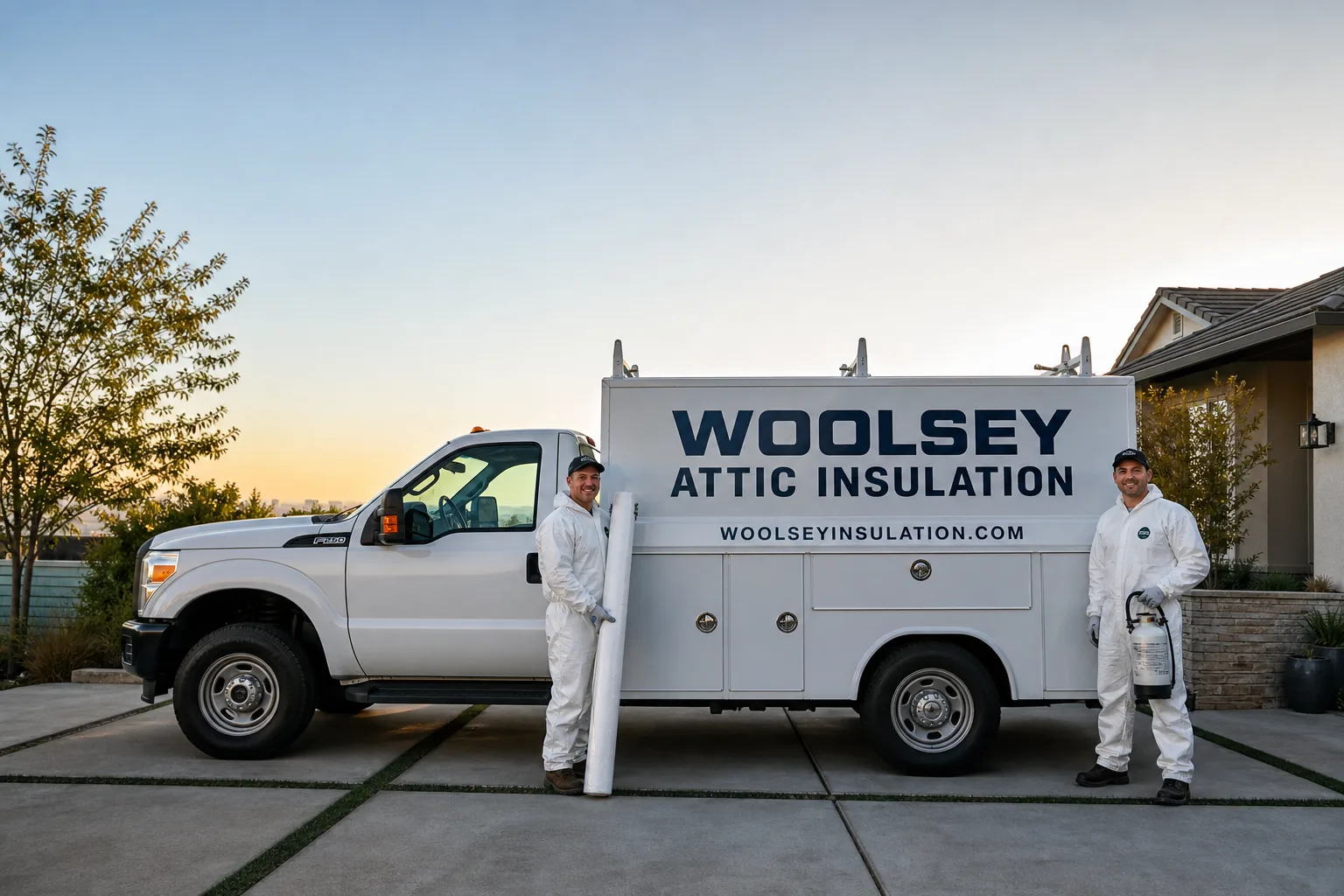
Fast, Reliable Spray Foam Insulation Across East Foothills
Spray foam insulation in East Foothills typically costs $3,800 to $9,500 for a full attic application, with wall retrofits running $2,200 to $6,000 depending on cavity access and square footage. Most jobs are scheduled within 5 to 7 business days. If you live on the terraced slopes off Mount Hamilton Road or up toward the foothill ridges, you already know your home fights temperature swings that houses down on the valley floor never feel. That’s the East Foothills reality: sharper night drops, afternoon wind gusts off the Diablo Range, and post-war framing that was never built for California’s current energy demands. Woolsey Attic Insulation has been insulating these hillside homes since 2002, and we understand what these structures actually need. Call (325) 240-5411 for a written estimate before any work starts.
Key Takeaways
- East Foothills split-levels from the 1950s through 1970s were built with little to no attic insulation and R-7 or worse wall assemblies.
- Spray foam here must be applied in staggered lifts because the stepped attic cavities on terraced lots create irregular bays that flat-lot crews rarely encounter.
- Closed-cell spray foam handles the 150°F attic spikes on south-facing rooflines far better than fiberglass batts, which settle and shift on sloped framing.
- Woolsey gives you a written price before work begins – no door-step changes, ever – and that price covers the exact scope spelled out in advance.
- Every job includes the 365-Day Done Right Promise: if it isn’t right within a year, we come back and fix it at no charge.
Why Woolsey Attic Insulation Is East Foothills’s Preferred Spray Foam Insulation Company
East Foothills homeowners call us because they’ve been burned before. A contractor who never showed. A quote that changed at the door. A fiberglass job that left cold spots in the bonus room by the first Diablo wind. We hear it on every third call we take up here. Our answer is the Kingswell Guarantee, and it’s boringly simple: a written price before any work starts, a committed arrival window, a clean job site, a written guarantee on the labor, and a free return visit if anything fails within 365 days. Glenn Hartley, who leads our crew, has spent more than two decades in attics across the South Bay foothills. He knows that the stepped framing in a 1964 split-level off Mount Hamilton Road behaves differently than the flat trusses in Alum Rock. That’s not marketing talk. It’s why our foam jobs hold up on these exposed slopes.
Every technician who walks through your door is background-checked and uniformed. You’ll know exactly who is in your home. And if you call us at 3 a.m. because a raccoon tore through an exterior wall cavity, a real person answers the phone. Not a voicemail maze. Not an answering service that promises a callback. A person. That’s been true every day since 2002, and it’s true now.
Spray Foam Attic Insulation in East Foothills
Spray Foam Attic Insulation in East Foothills means sealing the attic floor, top plates, and any knee walls against the thermal stack effect that pulls conditioned air up through the stepped framing of these hillside split-levels and out through every unsealed penetration in the roofline. Most East Foothills homes from the 1950s through 1970s were built before California’s Title 24 energy codes. Many still have the original fiberglass batts, which on sloped framing settle into thin, ineffective layers. A full attic spray foam job in East Foothills generally runs $3,800 to $9,500 depending on attic size, access difficulty, and whether we’re pulling old material first. We give you the exact written number before any work begins.
Sealing top plates and stepped attic transitions
On hillside split-levels, the stack effect is relentless. Warm air rises through the structure year-round, escaping through unsealed top-plate penetrations, plumbing chases, and the irregular transitions where one attic step meets another. In East Foothills, we consistently find that sealing these vertical chases delivers as much comfort improvement as adding several inches of bulk insulation. Closed-cell foam locks those gaps airtight.
Handling the 150°F attic spike
South- and west-facing rooflines in East Foothills regularly push attic temperatures well past 150°F in summer, then drop 40 degrees or more at night as the Diablo Range funnels cool air across the envelope. That thermal cycling is hard on insulation. Fiberglass batts break down and shift. Properly cured closed-cell spray foam holds its R-value without shrinking, which is exactly what these exposed hillside attics need.
Spray Foam Wall Insulation in East Foothills
Spray Foam Wall Insulation in East Foothills targets the R-7 or worse wall assemblies common to the post-war hillside builds that dominate this area. Most of these homes have 2×4 framing with either no wall insulation or a thin layer of original fiberglass that has settled, shifted, or been chewed through by rodents over five decades. Retrofitting walls with spray foam in East Foothills typically runs $2,200 to $6,000, with the range driven by cavity access, existing insulation removal, and how much of the wall plane we can reach without opening drywall. We use injection-style foam where minimally invasive access works and open-cavity application when walls are already exposed during renovation. Either way, you get a written price before any work starts.
Wind-driven infiltration from the Diablo Range
The east-facing slopes of East Foothills catch afternoon winds off the Diablo Range far more aggressively than flatland zip codes down in the valley. Those winds push cold air through every gap, crack, and unsealed rim joist. Spray foam applied to the wall cavities and rim joists seals the air barrier, which is the bigger win here, not just the added R-value. The R-value matters, but stopping the wind is what actually changes how the house feels.
Stopping the stack effect in balloon-framed walls
Many East Foothills homes built between 1950 and 1975 have balloon-framed or partially balloon-framed wall cavities that run continuously from crawl space to attic with no fire blocking and no air seal. That’s a vertical highway for air movement. Spray foam, applied in lifts inside these chases, cuts the stack effect off at the source. This is one of the highest-impact fixes we do on these hillside structures.
Trusted Brands We Service in East Foothills
Woolsey works with eight leading insulation brands – Owens Corning, Johns Manville, Knauf, Rockwool, CertainTeed, Icynene, Demilec, and GreenFiber – so the material we recommend for your East Foothills home matches what your house actually needs, not what happens to be sitting on our truck. For the stepped attics and wind-battered wall cavities common up here, we lean on Icynene and Demilec closed-cell foams for their adhesion and air-sealing properties on legacy wood. For projects where open-cell is the right call, Owens Corning and CertainTeed give us reliable options. We keep a range of these materials accessible for East Foothills jobs, which means we’re not forcing square pegs into round holes. Your home gets the right foam, period.
Common Spray Foam Insulation Problems We See in East Foothills Homes
- Settled fiberglass in vaulted, stepped attic sections. On sloped framing, original batts slip and compact, leaving uninsulated gaps that turn into heat loss channels. Spray foam must be applied in lifts to fill these irregular bays completely.
- Delamination on dusty legacy wood. Crawl spaces and attic cavities in 60-year-old hillside homes accumulate decades of dust that prevents foam from bonding properly. Prep and proper adhesion technique separate a long-term seal from a foam that peels off in sheets.
- Unsealed top plates and balloon-framed chases. The stack effect pulls air up through these vertical paths year-round. Foam applied only to attic floors doesn’t touch the real air movement in these split-levels.
- Shrinkage from application in hot attics. Some crews spray when attic temperatures are 130°F or higher, outside the manufacturer’s window, and the foam cures poorly, shrinking and pulling away from framing. We schedule application in morning temperature windows for this exact reason.
Pricing for Spray Foam Insulation in East Foothills, CA
Open-cell spray foam in East Foothills attics generally runs $2,800 to $6,500. Closed-cell, which gives you a higher R-value per inch and a vapor barrier in one step, runs $3,800 to $9,500 for a full attic. Wall retrofits land between $2,200 and $6,000. What moves the number? Stepped access on terraced lots, existing insulation removal, cavity depth, and how much of the rim joist area needs sealing. The Kingswell Guarantee means the written price you receive before we start is the price you pay. No door-step adjustments. Call (325) 240-5411 for a free estimate. We’ll walk the attic with you, show you exactly what’s there, and hand you a number in writing.
We Also Serve Cities Near East Foothills
Our Spray Foam Insulation team covers East Foothills and the surrounding South Bay, including Los Angeles, San Diego, San Jose, and San Francisco. If you’re a homeowner in any of these nearby cities, our Spray Foam Insulation in East Foothills crew can coordinate scheduling and material logistics through our Bay Area dispatch office. Same written pricing, same 365-day guarantee, same live person on the phone.
Serving East Foothills, CA - Our Local Coverage Area
We’re based in the East Foothills area and know this community well. Use the map below to see our service coverage - if you’re nearby, we can almost certainly help.
FAQs About Spray Foam Insulation in East Foothills
Because the split-level design creates stepped attic cavities and balloon-framed wall chases that fiberglass batts simply cannot seal. East Foothills split-levels built from 1950 to 1975 lose most of their conditioned air through unsealed top plates and vertical framing paths, not through the attic floor itself. Spray foam addresses the air barrier, which is the actual problem on these hillside homes. Call (325) 240-5411 and we’ll show you exactly where your house is leaking.
Yes, properly cured closed-cell spray foam holds its R-value through temperature swings that would degrade or shift fiberglass batts. The key is application: foam must be sprayed within the manufacturer’s temperature window and allowed to cure fully. We schedule morning application windows in East Foothills specifically so the foam cures before south-facing attics hit their hottest afternoon temperatures. It’s a detail that prevents shrinkage and void formation later.
No, we remove the settled batts first. Original fiberglass in East Foothills homes has typically compressed to R-4 or worse in sloped sections, and spraying foam over compromised material creates poor adhesion and hidden voids. We pull the old material out, prep the cavities, and apply foam in lifts that fill the irregular joist bays completely. You’ll see the difference in the same rooms that used to feel drafty.
Spray foam is an air barrier, not just an insulator. The afternoon winds off the Diablo Range push air through every unsealed rim joist, wall cavity, and top plate in your home. Closed-cell foam locks those gaps tight, stopping the air movement that makes rooms feel cold even when your thermostat says 72. Fiberglass batts filter air; they don’t stop it. That distinction matters more on these exposed slopes than anywhere else in the South Bay.
Yes, and the reason is the air sealing as much as the added R-value. R-7 walls are common in East Foothills’ 1950s through 1970s construction, but the bigger loss is infiltration through unsealed cavities and rim joists. Spray foam wall insulation in these homes typically runs $2,200 to $6,000, and the comfort difference – especially in rooms facing east toward the Diablo Range – is immediate. Call (325) 240-5411 for a free, written estimate.
Call Woolsey Attic Insulation for Spray Foam in East Foothills
Your East Foothills home was built for a different climate than the one it now endures. The stepped attics, the wind-driven infiltration, the 150°F summer roof decks – all of it demands insulation that seals air, not just slows it. Woolsey Attic Insulation will give you a written price before any work starts, show up in a committed window, leave the job site cleaner than we found it, and put the 365-Day Done Right Promise in writing on every single job. Call (325) 240-5411 now. A real person answers, 24 hours a day, 7 days a week. No voicemail. No callback window. Just a straight answer and a free estimate.
Written by Glenn Hartley, Owner at Woolsey Attic Insulation, serving East Foothills since 2002.