
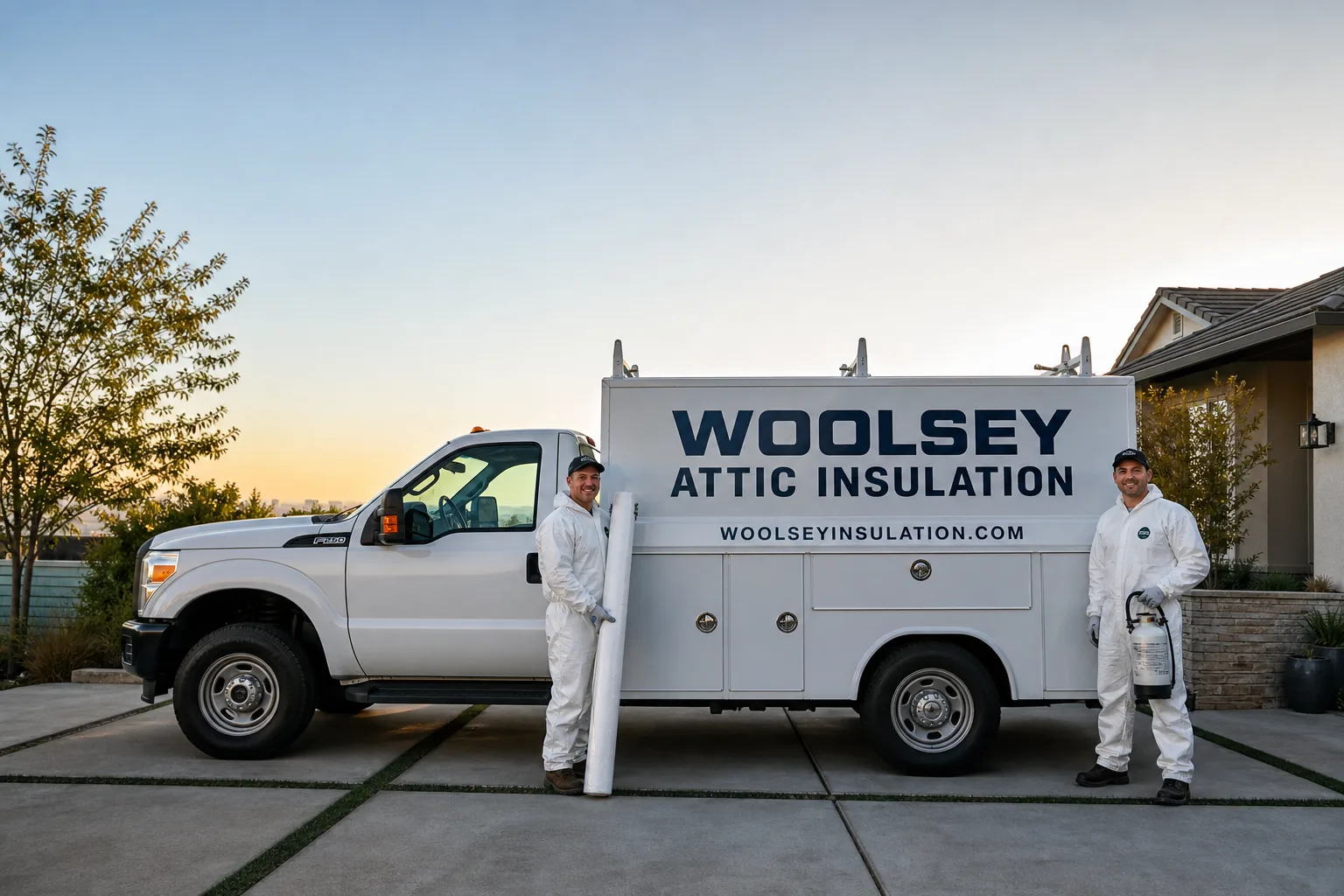
Fast, Reliable Spray Foam Insulation Across Good Hope
Spray foam insulation in Good Hope costs $1.75 to $4.25 per board foot for open-cell and $2.50 to $6.50 per board foot for closed-cell, with most whole-home retrofits landing between $4,800 and $14,200 depending on square footage and cavity access. We’ll give you a written price before any work starts, no door-step surprises. This matters here more than most places: Good Hope sits at roughly 1,500 feet in the San Jacinto Valley, where summer highs routinely top 105°F and winter nights dip near freezing, and a large share of the housing stock is older manufactured homes with sagging belly boards and thin wall cavities. We answer calls around the clock at (325) 240-5411, and we schedule Good Hope jobs every week.
Our crews know the difference between a stick-built rancher off Highway 74 and a 1970s mobile home in a Good Hope park. That matters when the insulation job is in the floor system, not the attic. Spray Foam Insulation is our entire trade at Woolsey Attic Insulation, and for Good Hope specifically, the work skews toward under-belly encapsulation and closed-cell retrofit rather than standard attic batts. Call us for a free estimate and Glenn Hartley, our lead, will make sure you get a straight answer about what your home actually needs.
Why Woolsey Attic Insulation Is Good Hope’s Preferred Spray Foam Insulation Company
We’re not a franchise operation. Woolsey Attic Insulation is part of the Kingswell family of independently owned and operated insulation companies, founded in 2002, and our people are background-checked and uniformed on every job. The homeowner who calls us from a Good Hope mobile home park gets the same straight talk as the one calling from a rural property near Gilman Springs Road.
Our reputation in Good Hope is built on a simple pattern: a live person answers the phone 24/7, we show up in the window we commit to, and the written price you were quoted is the price you pay. Then, after the job is done, the Kingswell Guarantee stays in effect for 365 days. If something isn’t right, we come back and fix it at no charge. That’s the Spray Foam Insulation in Good Hope standard we hold ourselves to, and it’s why local homeowners call us back for the next job and tell their neighbors.
Good Hope is a small community, so a company works here on its reputation. We don’t push material we’re overstocked on. We work with eight leading insulation brands and make the recommendation fit the home, not whatever happens to be on the truck.
Garage Spray Foam Insulation in Good Hope
Garage spray foam insulation in Good Hope is one of the most practical upgrades a homeowner can make, especially on older manufactured homes where the garage is an attached carport conversion or a standalone metal structure. In Good Hope, a detached garage in July becomes an oven, with interior temperatures climbing well past the outside air temperature because the sun beats on thin metal or uninsulated wood framing all afternoon. Open-cell spray foam applied to the ceiling and wall cavities can drop that interior temperature by 20 degrees or more, which protects stored belongings and keeps the rooms adjacent to the garage cooler. A typical two-car garage in Good Hope runs $2,200 to $4,800 for a full ceiling and wall application, and we give you the exact written number before any work begins.
Why Good Hope Garages Need More Than Batts
Fiberglass batts sag. In a Good Hope garage that hits 105°F in the summer, that sagging happens faster than you’d expect, because the adhesive and friction that hold batts in place fail when the cavity gets hot. Spray foam adheres to the studs and stays put. For garages that double as workshops or band practice rooms, that insulation staying in place through a San Jacinto Valley summer is the difference between a usable space and a storage shed.
Ceiling vs. Wall Application in Good Hope
Most of the heat enters through the garage ceiling, not the walls, because roofs in the valley take direct sun from about 9 a.m. to 7 p.m. in July. We often recommend closed-cell on the ceiling for its higher R-value per inch and open-cell on the walls. But every Good Hope garage is different, so we inspect before we quote.
Closed Cell Spray Foam Insulation in Good Hope
Closed cell spray foam insulation in Good Hope is the right call for under-belly encapsulation and any application where moisture, tight clearances, or dual-season thermal performance are in play. The material cures into a rigid foam with an R-value of about 6.5 to 7 per inch, and it acts as an air barrier, vapor retarder, and structural stiffener all at once. For a Good Hope manufactured home with a sagging or torn belly board, closed-cell is the standard fix: it seals the floor cavity against winter cold and summer ground heat, and it won’t fall out the way batts do. Expect to pay $2,900 to $7,800 for a full under-belly encapsulation on a typical double-wide, depending on access and how much belly board needs replacement. We give the written price before any work starts, and the Kingswell Guarantee covers the job for 365 days in writing.
Belly Encapsulation for Good Hope Manufactured Homes
This is where closed-cell earns its price. In a manufactured home built before California’s Title 24 energy codes, the floor cavity is often wide open to the outside air through sagging belly board, patched tears, or gaps around plumbing penetrations. Closed-cell spray foam expands to fill those irregular cavities, then hardens into a continuous thermal break. A Good Hope home with this treatment holds heat in January and stays noticeably cooler in July.
When Thin Walls Call for Closed-Cell
Older mobile homes in Good Hope often have 2×3 or 2×4 wall cavities that simply can’t hold enough fiberglass to make a real difference. Closed-cell foam at 3.5 inches gives you R-24 to R-25 in a 2×3 wall, which changes the whole comfort equation. We use Icynene, Demilec, and other materials that can be applied in lifts thin enough to avoid warping panels, even on a 105°F day.
Trusted Brands We Service in Good Hope
We install and service spray foam material from Owens Corning, Johns Manville, Icynene, Demilec, and Knauf, among others. That’s not a sales pitch, it’s a practical point: different Good Hope homes need different foam chemistry. A damp under-belly cavity calls for a closed-cell product that tolerates moisture; a garage ceiling where sound control matters might get open-cell. Because we’re not tied to one manufacturer, the recommendation comes from your home’s actual conditions. We carry the equipment and supplies we need to service Good Hope jobs promptly, and when a specific product is called for, we order it and it’s on the truck before your install date. You’ll never hear “well, we have this other foam instead” from us.
Common Spray Foam Insulation Problems We See in Good Hope Homes
- Sagging and torn belly boards under manufactured homes. In Good Hope, we regularly find belly board that has pulled away from floor joists, rotted along edges, or been patched with mismatched material. The floor cavity then becomes a highway for winter cold and summer heat.
- Minimal or absent original wall insulation in pre-Title 24 mobile homes. If your Good Hope home was built before the early 1980s, the wall cavities may have R-3 fiberglass or nothing at all. Spray foam fills those narrow 2×3 cavities in a way no batt can.
- Moisture trapped against floor systems by improper patches. A poorly sealed belly patch traps condensation against the subfloor, which causes spray foam adhesion failure and, over time, subfloor rot. We see this during the valley’s winter freeze-thaw cycles, and it’s why we inspect before we spray.
- Detached garages and workshops that become unusably hot. Good Hope summers are brutal on uninsulated garages. Thin metal or wood walls plus a dark roof equals interior temperatures that warp stored items and make the space off-limits from June through September.
Pricing for Spray Foam Insulation in Good Hope, CA
Here’s what Good Hope homeowners can expect to pay. Garage ceiling and wall spray foam runs $2,200 to $4,800 for a typical two-car garage. Under-belly encapsulation with closed-cell runs $2,900 to $7,800 for a double-wide manufactured home, including belly board replacement where needed. Whole-home retrofits on older Good Hope mobile homes typically land between $4,800 and $14,200, depending on square footage and whether we’re doing walls, floor cavities, or both. The variables are square footage, cavity depth, and how much prep work the existing insulation or belly board requires. We calculate that before we give you a price, so the number on the written quote is the number you pay. Call (325) 240-5411 for a free estimate, and we’ll come out to Good Hope, inspect, and put the numbers in writing.
We Also Serve Cities Near Good Hope
Our crews regularly work in Good Hope and in surrounding markets including Los Angeles, San Diego, San Jose, and San Francisco. If you own property in Good Hope and a rental or second home nearby, ask about scheduling both jobs in the same week.
Serving Good Hope, CA - Our Local Coverage Area
We’re based in the Good Hope area and know this community well. Use the map below to see our service coverage - if you’re nearby, we can almost certainly help.
FAQs About Spray Foam Insulation in Good Hope
Spray foam makes more sense than batts for Good Hope manufactured homes because batts fall out of under-belly cavities and leave thin 2×3 and 2×4 walls under-insulated. Closed-cell spray foam adheres to the structure, expands to fill irregular cavities, and acts as an air barrier and vapor retarder. In a pre-Title 24 manufactured home in Good Hope, that is the difference between a floor you can feel the cold through and one that stays comfortable. Call (325) 240-5411 for an exact quote, free.
Yes, and it’s a problem we see every winter. When daytime temperatures rise above freezing and overnight lows drop back below 32°F, moisture trapped against the subfloor or inside a poorly patched belly board freezes and thaws repeatedly. Over time this weakens adhesion and can cause closed-cell foam to delaminate from the floor system. That’s why proper prep, dry cavities, and new belly board where needed are non-negotiable on Good Hope jobs. Glenn Hartley will put that in writing.
Yes, and in fact that’s when the problem is most obvious. Closed-cell spray foam can be applied in high-heat conditions when the technician manages surface temperatures properly, which our crews do routinely in Good Hope summers. The key is not applying too thick a lift too quickly, because the foam’s exothermic reaction adds heat of its own. We do early-morning starts on hot days when possible, and we’ll tell you upfront if the schedule should be adjusted for temperature.
We pull the damaged belly board, inspect the joists and subfloor for rot or moisture damage, repair what needs repairing, then grid-set a 2-inch closed-cell foam layer against the floor system. After that we install new belly board to close the cavity. A homeowner off Calle de los Pinos in Good Hope had us do this after a torn belly board let 42°F winter air pool under the floor; after the job, the furnace short-cycling stopped and the floor stayed comfortable through January freezes and July heat.
We work with eight leading brands, including Owens Corning, Johns Manville, Icynene, Demilec, and Knauf. For Good Hope’s hot summers and cold winters, we often specify Icynene or Demilec closed-cell for under-belly and rim joist work because of their moisture tolerance and R-value per inch. For garage ceilings where the goal is heat rejection plus some sound damping, open-cell from Owens Corning or Johns Manville is a solid fit. The brand follows the job, not the other way around. Call (325) 240-5411 and we’ll walk you through what your specific Good Hope home needs.
Written by Glenn Hartley, Owner at Woolsey Attic Insulation, serving Good Hope, CA.