
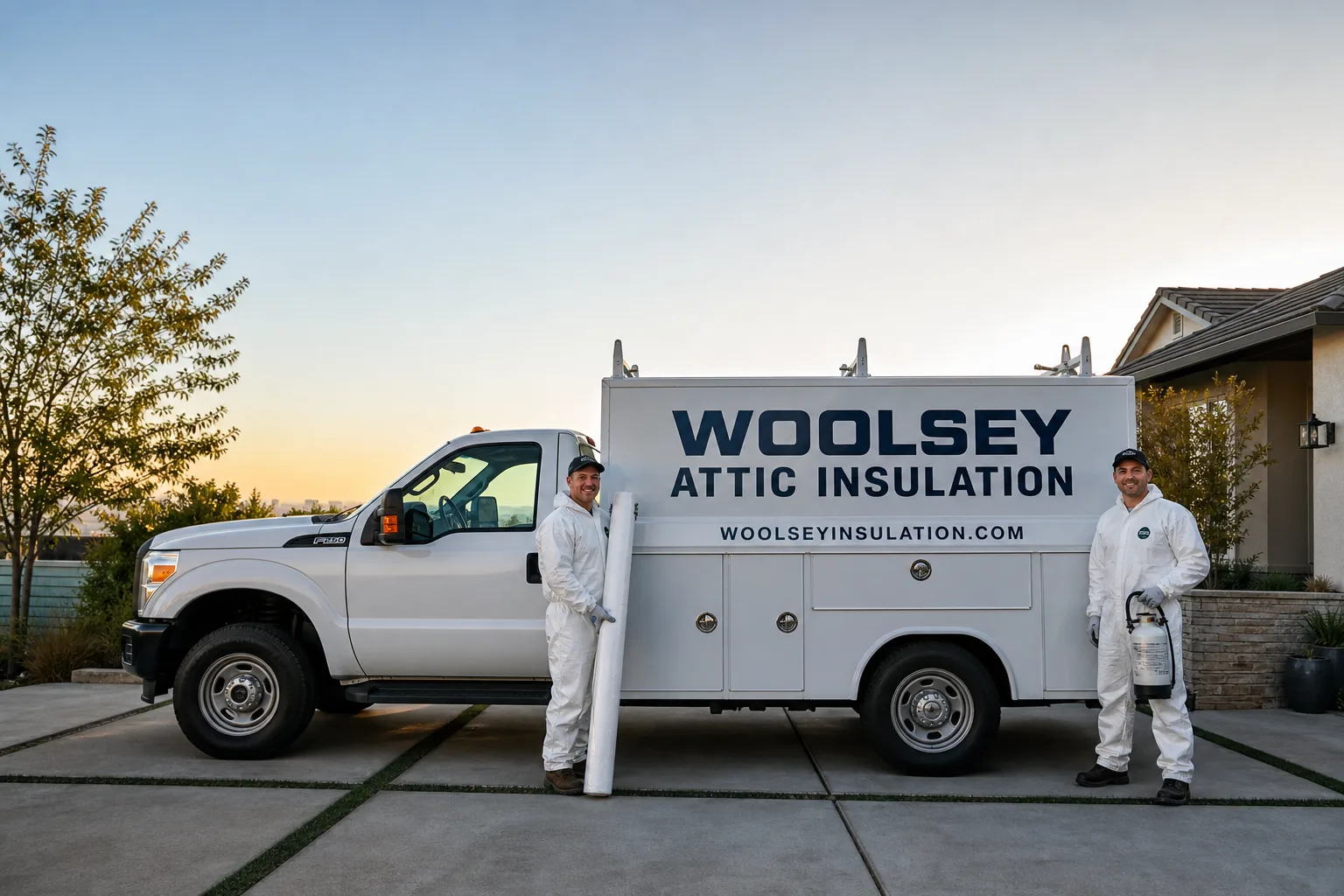
Fast, Reliable Spray Foam Insulation Across Rolling Hills Estates
Spray foam insulation in Rolling Hills Estates typically costs between $2,800 and $7,500 for a full attic or crawl space project, and we can usually schedule an estimate within 48 hours. The marine layer that sits over the Palos Verdes Peninsula does something most Southern California homeowners never expect: it keeps attics and crawl spaces damp for hours longer than inland communities, which means the wrong insulation spec quietly fails while looking fine from the outside. We know this because we’re in Rolling Hills Estates regularly, working on the same 1950s-to-1970s ranch homes that make up most of the city’s housing stock. If you’re dealing with high energy bills, musty crawl space smells, or garage doors that corrode suspiciously fast, call us at (325) 240-5411 for a free estimate with a written price before any work starts.
Why Woolsey Attic Insulation Is Rolling Hills Estates’s Preferred Spray Foam Insulation Company
Homeowners on the Palos Verdes Peninsula have been let down before. A contractor quotes one number, shows up late, then changes the price at the door. Or the work gets done, something fails six weeks later, and the phone goes to voicemail. That’s the exact cycle Woolsey Attic Insulation was built to break, and it’s why our Spray Foam Insulation team handles Rolling Hills Estates jobs differently. Every job starts with a written price before any work begins. You get a real arrival window, a background-checked uniformed technician, and a clean job site when we leave. Then, on top of that, you get a written guarantee on every repair and installation, backed by the 365-Day Done Right Promise. If it’s not right within a year, we come back and fix it at no charge.
Glenn Hartley leads our crew, and he’s spent years working through the specific moisture and corrosion problems that show up in Palos Verdes hillside homes. That local familiarity matters because Rolling Hills Estates isn’t like flat LA Basin cities. A technician who doesn’t recognize the split slab-to-crawl-space floor system common here can leave a cold, damp gap in your building envelope and call the job done. We don’t. Dispatch and scheduling are coordinated from the brand’s Los Angeles office, but our crews serve Rolling Hills Estates locally and know the streets, the housing stock, and what the marine layer does to a home over twenty years.
Crawl Space Spray Foam Insulation in Rolling Hills Estates
Crawl Space Spray Foam Insulation in Rolling Hills Estates addresses a problem that’s far more common here than in nearby flat communities like Torrance or Gardena: elevated relative humidity in vented crawl spaces beneath raised-foundation hillside homes. The Palos Verdes Peninsula’s elevation and coastal exposure trap the marine layer longer, and that moisture gets into the subfloor cavities where old fiberglass batts soak it up like a sponge. We see moisture-degraded batts hanging saggy and cold under houses all over Rolling Hills Estates, especially in the hillside tracts built from roughly 1955 to 1975. Closed-cell spray foam applied to the crawl space rim and subfloor creates an air and moisture barrier that fiberglass simply cannot provide, which is why we recommend it for most raised-foundation homes here. A typical crawl space spray foam project in Rolling Hills Estates runs between $1,800 and $4,200 depending on square footage and access.
What Closed-Cell Foam Does Differently in Coastal Crawl Spaces
Closed-cell foam cures into a rigid, water-resistant layer that doesn’t absorb moisture from the marine-layer humidity. That’s the key difference in Rolling Hills Estates, where an open-cell-only spec that works fine a few miles inland will gradually take on water and lose R-value. Sealing the rim joist and subfloor with closed-cell foam also stops the stack effect that pulls damp air up from the crawl space into the house.
When a Rolling Hills Estates Homeowner Needs This
If you notice musty smells coming from floor vents, cold floors in winter despite the mild climate, or condensation on the underside of floor decking, your crawl space insulation is likely failing. Homes built into hillsides often have one end on a concrete slab and the other end overhanging a vented crawl space, and that transition is exactly where we find cold, damp gaps that other contractors miss. Sealing that boundary correctly requires understanding where the thermal barrier shifts mid-house, which is not a detail generic contractors pick up on.
Garage Spray Foam Insulation in Rolling Hills Estates
Garage Spray Foam Insulation in Rolling Hills Estates does two jobs at once: it seals the garage ceiling against the hot attic air above, and it slows the salt-air corrosion cycle that eats garage door hardware on the Palos Verdes Peninsula. We see this pattern constantly. On a 1968 ranch home off Palos Verdes Drive North, our crew found the garage’s original torsion springs and opener chain rusted and pitted from years of salt-air marine-layer exposure, while the raised crawl space under the house end had moisture-degraded batts and a cold gap where the slab-to-crawl-space floor system transitioned mid-house. We removed the soggy batts, sealed the attic bypasses, and sprayed closed-cell foam across the crawl space rim and garage ceiling using Icynene, then installed stainless hinges and nylon rollers on the garage door to stop the corrosion cycle that had been failing hardware repeatedly.
A typical garage ceiling spray foam job in Rolling Hills Estates runs between $1,200 and $3,000. The price depends on ceiling square footage, whether the garage shares a wall with living space, and how accessible the attic above is.
Why Garage Door Hardware Fails So Fast Here
The marine layer isn’t just fog. It’s a fine salt-laden mist that settles on metal surfaces hour after hour, and garage door springs, hinges, rollers, and opener chains are usually the first to go. Homeowners in Rolling Hills Estates replace garage door hardware years faster than homeowners in Redondo Beach or Long Beach, where the air is drier and less persistently coastal. Sealing the garage ceiling with closed-cell foam reduces the humid air cycling into the garage from the attic, which slows the corrosion on everything metal in that space.
What We Do Differently
We pair closed-cell garage ceiling foam with corrosion-resistant hardware recommendations because fixing the insulation without addressing the moisture source only buys you half a solution. We don’t sell garage door parts, but we’ll tell you exactly what’s rusting, why it’s rusting, and what hardware spec will hold up better in Rolling Hills Estates’ salt air.
Trusted Brands We Service in Rolling Hills Estates
We work with eight leading insulation brands, and on Rolling Hills Estates projects we most often recommend Icynene, Demilec, and Rockwool because of how they perform in persistent humidity. That’s the point of carrying multiple lines: the material recommendation should fit the home, not whatever happens to be on the truck. Johns Manville and Knauf open-cell products have their place too, particularly on interior wall retrofits where open-cell’s flexibility and sound-dampening matter more. We stock material locally for Rolling Hills Estates customers, which means faster turnaround when you’re ready to schedule. And because we’re not tied to a single manufacturer, we’ll tell you honestly which product suits your home’s specific moisture profile.
Common Spray Foam Insulation Problems We See in Rolling Hills Estates Homes
- Salt-air corrosion on garage door hardware. Springs, hinges, rollers, tracks, and opener chains in Rolling Hills Estates corrode years faster than inland equivalents. Once the garage ceiling is sealed with closed-cell foam, the humid air cycling into the garage drops, and the corrosion slows noticeably.
- Moisture-degraded batts in hillside crawl spaces. Raised-foundation homes on graded hillside pads hold moisture under the floor decking because the marine layer keeps relative humidity high for more hours per day than flat LA Basin cities. Fiberglass batts in those subfloor cavities often end up sagging, matted, and thermally useless.
- The split slab-to-crawl-space transition. Many Palos Verdes Peninsula homes are built into hillsides so one end sits on a concrete slab while the other overhangs a vented crawl space. If the spray foam applicator doesn’t recognize where the thermal and moisture boundary shifts mid-house, they leave a cold, damp gap that undermines the entire envelope.
- Condensation on poorly air-sealed attic bypasses. Warm interior air leaking into the attic hits the cooler underside of the roof deck and condenses. In Rolling Hills Estates, where the roof stays cooler longer due to the marine layer, this condensation problem is more persistent than homeowners expect in Southern California.
Pricing for Spray Foam Insulation in Rolling Hills Estates, CA
Here are honest numbers for the Rolling Hills Estates market. A crawl space spray foam project typically runs $1,800 to $4,200. Garage ceiling spray foam runs $1,200 to $3,000. A full attic seal with closed-cell foam usually lands between $3,500 and $7,500 depending on square footage and the condition of existing insulation. Closed-cell costs more per board foot than open-cell, but in Rolling Hills Estates that extra cost buys moisture resistance you genuinely need. We give you a written price before any work starts, every single time. No door-step surprises. Call (325) 240-5411 and we’ll walk you through exactly what your job would cost, for free.
We Also Serve Cities Near Rolling Hills Estates
Beyond Spray Foam Insulation in Rolling Hills Estates, our crews regularly work in Los Angeles, San Diego, San Jose, and San Francisco. If you’re on the Palos Verdes Peninsula or anywhere nearby along the coast, the same written-price guarantee and 365-Day Done Right Promise applies.
Serving Rolling Hills Estates, CA - Our Local Coverage Area
We’re based in the Rolling Hills Estates area and know this community well. Use the map below to see our service coverage - if you’re nearby, we can almost certainly help.
FAQs About Spray Foam Insulation in Rolling Hills Estates
The marine layer lingers over the Palos Verdes Peninsula longer than it does over flat LA Basin cities, which keeps attics and vented crawl spaces at high relative humidity for more hours every day. That means spray foam in Rolling Hills Estates must be closed-cell or paired with vapor management, whereas an open-cell-only spec works fine a few miles inland. If you install the wrong foam here, it absorbs moisture and loses R-value faster than it ever would in Torrance.
Yes, indirectly. The salt-air marine layer is what’s rusting your springs, hinges, rollers, and opener chains. Sealing the garage ceiling with closed-cell spray foam cuts off the humid attic air that feeds that corrosion cycle, slowing the rust noticeably. We’ll also tell you what hardware spec, like stainless hinges and nylon rollers, holds up better in Rolling Hills Estates’ coastal air. Call (325) 240-5411 if you want someone to actually look at the whole garage, not just the door parts.
Many homes here are built into hillsides so that one end sits on a concrete slab while the other overhangs a vented crawl space. The thermal and moisture boundary changes mid-house, and if spray foam is applied without recognizing that transition, you get a cold, damp gap in the building envelope. Our crews know to look for exactly this condition on Palos Verdes Peninsula hillside homes, because it’s one of the most common sources of failed insulation retrofits we see.
Yes, and this is one of the most common jobs we do in Rolling Hills Estates. The raised-foundation hillside homes built from roughly 1955 to 1975 often have subfloor batts that have been degrading in the humid crawl space air for decades. We remove the soggy material, seal the rim joist, and spray closed-cell foam that creates a real moisture barrier. Most crawl space projects run $1,800 to $4,200.
We specify from eight leading brands, including Icynene, Demilec, and Rockwool, and the choice depends on your home’s specific moisture conditions. On most Rolling Hills Estates crawl space and garage jobs, we recommend closed-cell Icynene or Demilec because of how they perform in persistent humidity. For a specific recommendation and exact price, call (325) 240-5411. Estimates are free, and you’ll get a written number before any work starts.
Written by Glenn Hartley, Owner at Woolsey Attic Insulation, serving Rolling Hills Estates and the Palos Verdes Peninsula.